

This is part two of our end-of-year recap, pulling together some of the most read, shared, and talked-about pieces from the past year. We’ll take a short break and see you again in early January!
Most Saved & Revisited Links
Of the many links and ideas we shared this year, a few were saved and reopened time and time again. These are the ones that resurfaced most often.
From Issue #137, an examination of why vertical farming failed:
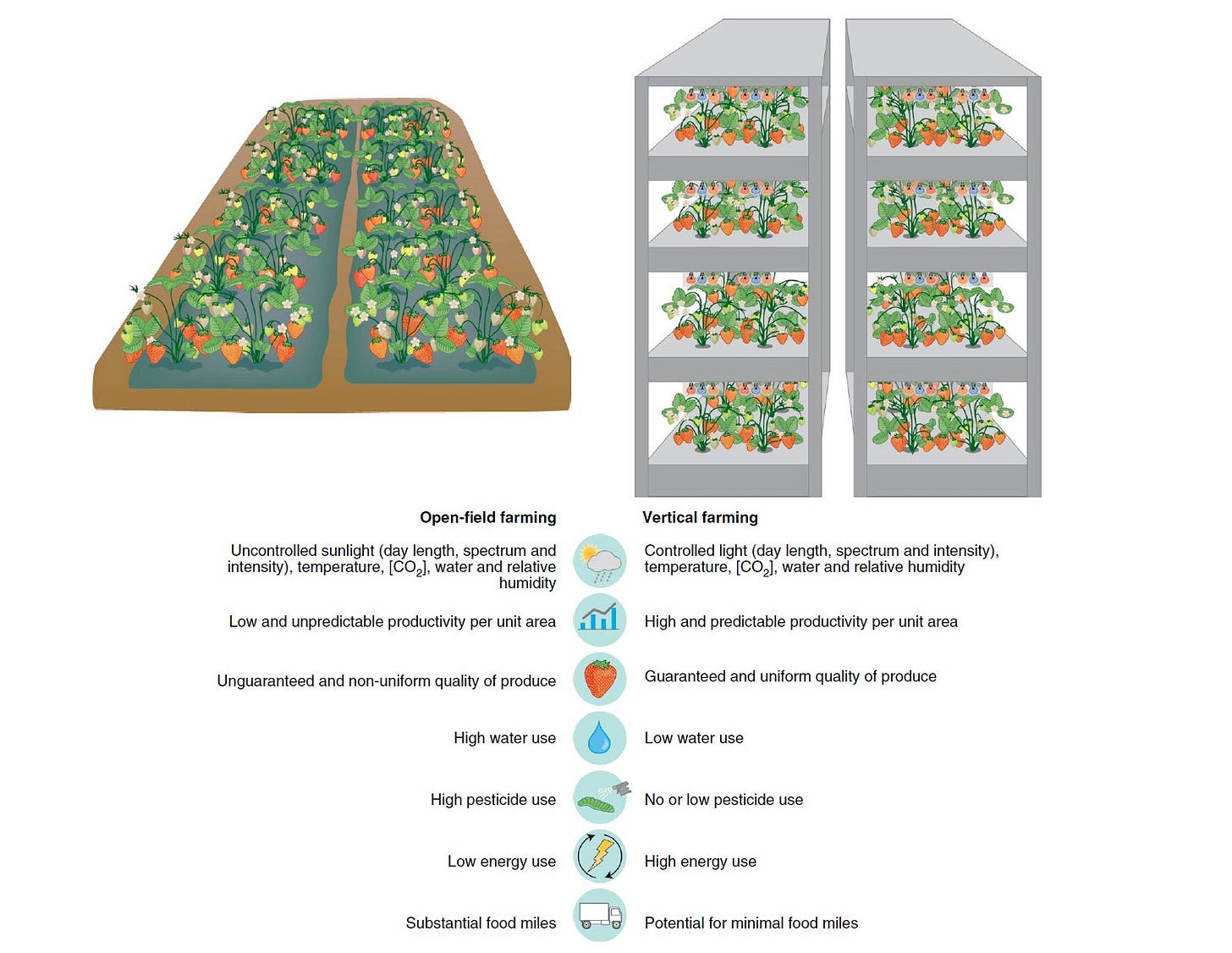
- When capital stopped flowing, the landscape of vertical farming reduced itself to unit economics. Vertical farming raised billions over the last decade on the promise of local, soil-free produce; this piece looks at what’s left now and how some are still trying to make the model work. The vision of vertical farming is simple: grow up, not out—especially when half the world’s habitable land is already farmland. In practice, what happens is that you trade a land problem for an energy problem where the economics of vertical farms are tied to the price of electricity. For example, in the UK, growing a kilogram of lettuce can cost £3–£5 in energy alone, already matching its retail price. Existing companies today are now leaning into high-margin crops (strawberries, herbs, etc.) or moving to container farms where margins still exist. As put by the WSJ:
Profits have been tough to come by, however, because the hardware-intensive indoor facilities are generally harder to scale than, say, software developers. And increasingly costly multilevel facilities have relatively high energy costs as they grow commodity crops largely undifferentiated from those of field farms.
From Issue #157, an essay on why AI has moved slower in manufacturing than in software. (In many ways, AI began by cannibalizing the software industry itself.)
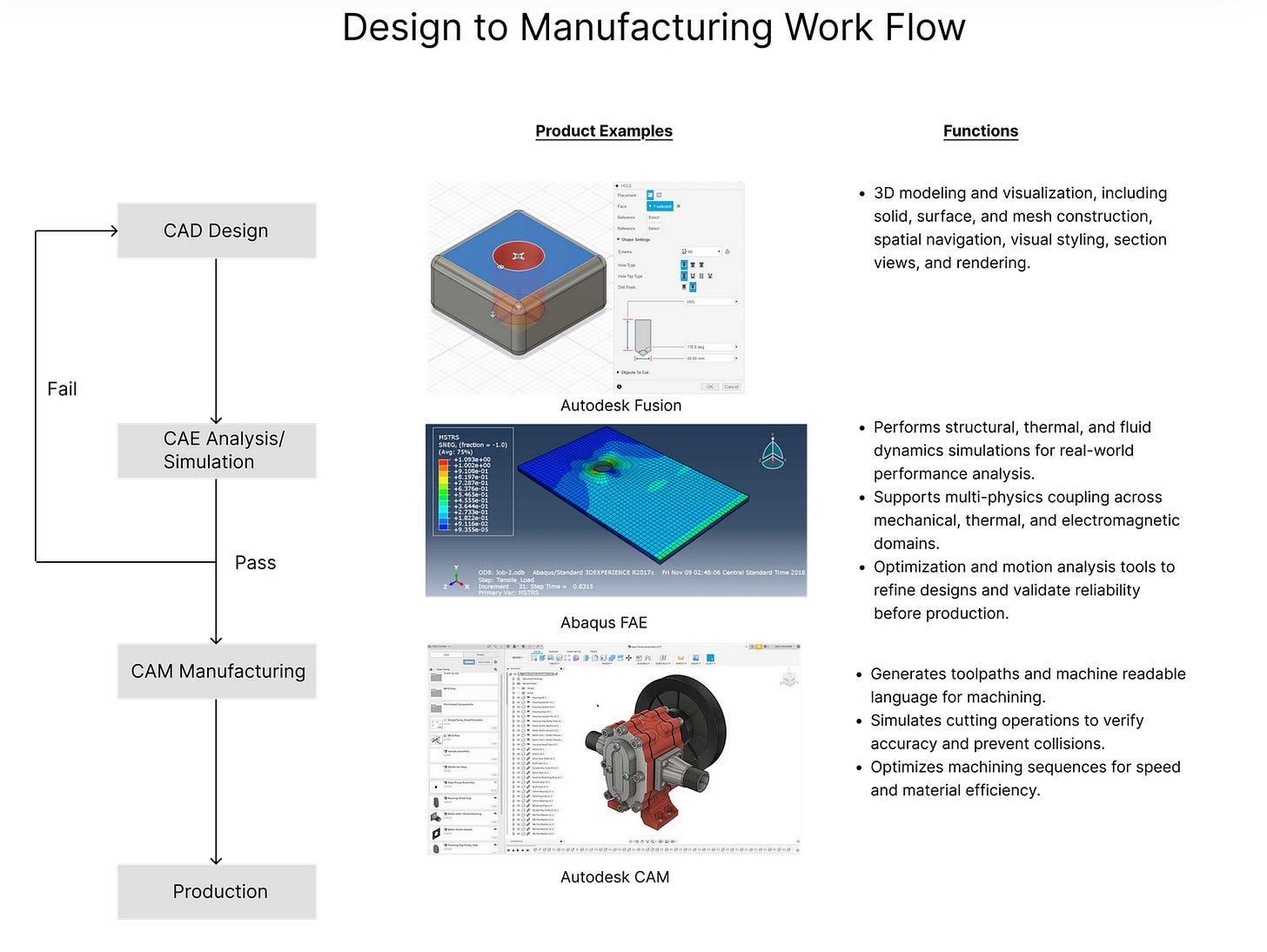
- To answer why there hasn’t been a ChatGPT moment in manufacturing, you have to look at a layer buried inside every CAD file: the geometry kernel. A kernel is the mathematical engine that defines how geometry behaves—how surfaces intersect, how solids stay watertight, how feature operations keep topology valid—and nearly every commercial CAD system depends on one of a few proprietary kernels. Over time, entire industries have been locked into those architectures as design libraries and legacy assemblies accumulated around them (CATIA for aerospace, CATIA and NX for automotive, SolidWorks for small-to-medium manufacturers). The result is an interoperability gap where design, simulation, and CAM all operate in separate silos, each translating geometry into slightly different formats and breaking information in the process.
“The geometry kernel matters because modern manufacturing isn’t a single, integrated process but rather a collection of disconnected stages, each using different software that must translate between incompatible formats.”
From Issues #136 and #142, observations on how companies like SpaceX and Apple are structured:
- How SpaceX actually operates, both at an individual productivity level and at the level of overall org structure and engineering philosophy.
- At the individual contributor level, the approach is optimized entirely for speed: move fast, return feedback in hours, and never let work stall while it’s in your court. Engineers should overcommunicate priorities, clear blockers in real time, and set the cadence for external vendors rather than letting them set it for you. During the early Starhopper sprint (first prototype of the Starship program), the team was told to ignore cost, efficiency, repeatability, and solely focus on building the first prototype as fast as possible. That clarity led to decisions like using tents instead of buildings and hiring water tower welders to fabricate rocket structures.
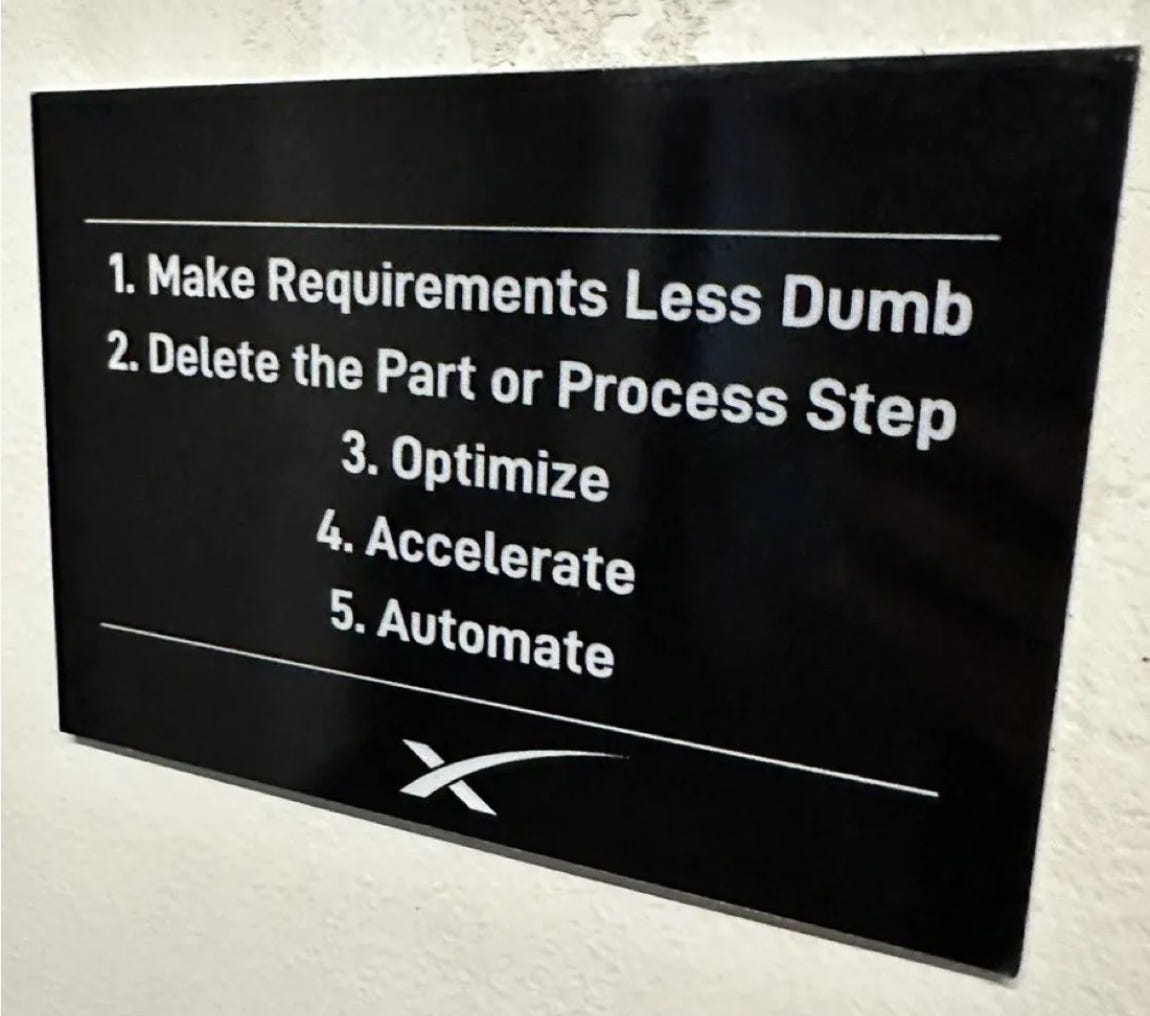
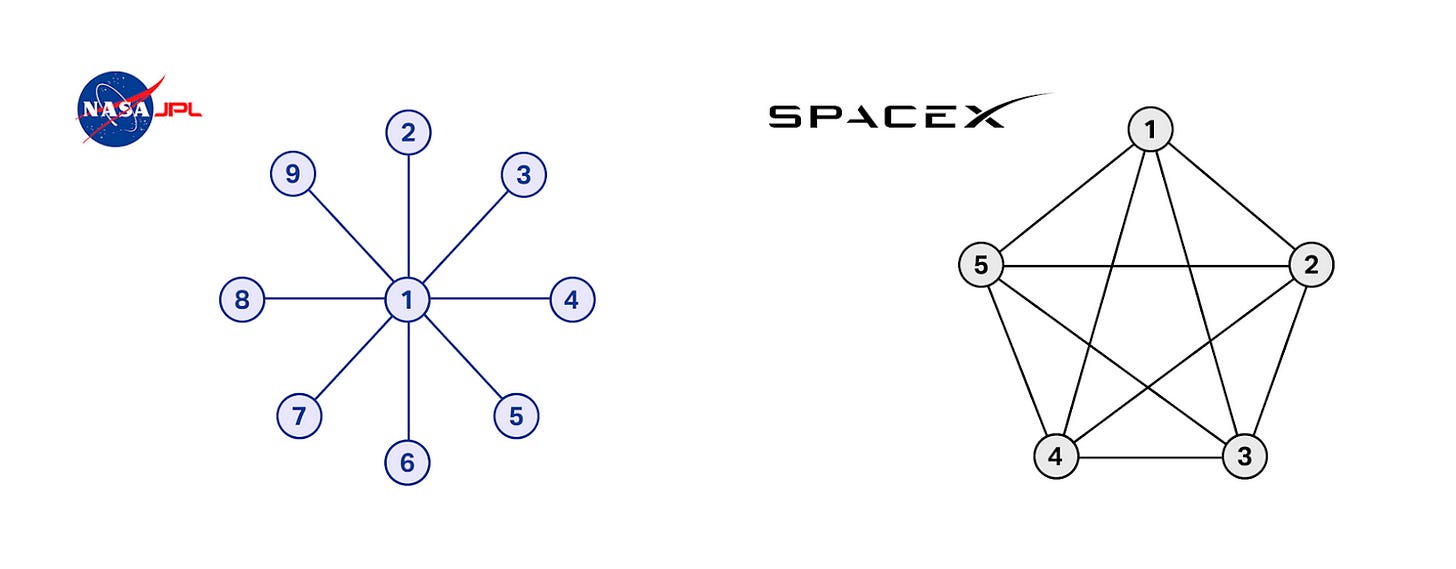
- At the organizational level, the company operates on a model of distributed ownership vs. a centralized systems engineering model typical of traditional aerospace and defense contractors. The observation: systems teams can act as gatekeepers that can slow down iteration and separate requirements from implementation. SpaceX flips this where every engineer is a Responsible Engineer (RE) that’s accountable for both designing and scoping requirements. ‘Everyone is a systems engineer, or no one is.’ It’s faster to get something wrong quickly 3 times and then right the 4th, than it is to get it perfectly right the first time, and take 20 years to do so. This is the core principle of the iterative/agile approach.
- From Apple in China: The Capture of the World’s Greatest Company, notes on how Apple structures product development and hardware execution.
- Apple’s hardware org is structured like a pyramid. Industrial Design sits at the top and sets the form, Product Design handles mechanical integration, Manufacturing Design translates it for mass production, and Operations works with vendors to scale and cost-down. A common saying on pushing back against ID was “You’d have to drive the car off the cliff to prove the brakes don’t work.” Specifically, the original iMac released in 1998 marked the shift in Apple’s internal hierarchy where industrial design took the lead for product decisions. Design was the differentiation, and the original form pushed so far beyond plastic manufacturing constraints it actually delayed launch by five months.
From Issue #152, an unusually detailed look at a production-grade legged robot:
- A 200-page teardown report of Boston Dynamics’ Spot quadruped robot, featuring detailed diagrams of its mechanical and electrical systems, leg kinematics, payload interfaces, and software API definitions. The report originally published in Chinese (see here) is a rare find because detailed teardowns of Boston Dynamics’ robots almost never appear publicly, partly because access is limited and because the company’s terms of sale explicitly forbid disassembly, teardown, or reverse engineering of its robots or software.
And some of our personal favorites of the year:
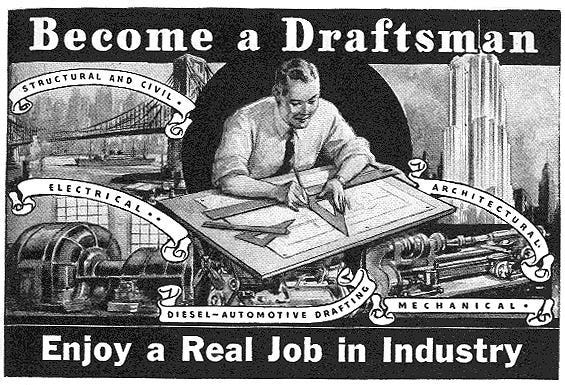
- The Death of the Draftsman, a favorite from earlier this year drawing on the reflections of an engineer with 50+ years spanning every major era of CAD (Issue #115). Today, an engineer spends a disparate amount of time doing the work formerly done by a draftsman and far less actually engineering.
- Periodic cooking, a technique for cooking near-perfect soft-boiled eggs by cycling temperature instead of holding it constant (Issue #117).
- And finally, The Repository of Ill-Advised Ventures (RIAV), a running catalog of ambitious products that failed shortly after shipping (Issue #119).
Startup News
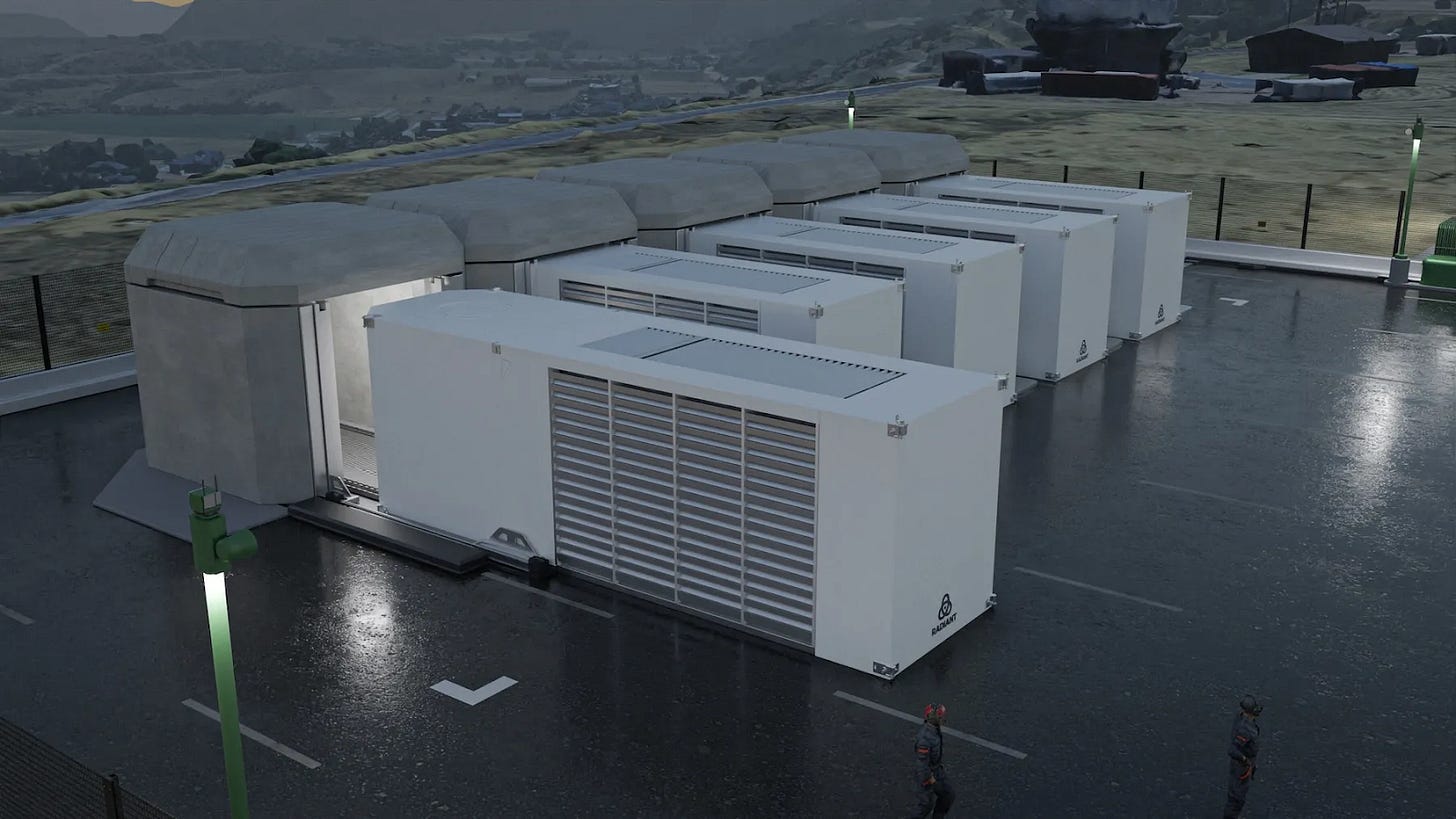
- Radiant raised $300M in Series D funding to scale production of its portable R-50 microreactors. The semi-truck-sized, helium-cooled reactors deliver 1MW of continuous power using meltdown-resistant TRISO fuel, providing a factory-built alternative to diesel generators for defense, data centers, and remote critical infrastructure. The funding supports a new Oak Ridge facility targeting 50 units per year. Draper Associates and Boost VC led the funding.
- Rivian recently outlined its new autonomy architecture built around in-house silicon, LiDAR, and a new third-gen autonomy compute platform. The system centers on a custom 5nm processor (developed with Arm and TSMC) paired with a LiDAR sensor to handle long-tail edge cases that camera-only systems struggle with. The new hardware will ship on R2 vehicles starting in late 2026, with earlier R2 builds capped at hands-free operation.
- Fuse Energy raised $70M in funding at a $5B valuation to expand its energy product portfolio and support international growth. The company is developing and scaling vertically integrated energy hardware and infrastructure across generation, supply, and installations to compete with traditional utility models. Fuse is also preparing to launch its first in-house consumer hardware product around a micro solar and battery system. The round was led by Balderton Capital and Lowercarbon Capital.
- 1X announced an MoU to make up to 10,000 of its humanoid robots available to portfolio companies of EQT, whose venture arm EQT Ventures has been an investor since 2023. While 1X’s Neo has been positioned as a ~$20k consumer-ready home robot, this agreement shifts focus toward industrial use cases across manufacturing, logistics, and warehousing. The deal is structured as access and pilots rather than a purchase commitment, giving EQT’s portfolio early exposure as 1X ramps toward commercial scale.
- Vital Lyfe raised $24M in seed funding to build portable desalination systems that produce clean drinking water from nearly any source. Its modular, compact platform uses advanced membrane technology and efficient pumping and control systems to enable decentralized water production at human scale. The round was led by Interlagos and General Catalyst.