

Interesting Links 🏭
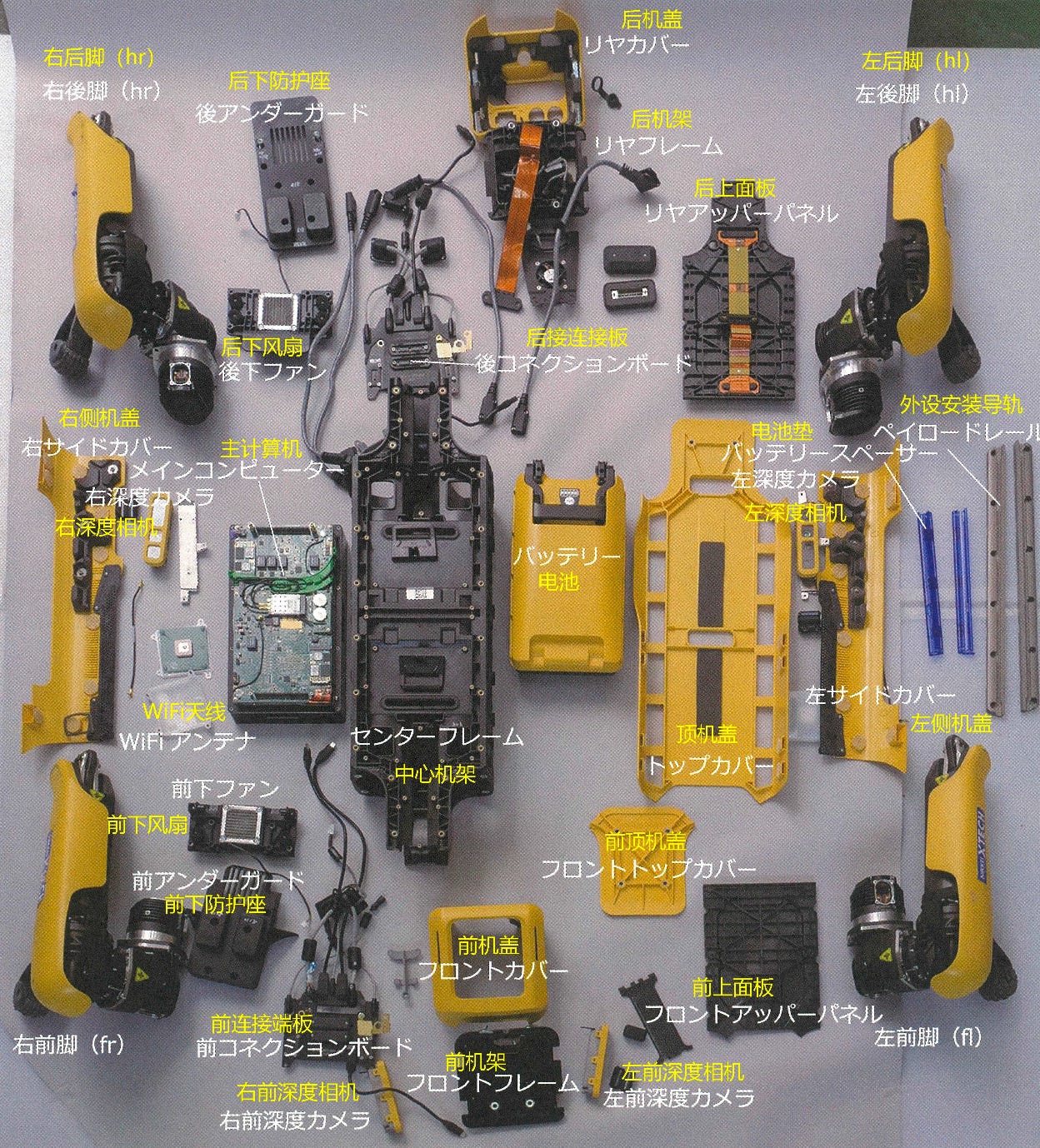
- A complete 200-page teardown report of Boston Dynamics’ Spot quadruped robot, featuring detailed diagrams of its mechanical and electrical systems, leg kinematics, payload interfaces, and software API definitions. The report originally published in Chinese (see here), is a rare find because detailed teardowns of Boston Dynamics’ robots almost never appear publicly, partly because access is limited and the company’s terms forbid teardown or reverse engineering. Some gems from the report, along with translated commentary:
- Each leg is a self-contained 4.2 kg drive module built around three identical motors, two rotary joints (X and Y axes) driven through 50:1 harmonic reducers, and a linear ball-screw actuator at the knee that turns rotation into push-pull motion to swing the lower leg (see Ch. 4 for details).
- On structure and robustness: The Spot mechanism can be appropriately described as ‘four legs connected to a high-performance desktop computer.’ The team tested the robot in heavy rain (even accidentally submerging it) and noted that “the waterproof design is not thorough—the sealing is at a dustproof level, with no strict waterproofing measures,” and that “repeated disassembly and assembly often damage screws and terminals.”
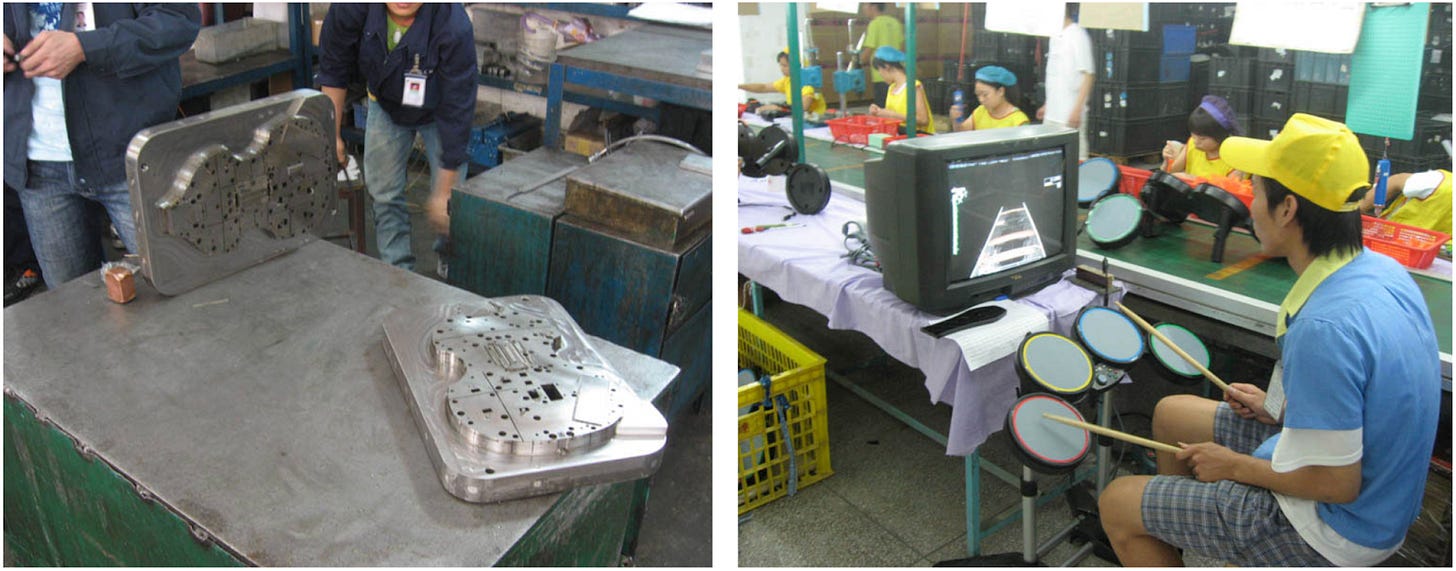
- A great post-mortem on the development of the original Rock Band video game — a game that turned plastic peripherals into modern cultural artifacts and at its peak, sold over 4 million copies in a single year. In 2007, instrument-emulator games like Guitar Hero were soaring in popularity and Harmonix decided to take this category to its logical conclusion: a full band setup with drums, guitar, bass, and vocals. Building consumer-grade controllers at scale was new territory, and the team grew from a small group of three into more than 160 people by launch. Over an 18-month sprint that started in early 2006, the team moved from prototyping to tooling by April 2007; by September, the first containers shipped from China, and by January 2008, more than two million Rock Band bundles were in players’ homes.
We began hardware development in February 2006, working with an industrial designer (J. Hayes Industrial Design) and a contract manufacturer (Canyon Creations). Because it was the least understood controller, we attacked the drums first. The big challenge was delivering the playing experience of a real drum kit, in a videogame controller that would cost a fraction of the price. The guitar controller was less blue sky, and development started after we had the basics of the drum controller down.
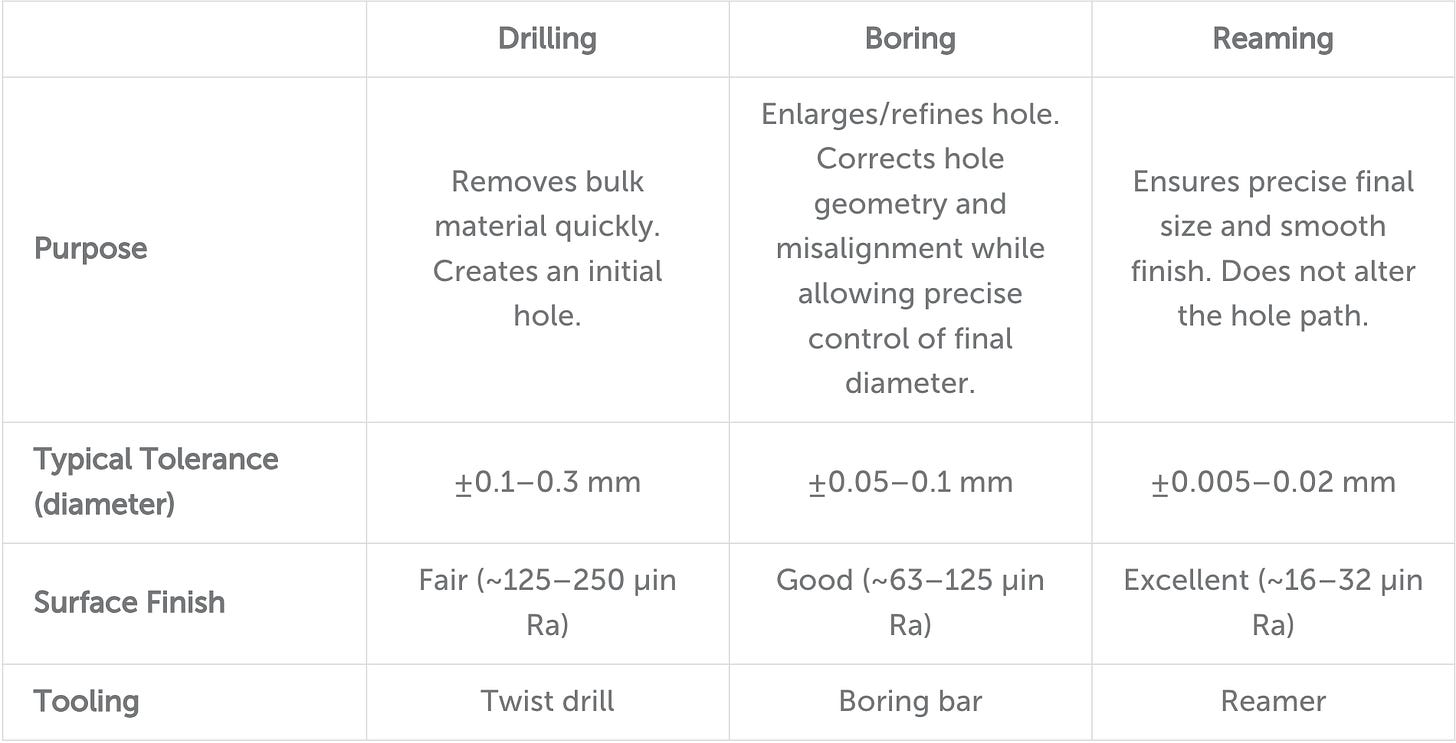
- It takes up to three tools to make one good hole. A drilled hole might start with a ±0.1 mm tolerance, but through sequential processes (drilling, boring, and reaming) that can be tightened to around ±0.005 mm in precision setups. Drilling removes bulk material and establishes the pilot hole; boring, when used, enlarges and straightens it to correct geometry and alignment; and reaming removes a final thin layer to achieve the exact diameter and surface finish. In practice, many shops skip boring for smaller holes or looser fits, but for high-precision assemblies this three-step workflow is standard.
- McMaster-Carr, but with a chat box: you can now ask an LLM to help you build an assembly from catalog parts instead of clicking through menus for SKUs. The feature’s still in beta for select users, but the vision is very, very cool: users describe what they want to build, and it handles the build entirely from off-the-shelf McMaster parts. See this example with a toaster.
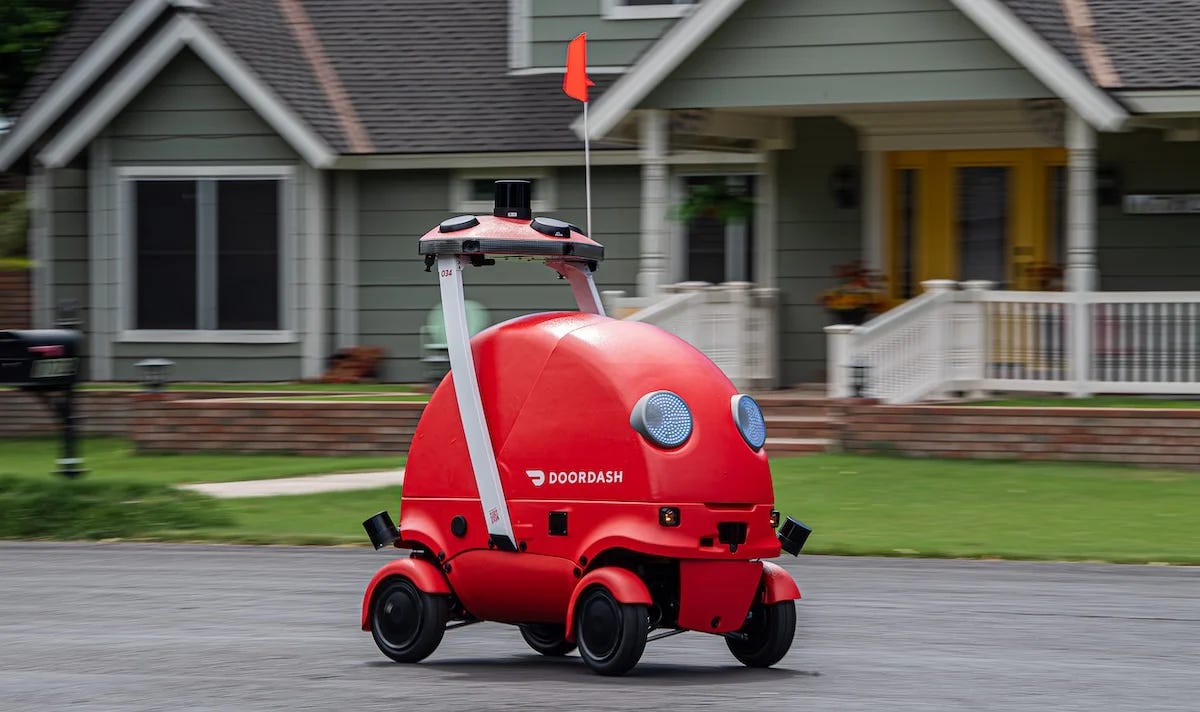
- Dot is DoorDash’s new 350-lb delivery robot built for mixed-terrain autonomy, with a 20 mph top speed, 30 lb payload, and full-stack perception for safe operation through doorways and intersections. It’s the product of seven years of internal development, though it’s also worth noting this category’s graveyard of past efforts. Nuro once built its own custom low-speed delivery vehicles before pivoting to licensing its autonomy stack after running into cost and scale constraints. Cartken started with campus sidewalk bots, but has since shifted to indoor and industrial logistics where reliability and ROI are easier to prove.
- Flash Joule heating (FJH) is an electrothermal process where a high-voltage pulse passes through a resistive material, converting electrical energy into intense, localized heat. The rapid heating and quenching can transform a material’s structure without furnaces or solvents, and has been used to create graphene by discharging a capacitor bank through graphite, and more recently to recover rare earth elements from e-waste under a chlorine atmosphere.
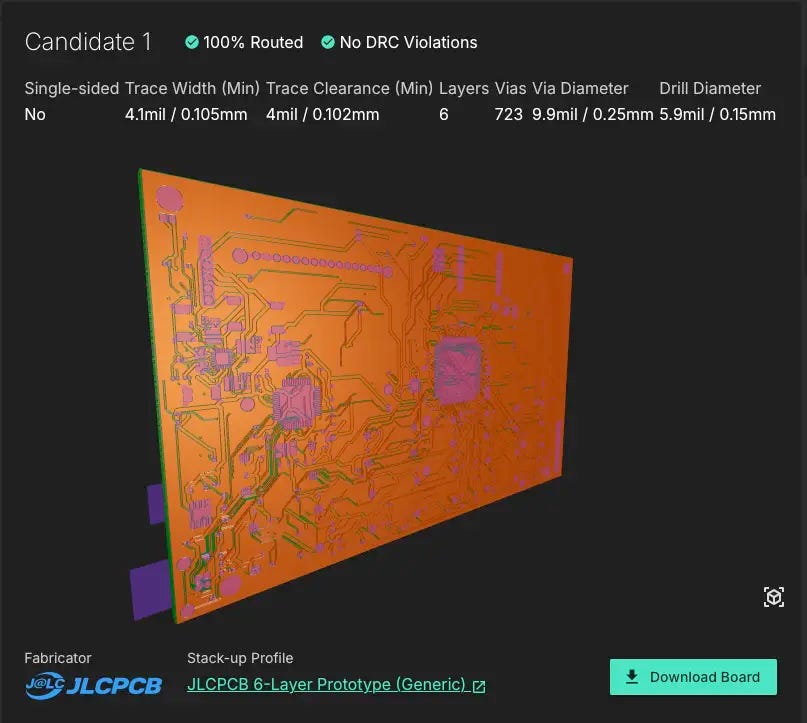
- Another great write-up from Quilter on using automated PCB layout to design a 32-sensor evaluation board in hours instead of days, specifically an FPGA array for MEMS accelerometers in parallel.
- And one fun link to round out the week: Scott Young’s framework for learning hard things, known as recursive deepening where intuition is built by repeatedly explaining and refining your understanding layer by layer.
Event Calendar 🗓️
10/14 – Dirac BuildOS Live Demo Webinar
Live walkthrough of new features and workflow improvements to Dirac’s Automated Work Instruction Platform, BuildOS.
10/29 – Where to Build: Factory Site Selection Strategies
Playbooks used by the world’s fastest-growing manufacturers and hardtech startups on how to build and select factory locations.
11/13 – SF Hardware & Manufacturing Happy Hour
Free food, good company, and plenty of shop talk at a local beer garden.
Startup News 🚀
- Taya opened preorders for its first AI-powered necklace, positioning it as the first “AI jewelry” product that blends voice intelligence with minimalist design. The company came out of stealth last Tuesday with a launch video that’s already crossed 2 million combined views on Twitter (fun fact: part of it was shot at my local coffee shop!). Taya is targeting the gap between fashion and wearables, arguing that most AI-native devices fail because they look like gadgets. As CEO Elena Wagenmans puts it, “We built Taya to be something people genuinely want to wear—beautiful, private, and empowering.”
- Neptune Robotics raised $52M in Series B funding to expand development of underwater hull-cleaning robots. The company’s AI-driven systems remove biofouling (marine growth that coats ship hulls) up to 3–5× faster than divers, even in strong currents. Regular cleaning improves hydrodynamic efficiency, cutting fuel use and emissions by keeping hull surfaces smooth. The round was led by Granite Asia.

- Until Labs raised $58M in Series A funding pioneer reversible cryopreservation, starting with organs for transplants and roadmapping toward medical hibernation. The approach combines cryoprotectants, perfusion protocols, and custom cooling hardware to avoid ice damage in tissues, extending viability beyond traditional cold-chain methods and enabling better logistics for donor matching. The round was led by Founders Fund.
- Calumix raised C$4.5M in fresh funding to scale a coating technology that adds conductive carbon layers to battery foils, boosting lithium-ion energy and power density while reducing manufacturing emissions. The company previously spun-out of 3M, bringing significant IP and a manufacturing facility in Ontario, Canada. Their process improves electrode stacks without retooling existing lines, enabling greener cells for EVs and grid storage.