

Interesting Links 🏭
- To answer why there hasn’t been a ChatGPT moment in manufacturing, you have to look at a layer buried inside every CAD file: the geometry kernel. A kernel is the mathematical engine that defines how geometry behaves—solid definitions, surface intersections, how feature operations keep topology valid—and nearly every commercial CAD system depends on one of a few proprietary kernels. Over time, entire industries have been locked into those architectures as design libraries and legacy assemblies accumulated around them (CATIA for aerospace, CATIA and NX for automotive, SolidWorks for small-to-medium manufacturers). The result is an interoperability gap where design, simulation, and CAM all operate in separate silos, each translating geometry into slightly different formats and breaking information in the process. Another thread the author pulls on is the idea that if geometry kernels are treated as strategic infrastructure, rather than just commercial software, an open-source U.S. kernel looks less like a thought experiment and more like a policy lever worth exploring.
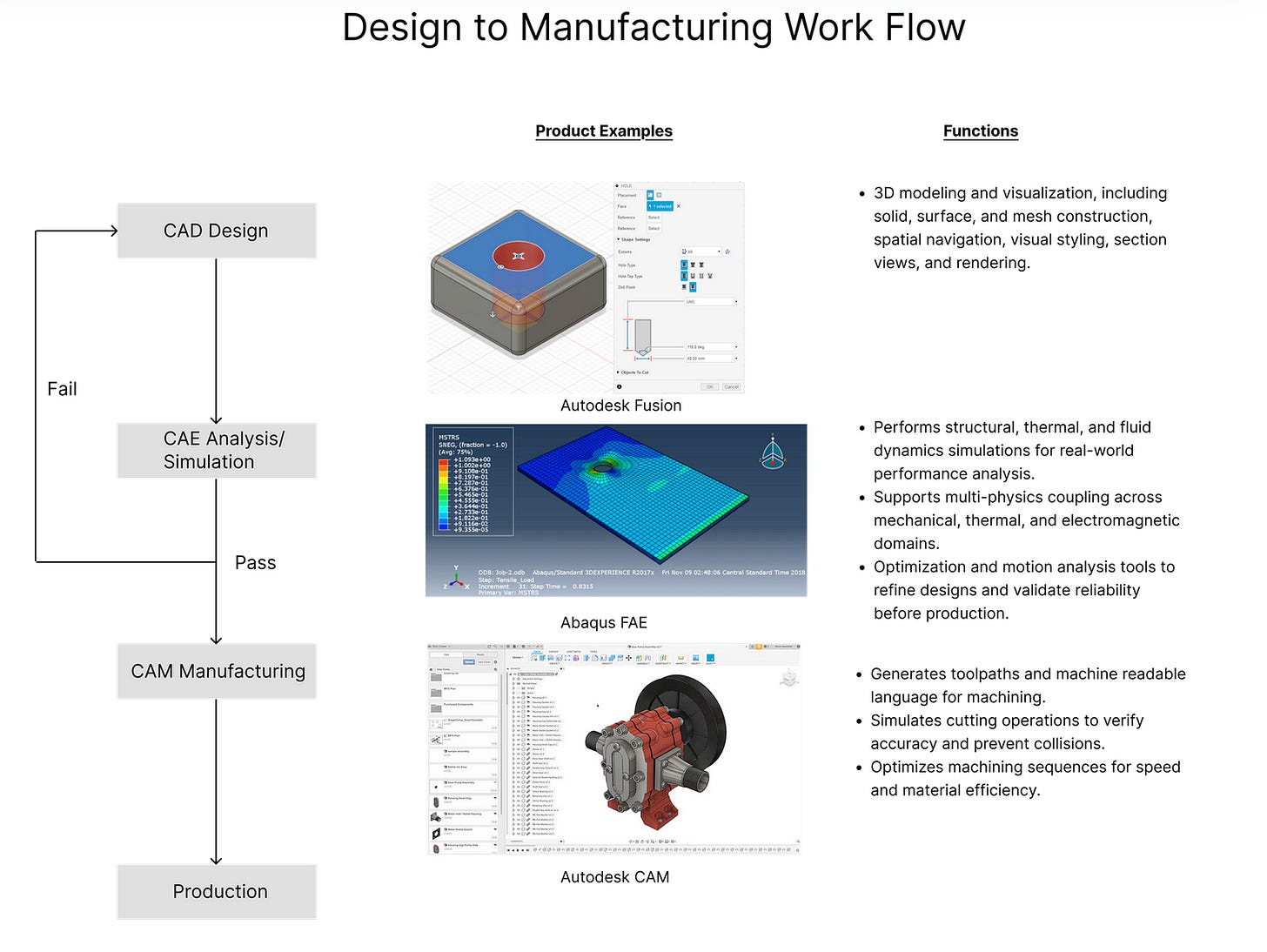
The geometry kernel matters because modern manufacturing isn’t a single, integrated process but rather a collection of disconnected stages, each using different software that must translate between incompatible formats.
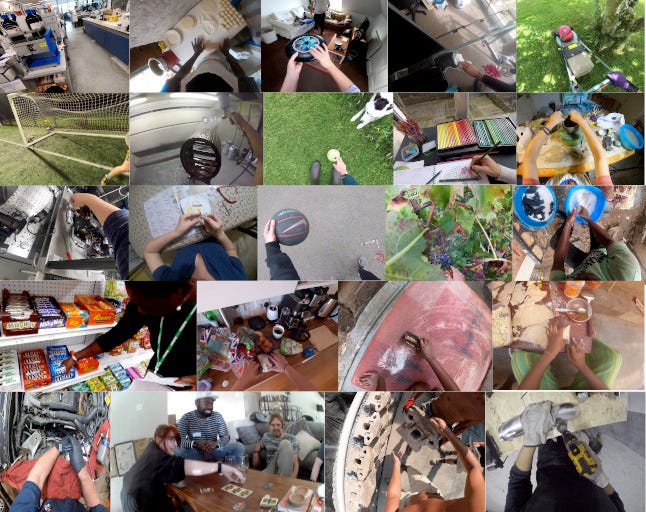
- LLMs swallowed and digested the internet for training data, and now in the race to build humanoid robots, egocentric data is the new currency. Egocentric data refers to high-res, first-person recordings of people performing manipulation tasks, giving models an exact view of how humans move, grasp, and interact with objects. The same footage is often paired with annotations like hand trajectories, object masks, and action labels. For embodied AI, it’s the closest thing available to a transferable record of human motor skill, and it’s what every robotics team is building toward today. For a sense of scale, Figure is reportedly directing a large share of its $1 billion raise toward nothing more glamorous than collecting first-person human data.
- Also worth noting: Build AI recently released one of the largest open egocentric datasets to date; whether raw data volume alone can close the sim-to-reality gap is still an open question.
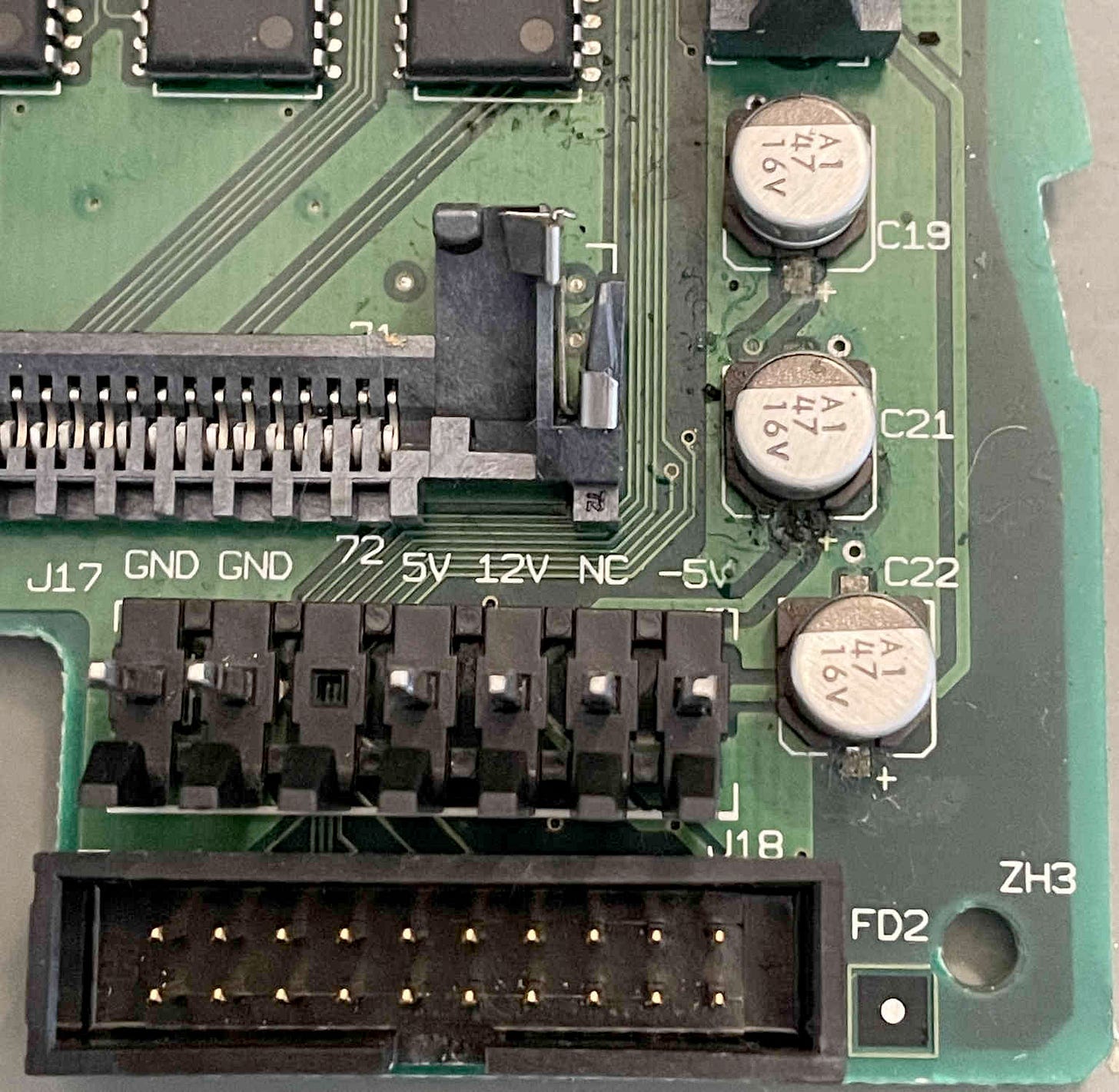
- On the 1993 Macintosh LC III, Apple managed to ship units of the computer with a power-rail capacitor installed in reverse. The board’s silkscreen was wrong (C22), and the assembler followed it literally by placing the positive lead on ground and the negative lead on the –5V rail. The reason it never triggered a recall is because the original electrolytic capacitor could survive a modest reverse bias on a rail that carried almost no load. Tantalum capacitors are used as a modern replacement, but they can’t tolerate reverse voltage; follow the silkscreen instructions and you’ll drive amp-level current, pull the rail toward –2.3 V, and in worst-case outcomes catch a capacitor on fire.
- A Ford Mustang Mach-E has about 1.6 km more wiring than a Tesla Model 3, and a big part of that gap comes down to architecture. Ford’s EVs inherited a domain-based architecture: separate ECUs for powertrain, chassis, body, and infotainment scattered around the car and linked by heavy CAN/LIN point-to-point harnesses (often >30 kg heavier). Zonal architectures are a structural reset that replace dozens of function-specific modules with a handful of high-performance computers placed in physical “zones” of the car, each managing everything nearby. Instead of routing point-to-point CAN and LIN bundles across the cabin, every local load (lights, sensors, switches, actuators) terminates in its nearest zone controller, and the zones communicate over a lightweight Ethernet backbone.
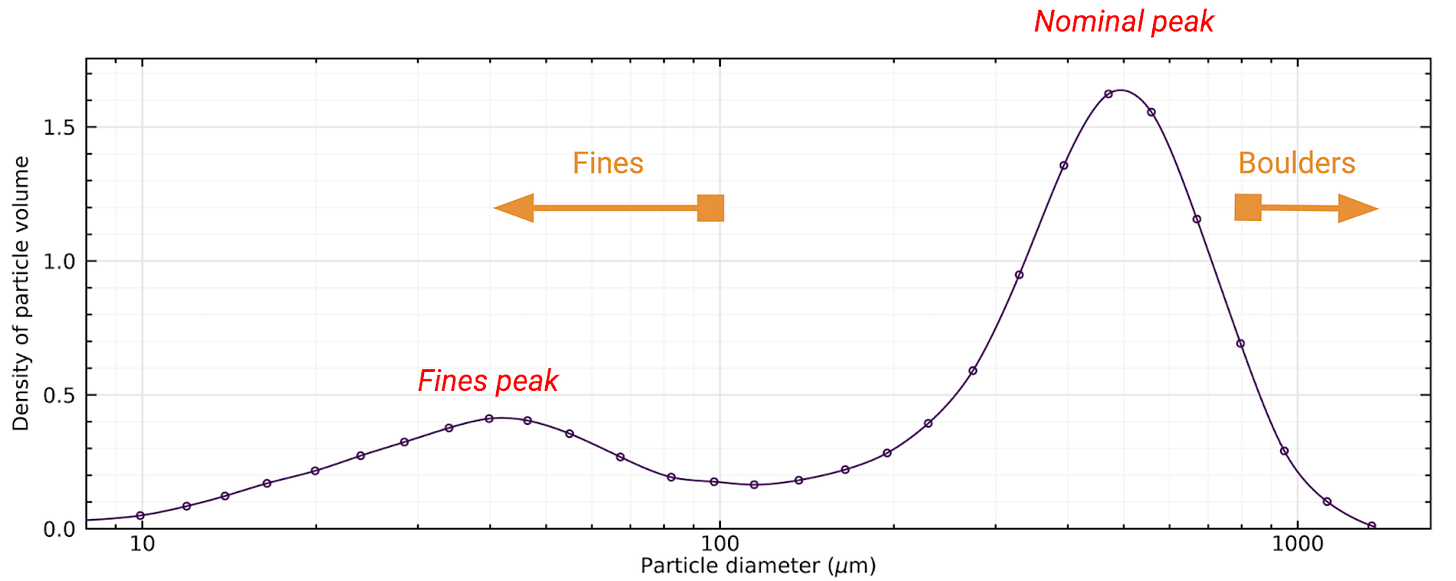
- For our coffee enthusiasts: a deep dive into 300 grind profiles across 24 espresso grinders shows the ideal target particle size distribution for an espresso shot is a bimodal curve with a tight 250–400 µm main peak and 20–35% fines (<100 µm) to build the puck resistance required for a 9-bar extraction in 25–35 seconds.
- And a reminder that anything worth building takes time: Stripe had around 50 users at the two-year mark. Full interview here.
Spotlight: Wizerr launches a BOM Optimizer
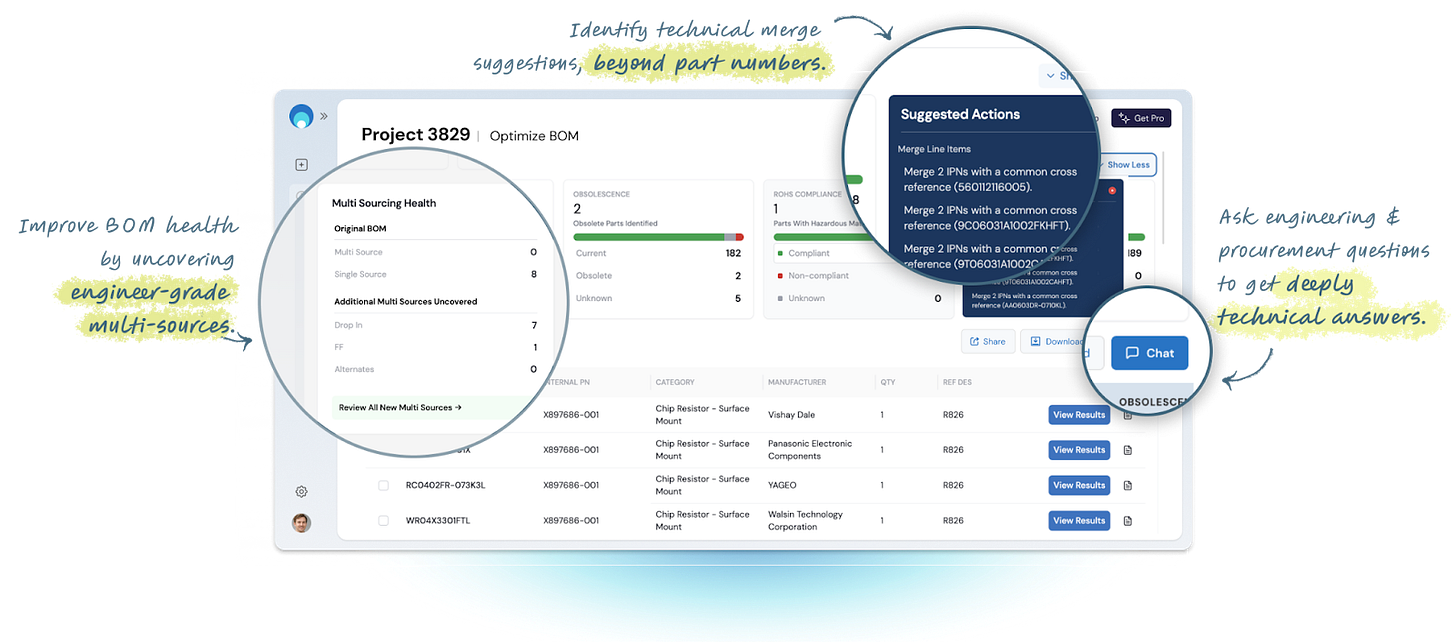
Wizerr’s new AI-powered BOM Optimizer goes far beyond basic part matching - it digs into datasheets, cross-references specs, and identifies true engineer-grade alternatives, not just similar-looking part numbers. It then combines that deep component understanding with live supply intelligence and compliance data to uncover cost savings, highlight risks, and even suggest potential merges where parts overlap functionally.
All data you upload stays fully private - never shared, never used for training. Request for exclusive early access here. 👇
Startup News 🚀
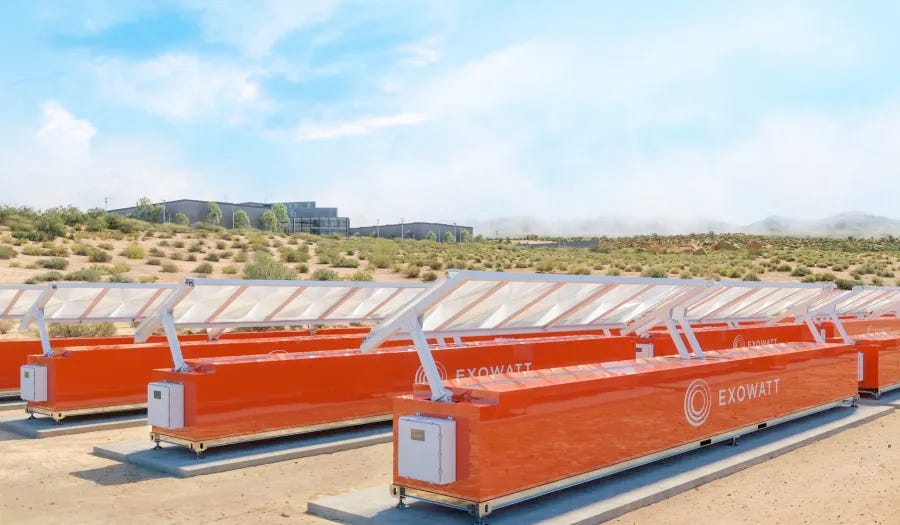
- Exowatt raised an additional $50M as an extension to its $70M Series A, bringing the round to $120M, to scale its thermal storage systems. The company builds modular, shipping-container P3 units that use concentrated sunlight to heat thermal-storage bricks and drive a Stirling engine, providing up to five days of dispatchable power. Exowatt reports a backlog of ~10M units (≈90 GWh of capacity) as it targets scaling production in sunny regions for industrial loads and AI data centers. MVP Ventures and 8090 Industries led the extension.
- CHAOS Industries raised $510M in Series D funding, bringing total capital to $1B at a $4.5B valuation for its counter-drone radar networks. The investment will accelerate development of advanced radar networks like Vanquish for long-range detection of drones and missiles, integrated with counter-autonomous-threat systems that respond up to ten minutes faster than legacy systems. Valor Equity Partners led the funding.
- Teradar raised $150M in Series B funding as it exits stealth with a solid-state terahertz sensor that aims to outperform lidar and radar in fog, glare, and heavy rain. The “modular terahertz engine” is in validation with five major automakers and three Tier 1 suppliers, where it’s being tested against existing radar and lidar stacks. Teradar says it’s targeting ADAS and autonomous-driving programs for 2027–28 vehicle models, with pricing expected to land between radar and lidar. Capricorn Investment Group and Lockheed Martin’s venture arm led the round.
- LambdaVision secured $7M in seed funding to scale its in-space manufacturing process for protein-based artificial retinas. The team has flown nine ISS missions and demonstrated 200-layer thin-film assembly in orbit, supported by a NASA Phase 2 ISPA award. The new capital funds operations through 2027 as the company pushes toward clinical-trial preparation. Seven Seven Six and Aurelia Foundry Fund led the round.
- Cadence acquired ChipStack in an undisclosed deal to bolster its AI-driven chip verification tools. Chipstack’s technology adds automated logic simulation tools that accelerate regression testing and debugging for complex SoCs, reducing verification bottlenecks in advanced node chip development flows.