

Interesting Links
- An ounce of visualization is worth a pound of theory; here that means watching lithium intercalation in action, or more simply put, batteries breathing. These two videos let you watch a lithium-ion battery operate in cross-section through a confocal microscope pointed at the electrode during charge and discharge:
- In the stacked battery clip, graphite particles shift from black to gold as lithium intercalates between layers; the electrode visibly expands and contracts like a lung. At full charge, the graphite (LiC₆) turns a distinct gold.
- The dendrite video visualizes dendrite growth during a 4C overcharge, then partial dissolution once current stops.
The full library also includes clips of silicon anode expansion, solid-state cells, NMC cathodes, and outgassing, all on Lasertec’s ECCS B320 product page. Each video is a shortcut to intuition on the mechanical stresses and catastrophic failures batteries often experience.
Watch the video in the original issue.
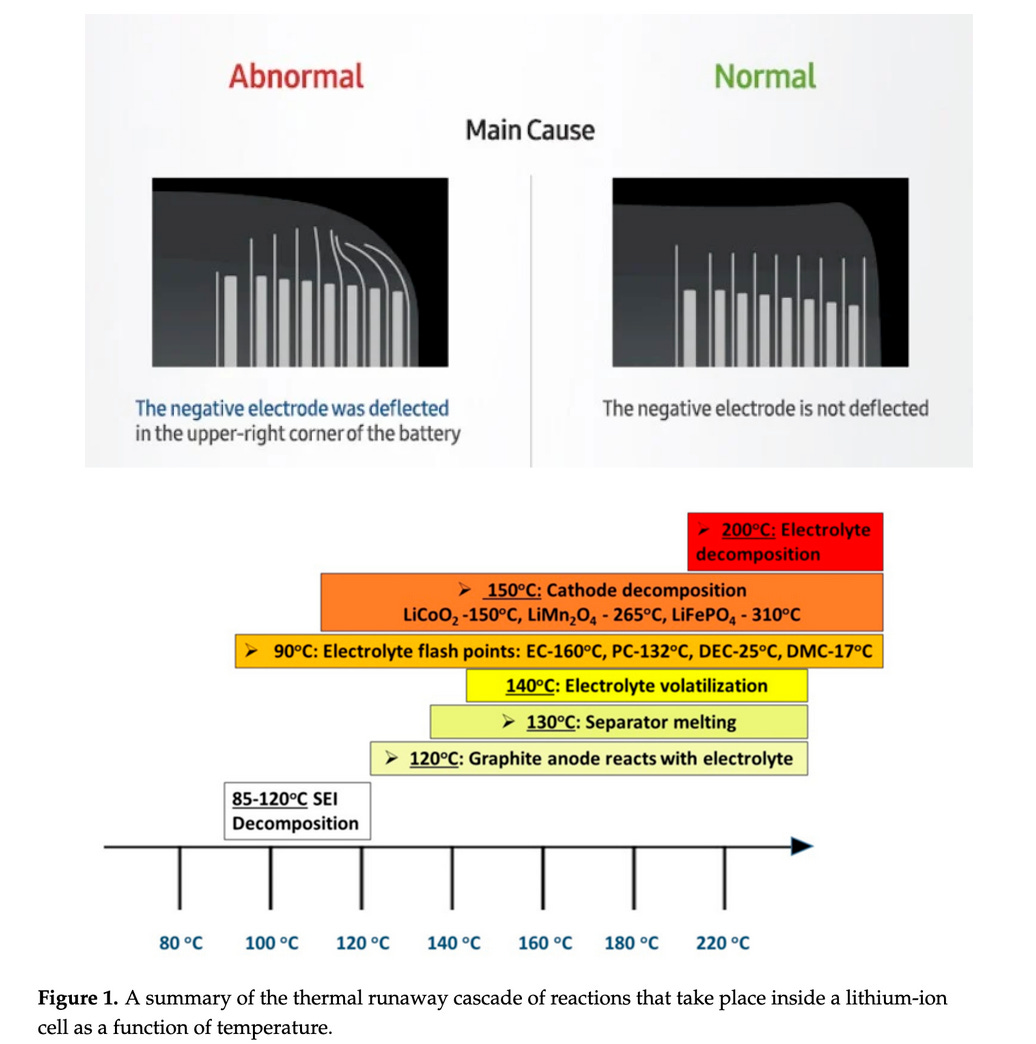
- On the topic of batteries, the Galaxy Note 7 is perhaps the most infamous large-scale battery failure, costing Samsung an estimated $17B in recalls in 2016. For those unfamiliar, reports of units failing in the field surfaced soon after launch; in some cases overheating, and in other cases fires from “exploding” batteries. The root cause wasn’t a single issue but a stackup: aggressive packaging left minimal mechanical margin, especially at the corners of the cell, while supplier-related manufacturing defects (misaligned electrodes, thin/damaged separators, and weld issues) increased the likelihood of internal short circuits. Together, normal battery expansion during charge was enough to push already fragile regions into failure.
- Electricity markets are split into two layers: energy (paying for the electricity consumers use, priced in real-time) and capacity (paying power plants to be available during peak demand, even if they sit idle). SemiAnalysis breaks down how power prices are set, and why recent electricity bill increases have more to do with market design and forecasting than raw AI datacenter demand. In PJM (13 eastern states), capacity prices are set through a forward auction driven by a simulated demand curve; when projected datacenter load shifted that curve, prices jumped 9.3× in a single year, adding roughly $25–30/month for households. By contrast, Texas’s ERCOT runs an energy-only market with real-time scarcity pricing (no capacity auction, no model-driven curve) and has seen far more stable outcomes despite similar datacenter growth. The difference comes down to what sets the price: in PJM, forecasts feed directly into the market, so errors get priced in; in ERCOT, prices are set by real conditions, so forecasts get filtered out.
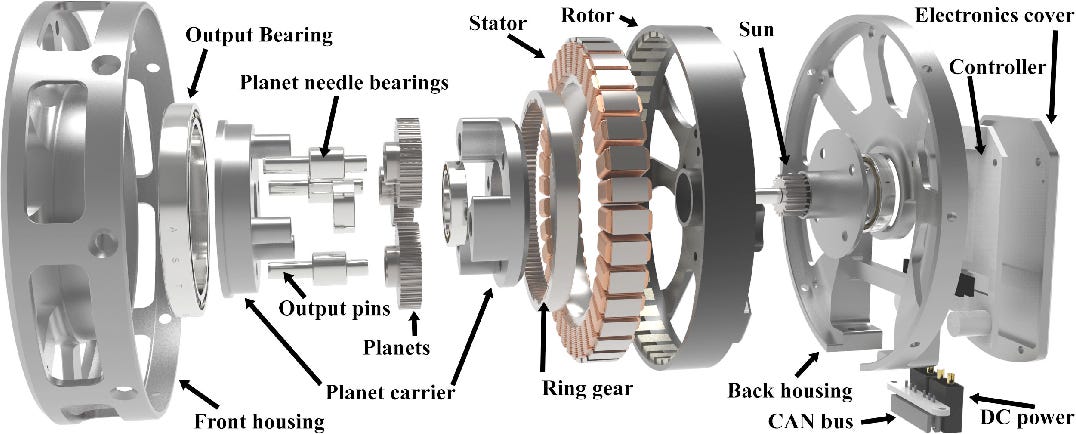
- Robot Daycare is a long-running technical project log spanning ~15 years of work from Ben Katz, best known for his work on the MIT Mini Cheetah and its widely influential electric actuators. Lots of fun project builds (Nyan Cat Hat, automated Rubik’s Cube Solver) to his latest posts on electric motor scaling laws and inertia in robot actuators. His master’s thesis, A Low Cost Modular Actuator for Dynamic Robots, is one of the best reads if you want to understand electric actuator design used in modern robotics.
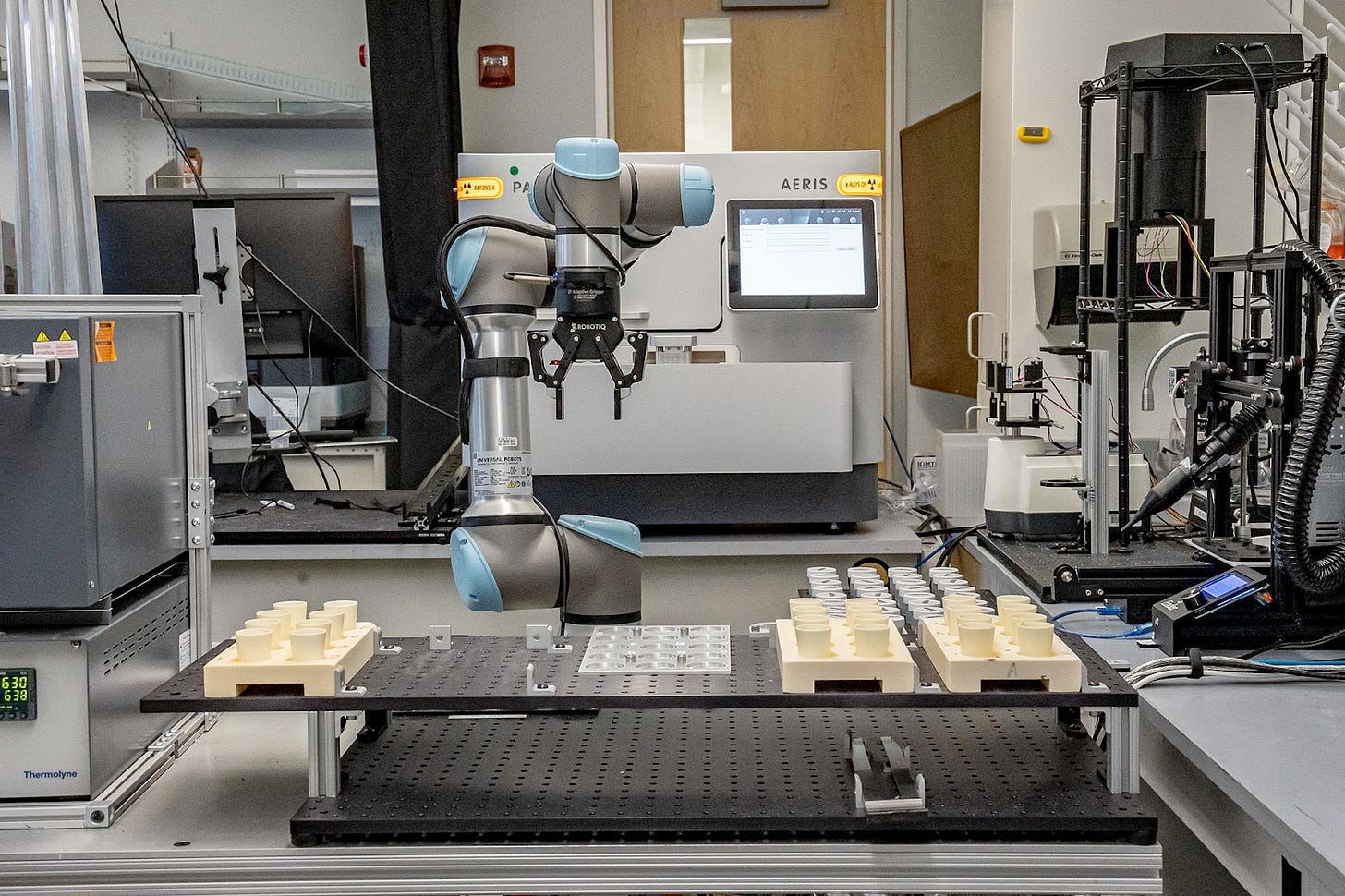
- Autonomous labs are being bottlenecked by instruments built for human hands. A coalition of 30+ researchers across materials science, chemistry, and AI recently published a preprint call to action laying out the problem plainly: most lab equipment exports data in proprietary encrypted formats with no API, physical interfaces assume a human operator (knobs, cartridge swaps, manual optical alignment), and instruments are built for single workflows rather than reconfigurable use. Their proposed fix is a new class of “Autonomous Science Instruments” defined by three attributes: open data standards and API access, design-for-automation standards (hardware physically accessible to robot arms, with machine-readable failure modes rather than GUI-only warnings), and modularity so instruments can be swapped the same way robot arms already are. This implementation of a robotic storage system at the Max Planck Institute is a useful reference point for what this looks like.
- And one last link to round out the week: every job in America mapped by AI exposure.
Bananaz AI Agents: Design rule checks, automated
Design Checks also capture critical engineering knowledge, preserving decisions, validations, and context, so teams build a scalable system instead of relying on tribal expertise.
Startup News
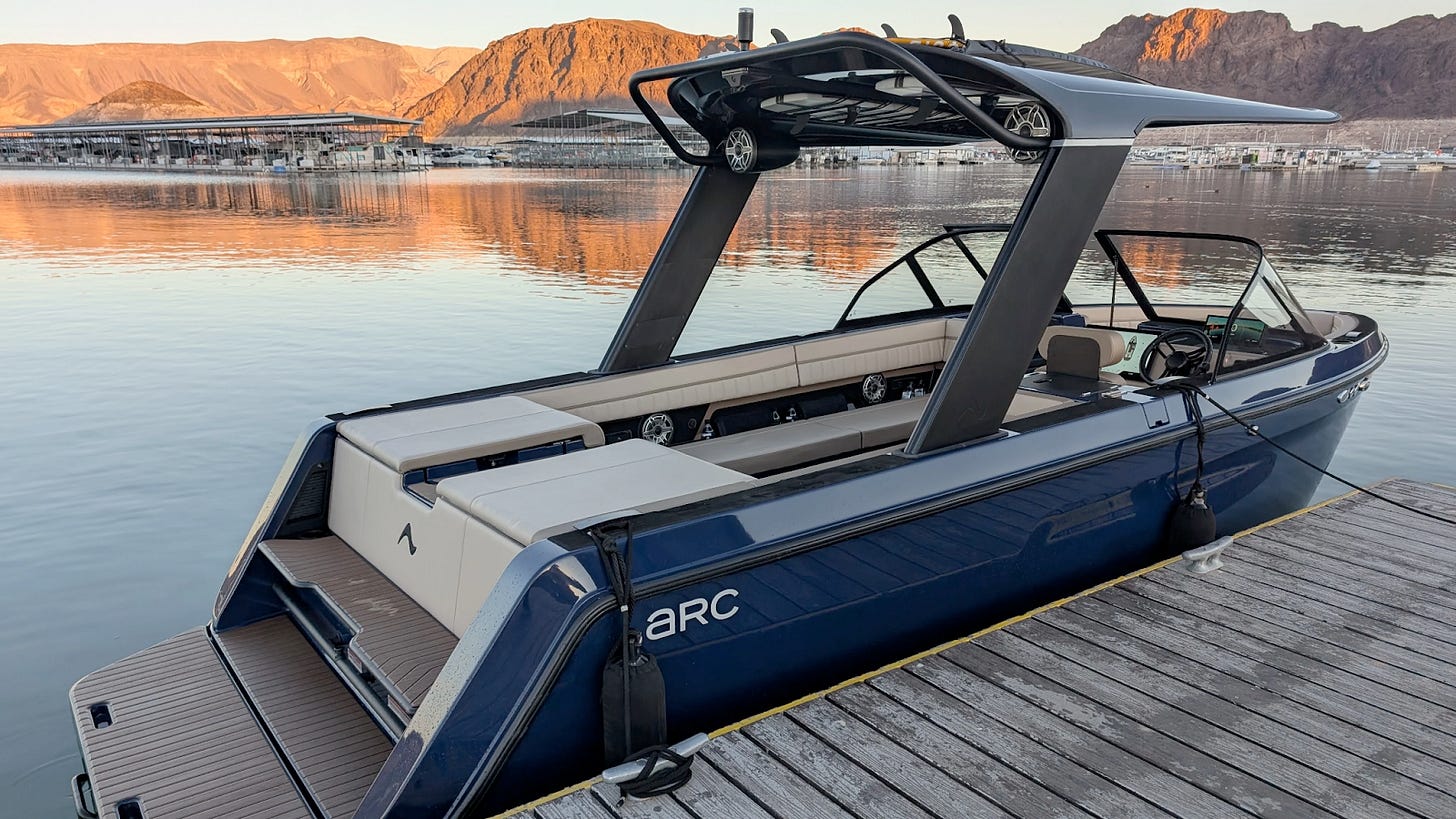
- Arc raised $50M in Series C funding to expand beyond consumer electric sport boats into commercial vessels and defense propulsion systems. The LA-based startup has used its high-end recreational boats to develop and validate its in-house electric powertrain tech, and now plans to apply those systems to hybrid tugboats and fully electric commercial platforms. For commercial customers, Arc designs vessels in partnership with shipyards; for defense, it intends to supply electric propulsion systems directly to primes amidst growing demand. The round was backed by Eclipse, a16z, and Menlo Ventures among others.
- Crusoe is reportedly raising a pre-IPO round to continue scaling its AI-focused data center buildout. The company, which began by using stranded natural gas to power bitcoin mining, now builds and operates vertically integrated energy and compute sites for hyperscale AI workloads. Their model centers on securing generation first, then colocating modular data centers at the source to avoid grid bottlenecks. Additional capital would fund further site development as the company moves closer to a public listing.
- RoboForce raised $52M in new funding, bringing total capital to $67M, to scale deployment of its Titan robot designed for outdoor and industrial environments. Titan is a dual-arm, all-terrain mobile manipulator capable of handling up to 40 kg payloads and is built around five core task primitives (pick, place, press, twist, and connect). The company plans to deploy the system under a service model rather than selling it as capital equipment, targeting applications like solar, mining, and large infrastructure sites. The round was led by YZi Labs.
- Jeff Bezos is in early talks to raise $100B for a fund that would broadly acquire manufacturing companies and use ‘AI’ to drive automation across their operations. The raise is hard to read without factoring in Project Prometheus, the physical AI startup where Bezos recently became co-CEO; the startup builds ‘AI for manufacturing and industrial applications’ and is separately raising up to $6B. The implied playbook: buy manufacturing companies, plug in Prometheus’s technology, extract efficiency.
- Former Uber founder and CEO Travis Kalanick launched Atoms, a robotics venture focused on building a platform for specialized industrial machines, or what he describes as a “wheelbase for robots.” Atoms is folding in CloudKitchens (Kalanick’s ghost-kitchen startup) and is close to acquiring Pronto, a startup developing autonomous systems for mining and industrial sites. The company is targeting automation across food production, mining, and transport.