

Three topics worth your time: lecture notes on the CAM translation layer that bridges models to physical parts, the semiconductor DFM feedback loop behind every chip design, and a novel build of a 4-axis printer that eliminates supports using non-planar print paths.
Interesting Lecture Notes: The CAM Translation Layer
There’s a gap in engineering education that rarely gets named directly: the distance between a finished CAD model and a finished physical part. That same translation layer (toolpaths, fixturing, G-code) is the domain of computer-aided machining (CAM), or the ‘machines making the machines’. From Stanford’s Making Machines for Makers, an introductory set of lecture notes on CAM that covers the full domain from milling machine fundamentals, toolpath generation, and software toolchains.
The early roots of CAM first trace back to a 1952 Scientific American article describing a milling machine that read instructions from punched tape. Simply put, the core idea was that if you can encode part geometry as a sequence of machine instructions, you can separate the act of designing something from the act of making it.
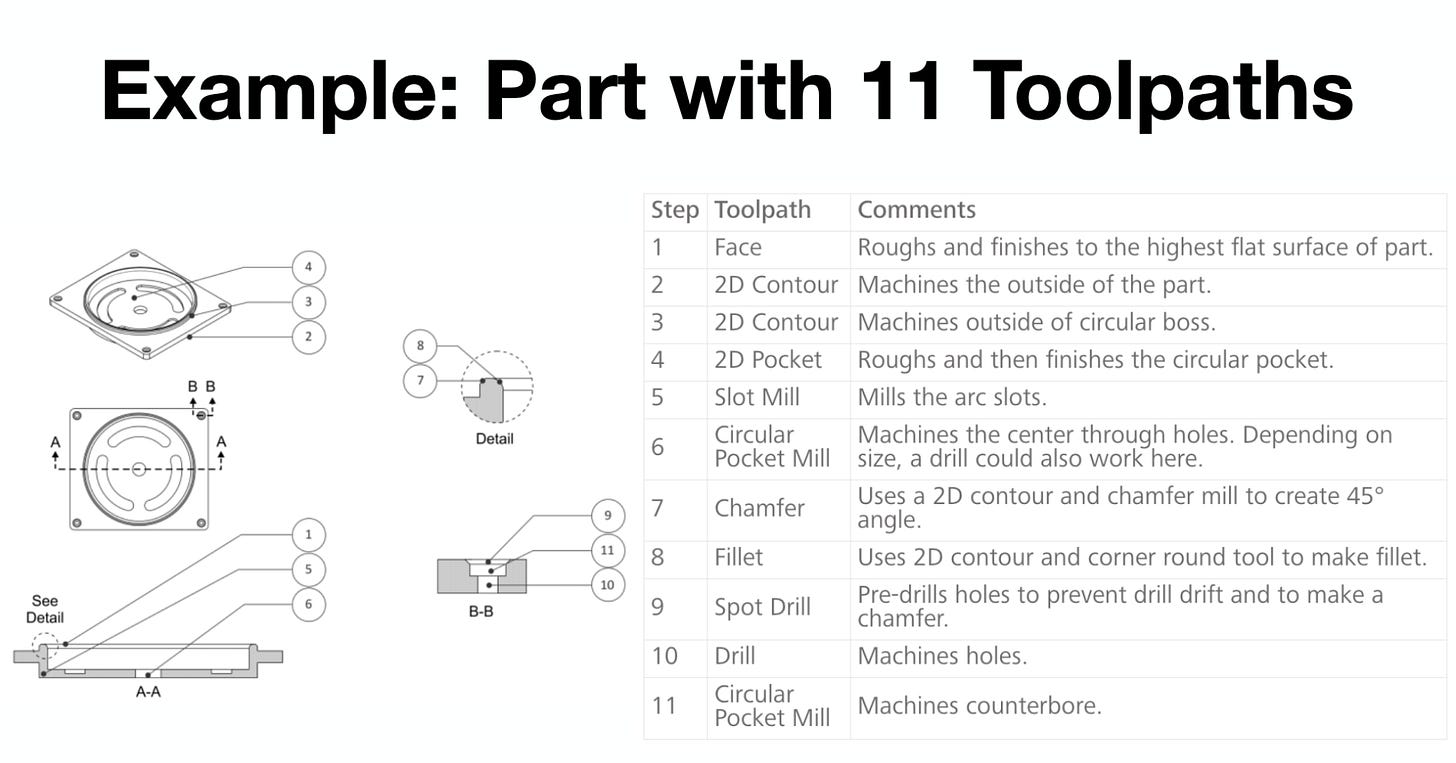
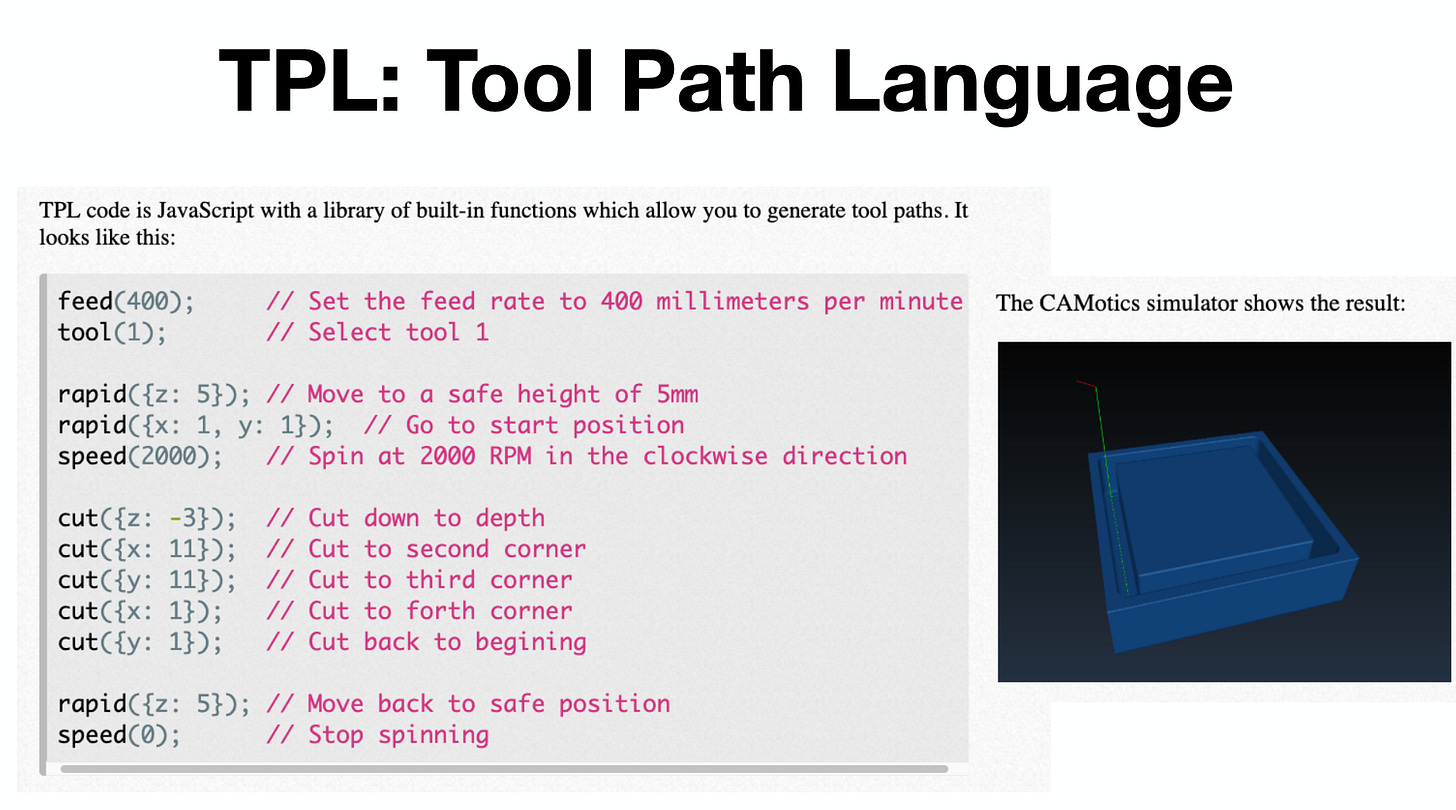
Traditionally, all of this translation work lived with a specialist CAM programmer where the workflow breaks into three layers:
- Toolpath generation: cutter motion derived from geometry (entry/exit moves, collision avoidance, offsets, stepovers)
- G-code: machine instructions encoding that motion (positions, speeds, feeds)
- Machining strategy: choices around tools, sequencing, and workholding
Like most engineering software today, CAM is seeing a wave of AI-enabled tooling from startups like Toolpath and CloudNC that automate the more repetitive parts of process planning and programming.
For a lighter pass, this compilation of CNC operations is worth a few minutes; skip to 4:30 to watch a motorcycle helmet being cut from solid metal.
Mechanical AI Design Tools: Hype, Leverage, and the Parts That Matter

Real engineering workflows, not demos, with:
- Chris Barton, CTO, Drafter
- Jordan Noone, Executive Chairman, Zoo
- Sohrab Haghibhat, CEO, Hestus
Interesting Chart: The Semiconductor Fab Feedback Loop
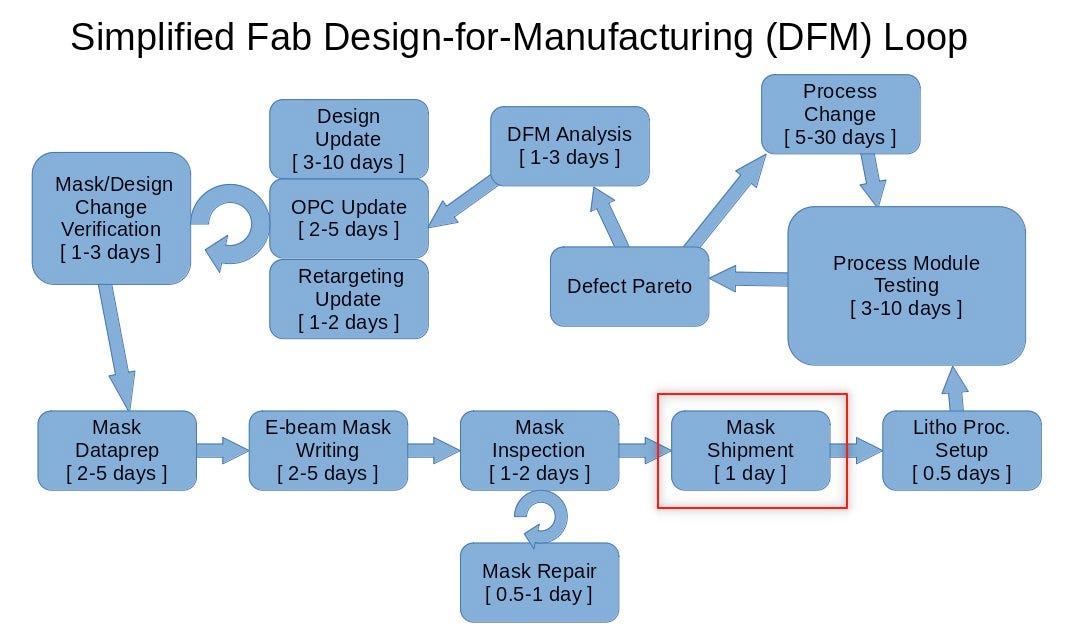
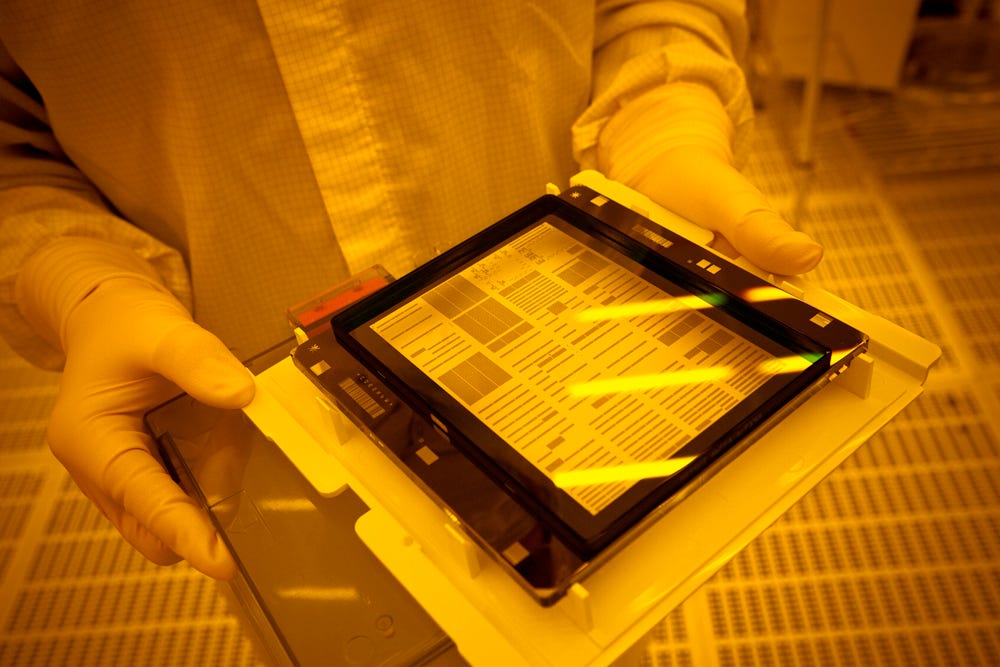
At a high level, the design for manufacturing (DFM) feedback loop in semiconductor fabrication. Turning a chip design into a physical layer on silicon is an iterative process that typically runs for weeks to months, with masks costing $100–200k each. Generate a mask, run it in the fab, inspect the results, identify defects, update the design or mask, and repeat.
Worth noting given the recent Terafab announcement.
Interesting Video: 4-Axis Printing Using Non-Planar Paths
An open-source 4-axis printer that adds a rotational degree of freedom at the toolhead: one linear axis, one rotational axis, and non-planar paths to print overhangs without supports. Full build files linked here.
Manufacturing & Startup News
More leftovers from our weekly research:
- Terafab, a proposed semiconductor fab in Texas jointly run by Tesla and SpaceX to produce custom chips for its own compute stack, comes as demand for custom silicon begins to outpace external supply.
- Doss raised $55M in Series B funding to build an AI-native inventory layer that links physical goods to accounting systems, aiming to keep inventory synced with the accounting ledger.
- NASA is planning to invest roughly $30B over the next decade to build a permanent lunar base, shifting focus toward sustained surface operations and semiannual crewed missions.
- Eternal.ag, a German startup building autonomous greenhouse harvesting robots, raised €8M in funding to scale its tomato harvesting systems and expand across Europe.
- Enigma emerged from stealth with a $5M Air Force contract and ~$2M in funding, aiming to develop an autonomous logistics drone designed to deliver 1,000 lb payloads without runway infrastructure.