A comprehensive repository of 100+ reference startup pitch decks across different industries (climate, robotics, transportation, etc.), rounds, and commentary on what works well and what could be improved. Here are some decks that stood out to us:
Cobot’s $100M Series B Deck (PW: cobot): Develops a hybrid robotic system that combines traditional autonomous mobile robots used in warehouses with the versatility of humanoid robots. Jeff Bezos, who invested in the round, specifically requested an evidence-based narrative shown above.
FiveFlute’s $1.2M Pre-Seed Deck: Pitched as issue-tracking software, and core product today is a continuous design review platform.
Syneroid’s $500k Seed Deck: Consumer pet device that combines the functions of a microchip and a dog collar.
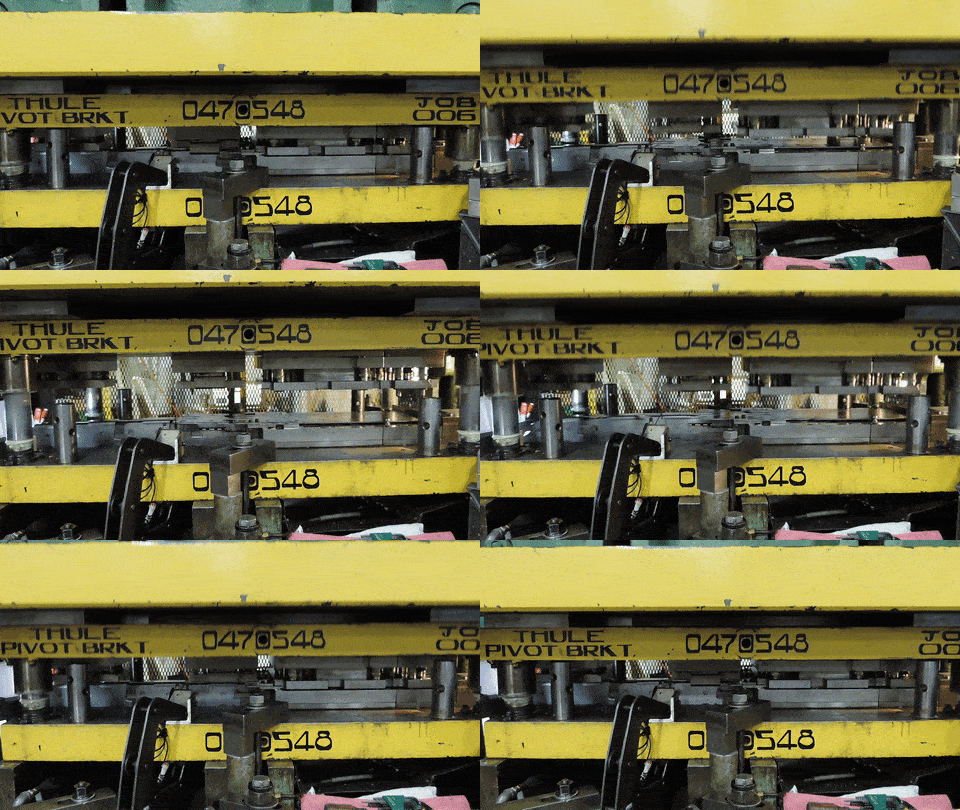
Metal stamping with stage tooling is a popular method for medium to high-volume sheet metal manufacturing. Different dies are used at various stages to form the part, allowing manufacturers to reuse dies across multiple parts. This makes it easier to produce a variety of components with the same equipment. Progressive die stamping, which evolved from stage tooling, uses a single die to form the part in one continuous process. While it’s ideal for high-volume production, it requires a significant upfront investment in tooling.
Simone Giertz, a well-known engineering YouTuber, shares her experience transitioning from making YouTube videos to running a profitable consumer product business. In her video, she discusses the financial aspects of her company, including how she justifies the pricing of products like her foldable coat hangers, which cost $150 for a 12-pack! At first glance, the design involves two pieces of wire-formed metal and a connecting hinge. While $12.50 per hanger is quite high compared to much cheaper alternatives, it’s better rationalized when you account for manufacturing costs, packaging, logistics, and raw materials. A markup of 2-4x is often necessary to cover these expenses and sustain the business.
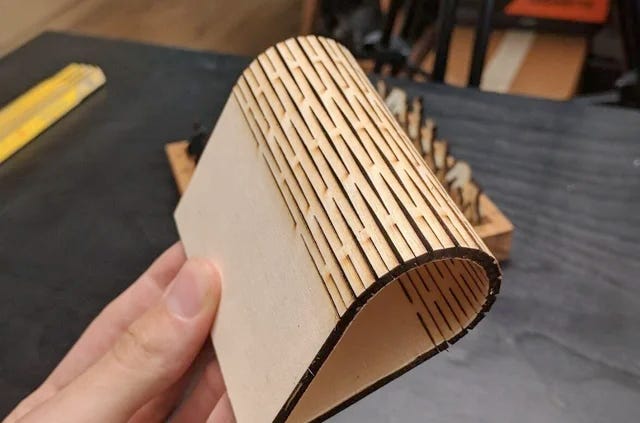
In terms of prototyping, we found neat was her use of laser cutting living hinges in wood, allowing her to experiment with how the product would function when folded for early prototypes!
A deep-dive on copper thickness in PCB design. One of the oddities related to plating has to do with the way the thickness of copper is specified. Copper thickness is specified in ounces, which is based on the weight of 1 sqft of copper (the more copper is plated on the surface, the more it will weigh). Between wires, PCB traces, and copper pallets on a metal-core PCB, understanding the characteristics of the conductors you are using is key.
An old Catia CAD/CAM documentary that goes hard. The video was digitized from a 16mm film reel and shows the optimism held at the time during the first wave of digital manufacturing in the early 80’s. It follows the production line of the Mirage fighter (at that time built by Dassault Aviation, a sister subsidiary of Dassault CAD).
We put together a neat 3D printing cheatsheet on the types of printing (FDM, SLA, SLS, MJF, etc.) and applications of different materials. Download it here!
Startup News 🚀
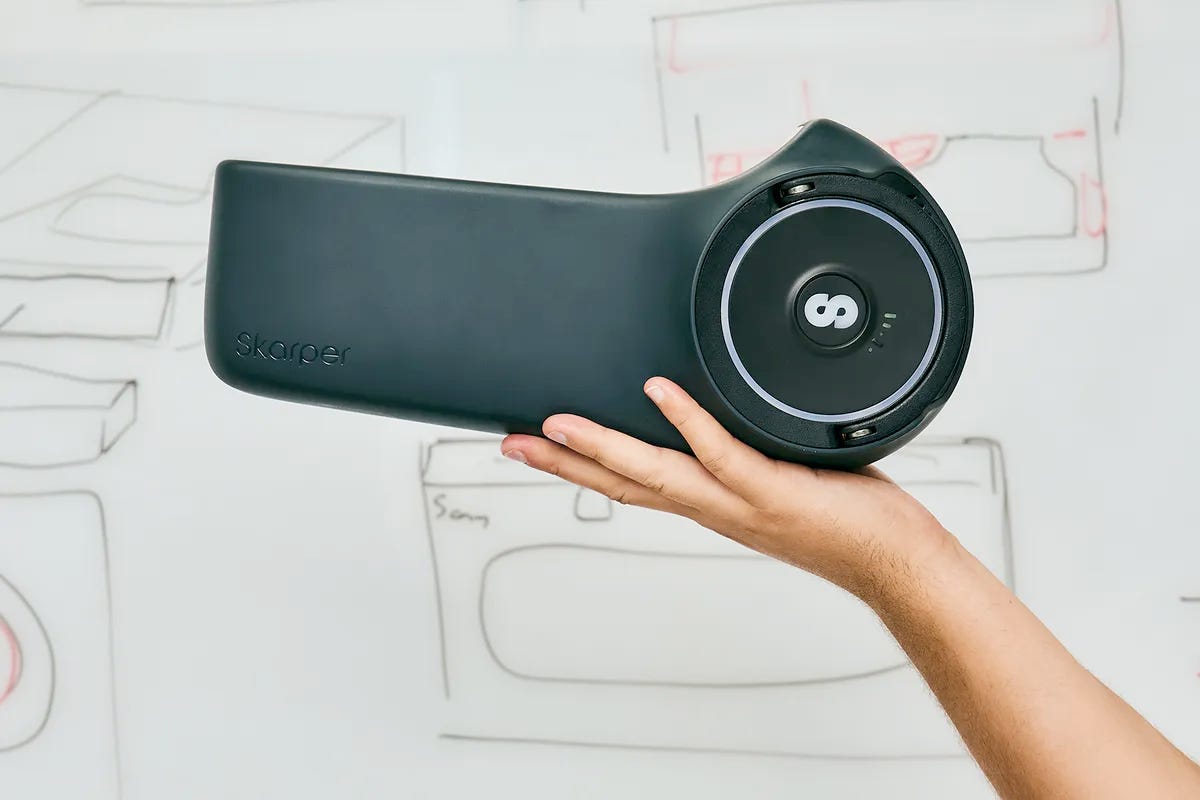
Two early stage rounds out of the e-bike space: Cowboy has raised $5.5M in equity and $1M in debt for their electric bikes widely deployed in Europe. Skarper has raised a similar $5.6M for its pedal to e-bike conversion kit, a detachable system that replaces the rear disc brake rotor with a custom-designed rotor connected to a motor unit, which powers the bike through direct engagement with the rotor.
Midjourney, the startup best known for their AI image-generation models, is officially getting into hardware and looking to hire (see here). While details are light, the company comes from a background of hardware development - Midjourney founder David Holz was the CTO of Leap Motion, and has poached talent from Apple’s Vision Pro Group to work on the new product.
Amazon has hired three of Covariant's co-founders and about a quarter of its staff while also obtaining a non-exclusive license to Covariant’s AI models in a move resembling a "reverse acquihire." Covariant builds AI-powered robotics systems for warehouse automation, and has deployed their platform with companies like healthcare manufacturer McKesson & GNC.
"Reverse acquihires" have become a common strategy among tech giants this year( Microsoft with Inflection AI, Amazon with Adept), though they have increasingly drawn regulatory scrutiny in the M&A space.
Mesa Quantum has raised a $3.7M Series Seed round to develop chip-scale quantum sensors with GPS capabilities. The round has participation from J2 Ventures and SOSV, along with a $1.9M Space Force SBIR grant back in August. The quantum sensors aim to miniaturize the capabilities of GPS satellites and provide alternatives in environments where traditional systems fail like military zones, deep-sea, and other applications/
Enterpoly has opened the world’s very first zinc-ion battery mega factory in Stockholm, Sweden. The factory will have an annual capacity of 100MWh, with a European-based supply chain. Production is expected to start in 2025 with a full ramp-up by 2026.
The zinc-ion batteries developed are intended for large scale or grid-based storage and offer a couple advantages: zinc is far more naturally abundant than lithium, compatible with water for aqueous based electrolytes, and a more cost-effective anode material.