

One quick programming note: we’ve got an upcoming happy hour in SF on Feb 12! We’re trying a new format with tables for companies to show what they’re building, open-mic demos, and a few Warriors tickets raffled among presenters. If you’re working on something and want to show it, email benji@hardwarefyi.com.
Interesting Links
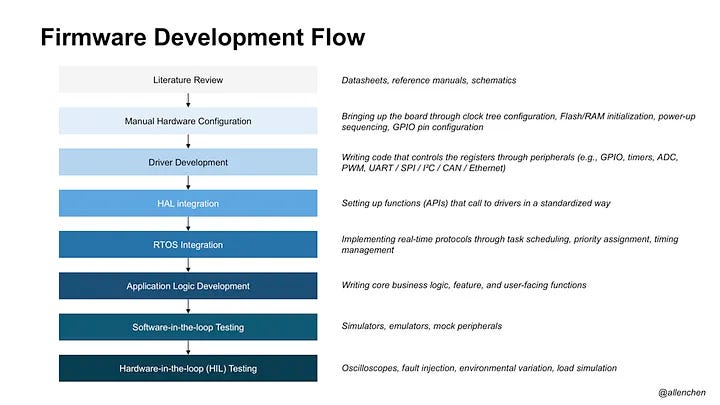
- Most modern software development benefits from abstraction, but firmware operates much closer to the metal, where what works on one MCU rarely transfers cleanly to another. Frontier of Firmware Development explains how this fragmentation forces engineers to spend much of their time in documentation studying hundreds of pages of datasheets, reference manuals, and schematics to correctly configure clocks, pins, and peripherals. A new crop of startups is trying to modernize this stack, including Root Access and BootLoop (CLI layer), Assemble Labs (IDE copilots), and Coherent Labs or Metalware (validation and security). However, there is a one core issue with many AI products in this space: the most valuable firmware knowledge is intentionally locked down for security and IP reasons, and much of the real know-how lives as undocumented, system-specific tribal knowledge discovered through hands-on testing. That reality puts a hard ceiling on how far AI can automate firmware without an engineer firmly in the loop.
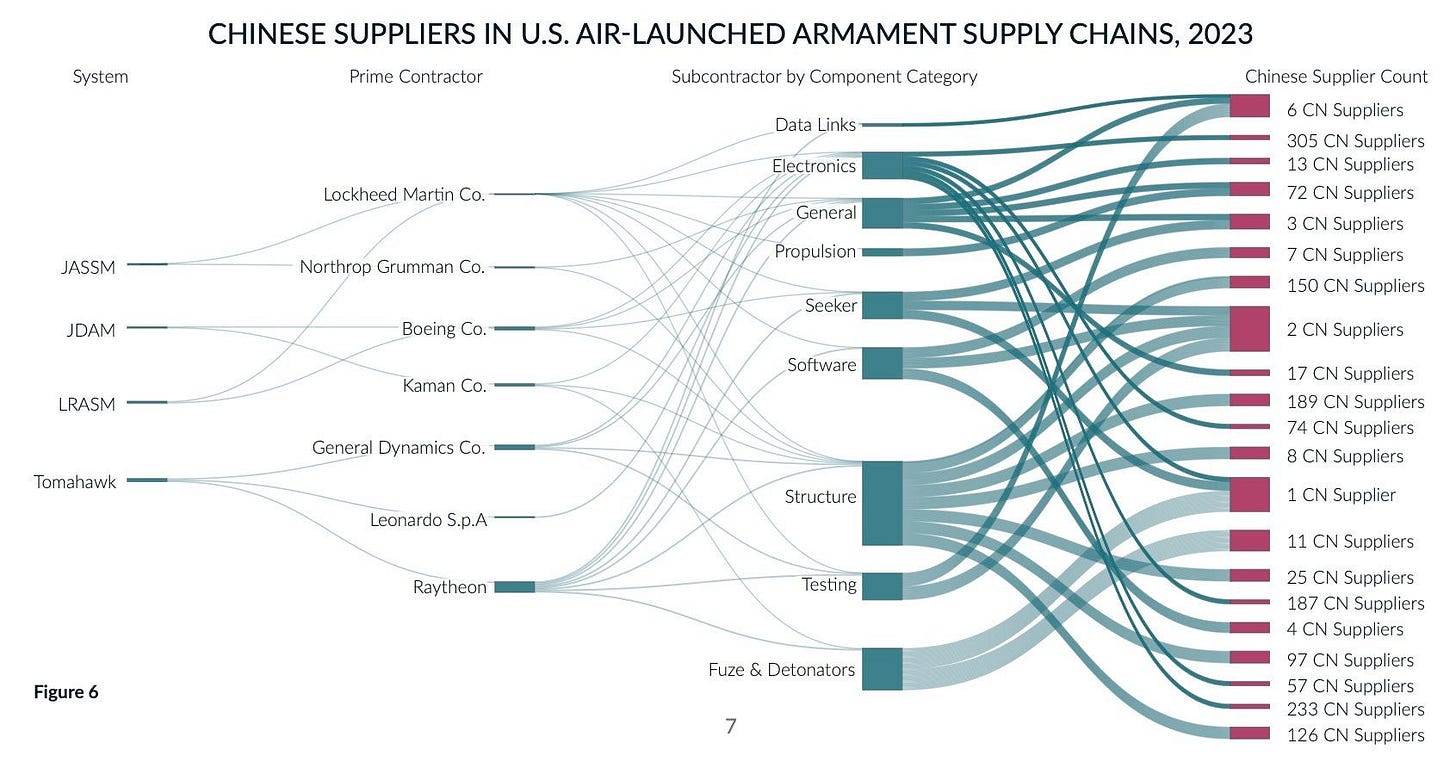
- Govini’s Numbers Matter report offers a sobering analysis on the scale of the U.S. reindustrialization gap: between 2014 and 2022, U.S. dependence on China for electronics in defense supply chains increased by 600%. The paper finds that “with just 25 well-constructed attacks, an adversarial military planner could cripple much of America’s manufacturing apparatus for producing advanced weapons.” In We Are Building the Wrong Factories, Lesley Gao makes a broader point: there is no such thing as a “defense industrial base” separate from the rest of manufacturing. Tooling, metallurgy, sensors, battery cells, and semiconductor wafers form the backbone of all production; the same foundations that support cars, household appliances, and consumer electronics also support missiles and drones.
- Gao argues the U.S. optimized for high-mix, low-volume precision over throughput, at the expense of surge capacity. Analysts warned as early as 2008 (pg. 74-75) that a “low-volume, tailored-requirement production model” is incompatible with “industrial surge capability.” What surprised us most: between 2002 and 2018, the U.S. lost 20% of its machine shops and nearly 45% of its tool-and-die workforce.
- High-mix, low-volume manufacturing describes a model of production where flexibility matters more than scale. In this model, factories are organized around short runs and specialized processes, with costs and lead times driven less by volume and more by setup and supply-chain complexity. A classic example is a machine shop producing many different custom parts in small batches for multiple customers, typically aerospace programs or other precision-driven industries. By contrast, low-mix, high-volume manufacturing looks like an automotive supplier stamping the same door panel with dedicated tooling and tightly optimized production runs. The distinction matters because the two systems reward opposite behaviors: HMLV optimizes for change, and LMHV only works when change is designed out of the system.
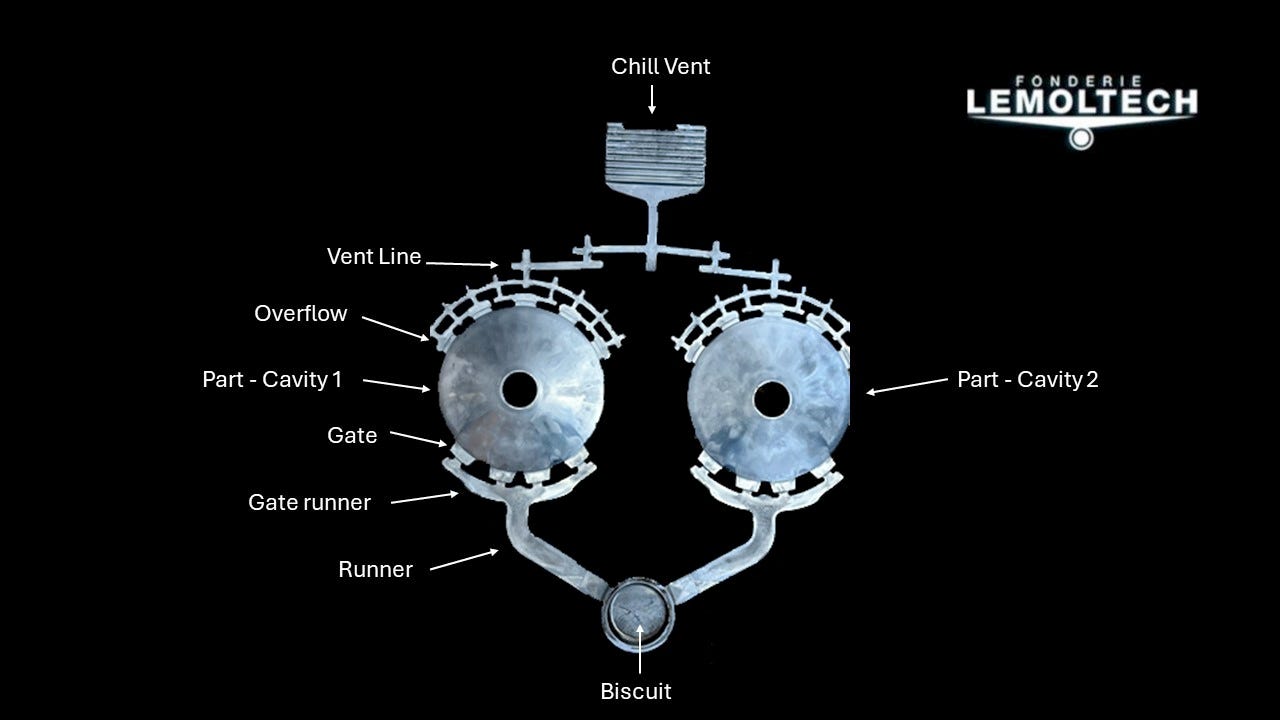
- For anyone spec’ing parts for die casting, Chicago White Metal’s Design and Specification Guide is a solid primer on material selection, wall thickness, draft angles, and cosmetic expectations across zinc, aluminum, and magnesium alloys. Useful as a first-pass design reference for die-cast parts!
- In the wake of OpenAI announcing ads in its free and go ($8/month) tiers, here’s a complete repository of resources for running large language models locally, on-prem. In practice, getting a local LLM running comes down to major four steps: (1) choose an inference runtime—the software layer that actually loads the model into memory and schedules its math onto your CPU/GPU (e.g. Ollama, llama.cpp, vLLM), (2) download an open-weight model that’s been compressed to fit within a system’s memory and bandwidth limits, (3) run it on local CPU/GPU or Apple Silicon, and (4) optionally expose it as a local API for chat, coding, or RAG workflows.
- A couple fun links to round out the week:
- Following the same theme of reindustrialization, a list of common household items made by defense manufacturers. If you can build a toaster, you can build anything.
- If you’ve ever wondered why groceries feel more expensive online, particularly on Instacart, Consumer Reports’ Same Cart, Different Price investigation found the app dynamically priced identical grocery carts up to 23% higher for the same items. Instacart says it has since ended all item price tests on the platform.
Startup News
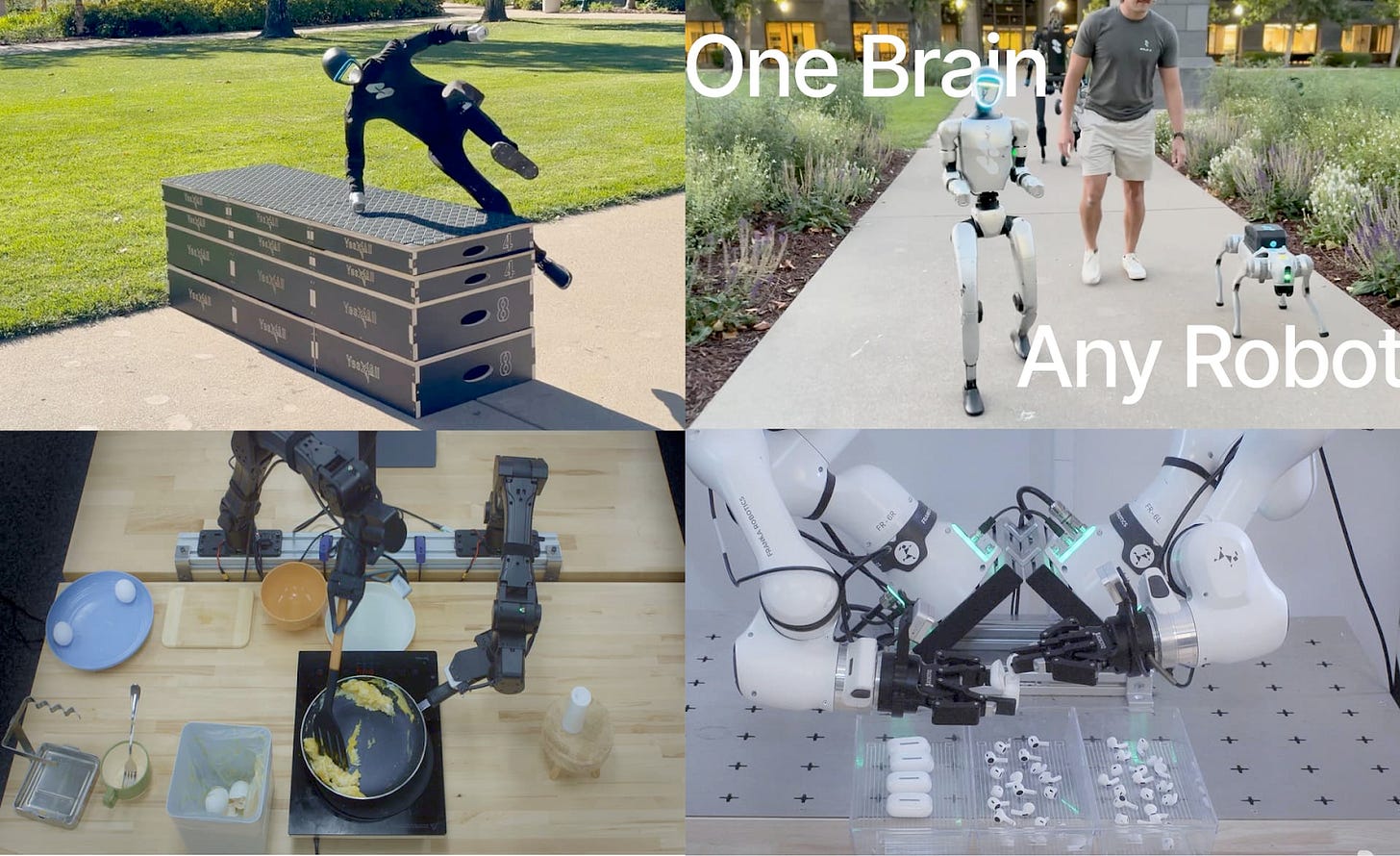
- Skild AI raised $1.4B in a Series C round valuing the company north of $14B to scale its general-purpose “robot brain” software. Founded in 2023, the Pittsburgh-based startup is building an AI system designed to transfer across robot types and environments, trained on large libraries of human video, simulation, and real-world feedback. Skild says it went from zero to tens of millions in revenue in 2025 and is working with more than eight enterprise customers across industrial, service, and humanoid robotics. The round was led by SoftBank with participation from Nvidia, Bezos Expeditions, Macquarie, Samsung, LG, and Salesforce.
- Mytra raised $120M in a Series C round to scale its material-flow automation systems across large warehouses and factory networks. Founded in 2022 by former Tesla Optimus engineering lead Chris Walti, Mytra is building automated storage and retrieval systems that replace fixed conveyors and racking with software-routed material movement. The company focuses on warehouse-native robotic systems designed to automate entire buildings end-to-end, with industrial contracts that start in the tens of millions and expand as deployments scale. The round was led by Avenir Growth.
- MATERIAL raised $7.1M in seed funding to develop a manufacturing platform for conformal, geometry-matched batteries. The company claims its chemistry-agnostic process can 3D-print batteries directly into structural volumes, aiming to eliminate the “dead space” imposed by cylindrical and pouch cells. The company is already working under a $1.25M U.S. Air Force SBIR Phase II contract, targeting >50% gains in pack-level energy density and ~22% weight reduction for small unmanned aerial systems. The round was co-led by Outlander VC and Harpoon Ventures.
- Fleetzero raised a $43M Series A round and opened a new manufacturing and R&D facility in Houston to scale its hybrid and electric marine propulsion systems. The company’s platform is designed for retrofit or new-build ships and combines containerized battery energy storage with hybrid or fully electric drivetrains. The Houston facility will launch with ~300 MWh/year of marine energy storage capacity, with plans to scale to multiple GWh annually as deployments grow. The round was led by Obvious Ventures.
- Mangrove Lithium closed $85M in financing commitments to scale its electrochemical lithium refining process, aimed at building domestic battery-grade lithium production outside of China. The funding includes $65M from Canada Growth Fund, with participation from Breakthrough Energy Ventures and BMW i Ventures, and will support commissioning a 1,000-ton/year demo plant in Delta, British Columbia. The company plans to follow with a larger 20,000-ton/year facility.