

👋 Happy Saturday! This week’s edition covers a practical, zero-to-one guide to starting a machine shop, a chart tracing elemental abundance and why it suddenly matters again, and lecture notes on advanced sensors used in autonomous vehicles.
Interesting Video: Starting a Profitable Machine Shop
This video is a practical look at what it actually takes to start a small machine shop, from someone who’s been doing it over the last two years. There are many ways to arrive at a viable shop, but what’s especially useful here is how accessible this approach is and how well it’s tuned to the current landscape.
His approach is built around small machines that run on standard 120V outlets and starting work through online job marketplaces, instead of relying on captive corporate demand. For context, his shop, run out of a home garage in central Pennsylvania, did $231,768 in top-line revenue last year. (We covered a full Year-1 income breakdown in a prior issue.)
His specific recommendations:
- Start with a Tormach PCNC 440 mill financed on monthly terms (~$300/month) to minimize upfront cash and avoid over-levering early.
- Use Fusion 360 for both CAD/CAM, and learn machining by working through Titans of CNC’s Titan-1M to 10M courses. Each module teaches how to design and program parts of increasing complexity and covers the full range of common milling operations, setups, and part features.
- Get initial work by onboarding as a supplier on online manufacturing marketplaces, then selectively target specific industries and programs.
Also shows how parts get measured and accepted in practice—laser micrometer, granite plate, gauge blocks, and more.
Interesting Chart: The Elements According to Relative Abundance
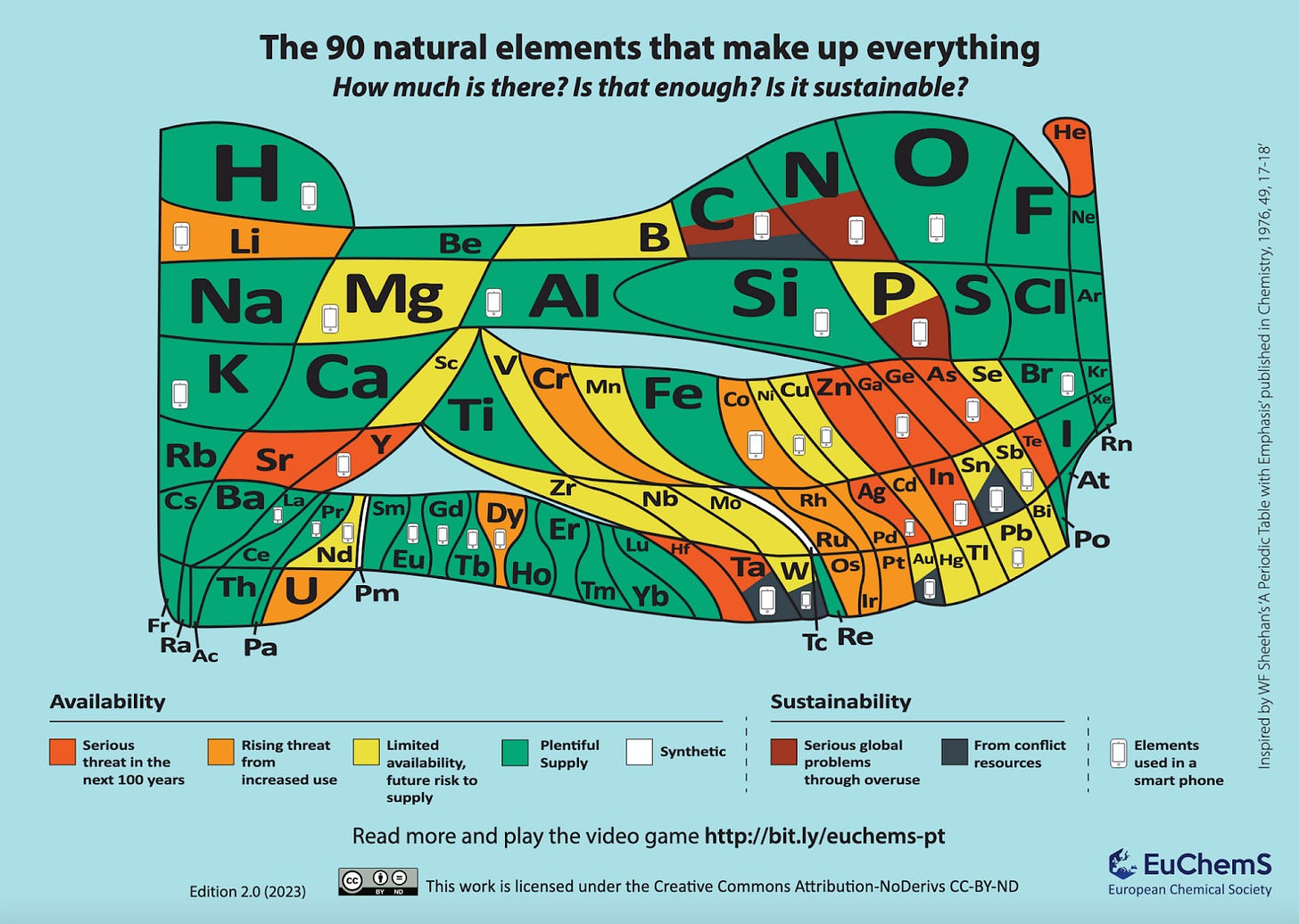
An updated visualization of the natural elements scaled by relative abundance, based on W. F. Sheehan’s original work.
Conversations around rare earths have crept back into the news cycle this year, starting with Amazon buying the first new copper produced in America in over a decade and Meta financing Oklo’s uranium supply for future reactors. The common thread in both: as AI infrastructure scales, ‘software’ companies are pushing vertical integration all the way down to base elements.
Interesting Lecture Notes: Visual Navigation for Autonomous Vehicles
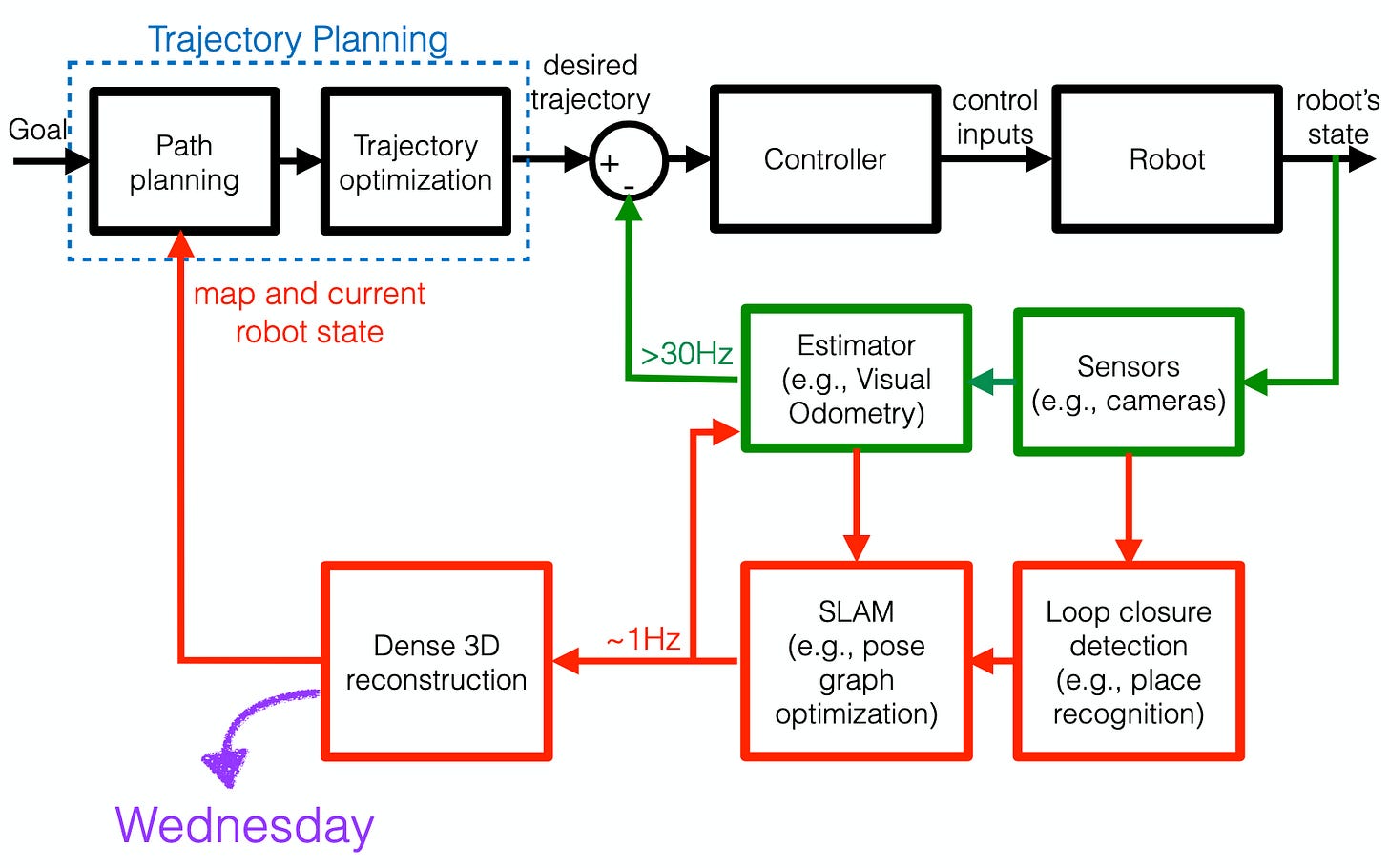
From MIT’s course on visual navigation for autonomous vehicles, lecture notes covering the advanced sensor stacks these systems rely on. Lots of dense material here on advanced sensing (this is a grad-level class), but it’s interesting to see how this is framed from the fundamentals of the classic closed-loop feedback systems taught in undergrad courses, extended into real-world autonomy.
Manufacturing & Startup News
More leftovers from our weekly research:
- Wing, the Alphabet-owned drone delivery company, is expanding its partnership with Walmart to 150 additional stores. Wing’s CBO described its scaling strategy as clustering store launches across as many markets as possible.
- Gru Space, a startup in YCombinator’s W26 batch, emerged from stealth with plans to build lunar surface habitats, culminating in a moon hotel inspired by San Francisco’s Palace of Fine Arts.
- The U.S. Army awarded ICON a $62.8M production contract to 3D print ten training barracks at Fort Bliss in West Texas. The award follows a 2025 prototype build and represents the Army’s largest use of 3D-printed construction to date.
- Aule Space raised a $2M pre-seed round to develop on-orbit “jetpack” spacecraft designed to dock with GEO satellites and extend their operational life by up to six years.
- And to round out the issue, TechCrunch has a solid breakdown of India’s startup ecosystem in 2025, showing $11B raised as capital shifts toward early-stage and application-led companies.