

Topics worth your time this issue: a deep dive into PCB design curriculum every engineer should read, why the mid-band spectrum is the most fought-over real estate in wireless, CNC machining centers available in custom pink, and energy storage systems built from second-life EV packs.
Interesting Lecture Notes: The Art & Science of PCB Design
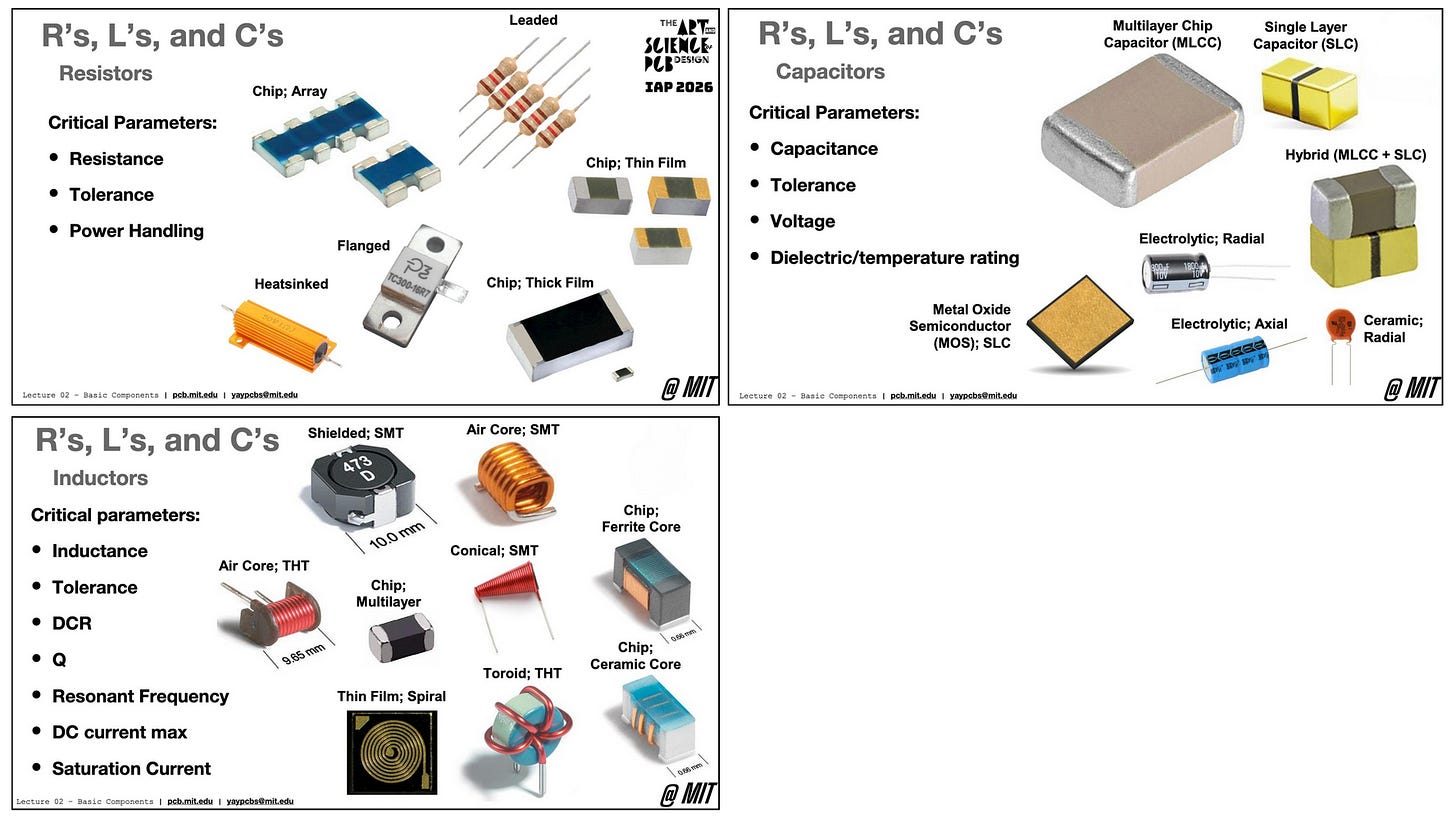
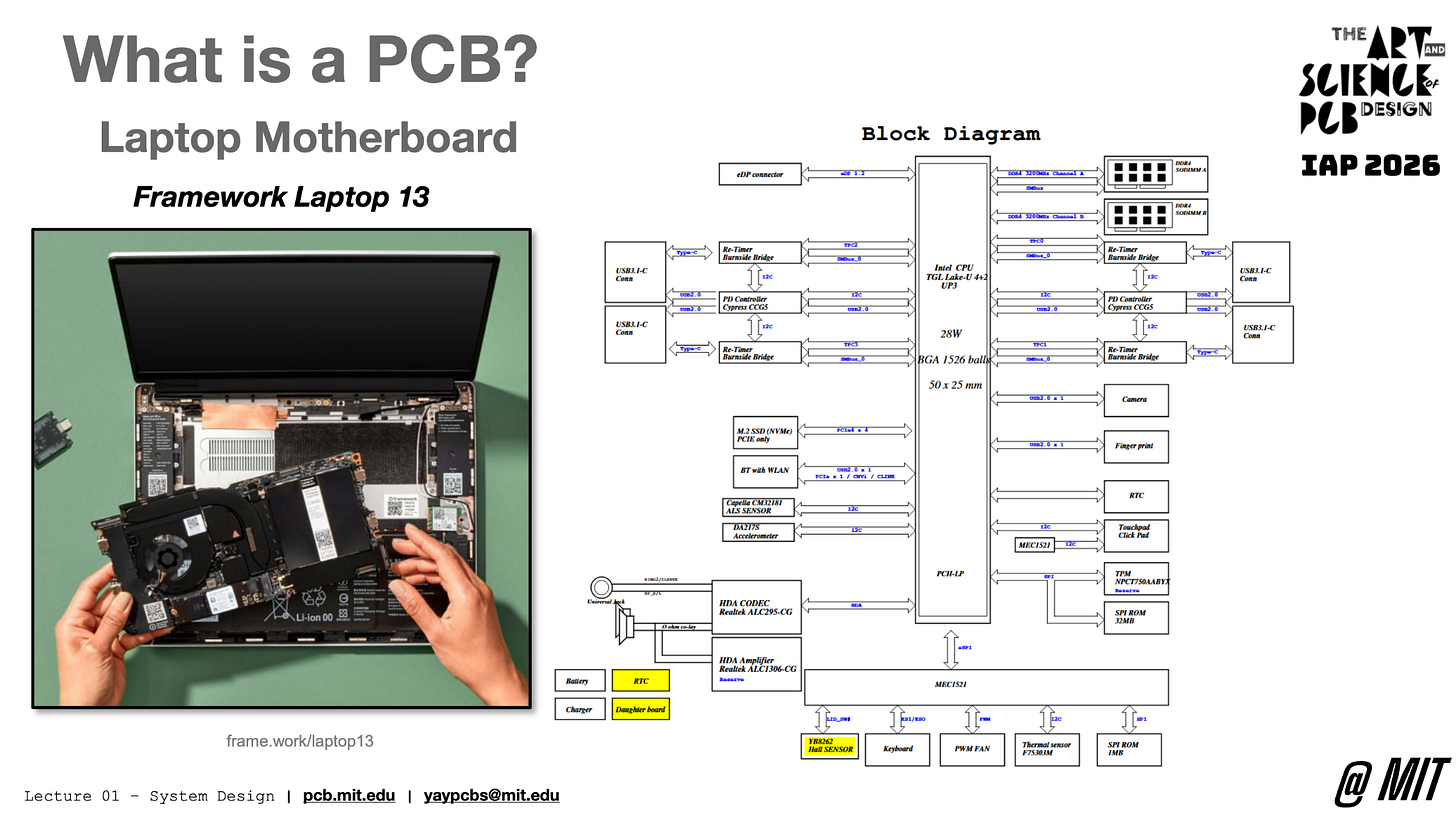
One of our favorite finds in recent memory: The Art & Science of PCB Design should be mandatory reading for electrical engineers — or really all engineers who interface with hardware at any level. The course comes out of MIT’s open-curriculum period where students step outside normal coursework for four weeks, and the resulting material tends to be more direct and applied than anything in a standard syllabus.
Electrical engineering is a broad field, with electronics engineering being the branch that maps to most of what we cover. The course runs the full discovery arc of what an engineer should learn when designing a board: basic components, electrical topologies, schematic capture, layout at increasing complexity (intro, high power, high speed), through to fabrication, assembly, and debug. Standout lectures include their notes on basic components which is really about understanding how ideal circuit elements from Circuits I/II translate into real parts, reading datasheets, and specifying components for a board.
Not to editorialize on academic grievances, but the University of Waterloo is worth naming here as an example of an engineering curriculum that strikes a direct balance between industry and academic framing. Students work through around 6 co-op terms that add up to two years of industry experience woven into the degree (most graduate in five years minimum); it does beg the question of why more programs can’t close the gap.
Interesting Chart: U.S. Radio Frequency Allocations
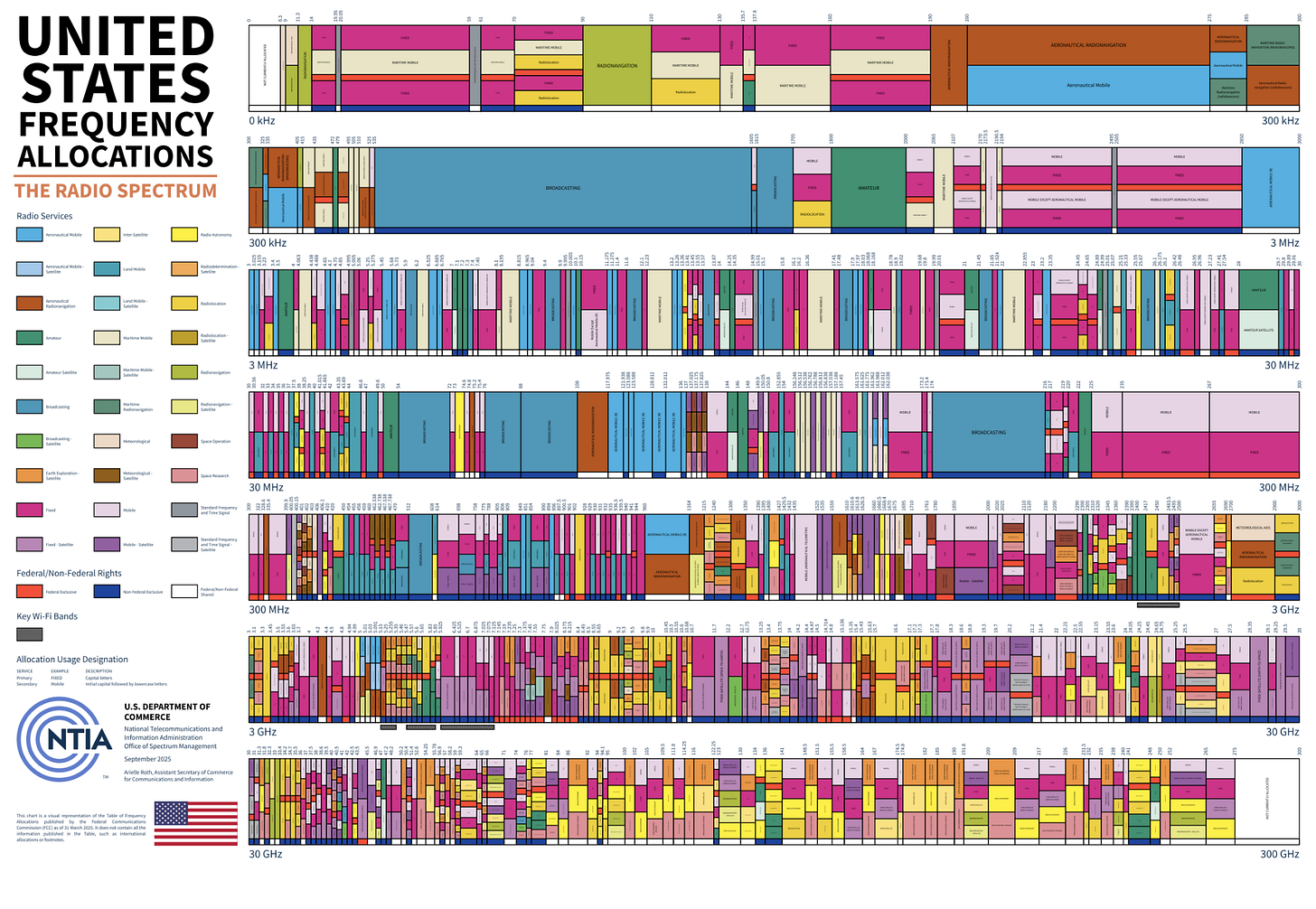
At a high level, a zoning map for the electromagnetic spectrum with every frequency band from 3 kHz to 300 GHz categorized among the 30 different radio services, each subdivided further into hundreds of sub-bands where the legal boundaries live.
Per Aspera has a great post on why the mid-band spectrum is the most fought-over real estate in wireless (5G, military radar, and aviation all operate in this band; AT&T and Verizon spent $94B securing licenses in 2021), and how whoever sets the global frequency standard ends up setting the hardware supply chain.
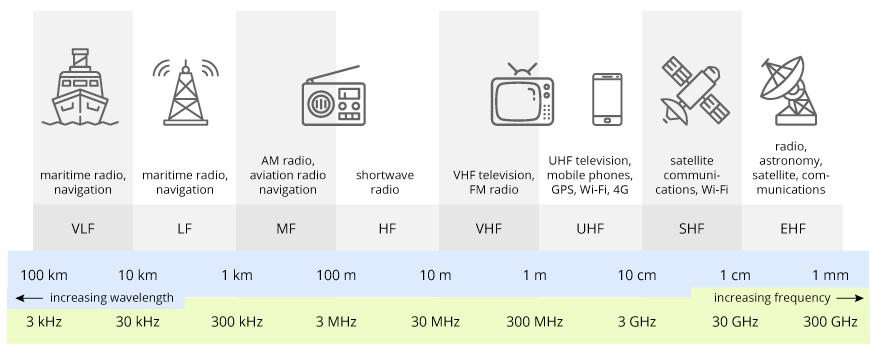
Low frequencies propagate far and penetrate obstacles but require large antennas (AM towers at 50–150 m), mid-band is the practical sweet spot (FM, WiFi, Bluetooth), and high frequencies deliver bandwidth at the cost of range (mmWave).
More From Around the Web
Things worth reading that didn’t fit anywhere else this week:
- Allbirds, the once popular shoe brand, is now making a hard pivot to AI compute in an attempt to save the company’s stock.
- A ‘one-piece drawer release catch’ mechanism using a molded flexure.
- Shane Witten is back with part two of robot golf vs. progressively harder holes. The engineering is genuinely insane, and the builds keep getting more elaborate.
- Brother can ship CNC machining centers in custom paint, including colors like pink.

Manufacturing & Startup News
More leftovers from our weekly research:
- Monarch Tractor’s assets were acquired by Caterpillar after dealer lawsuits, layoffs, and the loss of Foxconn as its manufacturing partner.
- Partcl raised $5M in new funding to build GPU-accelerated EDA tools aimed at reducing tapeout timelines.
- Hertha Metals is raising a $100M Series A to scale low-carbon steel and high-purity iron production, tied to the broader push to build domestic rare-earth magnet supply chains.
- Skild AI acquired Zebra Technologies’ robotics division (Fetch Robotics) to layer its foundational model on top of Zebra’s warehouse orchestration software.
- Rivian and Redwood Materials are deploying a 10 MWh battery storage system at Rivian’s Illinois plant using second-life EV packs to cut peak energy costs and reduce grid load.