

👋 Happy Saturday! This weekend’s highlights include a recap of CES 2025, flow schematic diagram of the Raptor 3 Engine, and a short video on what electronic waveforms sound like.
CES 2025 Recap

Did you know CES started in 1967 as a humble showcase of transistor radios and TVs? It was actually a spin-off from the Chicago Music Show, which focused on audio gear like vinyl record players and speaker systems.
Fast forward a few decades, and the trade show evolved from a niche event to an exhibition that reflects the full arc of consumer tech—personal computers, smartphones, self-driving cars, smart home devices, and more. Each January, companies gather in Las Vegas to unveil their latest products—some that make it to commercial markets, others speculative, and many destined to vanish without a trace.
Fun fact: the conference is spread across 2.5 million sq. feet of floor space (equal to ~38 football fields), with over 4,500 exhibitors and 140k+ attendees this year!
Here’s a review of products we found interesting, both the good and bad:
- Hypershell, a Shanghai based exoskeleton startup unveiled its X Series PowerSuit. The exoskeleton weighs 2.4 kg, provides 800W of assistive power, and is stated to increase lower limb strength by 40% and reduce exertion by 30%. The company was incubated by MiraclePlus, which evolved from Y Combinator’s China arm into one of Asia’s largest independent startup accelerators after shutting down in 2019 amid the China-US trade war.
- Our take: Powered exoskeletons still seem to be searching for product-market fit. Most traction is in military and medical applications as seen through Roam Robotics’ product roadmap, but consumer markets remain niche. A recent entrant is Skip, a company developing a hiking-focused exoskeleton—part robot, part technical pants—dubbed an "ebike for hiking," in partnership with Arc'teryx.

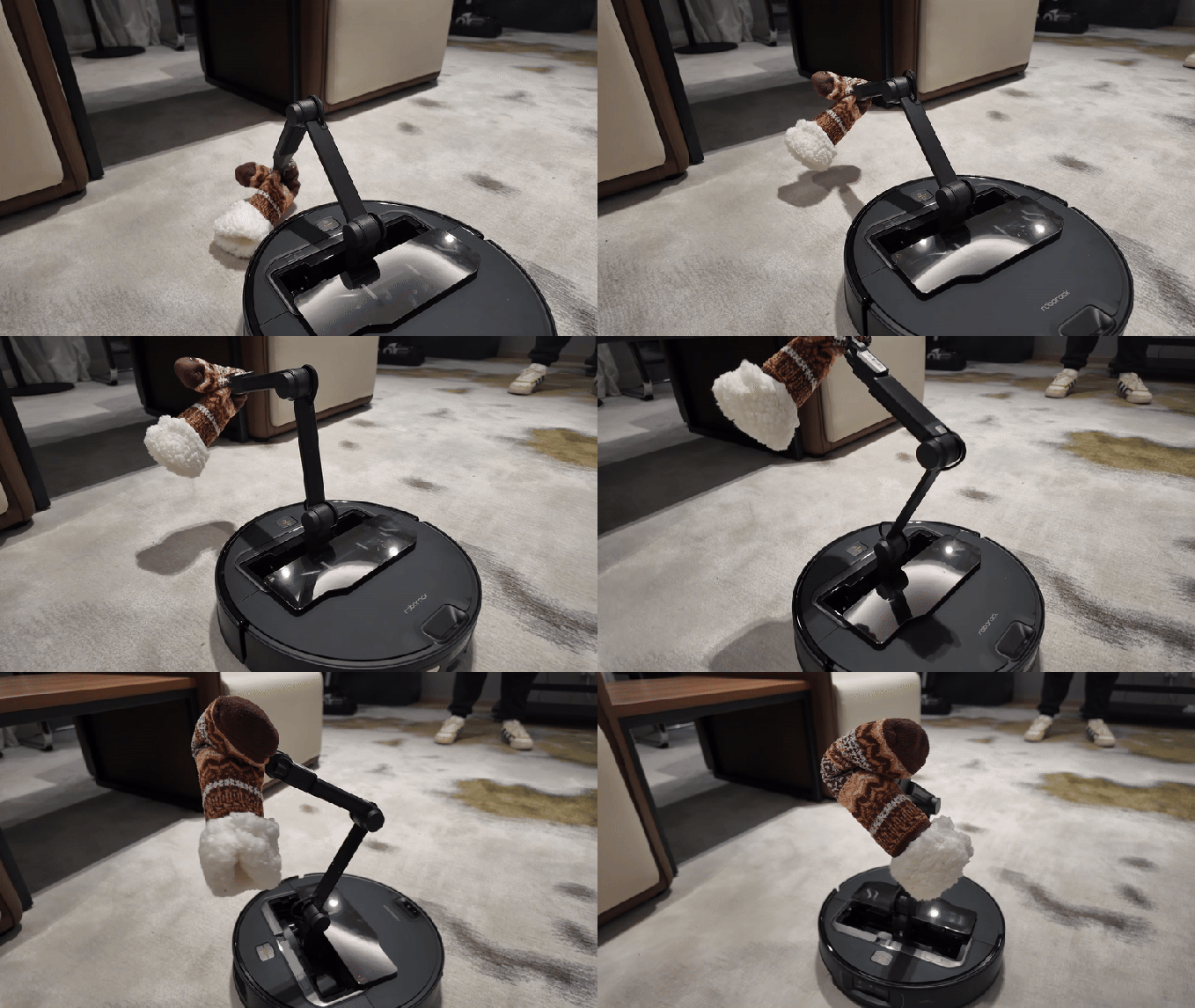
- Roborock, a Beijing based smart home cleaning company, announced the Saros Z70: a robot vacuum with a foldable 5-axis arm used to clear small obstructions up to 300 grams (socks, sandals, etc.). Pricing has not yet been set, but it’s expected to exceed $1,000 with mass production slated for summer 2025.
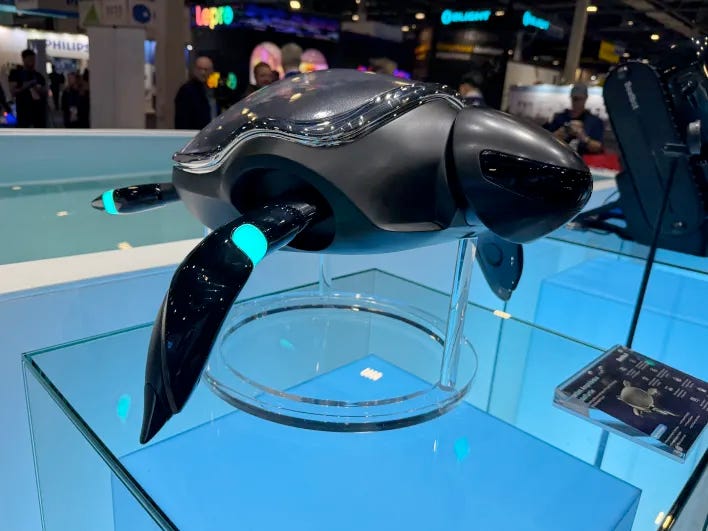
- Beatbot, a company that makes robotic pool cleaners, showed off a conceptual design for a robotic turtle drone for marine monitoring.
- iFixit has a list of Worst in Show Awards for 2025 that spotlight the most troubling trends in tech. Our favorite piece of advice found in the comments: If an appliance does just one thing, get the least complicated version of it, preferably with durable components.
Interesting Chart: Raptor 3 Engine Flow Schematic
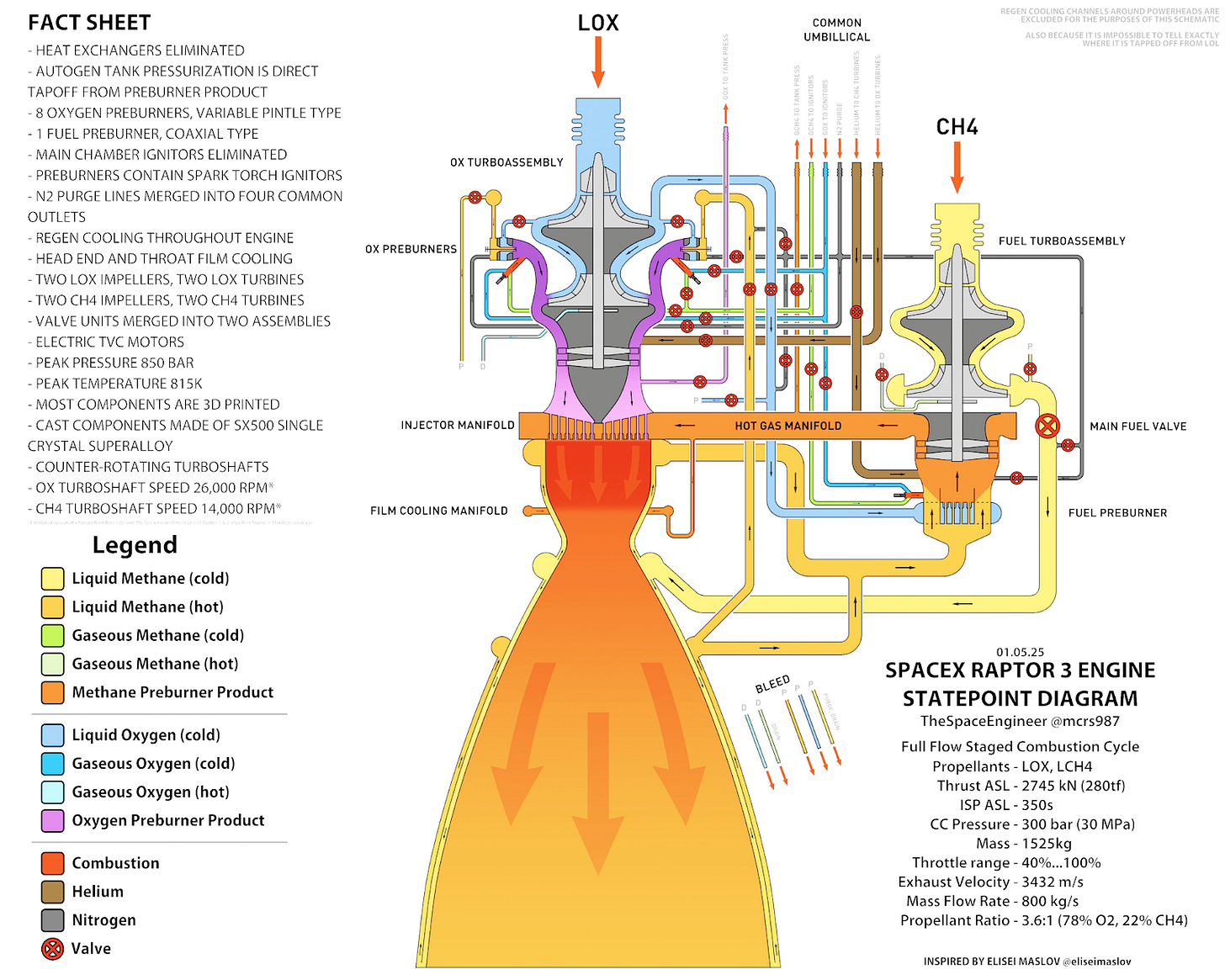
While post-mortems wrap up on the most recent Starship launch, here’s a deep dive from TheSpaceEngineer breaking down the flow schematic of the re-designed Raptor 3 engine.
A crude simplification of the process: the engine uses a full-flow staged combustion cycle, where methane and liquid oxygen pass through separate pre burners to drive the turbopumps before fully combusting in the main chamber.
Interesting Video: What Electronic Waveforms Sound Like 🔊
Quite literally, give it a listen!
Manufacturing & Startup News
More leftovers from our weekly research into hardware startups and manufacturing news:
- Germany achieved a significant milestone in 2024, with renewable energy sources accounting for 62.7% of the country's net public electricity generation. Wind accounted for 136.4 TWh (33%), and solar hit a record 72.2 TWh. Since 1990, CO2 emissions from electricity have fallen by 58%.
- Serve Robotics, an autonomous sidewalk delivery company backed by NVIDIA and Uber, has raised $80M in additional funding to scale its fleet from 100 to 2,000 robots by the end of 2025. Total funding is now $167M in the past 12 months and extending the company’s runway through 2026.
- Japanese startup Interstellar Technologies has received a $44 million investment from Woven by Toyota to scale rocket and satellite manufacturing. The goal is to build a satellite launch and communications business similar to SpaceX and Starlink.