

Interesting Links 🏭
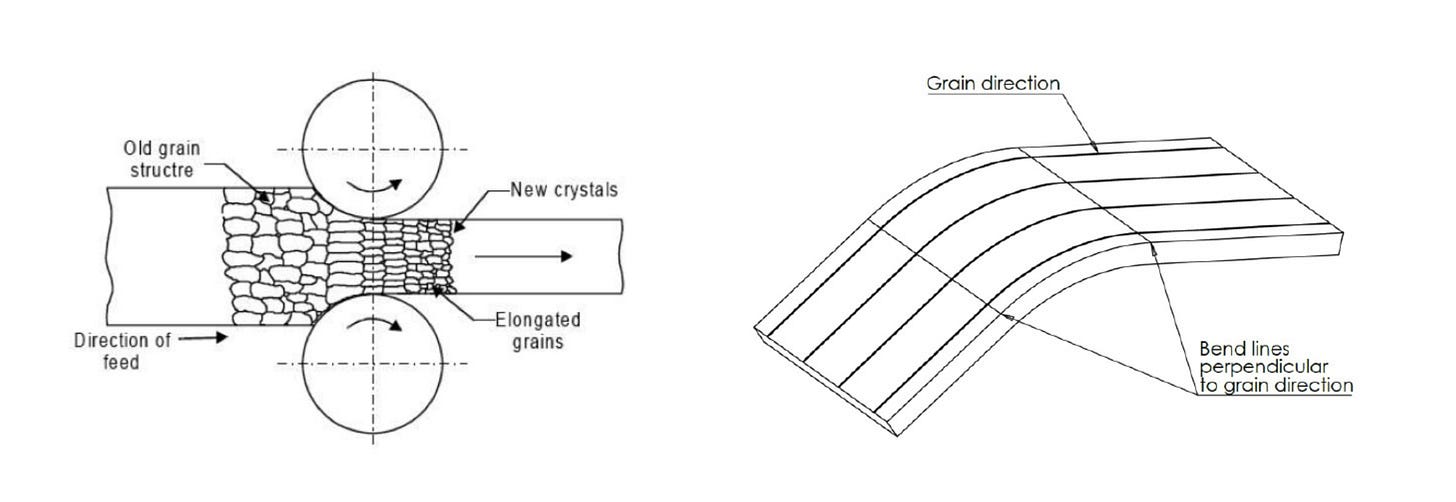
- If you’re working with sheet metal for high-structural applications, think about grain direction before planning your next bend. Metal is made up of tiny crystalline structures called grains, each formed from a specific arrangement of atoms—like body-centered cubic (BCC), face-centered cubic (FCC), or hexagonal close-packed (HCP). These grains grow independently during solidification, and where they meet, their crystal structures don’t align perfectly and create weaker regions called grain boundaries. Bending perpendicular to the grain direction spreads stress through the stronger grains (ordered, crystalline structure), while bending parallel concentrates stress along the weaker boundaries (disordered arrangement), increasing the risk of cracks. As a general rule, the grain line must run perpendicular to the bend to avoid the potential for cracking or fracture.
- A written tutorial on using Altium Designer 25 for high-speed digital PCB design. A couple design tips we learned:
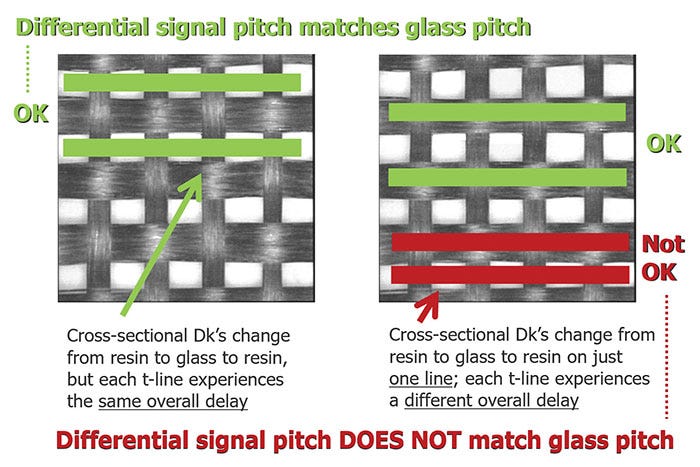
- For signals running at 8Gbps+ on high-speed compute applications, designers employ wavy routing and curved corners to mitigate fiber weave effects, where variations in dielectric constants between the glass fibers and resin in the PCB substrate cause uneven signal propagation. This effect leads to skew (timing differences between related signals) and degraded signal integrity. Learn more here.
- Teardrop vias are common in PCB fabrication where they strengthen trace-to-pad connections (better reliability) and compensate for drill misalignment (cheaper).

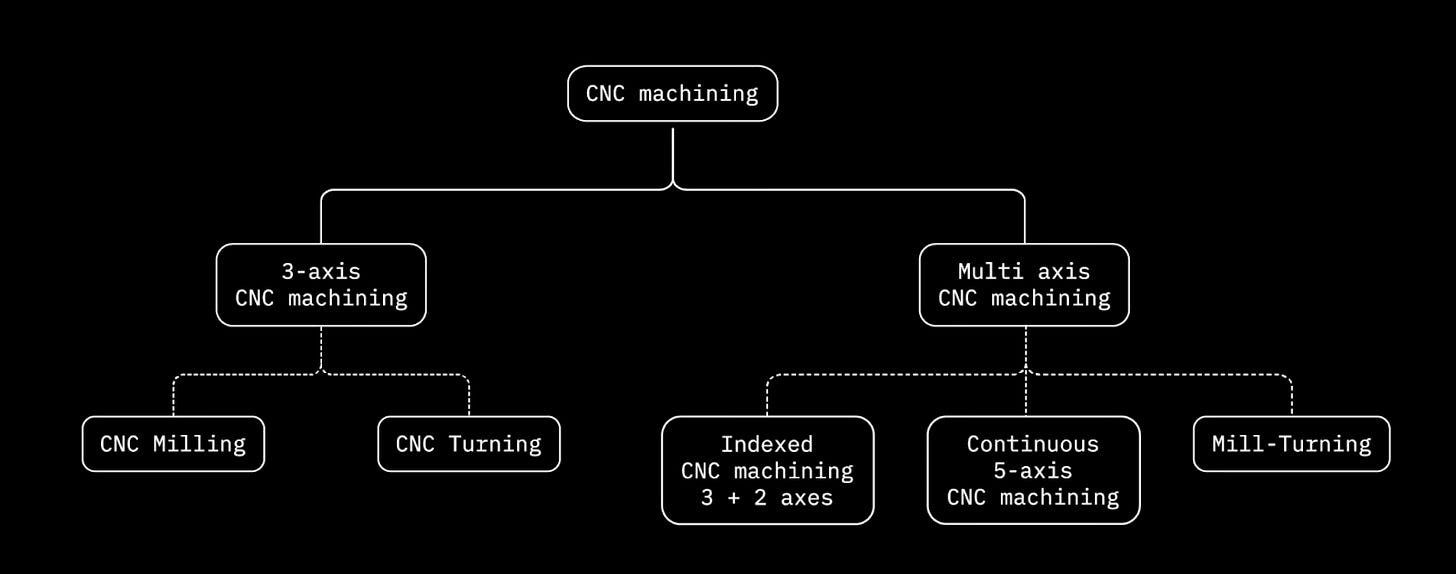
- Follow along an advanced machining course from MIT for free! Randall Briggs has been publishing lectures from his ongoing course that allows anyone in the world to ‘sit’ the course virtually. This week, his second lecture of the semester explored the evolution of machining—from custom single-purpose machines to standardized CNC systems—key material properties, and a tour of a machine shop that highlighted its CNC machines and typical workflow for tool and material management.
- The best way to learn? Work with your hands and “touch metal.” For those starting at home, he suggests a $270 CNC router from Amazon.
- The University of Michigan's Visual Encyclopedia of Chemical Engineering Equipment catalogs over 100 types of machinery used in chemical processes with clear photos and concise explanations. One of its strengths is breaking down the pros and cons of equipment subtypes, like how plate and frame heat exchangers are common in food processing—think tomato sauce processing or raw milk cooling—because they’re easy to clean (ideal for high sanitation applications).
- The BREST-OD-300 is the first lead-cooled fast neutron reactor, being developed by Rosatom in Seversk, Russia. This 300 MWe reactor uses mixed uranium-plutonium nitride (MNUP) fuel which is produced from depleted uranium sources. Lead is used in the primary coolant loop to provide high thermal inertia and operates at near-atmospheric pressure with an inlet temp of 420°C & outlet temp of 535°C. BREST-OD-300 can achieve complete breeding of fissionable materials in the core allowing it to reuse waste fuels.
- ‘Fuel breeding’ is when new fissile materials are produced within the core as it operates.
- Lead is definitely a surprising coolant material! Two good reasons why: A high boiling point prevents loss of coolant accidents, and lead does not interact violently with water or air if the primary circuit is breached.
- Some fun facts and machinery for the week:
- If you're a US citizen or green card holder, even income earned in outer space gets taxed.
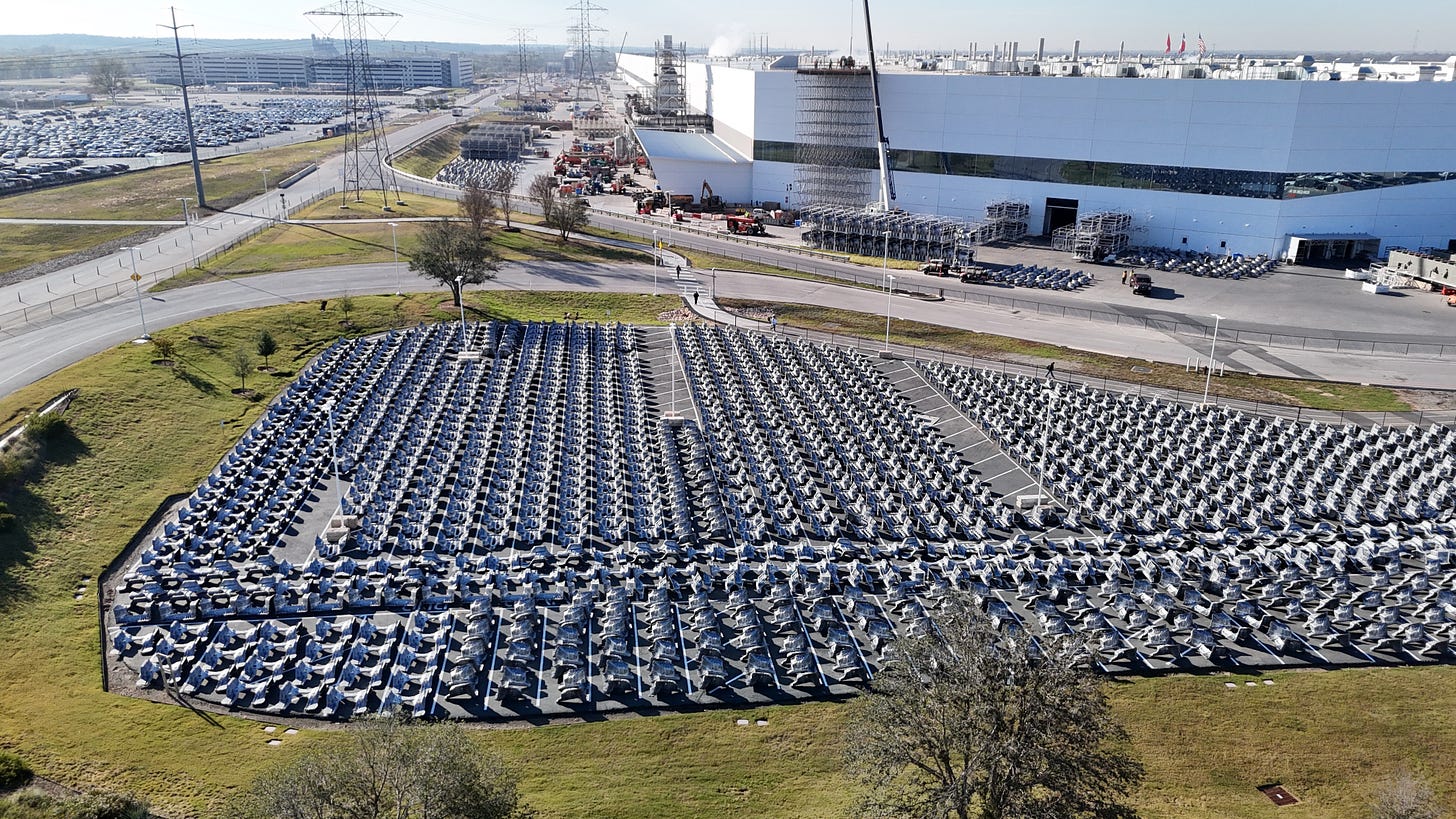
- From a drone enthusiast documenting the construction of Tesla’s Giga Texas factory: 1000’s of cast parts for the Cybertruck scattered across the north and east lots. The factory is the second largest factory in the US, and the second largest building in the world by volume.
Workshop: Prototype to Profit 🧰
Want to learn what it takes to build hardware in the real world? Join our live workshop on February 5th with Hardware Velocity to explore the process of defining product requirements, best practices for developing prototypes, and scaling to production—featuring insights from executives at Google, Apple, Razer, and more! Register here.
Startup News 🚀
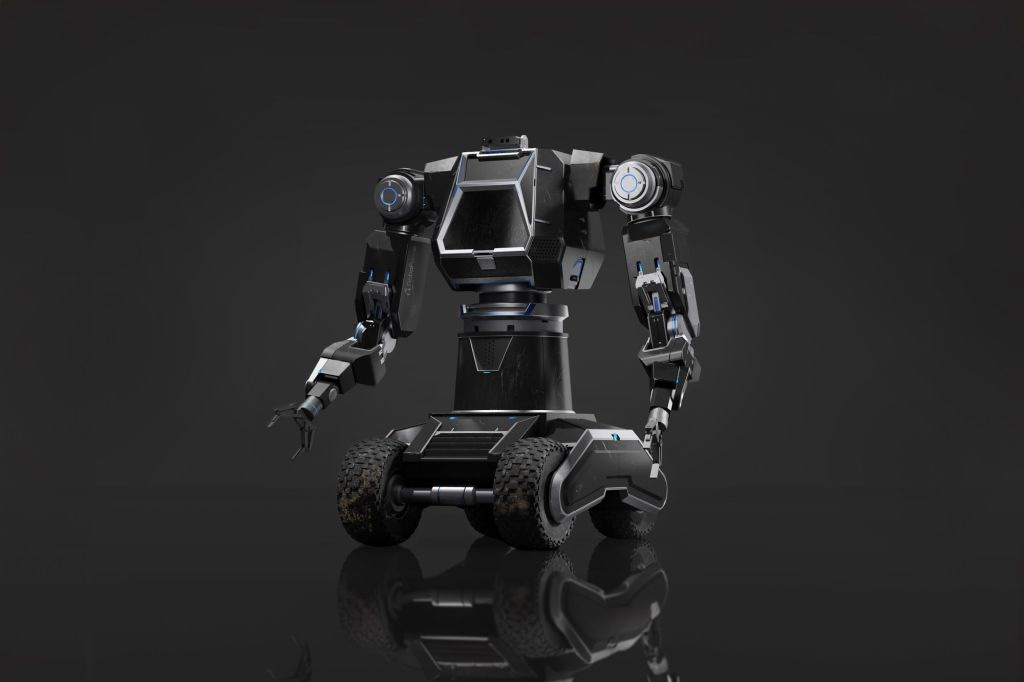
- RoboForce has emerged from stealth and raised $10 million in seed funding for a 1.5-meter-tall robot capable of performing tedious, force-intensive tasks like solar panel installation. The company’s robot can achieve 1mm accuracy in fine motor movements and use a spatial AI copilot system, and aims to address critical labor shortages in harsh and hazardous work environments. Notable investors include the Nobel Laureate Myron Scholes, and Carnegie Mellon University.
- Alta Resource Technologies has raised a $5.1M Seed round to recover rare earth metals from electronic waste. Their process allows for the extraction of metals like neodymium, praseodymium, and cerium—key materials for high-end electronics. With the US relying on a single rare earth mine in California, the company's work could allow a small amount of rare earth metals to be produced domestically.
- FIRE1, a Dublin-based medtech company, has raised $120 million in Series B funding led by Polaris Partners and Elevage Medical Technologies. The funding will support the rollout of Norm for clinical trials in the US, an implantable sensor placed inside the heart that provides remote monitoring of fluid volume.
- Altilium has raised $5M in a Series B round from Marubeni Corporation to build the UK’s largest EV battery recycling facility in Teesside. Their goal: a closed-loop supply chain for low-carbon cathode materials. This follows a $21M Series A last year.