

Topics worth your time this issue: a homemade thermoformer and the niche businesses built around simple plastic parts, an early look at The Bot Co.'s prototype hiding inside an Airbnb lawsuit, free home cleanings in exchange for egocentric data, and New Glenn's static fire explosion.
Interesting Manufacturing Process: Thermoforming and the Art of the Niche
Last week, a post crossed my feed about a homemade thermoformer used at OAM USA.
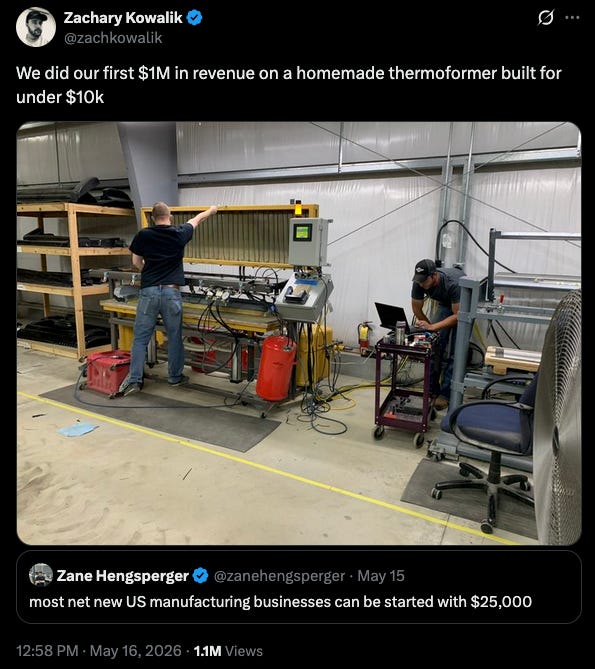
The machine caught our attention, and the business behind it was an equally interesting proposition that raised a few questions. What is thermoforming? Who buys these parts? And how seriously should we take the claim that most new U.S. manufacturing businesses can be started for under $25K?
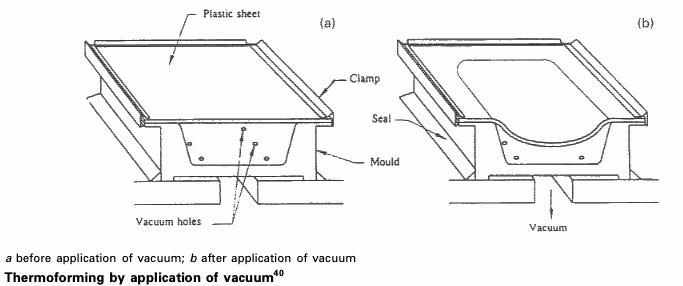
Thermoforming itself is a relatively simple process compared to its more advanced plastic manufacturing counterparts. Instead of injecting molten plastic into a mold, the process starts with an extruded flat sheet of thermoplastic. The sheet is heated until it softens, pulled over into a mold using vacuum, pressure, or a mechanical plug, then cooled until it holds the shape.
The appeal is the relatively low cost of tooling: molds can be made faster and cheaper compared to most plastic tooling, especially for large, thin-walled parts like trays, covers, liners, and enclosures. The tradeoff is limited part geometry, difficulties in maintaining uniform part thickness, and a process that works best when the part is fundamentally a formed shell.
In the context of this discussion, OAM USA maps cleanly to an example with standard use cases. The company makes plastic slip-on panel covers for trucks as a more affordable alternative to conventional rust repair. They started as a custom service at an auto body shop, prototyped with a nearby university, and built their own factory once they couldn’t find a local manufacturer.
Shops that find this kind of niche tend to keep it: older products with strong followings keep generating parts demand long after OEMs lose interest, and the capital floor can be as low as whatever you can invent to solve the problem - in this case, a homemade thermoformer built from a welded steel frame and a vacuum pump.
Watch the video in the original issue.
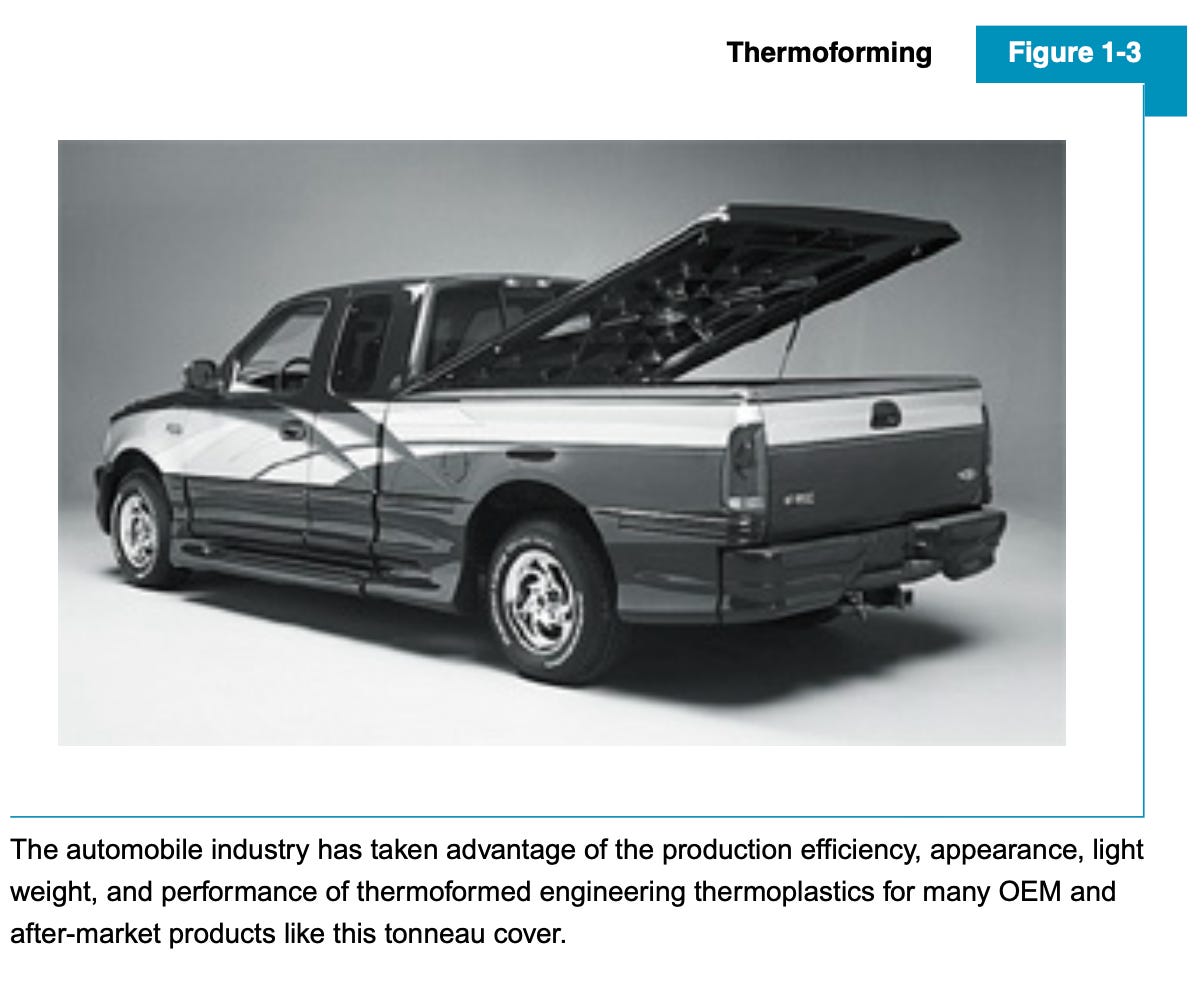
Useful references: James Throne’s Understanding Thermoforming, plus this shorter Overview of Polymer Processing primer. One textbook even gives the same example in the abstract: aftermarket plastic parts for older vehicles.
More From Around the Web
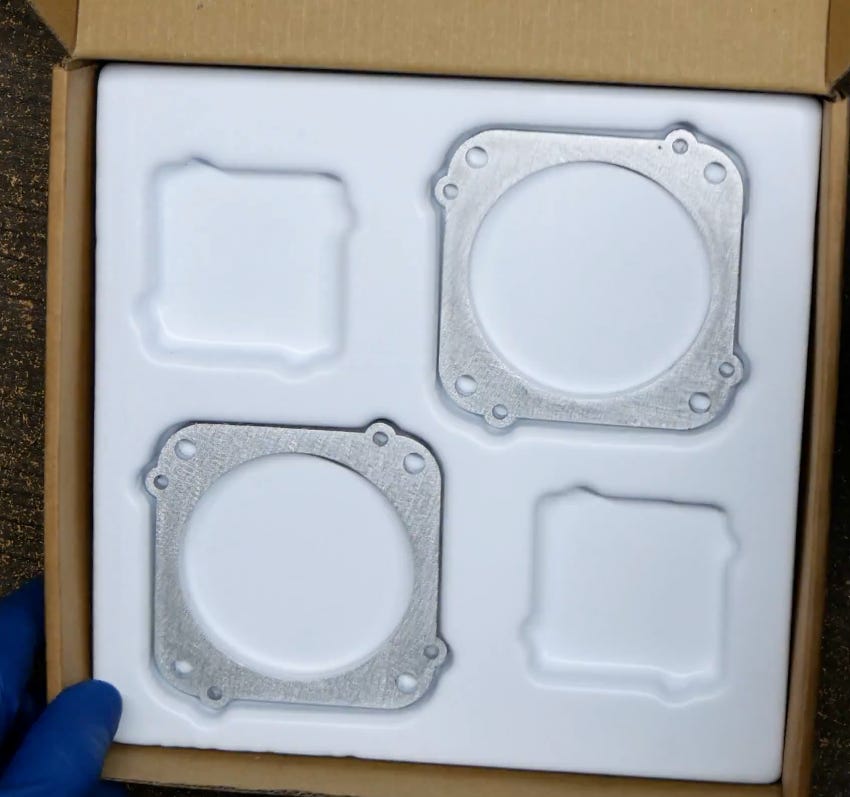
- On a related note: using thermoforming again, this time for instant-quote plastic packaging.
- A personal essay on getting a circuit tattoo. Part low-pass filter, oscillator, and meditation on why “schematic capture” is a beautiful phrase.
- Blue Origin’s New Glenn static fire explosion. Check out Scott Manley’s reaction to the initial failure and implications on pad damage, future New Glenn launches, and NASA lunar missions.
- Founder reflections on one year of building an engineering software startup for physics modeling. Related: a good argument for slow coding with LLMs.
- Dyson has a farming division now selling strawberries in the UK.

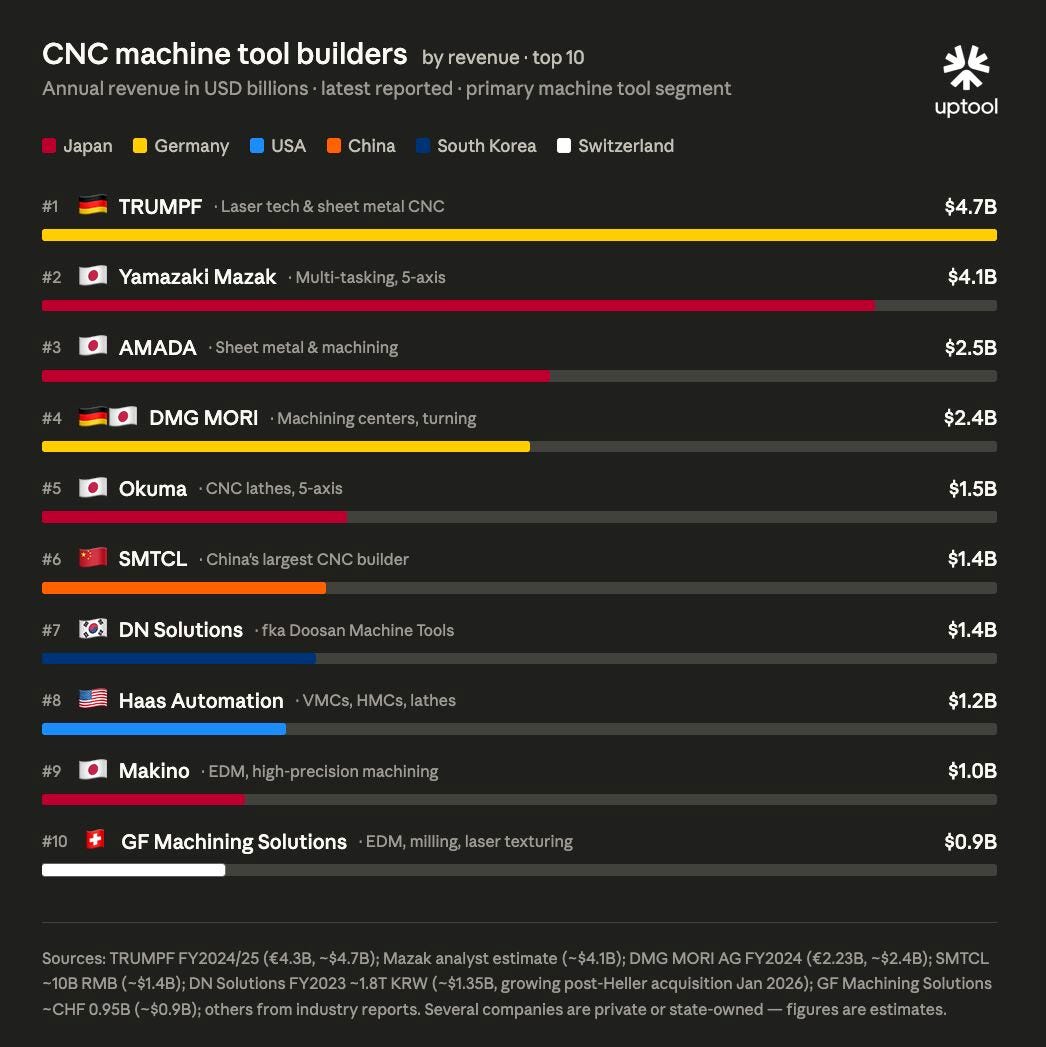
Interesting Chart: Top CNC Machine Tool Builders
Mapping CNC machine tool builders by revenue.
Manufacturing & Startup News
- Shift, an AI data collection startup, launched with a simple proposition: free home cleanings in exchange for egocentric video data of cleaners doing household tasks, captured through a camera-equipped hat and used to train future home robots.
- One of the first indications of what The Bot Co. is building comes from an Airbnb damage lawsuit: a low, wheeled robot with an arm and dual grippers.

- Autodesk agreed to acquire MaintainX for $3.6B, expanding its software suite further into maintenance and operations workflows.
- Stark, a German defense startup, is reportedly seeking €300M at a €2.5B valuation to scale autonomous strike drones and loitering munitions
- Texas released a new automated vehicle registry showing Waymo leading with 577 registered vehicles. Fleet registrations are an imperfect proxy for deployment, but still a useful snapshot of AV activity in the state.