

Topics worth your time this issue: Bambu Lab’s open-source slicer controversy and the backlash around mediated print workflows, SendCutSend raising $110M after demand outran the bootstrap playbook, corrosion as a slow negotiation between metal and environment, and KHK’s practical gear references.
Interesting Links
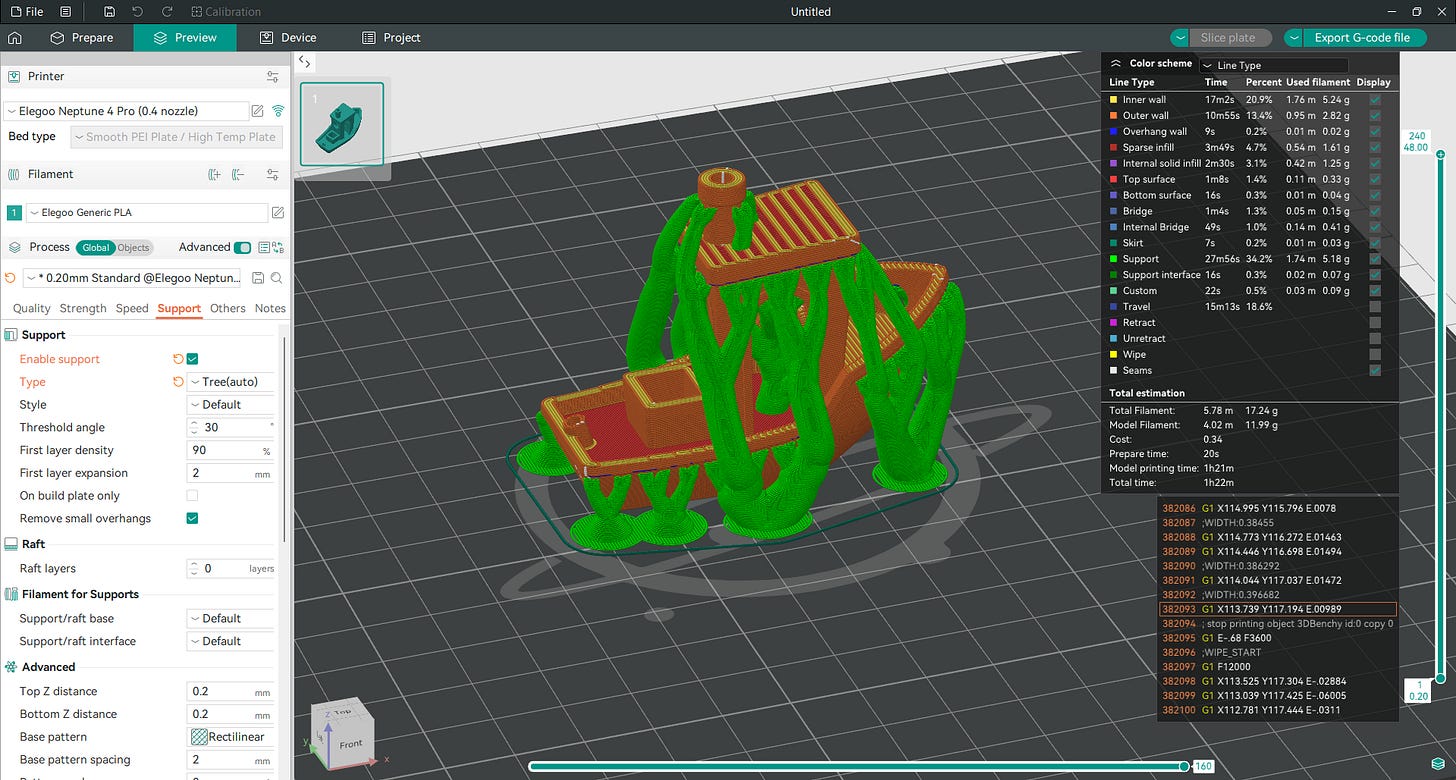
- Bambu Lab built one of the best consumer 3D printers on the market, partly by standing on top of the open-source slicer ecosystem. A firmware update last year added an Authorization Control System that gated third-party slicers behind Bambu Connect, turning a workflow change into an open-source licensing fight. The backlash now has two useful artifacts: a GitHub fork of OrcaSlicer/Bambu Studio that restores the blocked third-party workflows, and Louis Rossmann daring Bambu to do something about it. The old workflow was mostly local where users model and slice, send the file over LAN or SD card, and print. The new workflow pushes more of that process through Bambu’s software and cloud infrastructure, giving the company visibility into print activity and leverage over which third-party tools are allowed to work. The legal hook is AGPLv3 Section 10: Bambu Studio derives from PrusaSlicer, itself a Slic3r fork, and the license forbids adding further restrictions on the rights it grants. The Software Freedom Conservancy has also opened a formal investigation and launched Baltobu, a reverse-engineering project targeting Bambu’s proprietary networking layer. Great hardware can create captive audiences, but post-purchase restrictions are exactly how companies turn the most loyal customers into the people maintaining forks around it.
- A year and a half ago, we shared Jim Belosic’s A Bootstrapper’s Guide to ReIndustrializing America, one of the best operator-written pieces on building a manufacturing business from the shop floor up. The advice was less about industrial policy and more about access; make modern equipment easier to buy and finance, easier to operate, and people can build real businesses around it. The WSJ follow-up lands as a clean Part II: SendCutSend just raised $110M after demand started outrunning the bootstrap playbook. The company has been running 35,000+ overtime hours, maxing out credit lines to add equipment, and looking at new facilities where real capacity is no longer a $500K machine purchase but a mid-eight-figure buildout. A good reminder on raising capital from leverage, not urgency - I’ve said no to VC inquiries for years now. We’re profitable, I didn’t need the money, and we were just barely keeping up with demand. I was never desperate. When you’re desperate, that’s when you get into bed with the wrong people and end up giving half your company away.
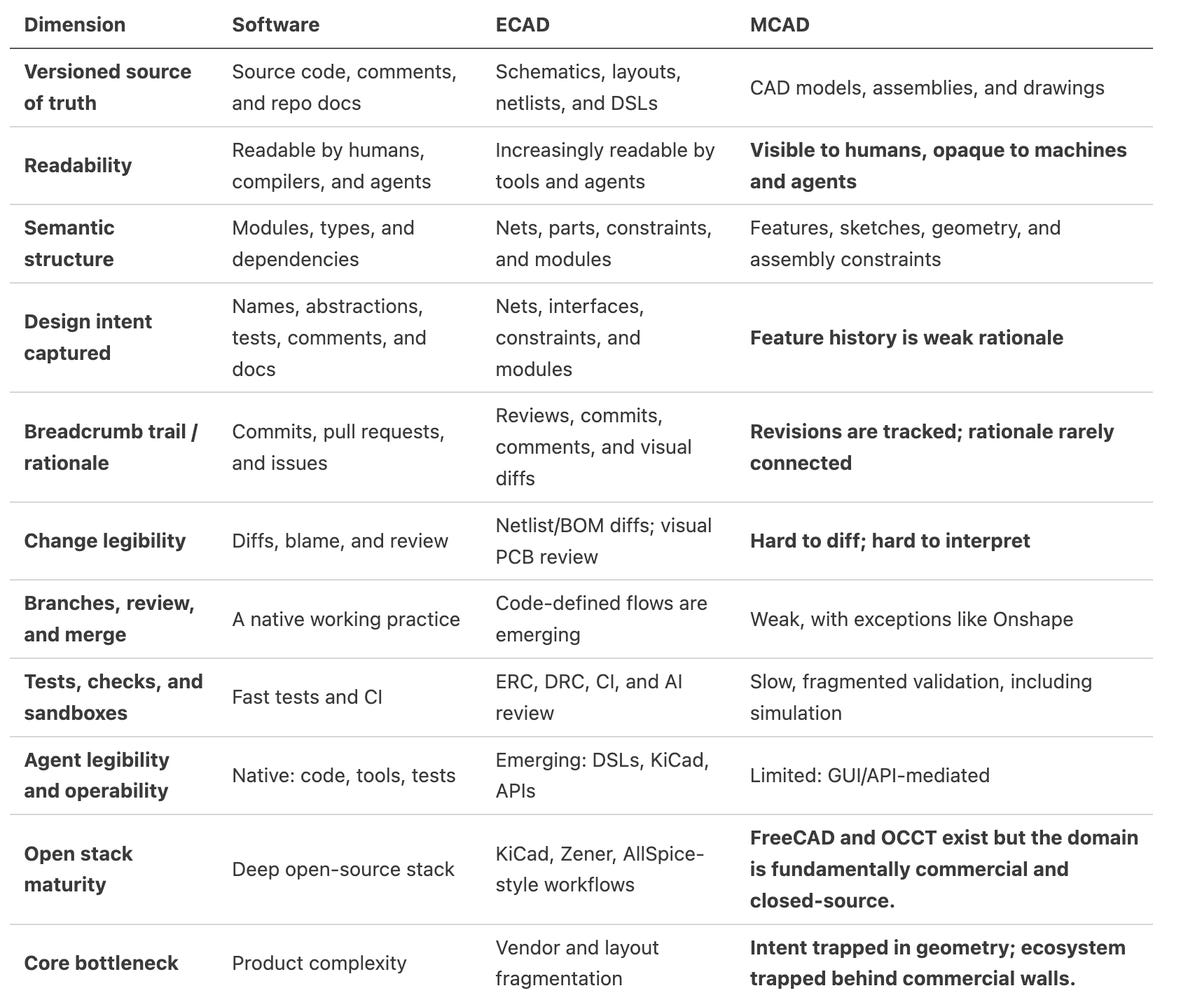
- A code-trained AI model can inspect a Git repo, read the commit history, modify a function, and run the tests; given a STEP file, the same model gets something much dumber: a sealed B-Rep solid with no parameters, no history, and no obvious way to recover design intent. Benjamin Hall’s argument is that the future of CAD is open because models need source, history, and feedback loops, not sealed solids. Zoo’s KittyCAD Language is the cleanest version of the upstream half: a text-based, parametric DSL that compiles to B-Rep geometry, while the kernel layer remains mostly proprietary. Blake Courter’s Omega work at Gradient Control Laboratories points in the same direction from the code//3D interface side, with early signs in our testing of versioned, iterative improvement. The broader point is that engineering is a search problem, not a generation problem; text-to-CAD is only the opening move. As models like Claude connect to Fusion and the major AI labs start eating CAD the way they ate coding, iterative improvement is the next domino.
- Fun fact: Cursor originally explored CAD copilots before it became the AI coding IDE everyone knows today. Same diagnosis, four years earlier: “They wanted to know why their models weren’t converging. Why weren’t there enough patterns in the CAD models’ construction to learn to autocomplete?“
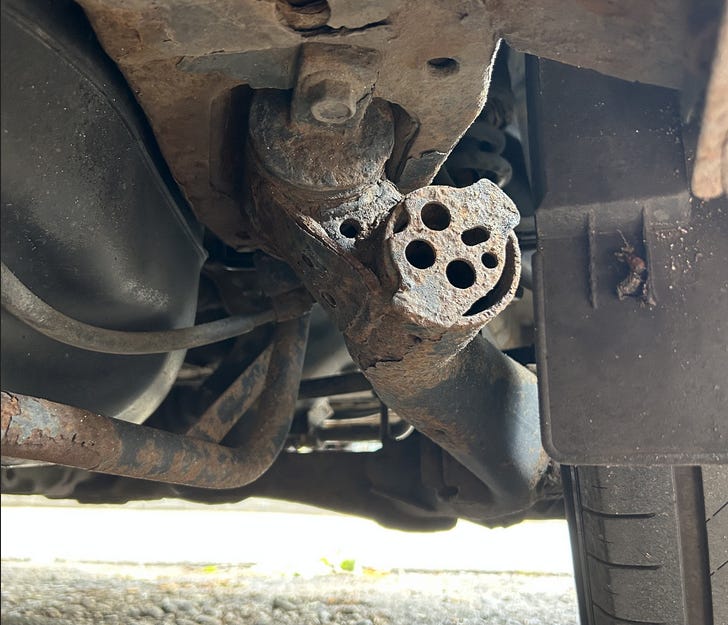
- Corrosion is less a single failure mode than a slow negotiation between a metal, its environment, and time. Sometimes the result is broad and obvious, like uniform corrosion spreading across an exposed surface. Other times it is local and dangerous, like pitting corrosion, where small holes form with very little total material loss before a part fails. “Never paint rust,” writes Stewart Brand. Corrosion costs the world roughly $2.5T a year, about 3.4% of global gross domestic product (GDP), per a 2016 National Association of Corrosion Engineers (NACE) figure cited in his corrosion section in Maintenance of Everything. The report calculates that available best practices could shave 15–35% off the total, $375–$875B in annual savings.
- The Golden Gate Bridge is a great example: painting runs continuously, with locations prioritized by inspection of corrosion progress. Surface prep involves stripping rust with chipping hammers, using flame dehydration torches to drive moisture out from between plates and rivet heads, and getting primer on while the steel is still hot (and dry).
- The ABCs of Gearing is a great introductory gear reference from KHK Gears. Shigley’s is still the canonical textbook answer, but if you’re new to designing with gears, learning the calculations, or just trying to understand terminology, spend an hour walking through KHK’s catalog and technical notes.
- And a couple fun links to round out the week:
- Someone took Cybertruck’s “wade mode” quite literally.
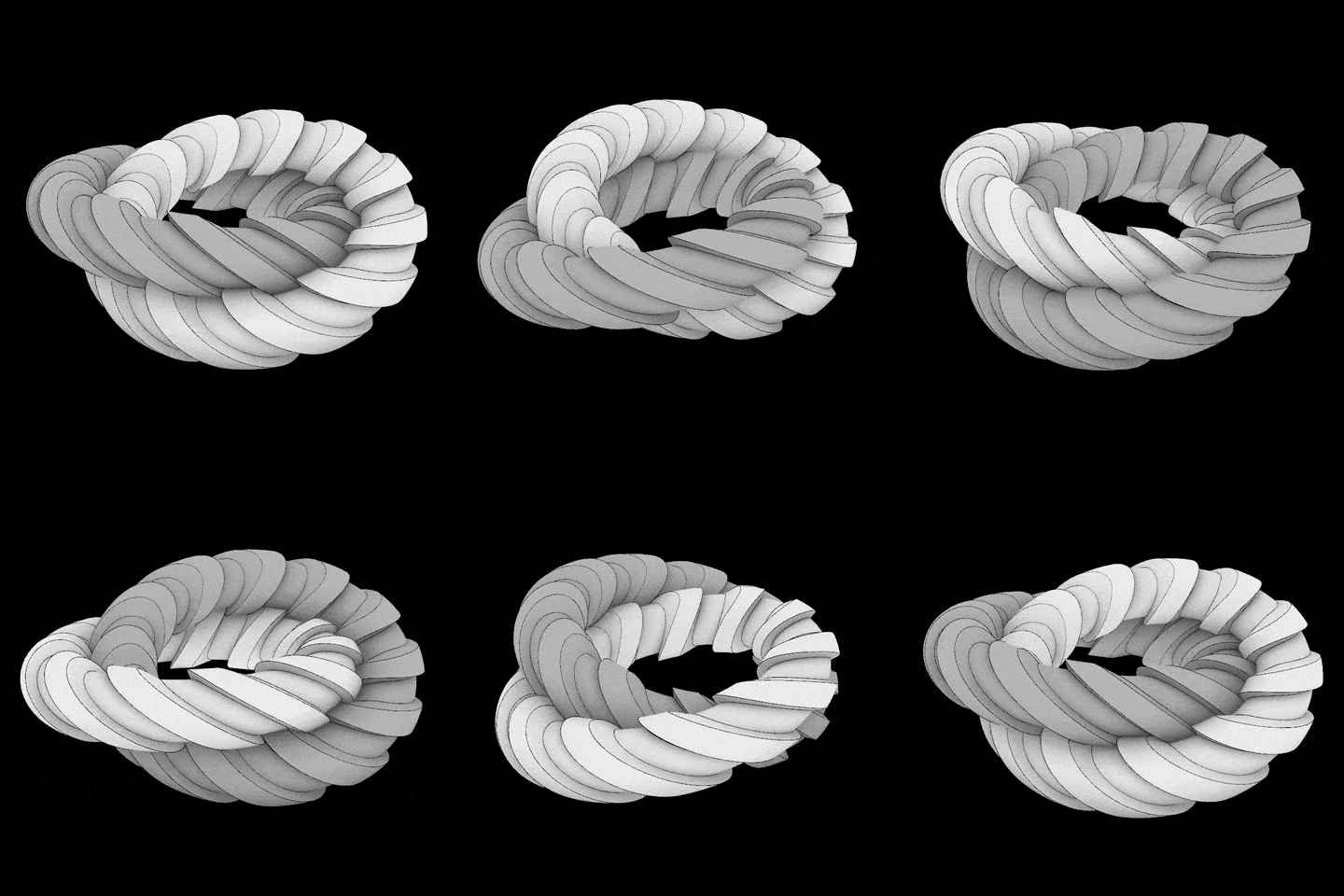
- A torus gear.
Startup News
- CircuitHub raised $28M in Series A funding ($48M total to date) to expand its automated PCB assembly platform. The company operates a highly automated PCBA factory built around a robotic architecture platform designed for high-mix production. The company reports 2M+ boards shipped, 133M+ parts placed, and routine 2–3 day turnaround on 1-off prototypes without premium pricing. The capital will fund a 10× capacity expansion through 2027 in Massachusetts and support expansion into Europe. The round was led by Plural and Sten Tamkivi.
- Amca raised $300M in Series B funding at a $1B+ valuation to expand its vertically integrated aerospace and defense manufacturing platform. The company develops and produces critical components tied to programs like the F-35 and major commercial airliners, and now operates six factories across California, Iowa, and New York. Amca says its internal platform, RAPID, cuts time from development to production-grade hardware by 67% versus typical industry lead times, by integrating engineering, qualification, and certified production. The round was led by Caffeinated Capital with participation from Lightspeed, Andreessen Horowitz, Lux Capital, Construct Capital, and others.
- From YC’s latest batch (P26):
- Synphony is deploying robots that pick strawberries in commercial fields, targeting one of agriculture’s most labor-intensive tasks.
- Nine Fives launched to automate hardware test infrastructure, specifically modern RF test equipment for manufacturers of radio devices in cellphones, drones, and satellites.
- Texture raised $12.5M in Series A funding to expand its grid operations software, bringing utilities and grid operators onto a unified data and workflow layer. The platform consolidates data from legacy systems into a single operating model for asset visibility and load management. Texture is already working with dozens of utilities and OEMs, supporting use cases like transformer health monitoring, distributed energy coordination, and virtual power plant operations. The round was led by VoLo Earth and Equal Ventures.