

Interesting Links 🏭
- A solid breakdown of the basic P&L behind micromobility companies, where just a few variables make or break the business. The core ingredients of running a profitable fleet boil down to 1) longer average ride durations, 2) higher fleet lifespans, and 3) less downtime between rides. Major swing factors include design (especially swappable batteries that cut idle time and service labor) and regulatory costs where city fees can range from $0.25 per ride to as high as $1 per device per day like in Chicago.
- Fun fact: both Lime and Bird (now defunct) started with retrofitted consumer scooters. Bird’s first fleet ran on modified Xiaomi M365s with a ‘Bird Brain’ built from breakout dev boards and GPS modules, and Lime took a similar path with Ninebot ES2s before designing its own platform for fleet durability.
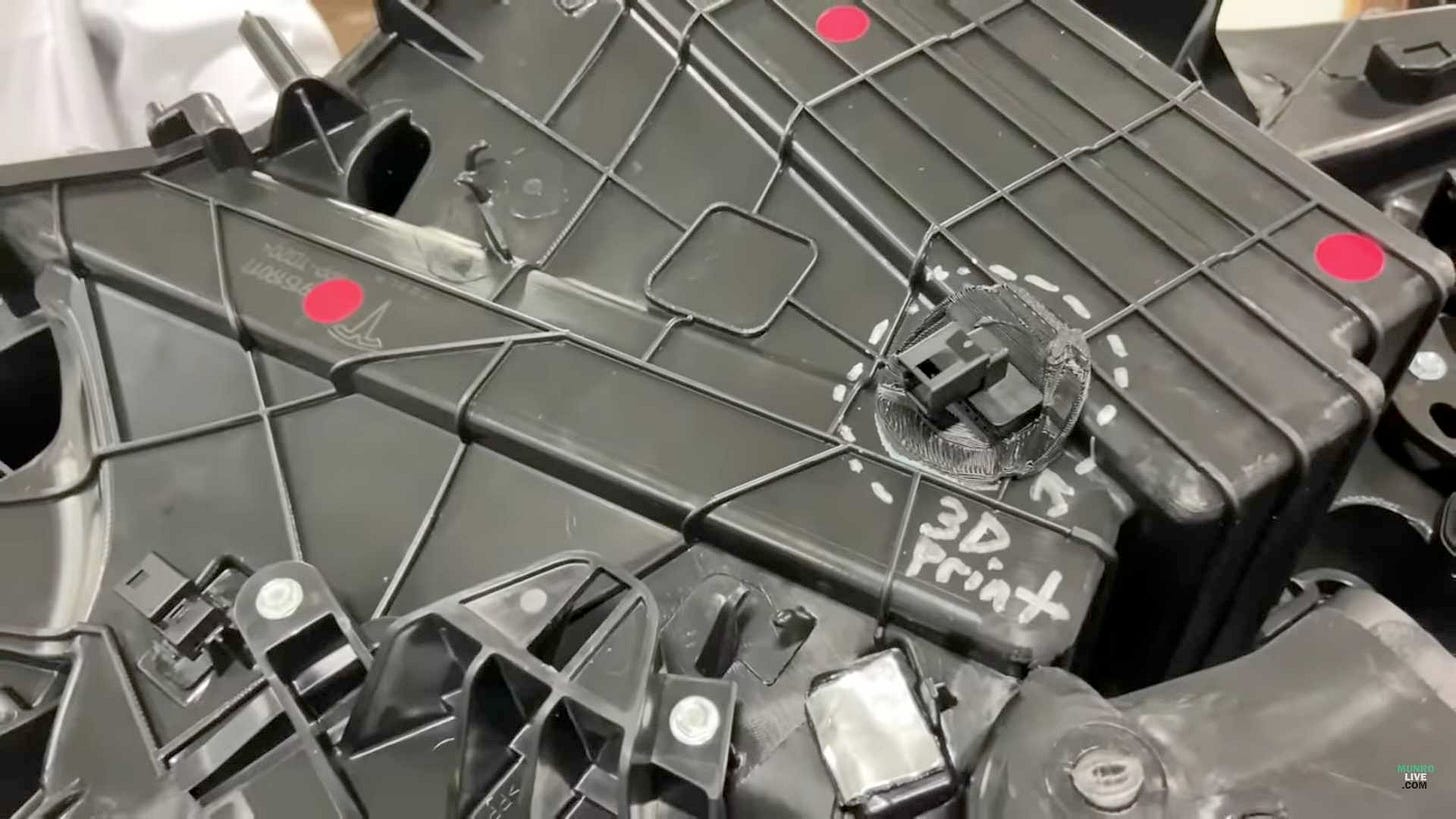
- On the same theme of hacking hardware to keep production moving, Tesla has been known to use FDM 3D-printed components as stopgaps in production cars. In a teardown of one of the first Model Y units, the HVAC system contained a 3D-printed appendage bonded to an otherwise fully molded housing. The module itself is made up of several large injection-molded parts, suggesting the print was a quick workaround for a tooling mistake or late design change while new steel was being cut. It’s unconfirmed publicly, but we’ve heard this practice dates back to early Model S builds for minor, non-critical parts used to unblock production.
- AV Map is an open dataset of autonomous vehicle service areas and operational details across the U.S. Media coverage can make it feel like robotaxis are everywhere, but most operate in geo-fenced zones from a few hundred to just a few square miles around cities like Phoenix, SF, LA, Austin, and Atlanta. Among the remaining companies that still exist today and offer public rides, Amazon-backed Zoox runs a limited service pilot in Las Vegas, and May Mobility operates with Lyft over a 5-square-mile area albeit with human safety driver in the car.
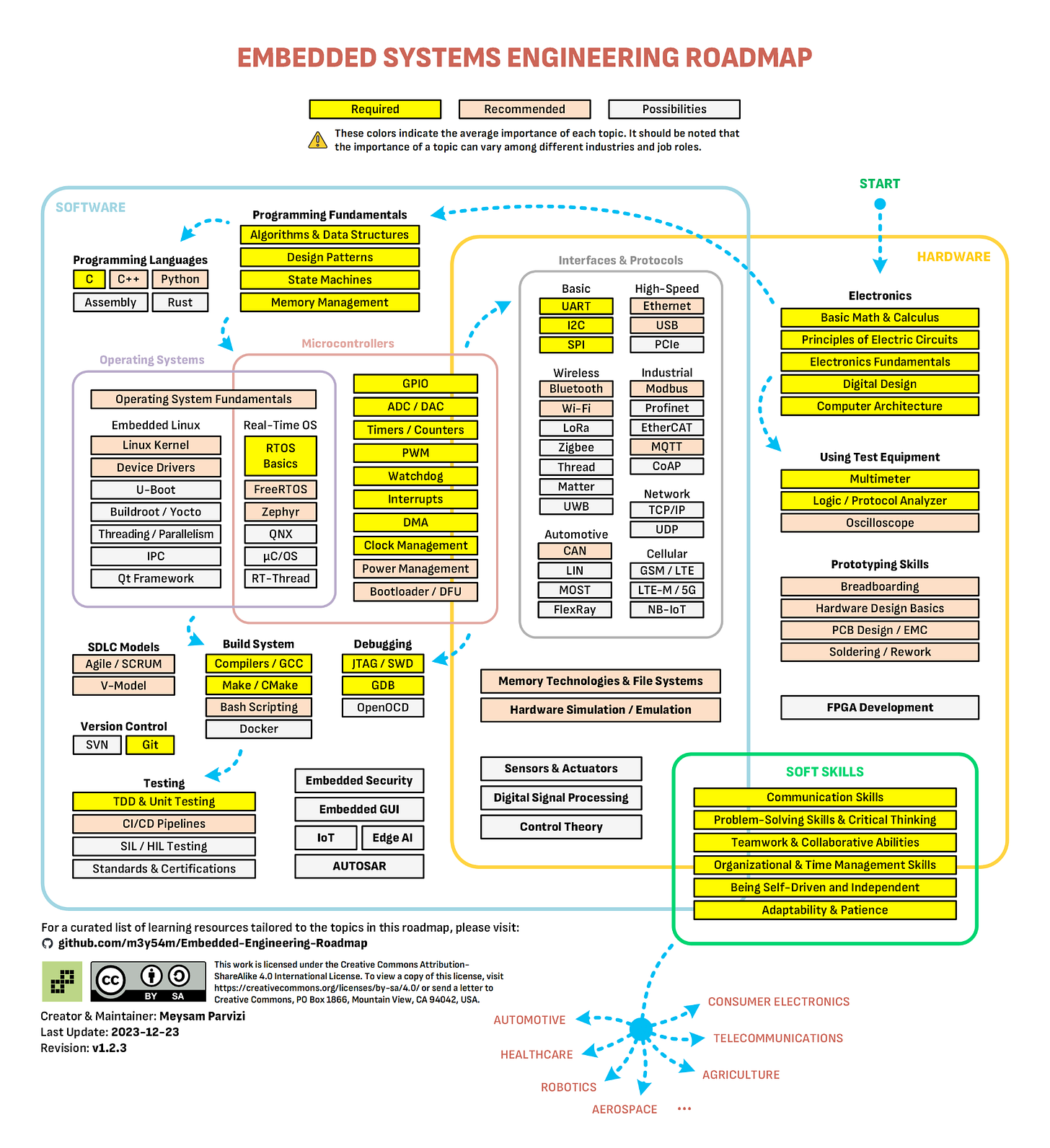
- A neat mindmap that lays out what embedded systems actually covers, and where hardware and software intersect. The GitHub repo. has a great collection of learning resources too.
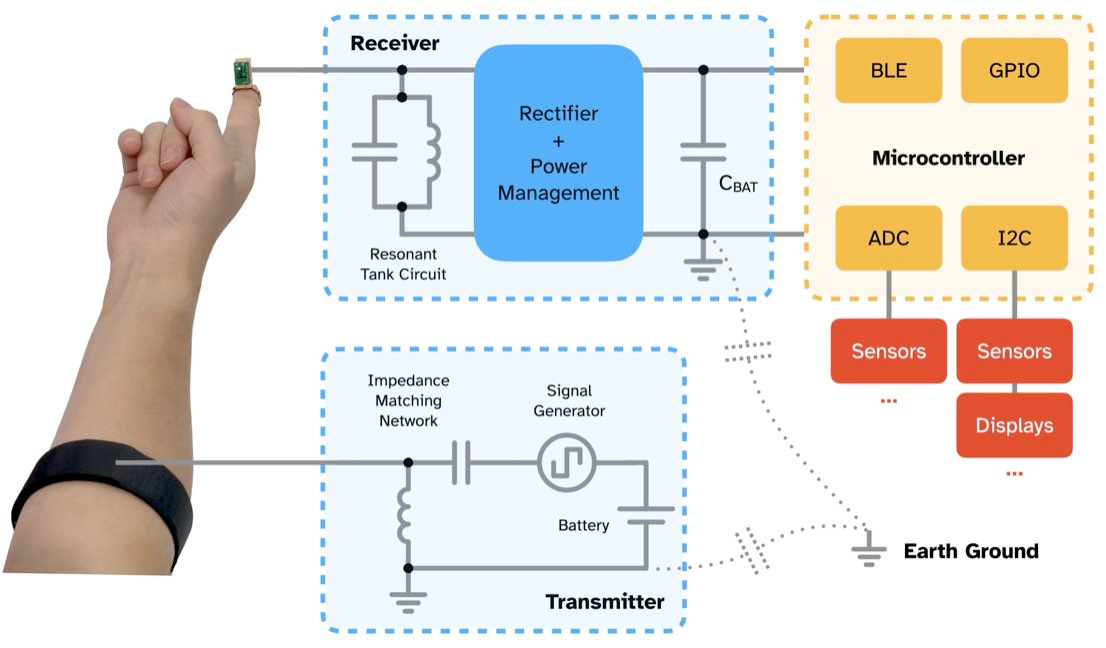
- You too can be a capacitor. Power-over-Skin is an early research concept in wearables powered by intra-body RF energy, where a 40 MHz square wave injected into the skin propagates through the body and delivers usable power to small receivers like sensors or displays. The setup uses a transmitter that drives the signal into a skin-contact electrode, and because the body has capacitance to ground, the wave spreads as a weak alternating potential. Receivers elsewhere pick it up, rectify it into DC, and store it in a capacitor—enough for short bursts of sensing, LEDs, or BLE packets. The power is modest (microwatts to milliwatts), but enough to keep duty-cycled devices alive without a battery.
- A couple fun links to round out the week:
- Don’t Ship the Org Chart is a reminder of how products often mirror the companies that build them. Ever wonder why some phones ship with two email apps, two browsers, and more redundant bloatware?
- And from Pete Oxenham, another classic thread. This time on an Idiot’s Guide to Buying a CNC Machine.
From Wizerr AI: Engineer-Level Cross References & Alternates
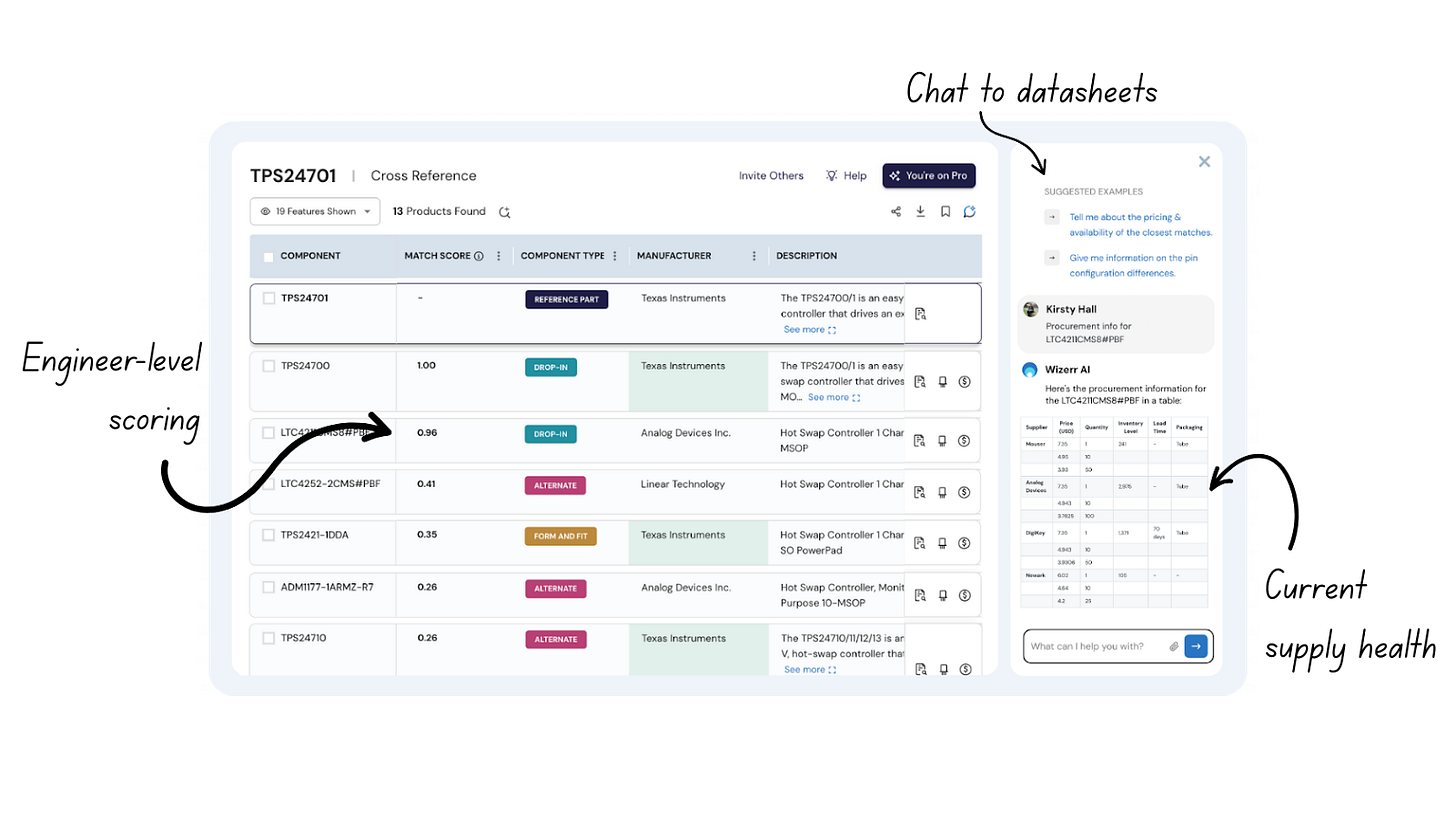
In our line of work, the wrong part can cost weeks and the right one can be painfully hard to find. The team at Wizerr changes that, delivering cross references and alternates far beyond parametric tables - whether it’s one critical part or an entire BOM. Pin-to-pin matched, drop-in ready, and scored with engineer-level reasoning.
- Cross-references & drop-in replacements - Verified for technical, mechanical, and commercial fit.
- Form-Fit-Function analysis – Automatically evaluates alternates for parametric integrity, pinout, and physical constraints—so replacements don’t just “fit,” they work.
The result: faster decisions, fewer redesigns, and projects that stay on track.
👉 Get 300 Free Credits.
Startup News 🚀
- Quilter raised $25M in Series B funding to automate PCB design through physics-driven reinforcement learning. Founded by former SpaceX engineer Sergiy Nesterenko, Quilter’s system learns from first-principles physics rather than human layout patterns, generating complete, manufacturable boards in minutes. Early users in aerospace, defense, and automotive report design cycles shrinking from weeks to hours. The platform integrates with existing enterprise tools like Altium, Cadence, and Siemens Xpedition for automated PCB layout. The round was led by Index Ventures with participation from Lip-Bu Tan, former CEO of Cadence and current CEO of Intel.
- Base Power raised $1B in Series C funding to expand deployment of large-scale home battery systems and build a new factory for grid modernization and distributed energy storage. The investment supports nationwide rollout beyond Texas, focusing on affordable, utility-integrated batteries that provide backup power during outages and stabilize the grid through virtual power plants. The round was led by Addition.
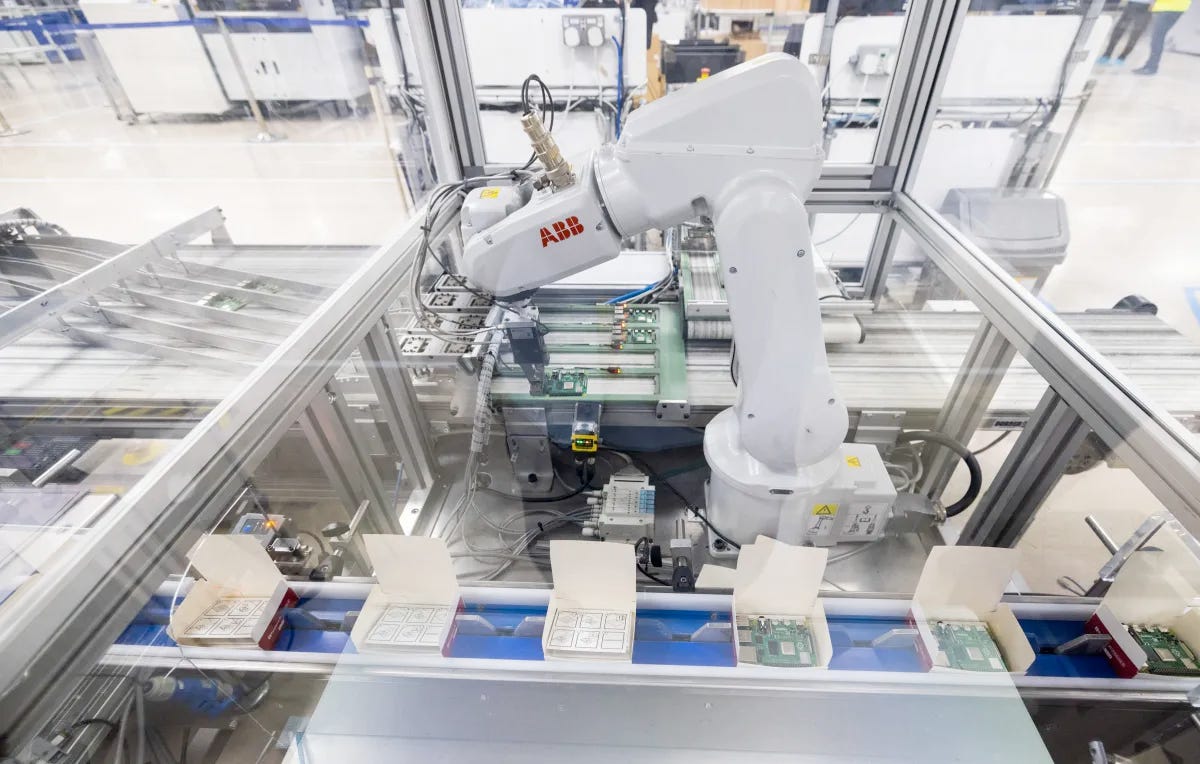
- SoftBank is acquiring ABB’s robotics division in a $5.4B deal, underscoring the strategic value of industrial arms in automating EV, battery, electronics, and metals manufacturing. The move follows SoftBank’s recent spree of AI-adjacent acquisitions, including chip designer Arm, as it doubles down on control of key technologies for the coming automation wave.
- Qualcomm is acquiring Arduino to merge its open-source hardware ecosystem with Qualcomm’s processor platforms, enabling faster development of edge-AI devices across industrial and consumer markets. The acquisition aims to streamline developers’ access to leading-edge computing and AI by pairing Arduino’s accessibility with Qualcomm’s compute and connectivity stack.
- HavocAI raised $85M in venture funding to scale production of its autonomous vessels for military use. The company retrofits commercial boats with an AI autonomy stack, turning them into networked robotic systems for surveillance, logistics, and sensor deployment across wide areas. The round was led by Outlander VC, with participation from Lockheed Martin, In-Q-Tel, and others.