

👋 Happy Saturday! This week’s edition covers a high-level introduction to robotic foundation models and how robot learning is changing, charts on the state of the autonomous vehicle industry, and an interview with SendCutSend’s Jim Belosic on scaling manufacturing without the default venture-backed playbook.
Interesting Lecture Notes: An Introduction to Robotic Foundation Models
From Stanford’s famous CS231n course (Deep Learning for Computer Vision), this is a guest lecture on the current state of robot learning, and more specifically a high-level introduction to what robotic foundation models actually are. For most of the last decade, robot learning focused on approaches like reinforcement learning tuned to specific tasks or model-based approaches that required engineered state representations.
What’s changed in just the last few years is a shift toward large, pre-trained policies—essentially robot controllers trained using the same large-scale, multimodal pretraining playbooks behind today’s LLMs—that trade task-specific optimization for generalization across many real-world scenarios.
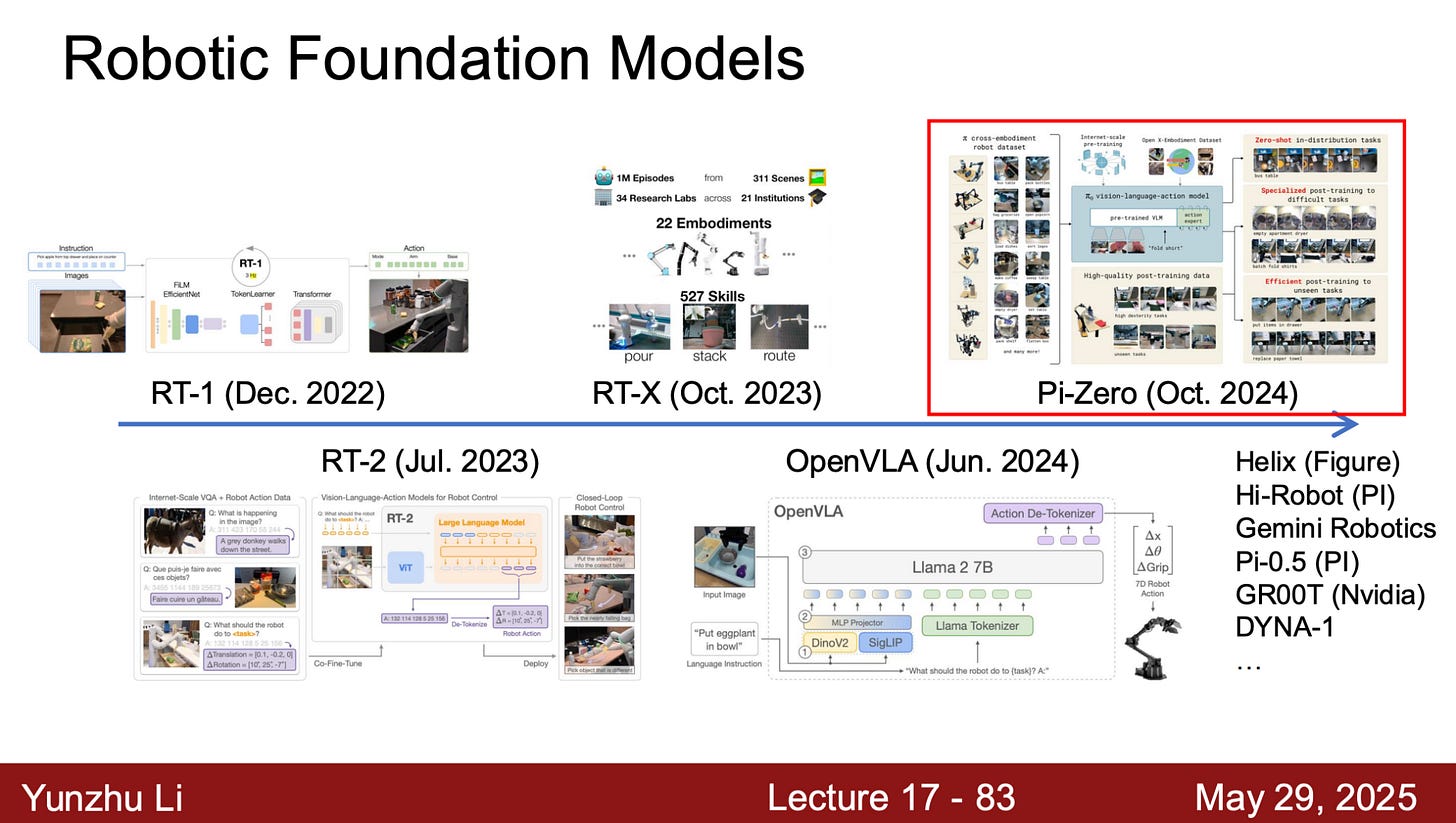
The lecturer defines robotic foundational models as policies that map observations and goals directly to actions without learning an explicit model of the environment, and are designed to trade task-specific optimality for producing “beautiful and reasonable” behavior. (“Beautiful” = smooth motion; “reasonable” = follows the instruction.)
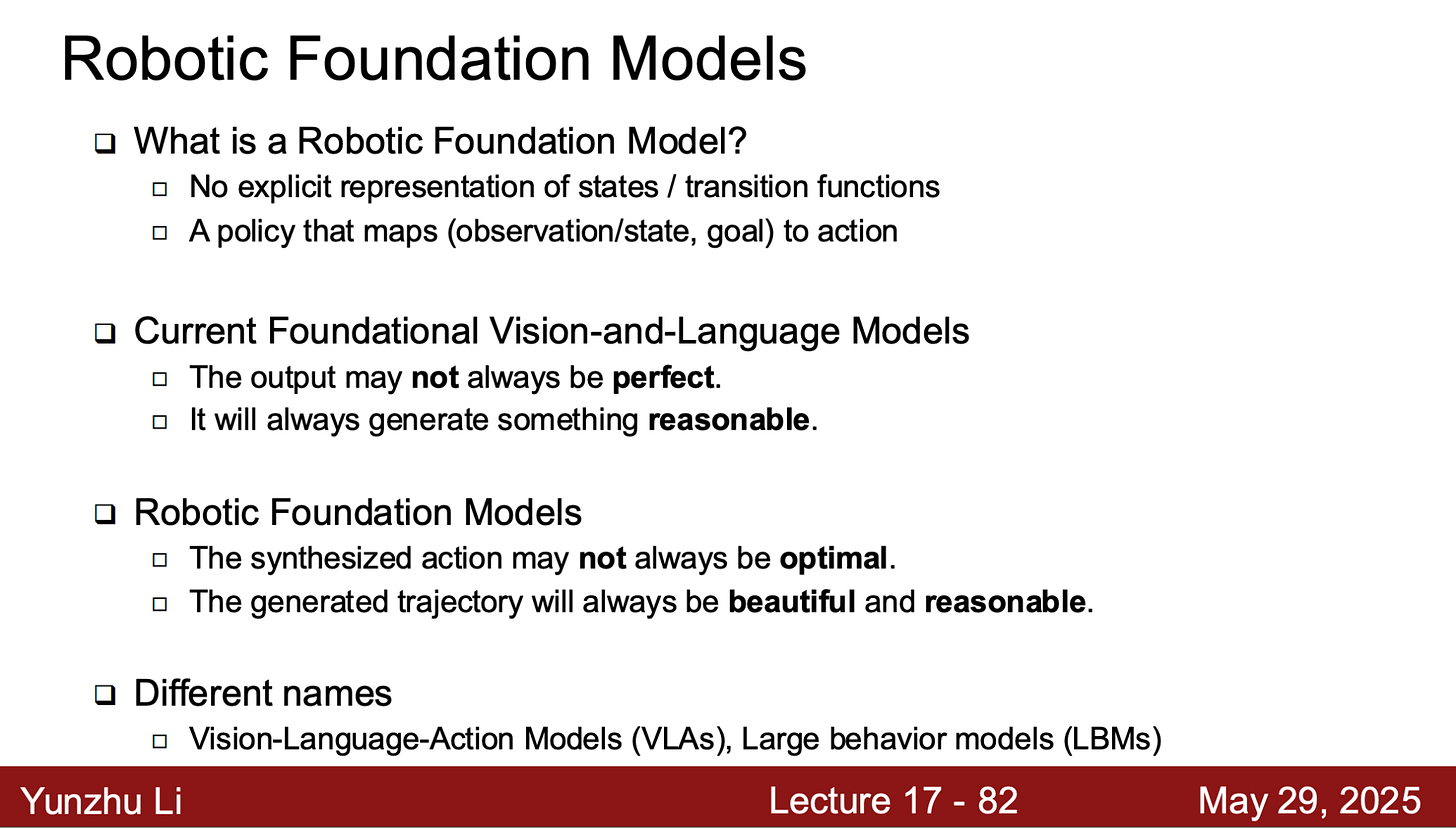
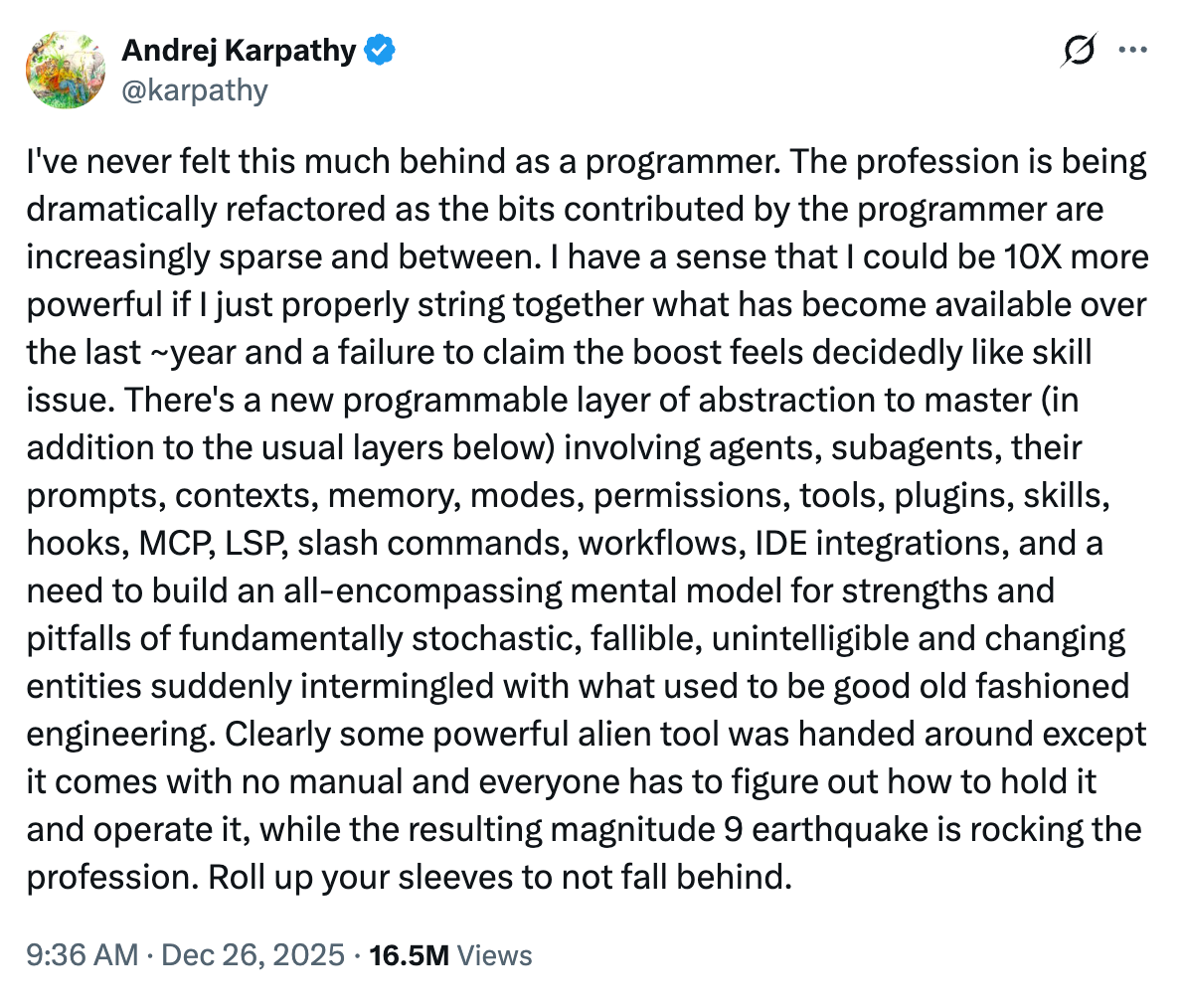
If you want to skip ahead, the foundation model discussion starts at pg. 80 and the full lecture recording can be found online here. There’s a well-worn saying that if you don’t keep learning, the industry moves on without you. It feels especially apt here, given that Andrej Karpathy, the original author and primary instructor of the very course we’re pulling from, had this to say recently:
Interesting Charts: Autonomous Vehicles Cost Curves
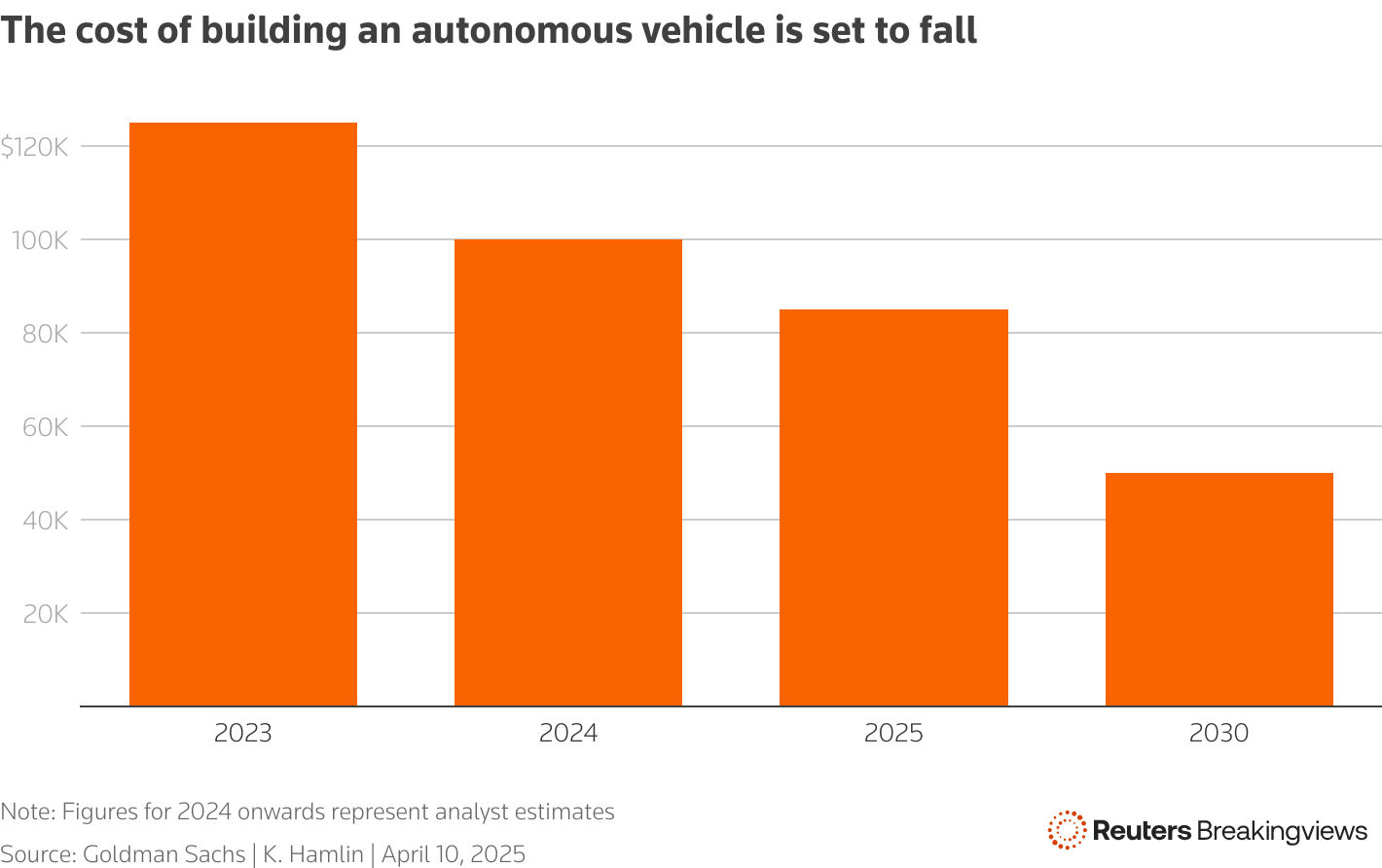
Jackson Lester from AVMap (who we featured a few months back in Issue #154) recently published 15 Charts That Explain the Autonomous Vehicle Industry. It’s a clean visualization of current robotaxi operating geographies, fleet growth, production cost trends, the present funding landscape, and more.
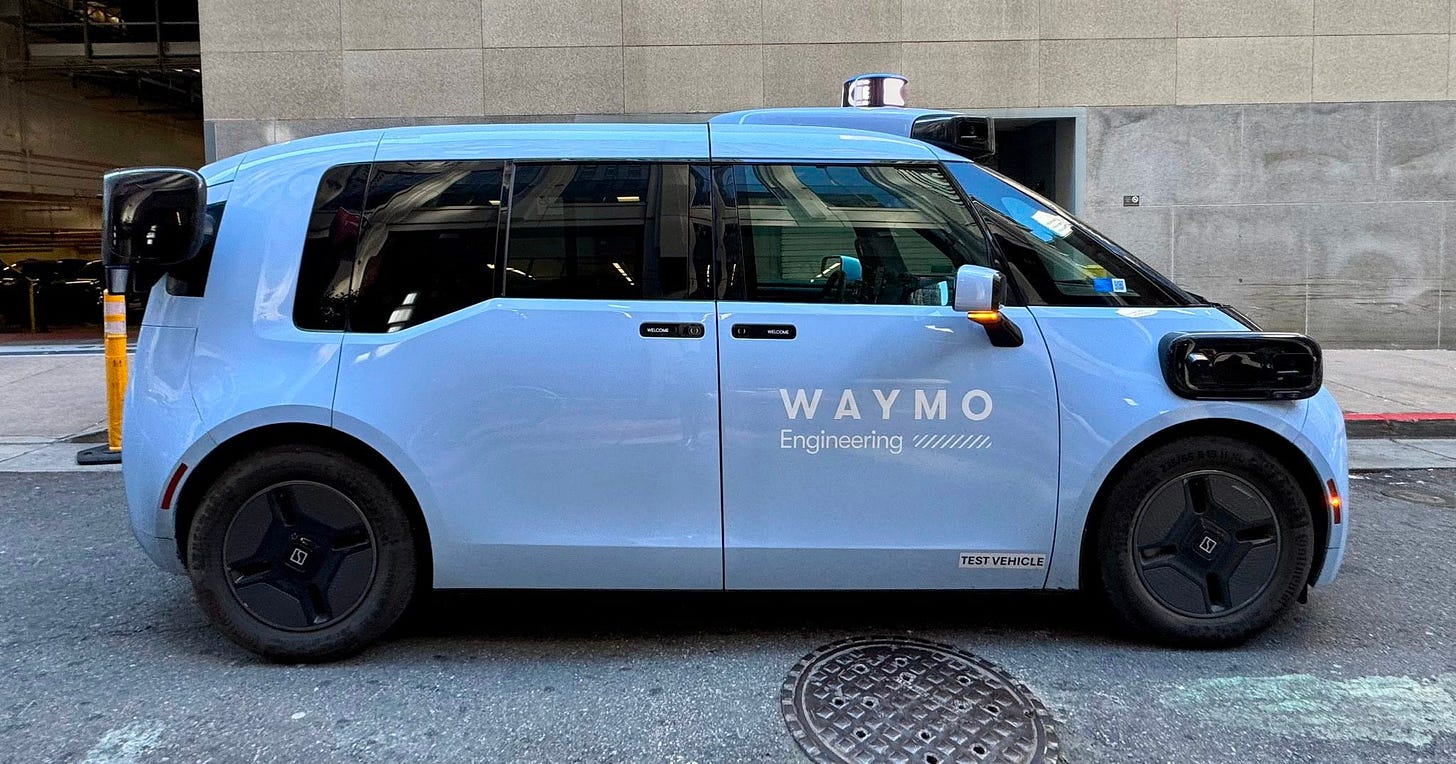
A useful cost comparison from Waymo’s early days to today: Waymo’s new mass-produced robotaxi, the Zeekr RT, is estimated to cost around $75,000:
“LiDAR is the biggest factor. When Waymo started, a single LiDAR unit cost $75,000. Today Chinese suppliers sell solid-state units for less than $200. Lower costs are making larger fleets economically viable, and that’s starting to show up in real-world competition.”
Interesting Interview: The Anti–Venture Manufacturing Playbook
Another great interview by Ti Morse, this time with Jim Belosic, founder and CEO of SendCutSend. The conversation starting around 16:02 is especially good for a different take on how manufacturing companies can grow and scale without following the default venture-backed playbook.
One thing that recently caught our attention (hat tip to Lucas from Loombotic) is that they’ve also spun up a separate entity called Banana Metals, where they sell stock aluminum and leftover blocks from their new CNC machining operations. Interesting to see how scrap material from CNC mills is being repurposed into new life.
Manufacturing & Startup News
More leftovers from our weekly research:
- Tesla deployed 46.7 GWh of energy storage in 2025, with energy storage and solar products now generating nearly a quarter of gross profit at ~30% margins.
- Blue Origin is set to refly a New Glenn booster on its third flight, targeting a sub-four-month turnaround to carry an AST SpaceMobile BlueBird satellite to LEO.
- Land Moto is planning a $50 million capital raise to support new product development and scale manufacturing of its electric motorcycles at its Cleveland facility.
- AheadComputing raised an additional $30M in a seed extension round to advance development of its high-performance, RISC-V–based CPU microarchitecture targeting AI and data-center workloads.
- RobCo, a Germany-based industrial robotics company, raised $100 million in Series C funding to scale industrial automation deployments and expand its U.S. presence.