

There’s also an upcoming happy hour in SF on Feb 12. If you’re working on something new and want to present, shoot us an email.
Interesting Links
- A personal aside: One reason we’ve been spending more time zooming out and covering entire industries is that beyond first-principles engineering, being a great engineer also means understanding the markets those ideas have to survive in.
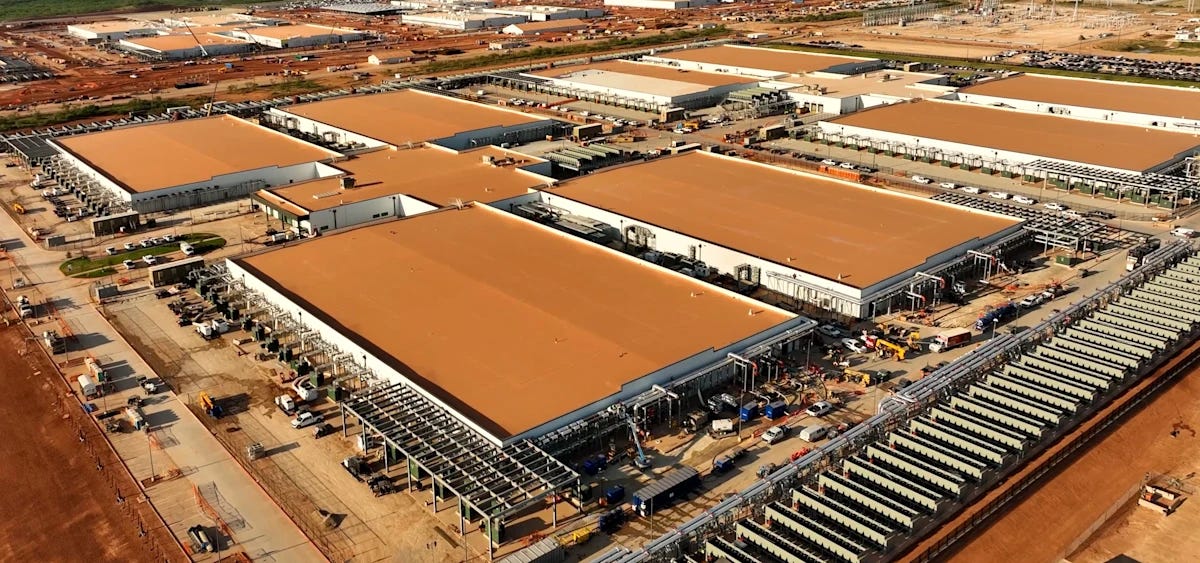
- When Marc Andreessen originally said software is eating the world, add another footnote: OpenAI is now behaving like a large industrial buyer. Last week, the company released an RFP seeking domestic manufacturing partners for any physical infrastructure required to deploy AI at scale. That includes data center hardware (compute enclosures, power, and cooling), modules and final assembly for consumer electronics, and robotics components down to gearboxes, motors, and power electronics. In a parallel letter to the OSTP, OpenAI effectively explains why it’s acting like an industrial buyer by highlighting the “electron gap”: China added 429 GW of power capacity in 2024 (over 50% of global growth) while the U.S. added just 51 GW. To support the proposed 100 GW Stargate expansion, estimates would require ~20% of the existing U.S. skilled trades workforce over five years. It’s an attempt to aggregate a fragmented supply chain, framing the data center buildout as a reindustrialization engine rather than just a software-only scaling problem.
- For any readers with domestic production capabilities, take a look! You may be able to win a contract.
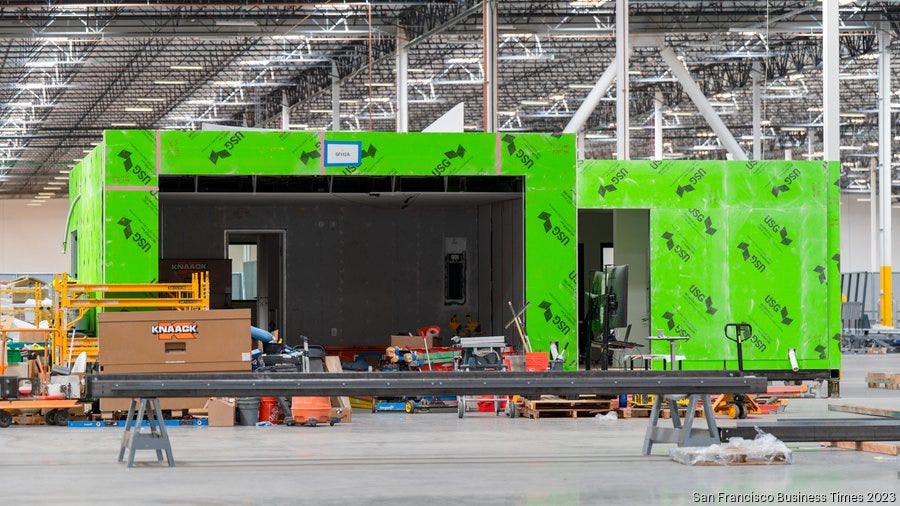
A post-mortem from Devan at OneBuild on why the landscape of modular construction is littered with shuttered startups, despite billions in venture funding over the last decade. Looking at the broader landscape, almost all of the largest venture-backed ‘industrialized construction’ companies have faced the same outcome: Katerra ($2B raised, bankrupt 2021), Veev ($600M raised, fire-sold 2024), with Entekra and Blu Homes following a similar arc. The shared constraint is that the first generation of companies pursued a model that didn’t align with the economic and financial realities of existing construction industry. Factories require 70–80% utilization to achieve positive unit economics, but construction demand is seasonal, rate-sensitive, and project-driven. That mismatch compounds especially when companies were investing heavily in vertical integrated factories and introducing automation before demand was proven. There’s a distinct parallel here to the adoption struggles of other construction technology (‘green’ concrete comes to mind); even with an equivalent or better technology, new entrants must contend with the inertia of a skilled workforce who don’t want unpredictability or risk.
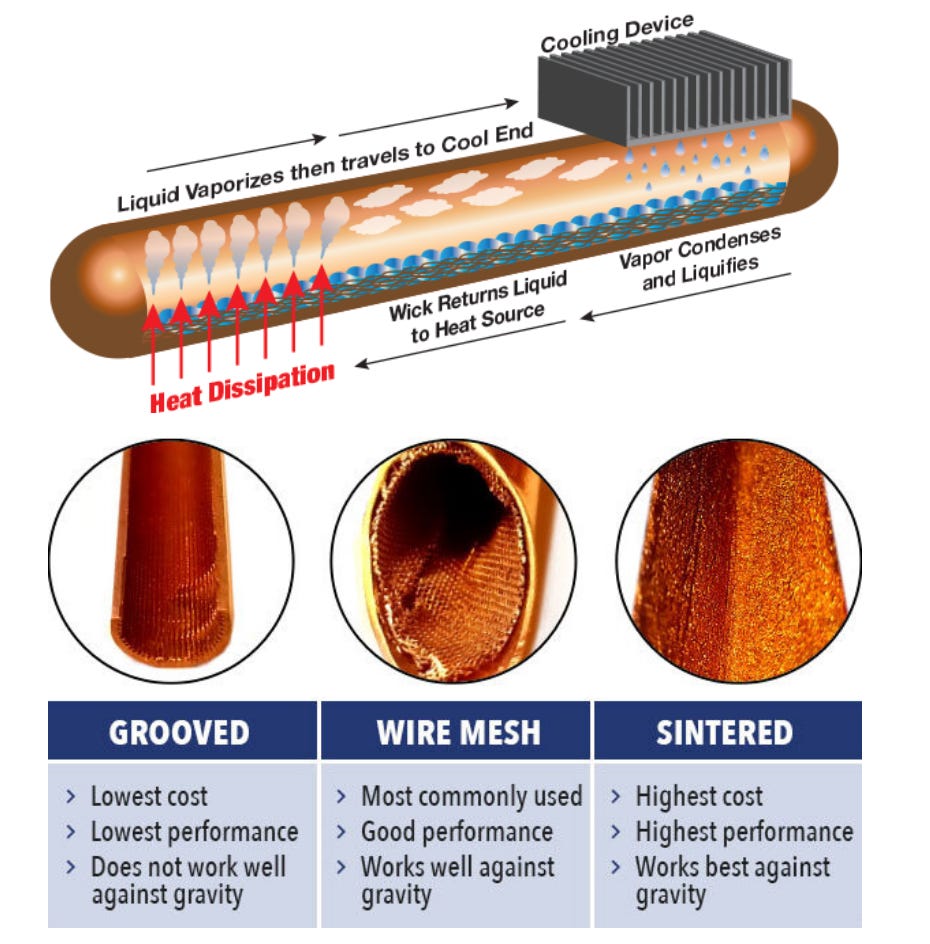
- A full overview of the industries, styles, and applications of heat pipes can be found here. Heat pipes are passive heat pumps requiring no moving parts or external power. They function entirely on latent heat of vaporization: a working fluid evaporates on contact with a heat source and condenses at a distant cold sink. The magic lies in how the condensed fluid returns to the evaporator. Sintered powder wicks, grooved channels, or custom extrusion paths enable different liquid flow paths (even against gravity). Most schematics only show a short segment, which obscures the fact that a heat pipe is a complete sealed circuit of evaporation and condensation.
- A book recommendation from Coop: the opening chapter of Stewart Brand’s The Maintenance Race retells the 1968 Golden Globe solo circumnavigation as a contest of maintenance styles. Three sailors, three philosophies: Robin Knox-Johnston (”whatever comes, deal with it”) won; Donald Crowhurst (”hope for the best”) died; Bernard Moitessier (”prepare for the worst”) sailed even farther, refusing to stop. The technical improvisation is wonderful (like how the winning sailor used his logbook pages as a feeler gauge—200 pages to the inch—to set his engine timing), but the deeper lesson is Moitessier’s design philosophy:
“Given a choice between something simple and something complicated, choose what is simple without hesitation; sooner or later, what is complicated will almost always lead to problems.”

- And one fun link to round out the week:
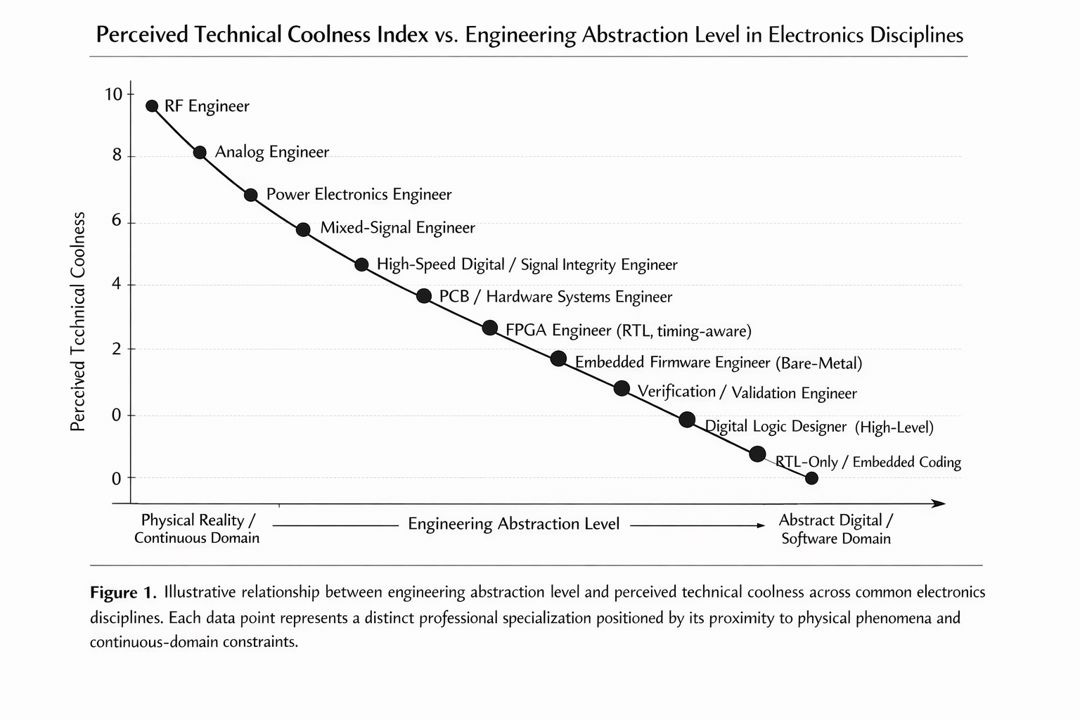
- Perceived technical coolness vs. engineering abstraction level in electronics disciplines. I fully assumed this was a real chart and went looking for the cited source before noticing the journal name: “International Journal of Applied Engineering Perception”.
Startup News
- Zipline raised $600M at a reported $7.6B valuation to expand its U.S. autonomous drone delivery operations, with launches planned in Houston, Phoenix, and additional states in 2026. Zipline’s Platform 2 drones support short-range home deliveries (≤8 lb within 10 miles), while its larger Platform 1 aircraft handles enterprise and government routes out to ~120 miles round trip. The company has now completed more than 2M deliveries globally, up from a cumulative total of 1M deliveries by the end of 2024. The round included Fidelity, Baillie Gifford, Valor Equity Partners, and Tiger Global.

- Fervo Energy has confidentially filed for an IPO targeting a reported $2–3B valuation, well below expectations set in its most recent Series E round. The company is developing enhanced geothermal systems (EGS) using horizontal drilling and fiber-optic sensing to produce carbon-free power from hot dry rock. Fervo’s lead project in Utah is intended to scale from pilot wells to utility-scale output under long-term power purchase agreements, but the IPO pricing suggests commercial-scale performance is still being validated. An early public-market read on how investors are valuing geothermal relative to other clean baseload sources like nuclear.
- Grid Aero raised $20M in a Series A round to move its long-range autonomous aircraft from testing into early deployments. Founded in 2024, the company is developing uncrewed aircraft designed to move heavy payloads over long distances and operate from infrastructure-limited locations, with a focus on simpler airframes paired with autonomy. The round was co-led by Bison Ventures and Geodesic Capital
- Foundry Robotics raised $13.5M in seed funding led by Khosla Ventures with participation from Red Glass Ventures. Details are light, with the company describing its work as an AI-first, assembly-focused approach to end-to-end manufacturing.
- Cyclic Materials raised $75M in an oversubscribed Series C round to scale rare earth recycling infrastructure across North America and Europe. The company uses a two-stage physical and hydrometallurgical process to recover rare earth elements from end-of-life magnets and production scrap. Cyclic positions recycling as a deployable alternative to mining, with >98% recovery rates and materially lower water use and carbon footprint. The round was led by T. Rowe Price with participation from the Canada Growth Fund.