This Week’s Highlights
- Origin of GPS 🌤️
- Reverse engineering HDMI 🔌
- An Interview with Reed Ginsberg, VP of Engineering at Shinkei 🎤
Xometry is offering new customers a $50 off discount off of your first order of $50 or more until June 30, 2024. Use the code NEWJUNE50 at checkout. Get your instant quote to start your project!

Welcome to our newest sponsor, FlashPCB! Flash offers super-fast PCB assembly with an instant online quote. Order boards online or email quote@flashpcb.com to get started.
Interesting Links 🏭
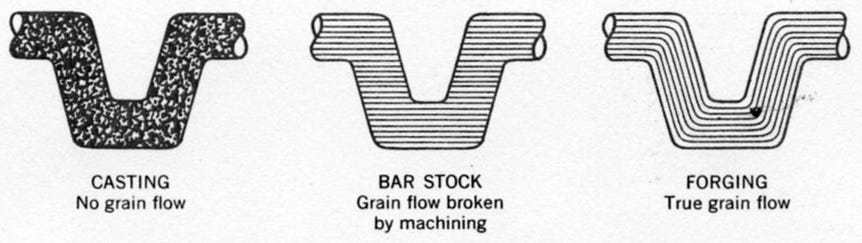
- A narrative journey about the manufacturing of the first generation Apple Watch released in 2015, focusing on the major materials used in the frame. At that time, Apple was likely anodizing more aluminum than anyone else in the world. The author discusses manufacturing processes for each of the various materials used, from smelting, machining, and anodization. Particularly interesting is his commentary on cold forging for the stainless steel housing, a process used to create parts of exceptional strength where the forged variant has an intact grain lattice.
- An engineer’s guide to current sensing from Texas Instrument’s gives an overview of high side, low side, and in-line current measurements and application-specific advice for motors, USB-C, and robotics. Some advanced topics include how to enhance common mode rejection. A simple current sensing system can be made with a current sense resistor and an IC package that uses an ADC to measure the voltage drop from the supply current.
- A video covering the origins of the Global Positioning System (GPS). GPS works in 3D by reporting the position and time of 24 satellites circling the globe simultaneously. With four satellites you can solve the intersection of the four spheres to provide an exact global position in three dimensions. GPS was first invented by the US military in 1978 and has been globally available since 2000 with full accuracy for civilian use, funded by taxpayer dollars to a tune of $2 million dollars per day! The original GPS satellites were launched on Atlas rockets, with newer ones now riding Falcon 9 rockets, and future models set for Falcon Heavy launches.
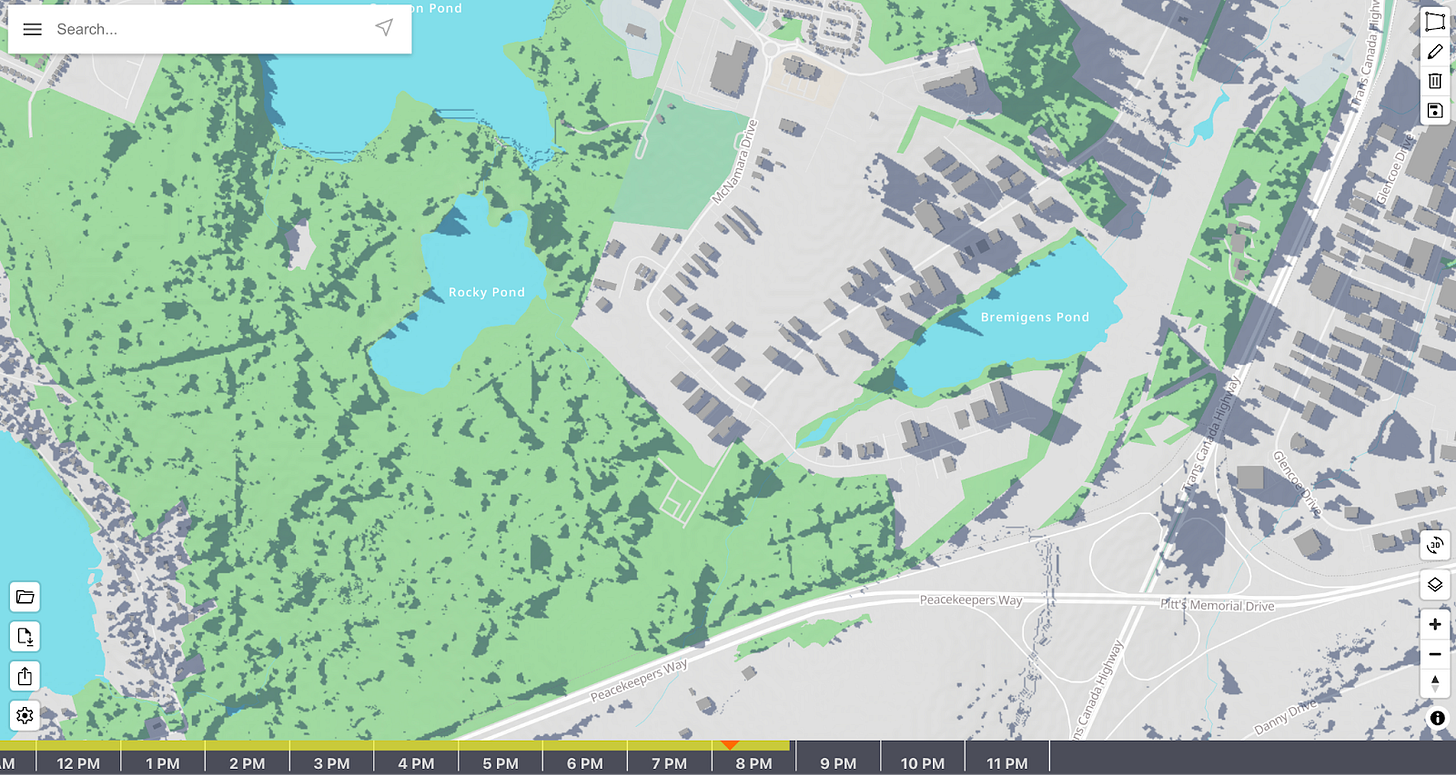
- ShadeMap provides a global prediction of shade based on 3D and terrain data, with granular levels of detail available. You can also arbitrarily clear nearby obstacles and estimate the impact on annual sunlight hours to see how clearing obstructions (trees, etc.) might affect how bright a property becomes.
- A mega-thread of industrial applications for solar power from the founder of Terraform Industries. Although most photovoltaic (PV) electricity is currently converted to AC and sold to the grid, there are many industrial applications that could be powered directly by solar. Industrial heating, thermal energy storage, and even solar hydrocarbons could all benefit significantly from cheap solar power.
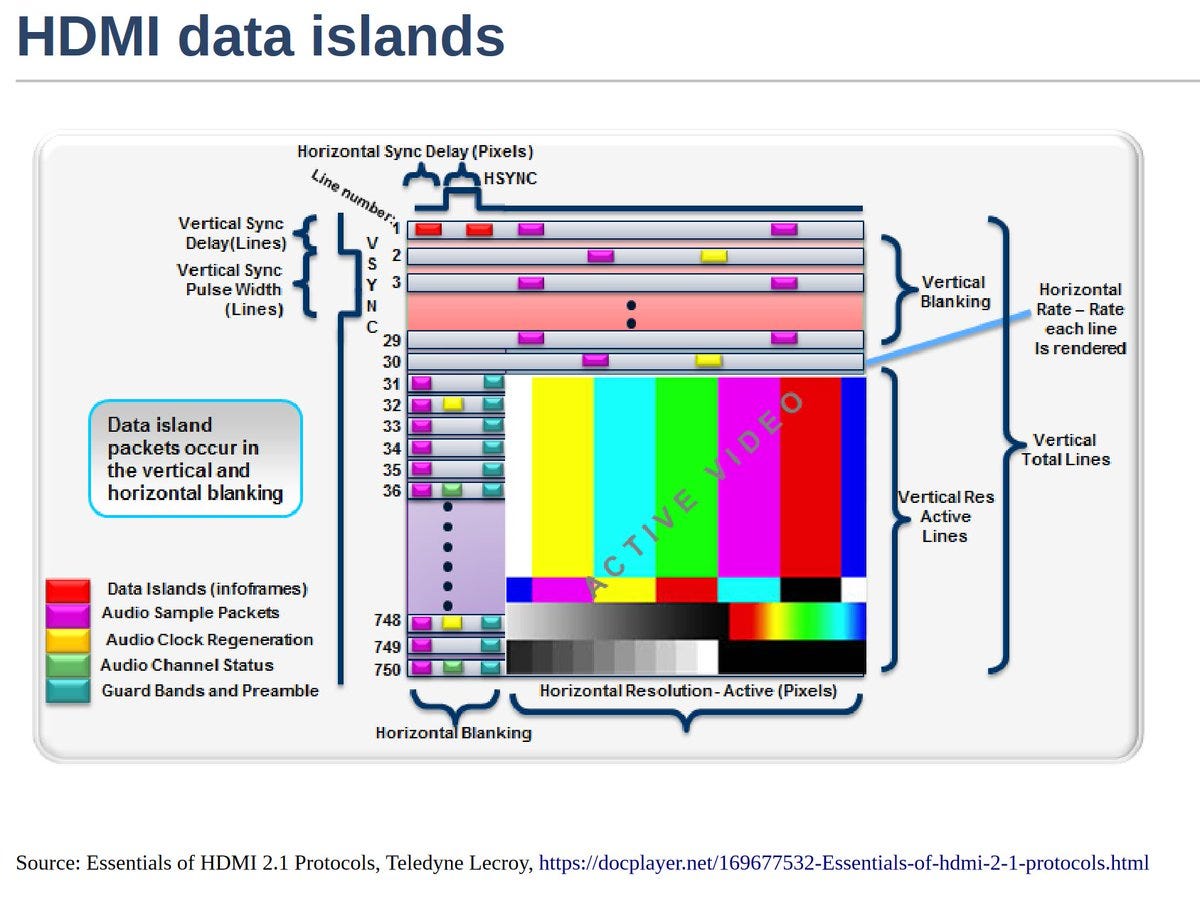
- An interesting talk from Steve Markgraf who explains how to use HDMI as a high-speed data interface. Although primarily intended for video applications, HDMI can be repurposed to capture high-speed data streams. ‘Data Islands’ as shown in the graphic below can be used to hold arbitrary data. GitHub project here.
Startup News 🚀
- Firefly Aerospace is exploring a private sale at a price of $1.5B, roughly three times its total venture funding of $572 million.This would be the ninth M&A transaction in the space sector alone for 2024.
- EthonAI has raised a $16.5M Series A led by Index Ventures for its manufacturing analytics system, currently in use at Lindt & Sprüngli, Siemens, and others.
- Revolv Space has raised $2.82M to help with in-orbit demonstrations of its modular solar array drive assembly. Primo Ventures led the investment.
- Humane, the company behind the AI Pin, is rumored to explore a potential sale at a price of $750 million to $1B. The company had previously raised $230 million prior to product launch from Microsoft, Qualcomm Ventures, and OpenAI’s Sam Altman.
- Electra has completed the first piloted test flight of its eSTOL ultra short takeoff and landing demonstrator aircraft. Known as a blown-lift design Electra uses a distributed array of electric motors to produce lift along the wing along with thrust simultaneously allowing it to perform takeoffs in one tenth the distance of a conventional plane.
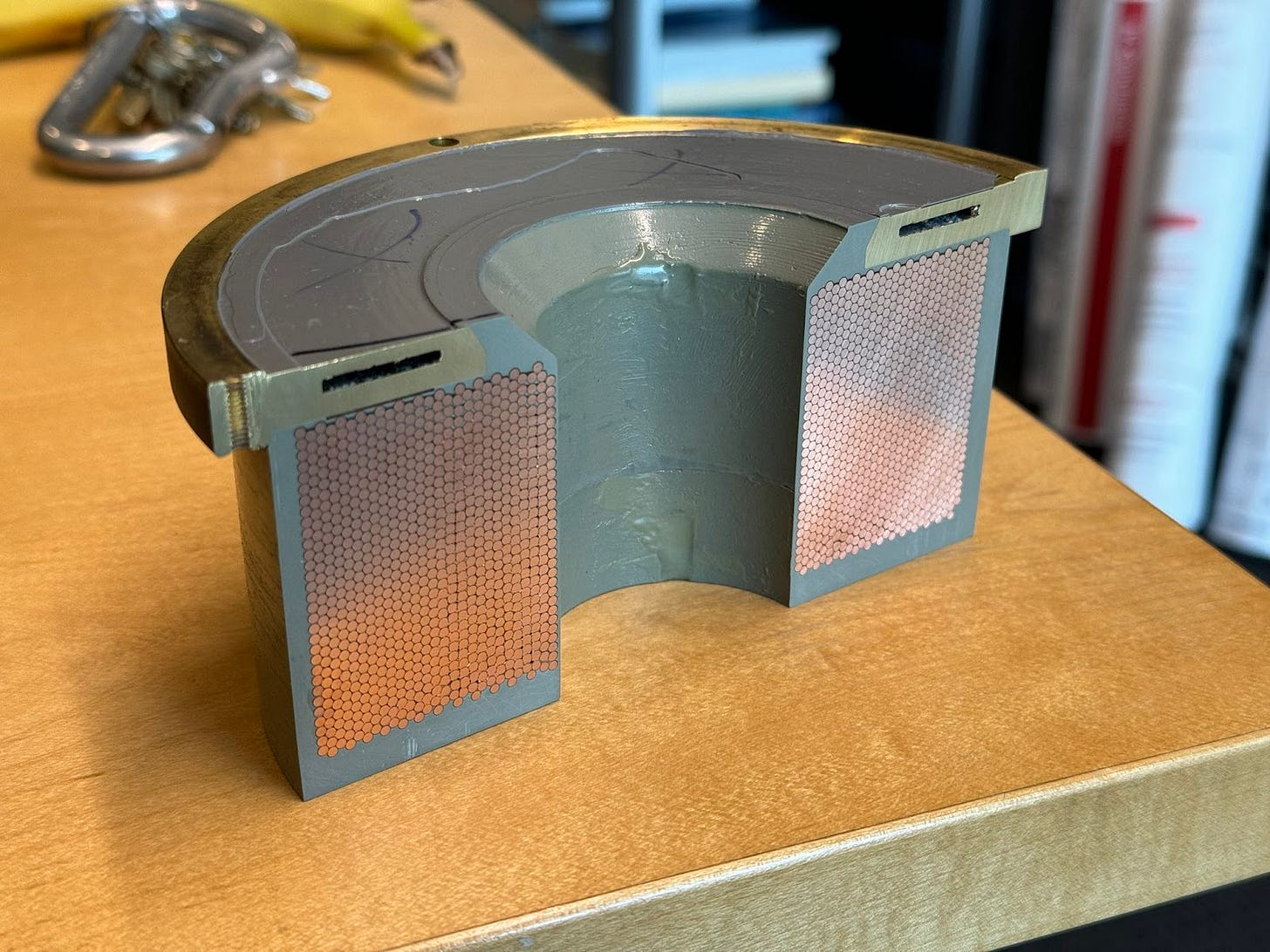
The lens of an electron microscope.