This Week’s Highlights
- Shared mechanisms in 7-segment displays & motorcycle valves 🏍️
- A 60 FPS paper e-ink display 📝
- An Interview with Shane Whiteside, CEO of Summit Interconnect 🎤

A warm welcome to our newest sponsor and friends over at POP Manufacturing! Located in Emeryville, CA, POP offers rapid prototyping and quick-turn services for FDM, PolyJet, full-color 3D printing, and CNC machining.
Interesting Links 🏭
Last week’s most clicked link was a teardown of the Bambu A1 Mini 3-D printer by the team at Vector3D.
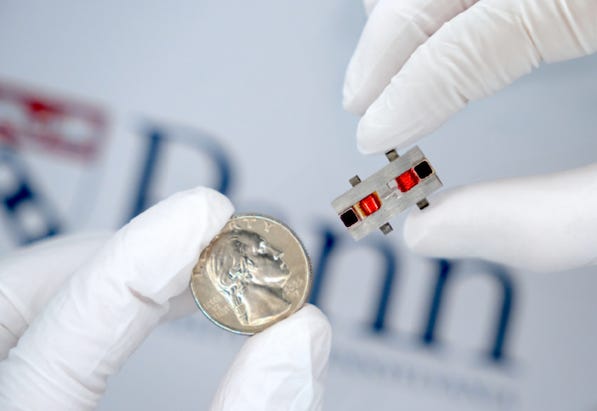
- Engineers at UPenn have developed a new filter that operates from 3.4 to 11.1 GHz, covering new high-frequency bands and enabling the use of direct-from-space signals for potential 6G cellular communication. Previously, filters lacked the selectivity needed to prevent interference in frequency signals. The full paper can be found here.
- A free PDF explaining high-speed constraint values in PCB layout. “Heuristics” are pragmatic shortcuts that can facilitate problem-solving and probability judgments. PCB design software tracks numerous engineering parameters as constraints which are heuristics to know if you have a design problem. Inputting these correctly is critical, from the simplest trace/space constraint to fiber weave skew. This book breaks down some of the most technical PCB design constraints you will encounter.Subscribe now
- Lithium phosphate battery prices cost 50% less in China. Prices from companies like CATL are $47/kWh, compared to $95/kWh outside China. One explanation for this significant price difference, despite similar labor, energy, and supply chain costs, lies in patent licensing, particularly with the cathode materials. These costs did not apply in China so manufacturing expertise developed years ahead of patent expirations.
- A startup called Daylight is turning high frames per second (FPS) “e-paper” displays into a product. Daylight has developed an e-ink tablet that runs at 60 FPS, a big jump from the 0.5-2 FPS seen in typical e-readers like an Amazon Kindle. The fundamental technology of the displays are different, where Daylight uses a transflective LCD display with a matte finish to achieve high FPS, while typical e-readers use an electrophoretic display.
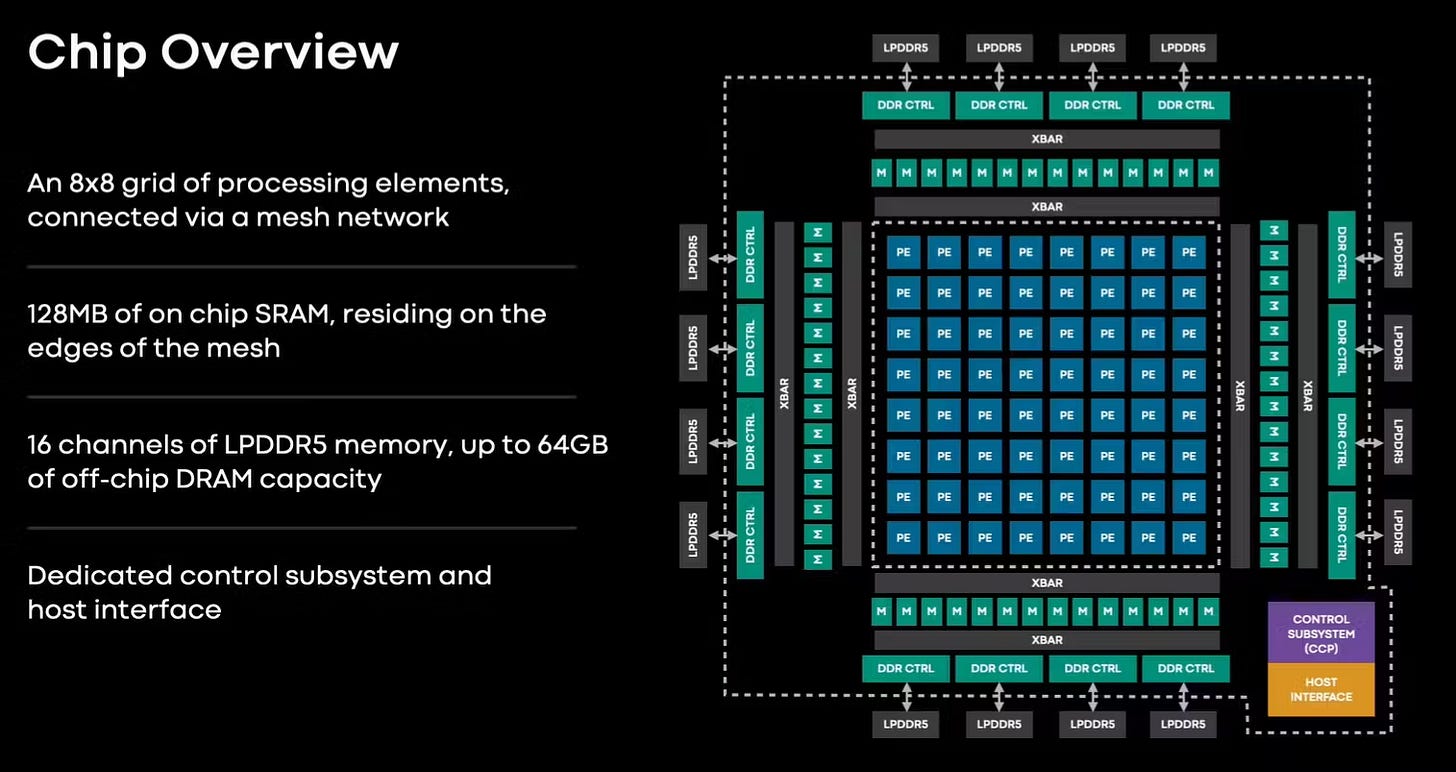
A blog paper that goes through the architecture of Meta’s new AI chip, the Meta Training and Inference Accelerator (MTIA). This is Meta’s first in-house silicon chip for use inside the company's data centers. AI chips are optimized for large volumes of parallel operations using a lower precision arithmetic suitable for AI applications. The MTIA uses a network of processing elements with a mesh connection to specific on-chip SRAM blocks to outperform GPUs for some AI tasks on TFLOPS/S/W. Full release here.
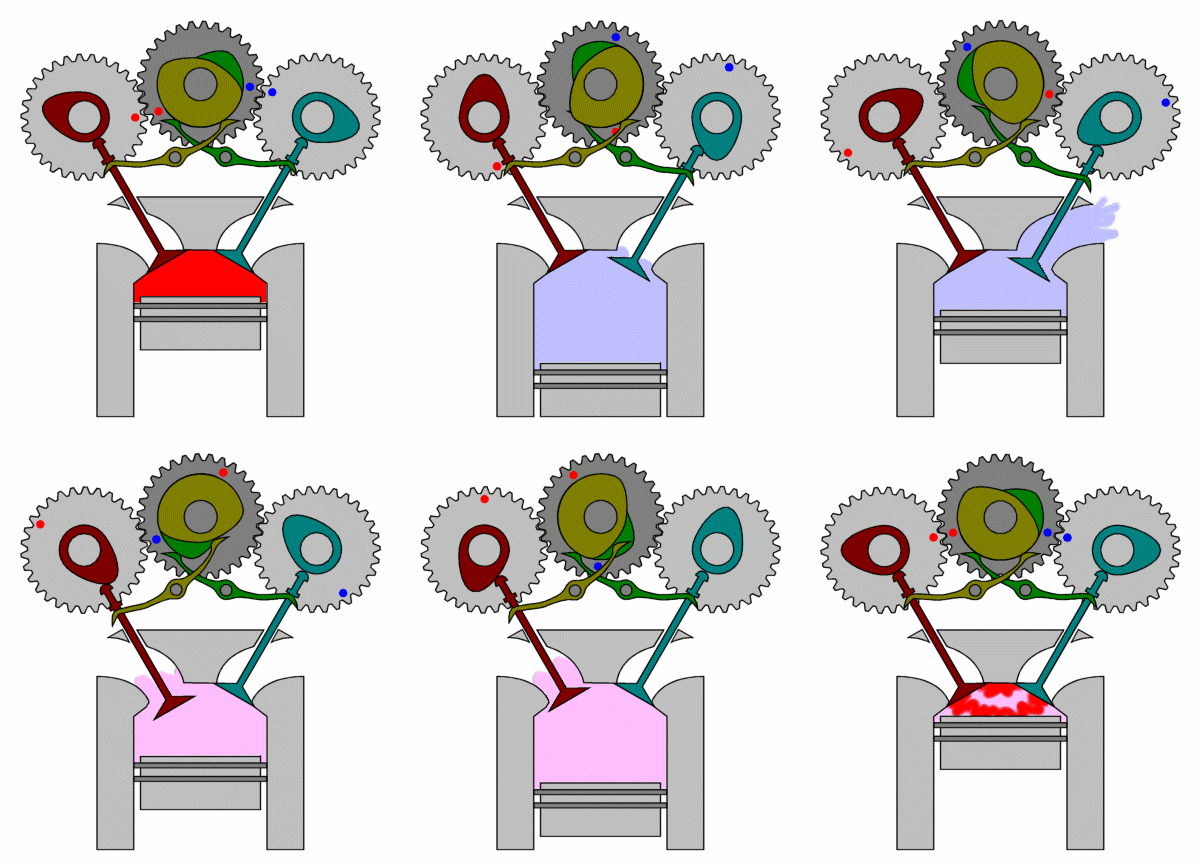
This Youtube Short provides a neat overview of an inverse cam pair mechanism used in a seven segment mechanical display. The inverse cam pair allows a follower gear to become self-returning, removing the need for a spring or elastic band. Ducati uses a similar mechanism to move the valves in their motorcycle engines, trade-named as desmodromic valves in piston engines to return valve positions without springs.
Startup News 🚀
- Prophetic AI is actively hiring engineers to help develop a non-invasive, neural device called The Halo. This neuromodulation tool will be worn around the head and use focused ultrasound, EEG, and fNIRS to create conscious experiences, like lucid dreaming. The company has secured $1.1 million in public funding from Box Group to support this project.
- Bot.co is the latest venture from Kyle Vogt, the former CEO and co-founder of Cruise. Vogt, along with self-driving experts Paril Jain (CTO) and Luke Holoubek, has secured $150 million in funding from investors like Quiet Capital and FiftyYears. While specifics are sparse, the company aims to develop robots designed for household tasks.
- Airloom Energy is raising $12.7M from 21 anonymous investors. The company is working on a wind power system featuring vertical blades arranged around a track to generate electricity. Airloom’s design aims to produce electricity at a cost of $0.013 per kilowatt-hour, significantly lower than the current average of $0.038 per kilowatt-hour.
- Autodesk has acquired Wonder Dynamics, a VFX tools company co-founded by actor Tye Sheridan. Wonder Dynamics offers a browser-based application that replaces traditional motion capture equipment, allowing a human to be substituted with a 3D computer model in real-time, using only video. Wonder Dynamics raised $11.5 million in funding, including a $9 million Series A from Horizon Ventures and Founder Fund.
- San Diego startup South8 has received a convertible note for an undisclosed amount from Porsche Ventures to develop liquefied electrolyte batteries. The company's LiGas technology uses a non-corrosive gas, held as a liquid under pressure, to provide increased energy and charging performance across a wide range of temperatures from -60C to +60C.
- Arc Boats has released their second electric, recreational vessel for public demos. Founded in 2021, Arc Boats has raised over $100 million in funding, including a $70 million Series B from Eclipse Ventures last year.
- Touvlo is building out a beta platform for remote technical screening of mechanical engineers. Candidates use an in-browser platform to complete both short technical, and collaborative design questions. Results are then summarized and returned with a full recording of the interview.