Highlights this week: 🔋 li-ion battery digital twins, ⚡️ superconducting diodes, and 🏭 a manufacturing industry outlook.
🔗 Last week’s most-clicked link: A compilation of interviews with the semiconductor industry’s top CEO’s.
Startup News 🚀💰:
- EnSilica, a UK-based semiconductor design house, is raising $7.4M from the London Stock Exchange’s Alternative Investment Market. This ‘IPO’ values EnSilica at $46M.
- SiMA.ai, a semiconductor startup developing a system-on-chip platform for AI applications, raised an additional $30M to round out their Series B led by Fidelity Management & Research Company and Lip-Bu Tan (legendary semi investor + former Cadence CEO).
- Red Leader Tech, a hardware startup developing the ‘LIDAR Version Of The iPhone Camera’, raised a $10M Series A led by NextView and Micron Ventures.
- Chiplytics, a startup bringing semiconductor authentication technology to market, just came out of stealth from the Albequerque-based Scouts Venture incubator.
- Lynx, the French XR hardware startup known for crowdfunding the Lynx R-1 mixed reality headset, raised a $4M Series A led by social VR platform Somnium Space.
Interesting Links 🔗:
- Smarter battery management systems using “digital twins”. The lifetime of lithium-ion battery systems depends greatly on the materials used, the system design and the operating conditions. This complexity has therefore made real-world control of battery systems challenging. However, with the recent advances in understanding battery degradation, modelling tools and diagnostics, there is an opportunity to fuse this knowledge with emerging machine learning techniques towards creating a battery digital twin.
- The DeLorean returns with a stylish, 300-mile EV — dubbed the Alpha5.
- The 1st SpaceX Starlink Gen-2 satellite has been produced. It's 7 meters long & 1.2 tons (4-5x more massive than Gen 1). This new version will be almost an order of magnitude more capable than Starlink 1 in terms of useful data throughput.
- A TU Delft team has demonstrated a superconducting diode that gives zero resistance in one direction, but blocks current completely in the other. The key is in using novel quantum materials to get over the inability to control magnetic fields at the nanometer scale. This discovery may enable computers with up to terahertz speed -- 400x faster than today’s speeds.
- How a lithium-ion battery actually works, explained incredibly well in video form from the atomic level all the way up through the system level. See the comments to confirm for yourself, consider this 15 minutes well spent.
- Great video highlighting tips to improve soldering skills and effectiveness. The main points revolve around use of flux, soldering at the right temperature, and using the right (and clean) tips. In general, more flux is better -- slight cleaning after is better than cold/ugly joints.
- The manufacturing industry is expecting a shortfall of 2.1 million skilled jobs by 2030. Deloitte’s 2022 manufacturing industry outlook is a great read on manufacturing growth expectations, supply chain woes, and hiring/retaining top talent.
- Bunny Huang’s book on “hacking the xbox” and general hardware engineering/hacking tips and inspiration. Must-have for hardware/electrical engineers and anyone more curious about how things work and where vulnerabilities lie.
- Andrew Waterman’s 2016 PhD dissertation at Berkeley outlining the RISC-V instruction set architecture, just after the founding of SiFive. Section 2 is a great primer on ISA’s in general, and the motivation for creating a new one.
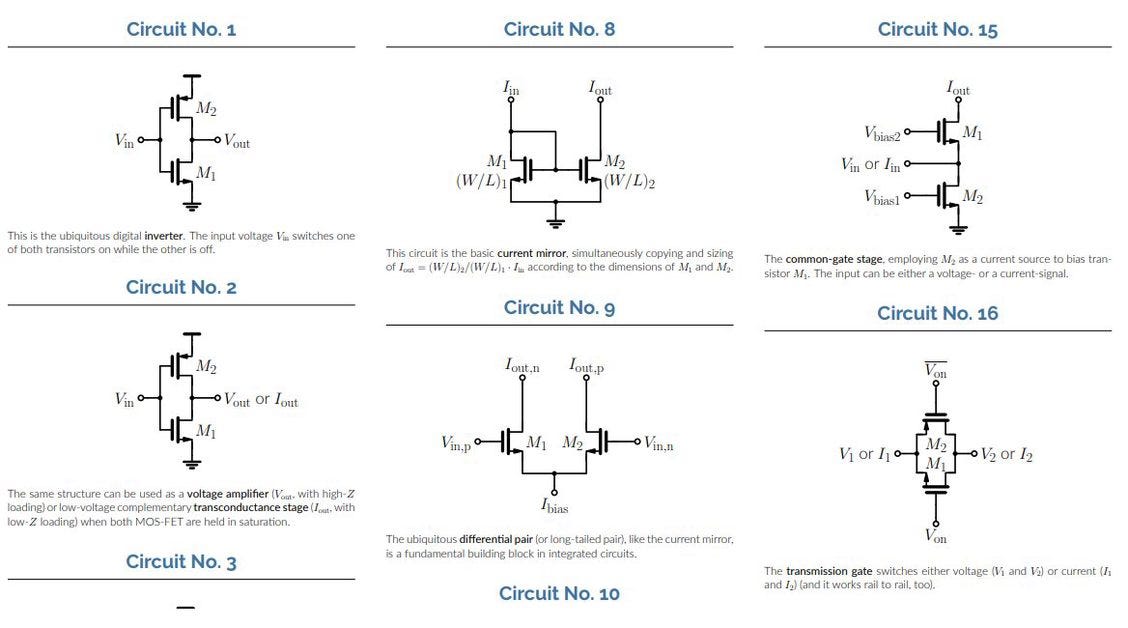
One Interesting Picture 📸: how many ways to put two transistors together?