A big welcome to our newest sponsor, AllSpice! AllSpice is a hardware collaboration platform built on git. It helps electrical engineers version-control their designs, conduct asynchronous design reviews, and manage releases to quickly get the right products to market.
Highlights this week: 🎤 semiconductor ceo interviews, 🏭 silicon carbide, and 🤖 ‘make’ for silicon.
🔗 Last week’s most-clicked link: One of hackerdom's great heroic epics. In a few spare images it captures more about the esthetics and psychology of hacking than all the scholarly volumes on the subject put together.
Startup News 🚀💰:
- Chargelab, a startup building software to operate and optimize electric vehicle charging equipment, raised a $15M Series A led by King River Capital, with participation from ABB E-Mobility, Construct Capital, Root Ventures, Highline Beta, Third Sphere, and Maple VC.
- Nikola Labs, a Columbus, OH-based provider of sensor-based reliability solutions, raised a $20M Series A led by G2 Venture Partners and Triangle Peak Partners.
- Anduril is raising up to $1.2B at a $7B pre-money valuation for its defense tech.
- Nomagic, a Polish startup building picking robots for e-commerce warehouses, raised $22M from Khosla Ventures and Berlin’s Almaz Capital, along with the European Investment Bank, Hoxton Ventures, Capnamic Ventures, DN Capital and Manta Ray.
- Ubotica, a startup building ‘smarts’ for smart satellites, raised a $4.2M Seed round led by Atlantic Bridge along with Dolby Family Ventures and Seraphim Space.
- Space Perspective, a startup building stratospheric balloon system that will loft a capsule carrying passengers to an altitude of about 30 kilometers, raised $17M from Silicon Valley Bank, Trinity Capital and Henry Kravis (KKR).
Interesting Links 🔗:
- A compilation of interviews of the semiconductor industry’s top CEOs. Find out what motivates them, how they work, and what they would do if faced with the same career choices over again.
- Unlike their quartz and smart siblings, mechanical watches can run without using any batteries or other electronic components. This article explains the workings of the mechanism with an interactive demonstration. Drag the watch around to change the viewing angle, and use the slider to peek at what’s going on inside.
- What’s down the road for silicon? When Tesla released its Model 3, it had a secret technical edge over the competition: a material called silicon carbide. One of the key parts of an electric car is the traction inverters, which take electricity from the batteries, convert it into a different form and feed it to the motors that turn the wheels. To get the pin-you-to-your-seat acceleration that Teslas are known for, traction inverters must pump out hundreds of kilowatts, enough power to supply a small neighborhood, while being dependable enough to handle life-or-death highway use. While previous traction inverters had been based on silicon, the Model 3’s were made from silicon carbide.
- Advocacy column for on-shore PCB manufacturing. Over the past two decades, domestic production of printed circuit boards has decreased from 26% to 4%. In that same period, the industry has shrunk from nearly 2,500 U.S.-based companies to only 145. This invites unacceptable supply chain and national security risks.
- Tesla AI Day 2 set for Aug 19, 2022. Expect updates on the Full Self-Driving Beta, Tesla’s self-driving chip, and its humanoid robot program.
- The Chip Shortage is a Manufacturing Problem with a Technology Solution. 75% of all semiconductor manufacturing is done by Asian foundries, and TSMC contributes to more than 50% of the market share. Virtual prototyping, digital twinning are some technological ways to navigate a chip shortage.
- SiliconCompiler’s git repo, an open-source modular build system for hardware ("make for silicon"). The project philosophy is to "make the complex possible while keeping the simple simple". Already in use by the Zero ASIC for commercial tapeouts at advanced process node.
- The chip shortage is so bad companies are ripping them out of washing machines. The demand for these 10-20yo chips has grown as everyday items and machines become more and more connected. In an earnings call, ASML said they would be happy if they could fulfill 60% of the orders ASML has received this year.
- Democratizing IC Design: The SSCS PICO Program. Nice overview of the open-source IC design ecosystem, Google’s MPW program, various design tools, and (previous) design contests. Check it out for more information and getting involved in the future.
- IEA’s 2022 Global EV Outlook. Back in 2012, just 120 000 electric cars were sold worldwide. In 2021, more than that many are sold each week. Nearly 10% of global car sales were electric in 2021, four times the market share in 2019. This brought the total number of electric cars on the world’s roads to about 16.5 million, triple the amount in 2018. Global sales of electric cars have kept rising strongly in 2022, with 2 million sold in the first quarter, up 75% from the same period in 2021. Electric car sales continue to break records, but mineral supply constraints are looming.
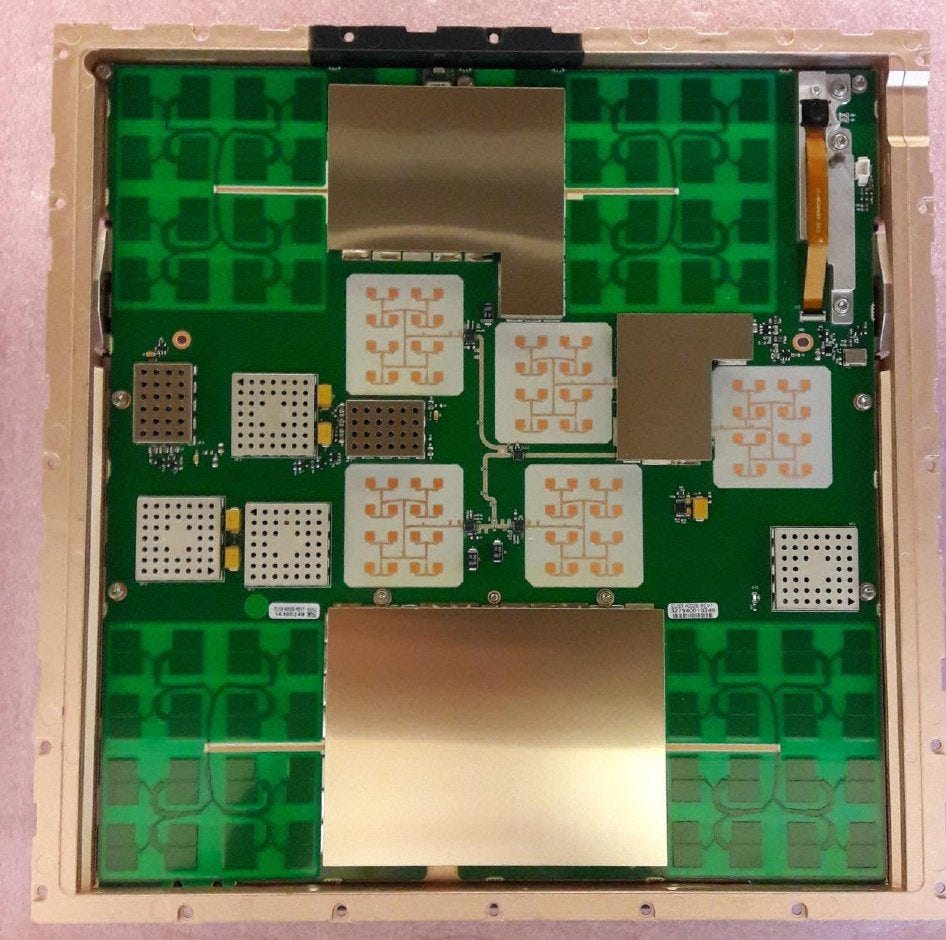
One Interesting Picture 📸: radars for tracking golf balls.