Are you a student? We're offering $50 for each classroom where you hand out flyers and make a quick announcement—up to $250 in total! If you’re interested, just fill out the form here.
Interesting Links 🏭
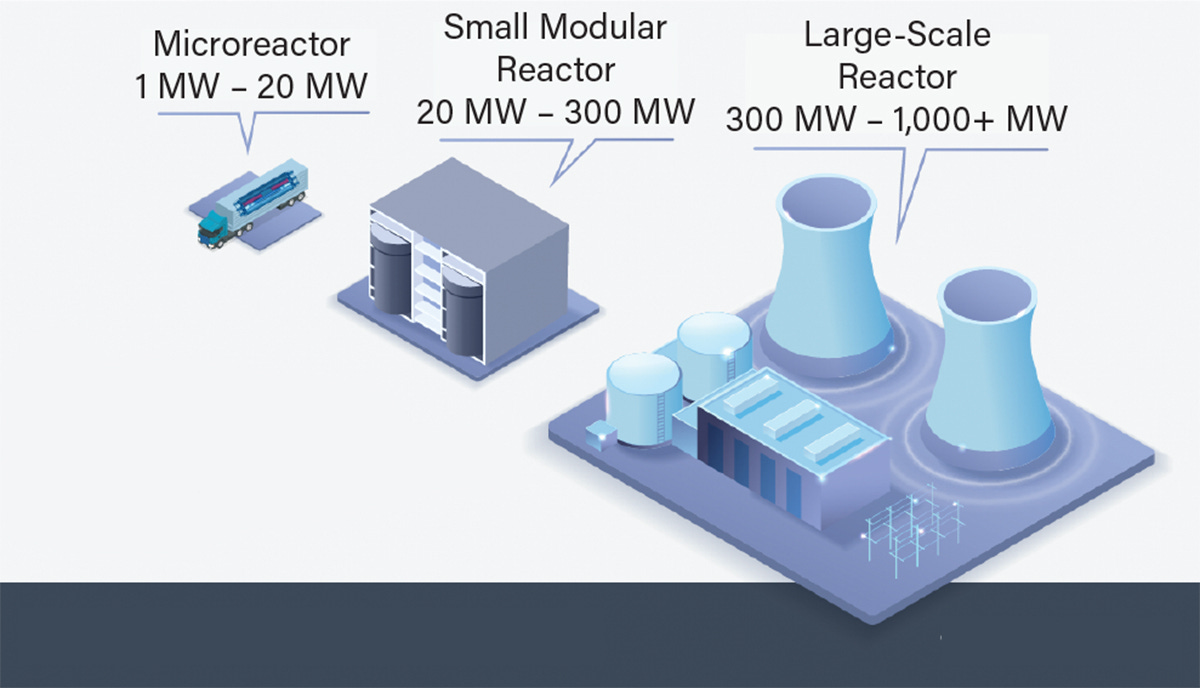
Size and power output comparison of a conventional nuclear reactor, small modular reactor, and microreactor (vSMR).
Tech giants have been investing billions of dollars in nuclear energy as a source of emissions-free electricity. The recent investment thesis has focused around a relatively new nuclear reactor design: small modular reactors (SMR). Compared with conventional nuclear reactors, SMRs focus have three primary advantages: modular construction (simplifying deployment), passive safety systems (significantly de-risking potential failures), and lower construction costs (more economically viable). This paper provides a great overview of SMRs and the long, controversial history behind commercial nuclear power.
Fun facts: data centers are projected to use 8% of the US’s power by 2030, and a single server rack with AI computing chips can draw over 100 kW—up from the 5-10 kW typical for traditional server racks!
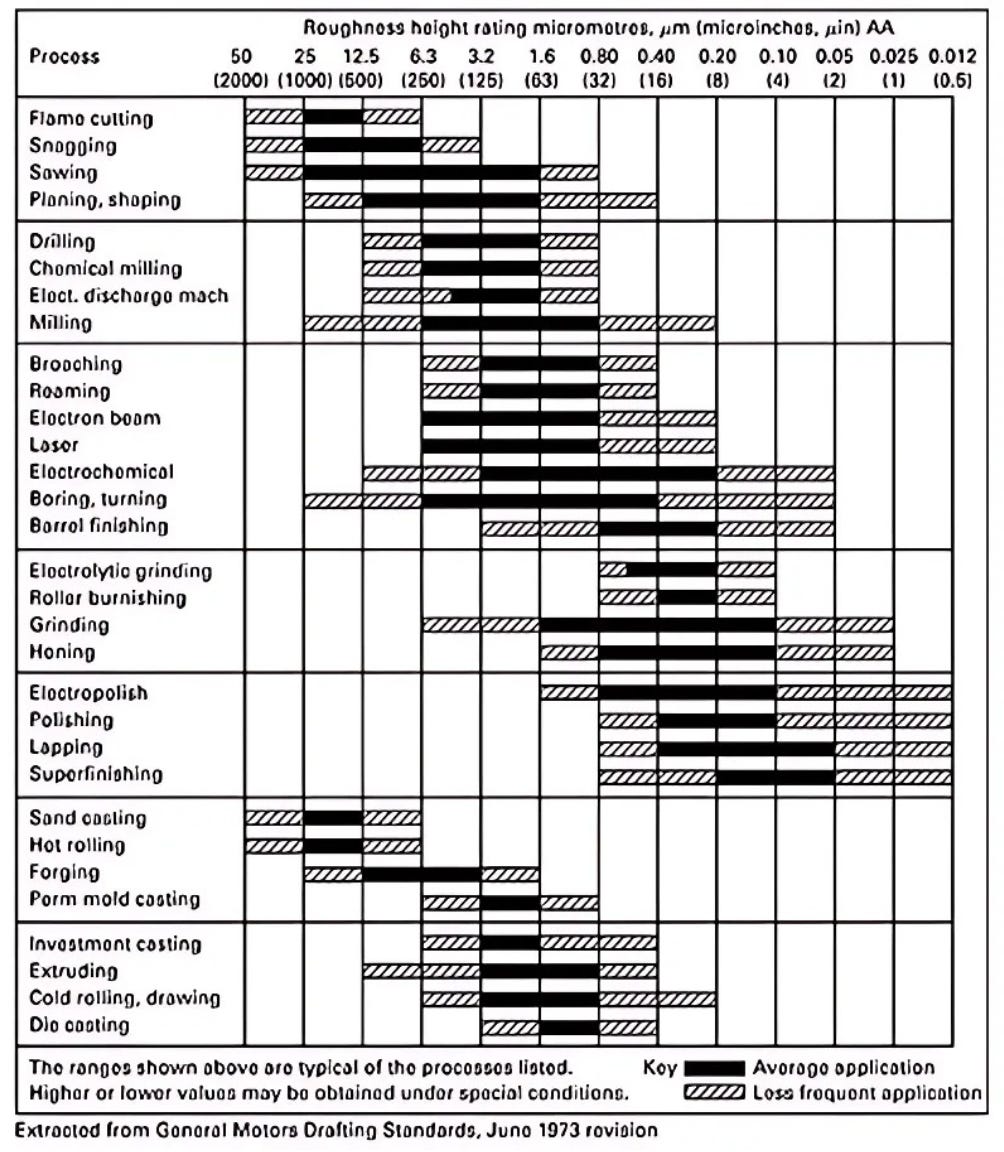
A comparison of surface roughness produced by common manufacturing processes.
Ra 0.05 µm: A highly polished, very smooth finish, commonly used in optical components, semiconductor devices, and medical implants.
Ra 0.1 µm: An exceptionally smooth surface, suitable for aerospace components, precision gears, and electronic devices.
Ra 6.3 µm: A moderately rough texture, often found in brake components, conveyor belts, and metal castings.
Ra 50 µm or more: A very rough and textured surface, ideal for abrasive applications, rough coatings, and similar finishes.
Micheal Ferguson, former Co-Founder & CTO of Fetch Robotics, published thoughts on the current landscape of robotic startups in 2024. Fetch Robotics was a company that developed autonomous mobile robots (AMRs) for logistics and warehouse automation, and was acquired by Zebra Technologies for $290M a few years back. He emphasizes most successful robotics companies in the future will be built by domain experts who focus on solving specific applications. Rather than reinventing the wheel like many robotics startups did in the 2010s, they’ll focus on using off-the-shelf components, cutting out unnecessary complexity, and simplifying their products to address real customer needs.
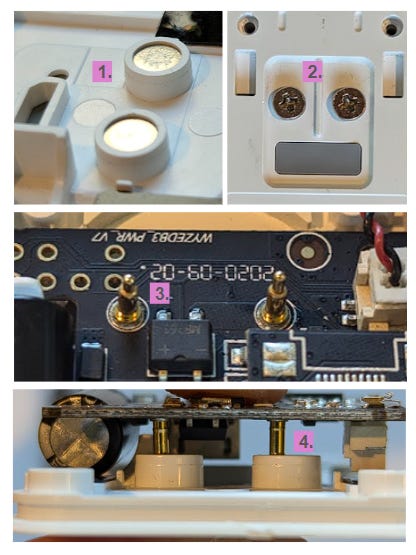
A teardown on the Wyze Video Doorbell detailing common waterproofing methods used in the design of outdoor consumer products. Spring-loaded pogo pins are soldered to the power PCB and contact with metal inserts on the front housing. This approach simplifies electrical connections while keeping everything waterproof and easy to assemble.
Pogo pins contacting the metal inserts (4).
MIT researchers have developed a method to 3D print active electronic components, specifically transistors, using a hybrid ink system that combines both conductive and semi-conductive materials. This method achieves transistor performance comparable to those made with traditional manufacturing processes, with on/off ratios exceeding 10^6 and electron mobilities of up to 0.5 cm^2/Vs, potentially revolutionizing the production of custom electronic devices by creating entire circuits in a single print job. Full paper here.
Startup News 🚀
On the topic of nuclear, several notable investments and partnerships by Amazon, Google & Microsoft:
X-energy raised a $500M Series C round to support completion of the company's SMR design. The agreement with Amazon involves a 4-unit project generating 320 MW, with an option to expand to 12 SMR units for a total output of 960 MW.. The round was led by Amazon’s Climate Pledge Fund.
Google signed a master plant development agreement with Kairo Power, committing to purchase 500 megawatts of power. The partnership aims to deploy a fleet of advanced nuclear projects across the U.S., with a goal of reaching a total capacity of 500 MW by 2035.
Microsoft agreed to purchase the entire electricity output of the Three Mile Island nuclear power plant for the next 20 years to power its data centers. Notably, Three Mile Island was the site of the worst commercial nuclear accident in U.S. history, which occurred in 1979. The facility plans to restart the Unit 1 reactor in 2028, which had reliably produced electricity for decades before being decommissioned in 2019.
Path Robotics has raised a $100M Series D round, positioning the company to continue deployment of their robotic welding system. The company’s two core products center around robotic welding cells, and they’re broadening their scope with a contract manufacturing service for weldin.gThe round was led by Matter Venture Partners and Drive Capital.
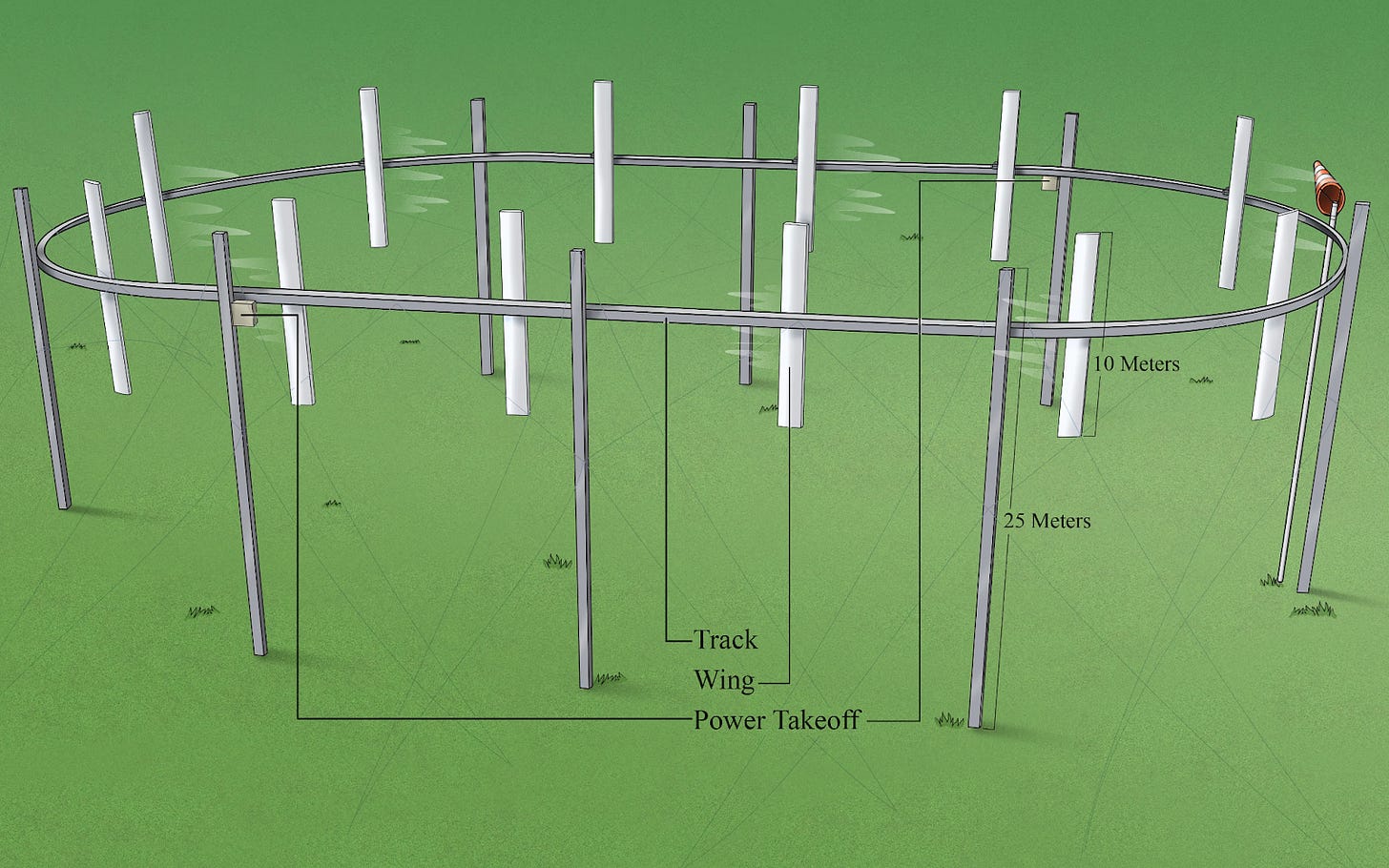
Airloom Energy secured $13.75M in financing to support development of a pilot program in Wyoming to demonstrate power production and system efficiency of their next gen. wind turbines. Airloom's wind turbine design prioritizes mass-manufacturability, a smaller footprint, and reduced infrastructure costs compared to traditional horizontal-axis wind turbines (HAWTs). The financing was led by LowerCarbon Capital following a previous raise earlier this year.
ASML, the Dutch semiconductor equipment giant,accidentally released their quarterly earnings report a day early, triggering a $53.6 billion drop in market value due to a lower-than-expected sales forecast. ASML is known for producing advanced EUV lithography systems, which use extreme ultraviolet light to etch extremely fine features on wafers, essential for manufacturing the smallest chips at 5 nm and 3 nm process nodes.
The US Space Force is funding next-generation space propulsions systems that can “maneuver without regret” in a joint collaboration with the University of Michigan to expand upon research which produced a 100kW Hall thruster. Larger designs which can use propellant produced in space could be a key innovation in the coming decades. USSF is supporting UM’s new Space Power and Propulsion for Agility, Responsiveness and Resilience Institute with $35M.