

Topics worth your time this issue: NVH testing and the engineering of perceived quality, the case for cowboy engineering, Lime’s IPO filing, India’s first space-tech unicorn, wave-powered data centers, and more.
Interesting Guide: Fundamentals of Noise, Vibration & Harshness Testing
The engineering behind perceived quality is often tactile before it is analytical. A system can meet its specifications and still feel cheap, loose, or unfinished. Much of that judgment happens below conscious analysis; we feel it before we can explain it. NVH, short for noise, vibration, and harshness, is a field within automotive and mechanical engineering focused on unwanted sound and vibration in engineered systems.
The car you’re driving almost certainly has NVH engineered into it, and while the discipline is most formalized in automotive work, the same fundamentals apply anywhere a system is judged both by what it does and by how it feels and sounds.
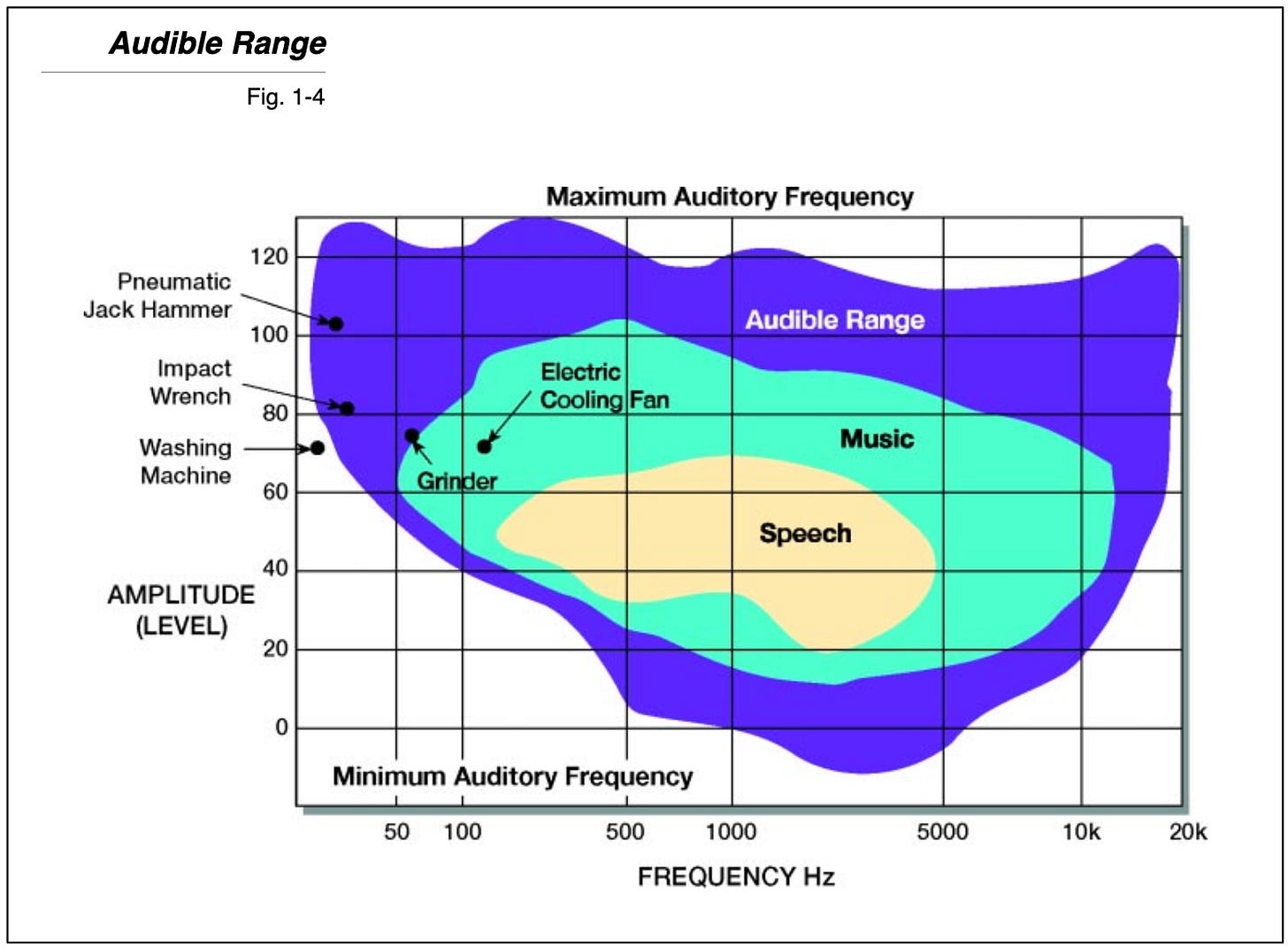
For a practical introduction, Toyota’s training manual is a great plain-English guide written for technicians diagnosing how noise and vibration move through a vehicle. The basic vocabulary: sound is propagating energy, noise is unwanted sound, vibration is what you feel, and harshness is the combined tactile and audible response, typically in the low-frequency range (~15–300 Hz).
On the applied side, NVH is best described as a source-path-receiver problem. Identify what’s creating the noise or vibration, trace how it moves through the structure, then decide where to intervene: quiet the source, isolate the path, or treat the receiver with damping, absorbers, barriers, stiffness changes, or better mounts. While the mental framework is simple, almost nothing about applying it is. Real systems like cars are extremely complex to model from first principles, so most of the work is empirical: instrumenting the system, figuring out which resonances matter, adjusting stiffness or damping, and going back to the rig to see whether anything moved.
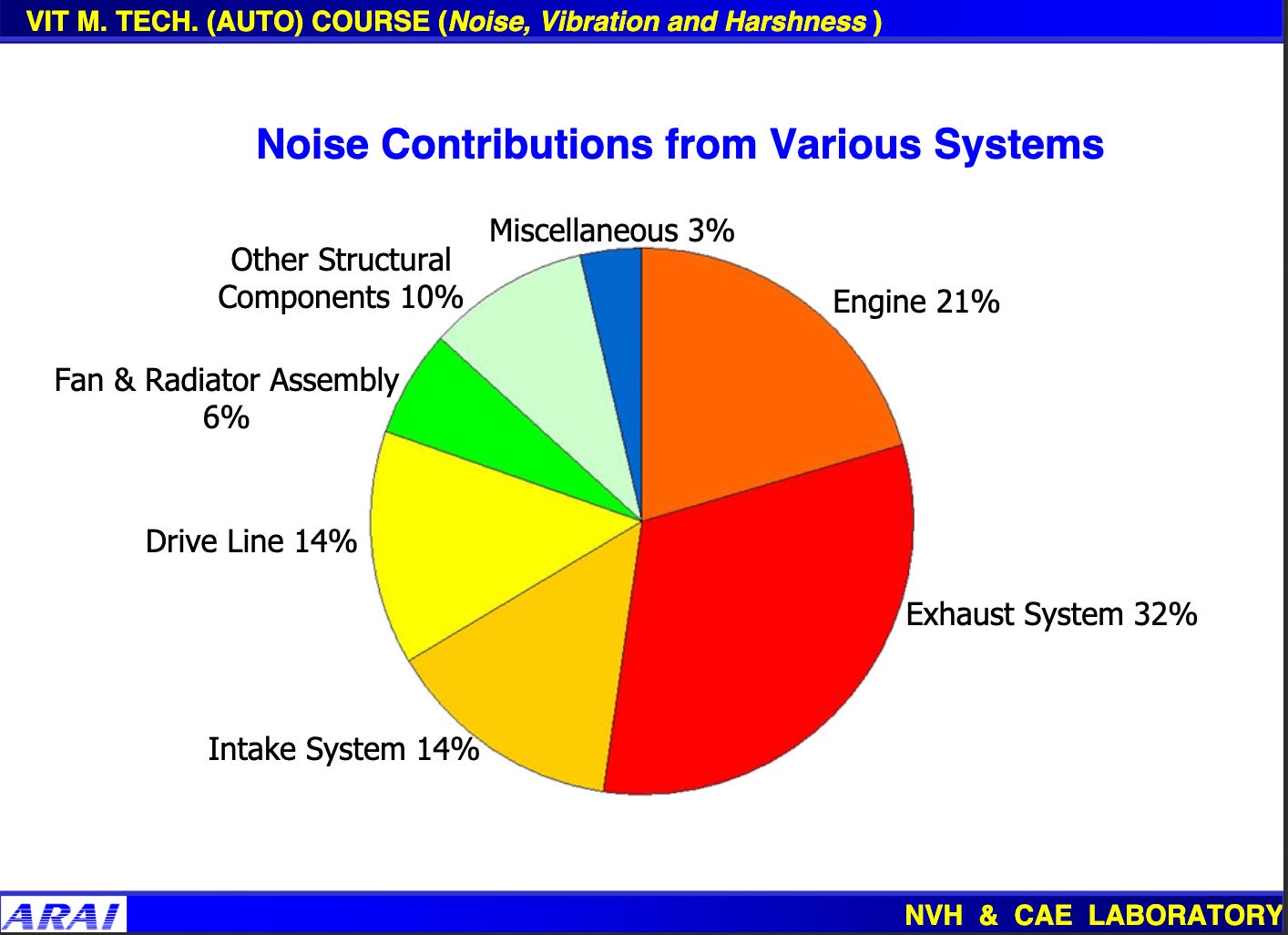
From two engineers writing about automotive testing in the late 1990s:
Automotive NVH testing, while extremely complex in practice, is conceptually pretty simple. Excitation from either the engine, powertrain, the road surface, or the air passing over the vehicle excites the structure and makes noise … Perhaps the most fundamental problem in automotive NVH testing is that the industry regularly builds products it can’t analyze. The limitations may be either technical (nobody knows how) or economic (we know how, but it is too expensive). The result is that testing is currently an inseparable part of the product development process.
More From Around the Web
- A clever flex PCB trick used for mounting EKG electrodes.
- Core Memory gets a first look at Tesla’s new Semi factory in Nevada.
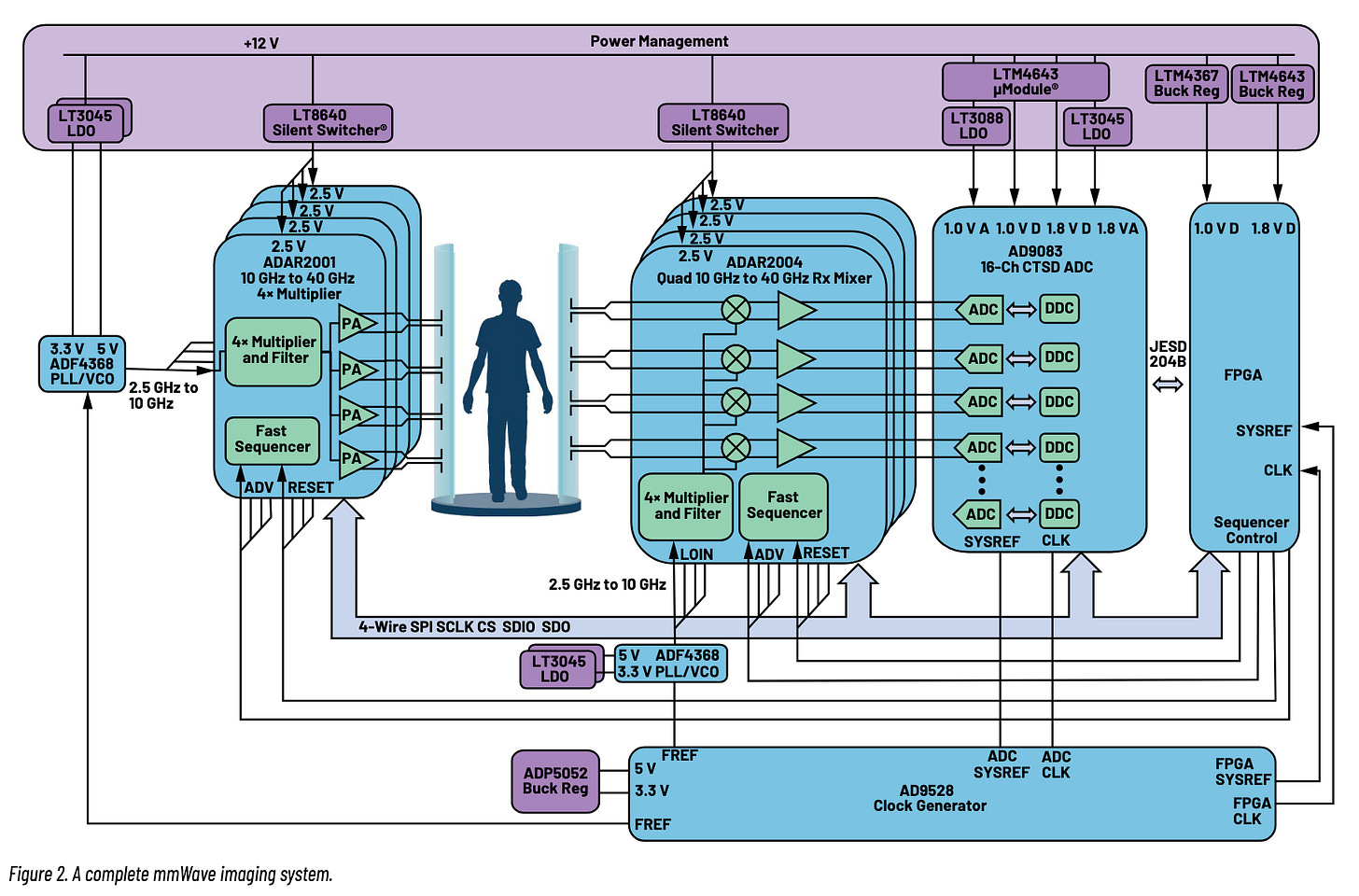
- The system-level RF architecture behind airport body scanners.
- In praise of the cowboy engineer, who knows the first version does not need to be elegant; it just needs to exist.
Engineering is a discipline that follows strict rules of mathematics and science, but someone had to discover those rules first. We know that 316 stainless steel has a melting point of between 1370°C and 1400°C, but do we even remember how we acquired that information in the first place? We know it because of what we call “Cowboy Engineers.” Melting points were discovered because someone once took a piece of 316 stainless steel and turned up the furnace until the steel melted. We know the bend radius of tubing and elongation percentages of mandrel wires because someone once bent and stretched these materials past their limits. — Component Supply
Interesting Chart: Vehicle Noise and Vibration Phenomena
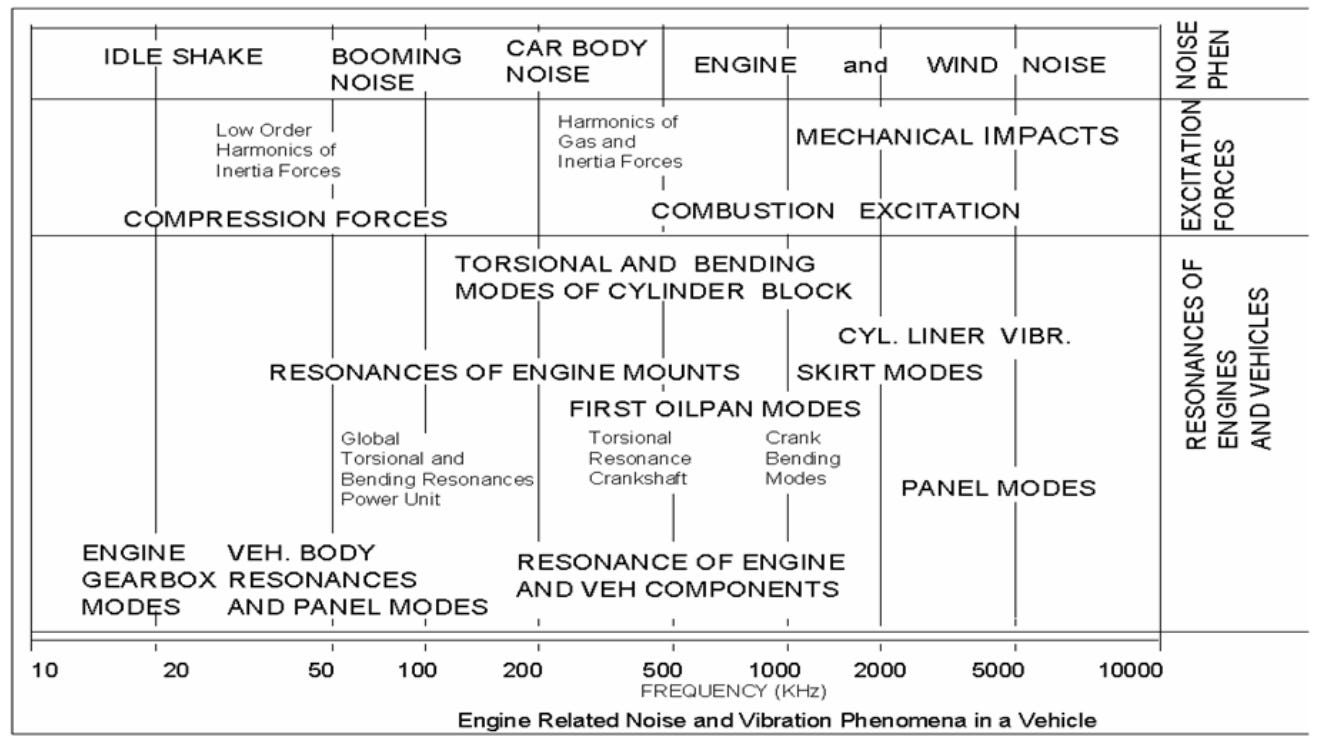
From VIT’s NVH and CAE Laboratory: a frequency map of the main noise and vibration phenomena in a vehicle.
Manufacturing & Startup News
- Lime, the Uber-backed company behind shared e-scooters and e-bikes, filed to go public showing $886.7M in 2025 revenue and a business that has outlasted much of the first micro-mobility cycle.
- Panthalassa, an ocean energy startup building floating wave-powered data centers, raised $140M in new funding to scale its pilot manufacturing facility and begin commercial deployments as AI compute demand pushes power generation into more exotic frontiers.
- Astranis raised $450M in new capital, including a $300M Series E round and $155M in debt financing, to expand production of its small GEO communications satellites as it targets growing demand from commercial telecom operators and U.S. military programs.
- Moment Energy raised $40M in Series B funding to scale its second-life EV battery storage systems, turning retired automotive packs into modular grid-scale storage.
- Skyroot Aerospace raised $60M at a $1.1B pre-money valuation, becoming India’s first space-tech unicorn as it prepares Vikram-1 for the first orbital launch attempt by an Indian private company.