

👋 Happy Saturday! A few highlights for your weekend: how new tariffs shaking up the electronics manufacturing landscape, using 1 kW LEDs to film welding arcs without blowing out the image, and how satellites use synthetic aperture radar to image the world.
Interesting Chart: The New Cost Map for Electronics Manufacturing
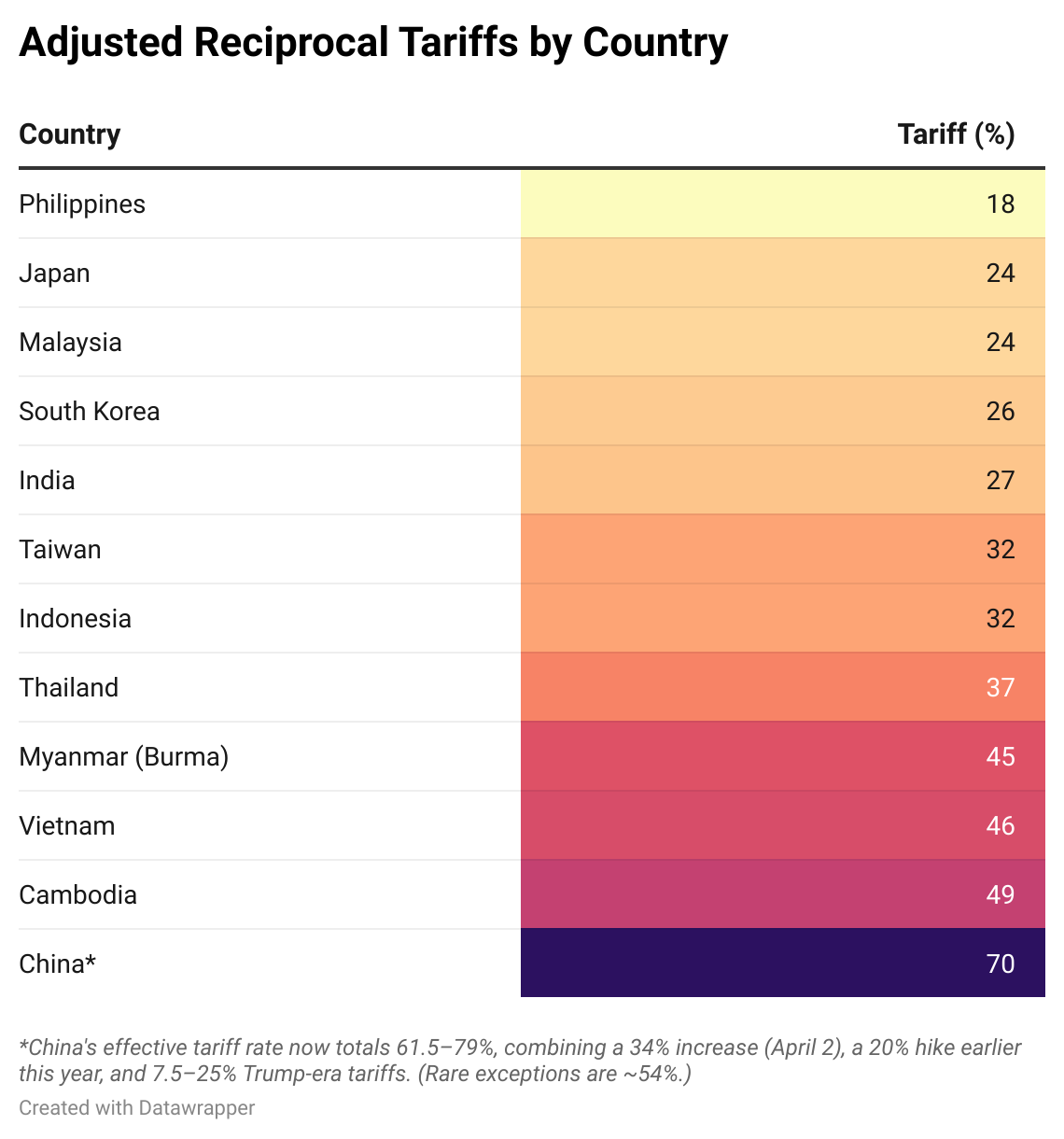
A breakdown of the latest tariffs that matter to electronics and tech companies. The U.S. imposed new tariffs on Asian electronics exporters, with 18-49% for most countries and China in particular now facing stacked tariffs of 61-79%.
If you haven’t felt the immediate effects, here’s another victim to the cause: Switch 2 pre-orders are on hold thanks to tariffs and “evolving market conditions”. (The original Switch was manufactured in Vietnam and China.)
If you’re like us and don’t know much about global trade policy, this article, The Effect of Tariffs: How the Machine Works, is a good read.
"The incentive to build global supply chains is efficiency, but tariffs disrupt that structure."
Interesting Video: How to Film Welding Without Blowing Out the Image
A video on filming insanely bright processes like welding arcs without losing surface detail. 1kW (!) pulsed blue LEDs, synced to the camera shutter (~10μs), overpower the arc's brightness and expose surface features that are normally invisible. The light is intense enough to make a thin piece of black plastic audibly vibrate at the pulse frequency.
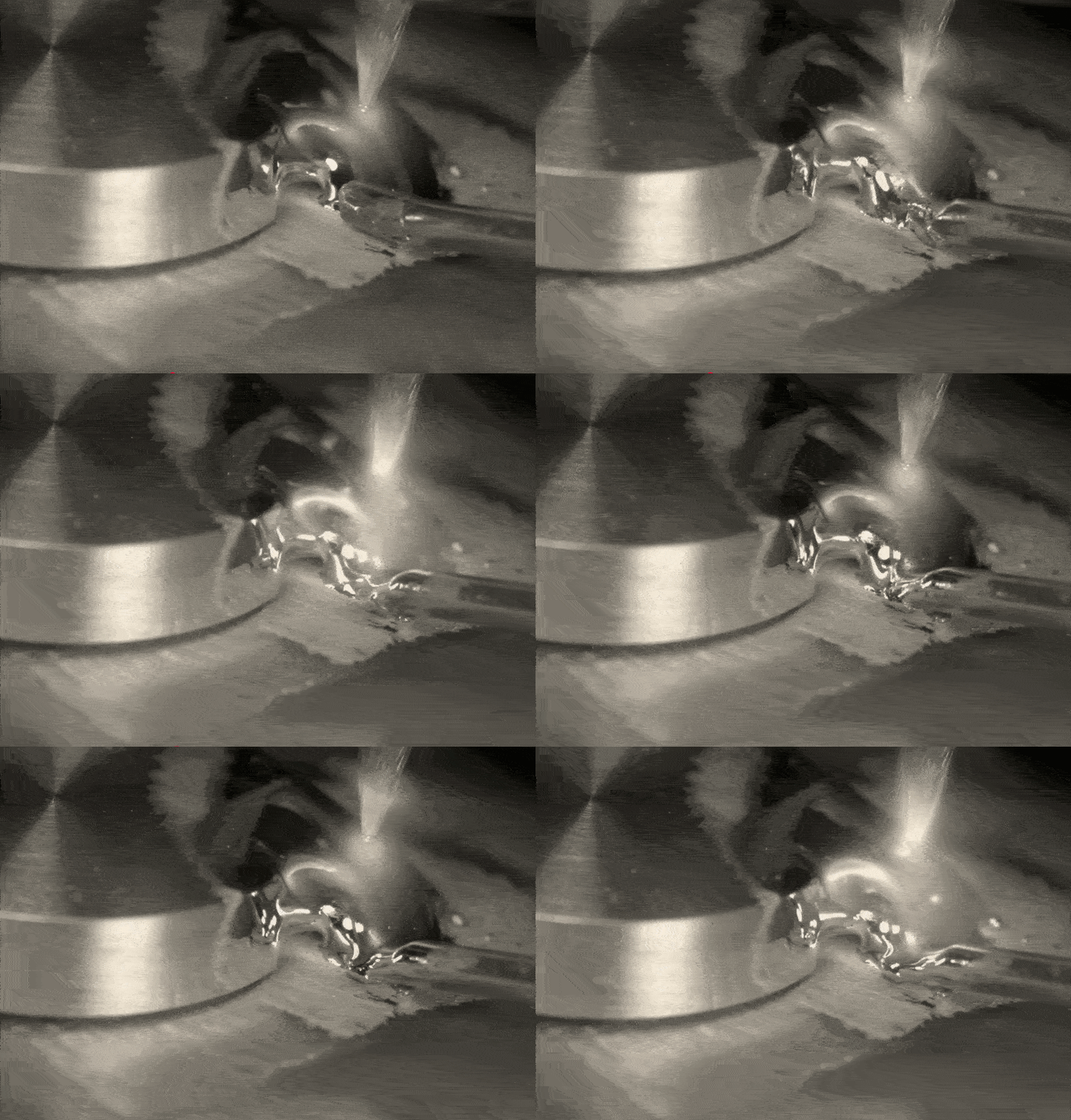
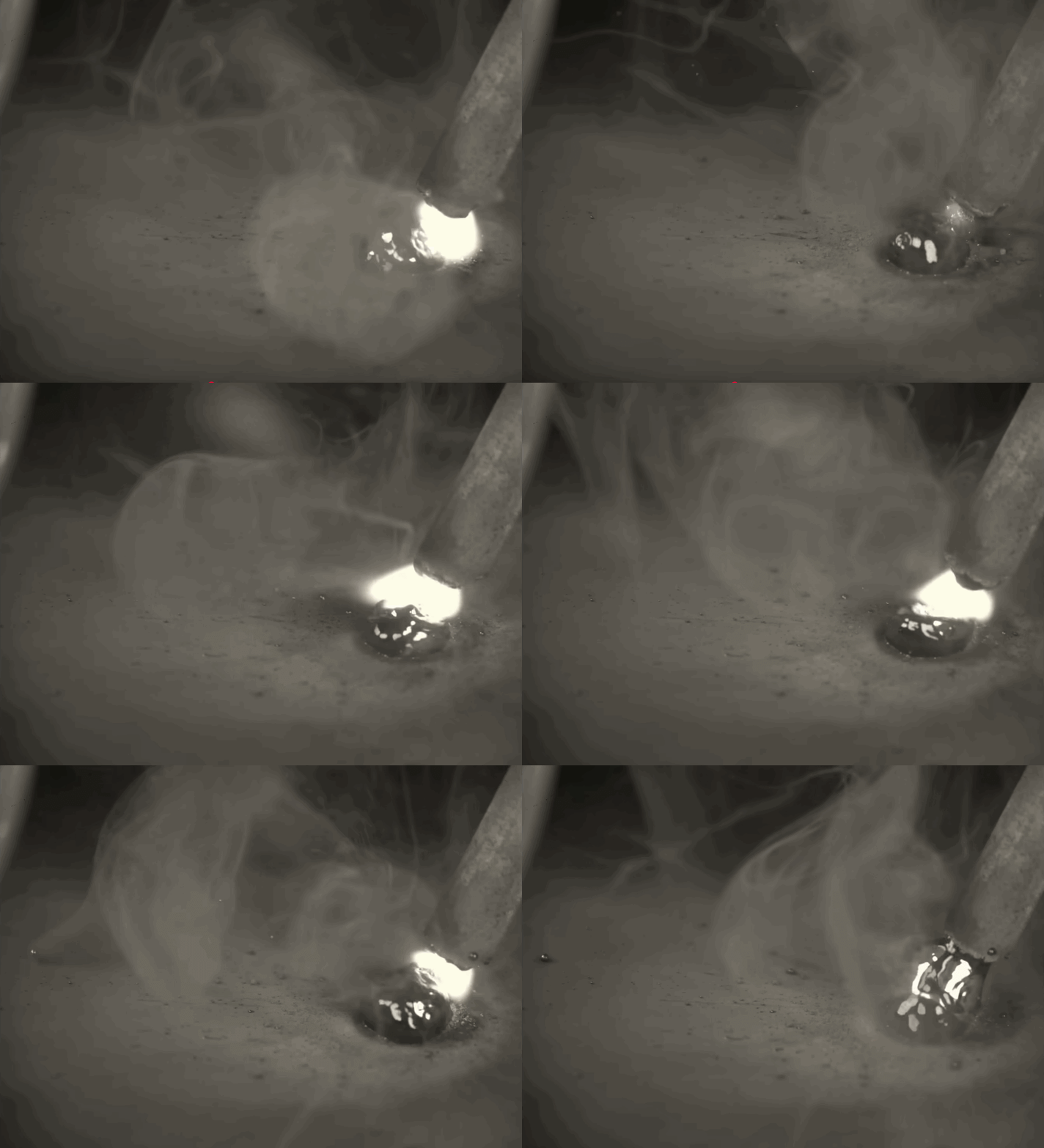
Also shown: plasma cutting (6:59) and laser cutting (9:13)
Interesting Notes: How SAR Fakes a Giant Antenna
In photography, a camera’s aperture controls light intake; the incoming light wavelengths (400–700 nm) are much smaller than the aperture size.
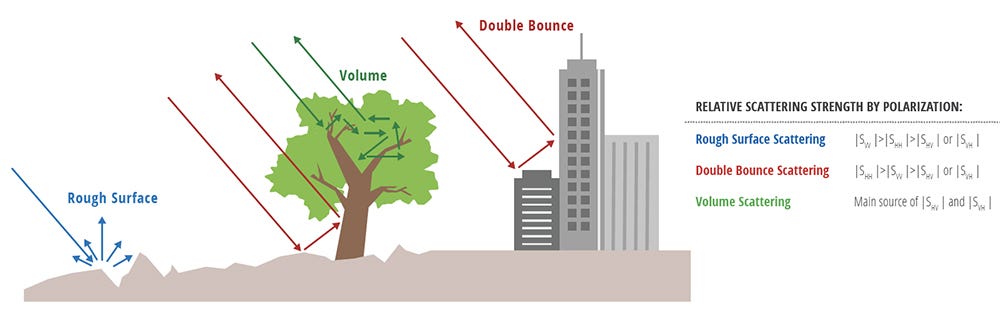
In radar imaging, an antenna transmits longer-wavelength electromagnetic waves (e.g. 5 cm C-band) and analyzes the returning backscatter to form an image, where each pixel represents the reflectivity of a specific ground area. In this case, the antenna size defines the system’s aperture and limits resolution: achieving 10-meter ground resolution from an altitude of 850 kilometers would require a physical antenna 4.2 kilometers wide!
Synthetic aperture radar (SAR) overcomes this by combining backscatter from multiple positions as the satellite moves, mimicking a larger aperture through signal processing.
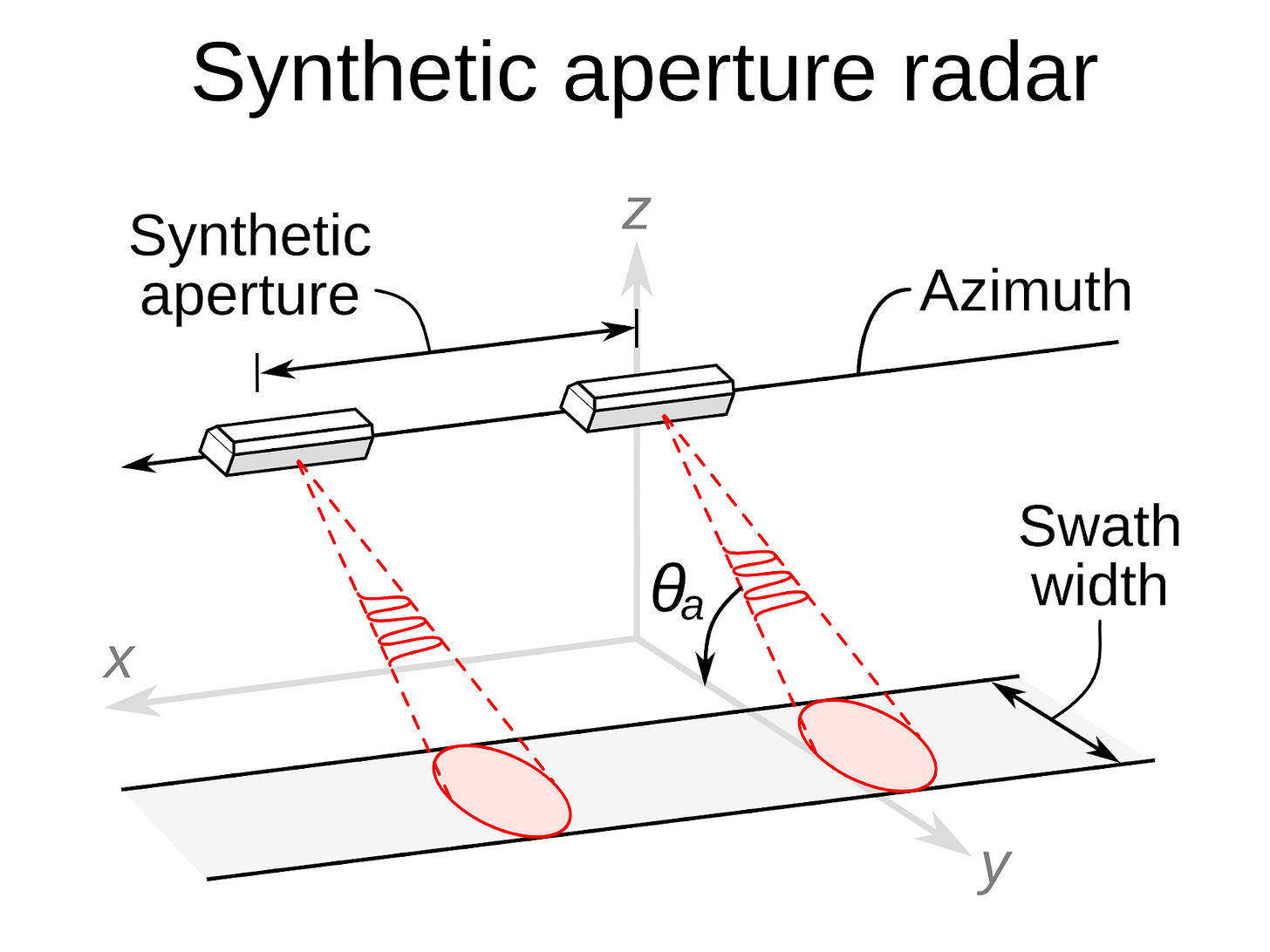
SAR can take high-resolution images using wavelengths that penetrate vegetation, making it incredibly useful for archaeology. The imaging method has helped researchers track deforestation projects across huge parts of the Amazon.
Manufacturing & Startup News
More leftovers from our weekly research in hardware and manufacturing news:
- Harvested Robotics, an India-based startup, raised $580k in seed funding for its AI-driven laser weeder, spotting and zapping weeds with cameras and high-power lasers for sustainable farming.
- Seloxium, a University of Oxford spinout, raised $7.6M in seed funding to commercialize their technology that can directly extract high-purity metals from complex waste streams.
- Porsche launched a pilot to recycle high-voltage batteries by mechanically shredding old packs to recover lithium, cobalt, nickel, and manganese. They’re doing it to secure materials and meet EU regulations that will require recycled content in batteries by 2031.
- Blueshift raised $2.1M in pre-seed funding to build a pilot facility using membrane-free electrochemical tech that captures CO₂ from seawater 10x more efficiently than existing methods.
- Anywaves, a French antenna maker, opened a 500-square-meter facility to build and test satellite antennas in-house ahead of a planned U.S. expansion.
- Sulzer partnered with Hyme Energy on molten salt batteries, utilizing liquid electrolytes to store energy at high temperatures.