

Topics worth your time this issue: why factory data is abundant but factory context isn’t, what the current AI adoption phase has in common with the early 3D CAD era, a classic teardown of a BMS board, and understanding SpaceX’s deal with Cursor.
Interesting Links
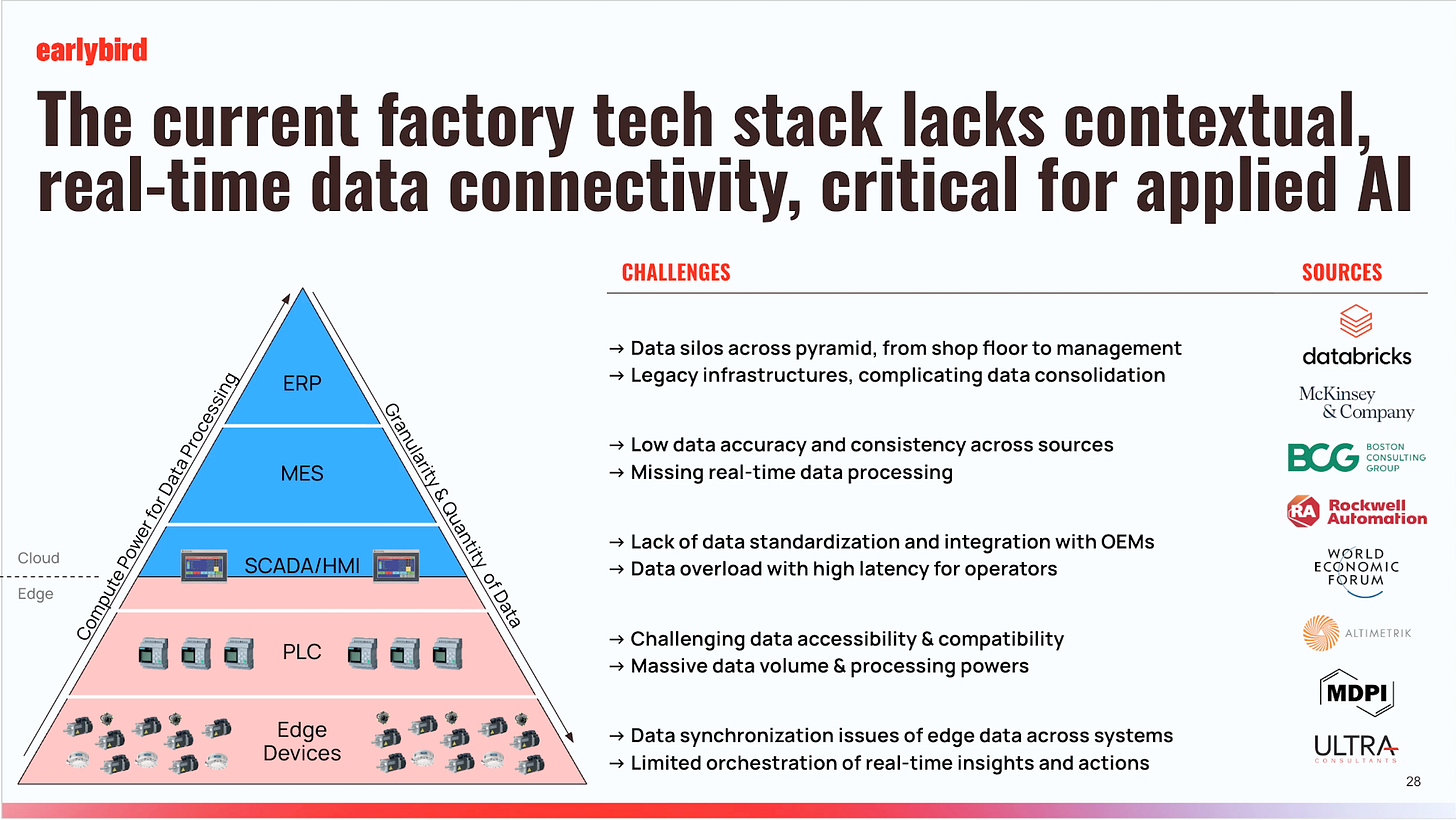
- If you’ve ever chased a yield issue, a bad batch, or a mysterious machine fault, you’ve already learned that manufacturing data is only useful when it preserves context. Manufacturing data is abundant. Manufacturing context is not. This MESA primer is a useful breakdown of the types of manufacturing data and where they live: production, process, product, equipment, quality, supplier, environmental, financial, and the other data categories that accumulate around a factory. For an engineer, these are the breadcrumbs used to reconstruct what happened across the line, from the machine that made the part and the recipe that was active to the material lot, sensor traces, maintenance history, and first appearance of the defect. This is the old Industry 4.0 promise in plainer language: connect the factory’s physical state to its digital record, then use software to ask better questions about why yield moved, what changed upstream, and what to do next. The hard part is that those breadcrumbs are almost always split across disparate factory systems, spreadsheets, PDFs, and tribal knowledge.
- Defining factory systems in plain english: MES tracks how work moves through the line, ERP knows the order and material record, SCADA controls and monitors equipment, historians store machine data, quality systems hold inspection/nonconformance records, and everything else lives in spreadsheets, documents, or an operator’s head.
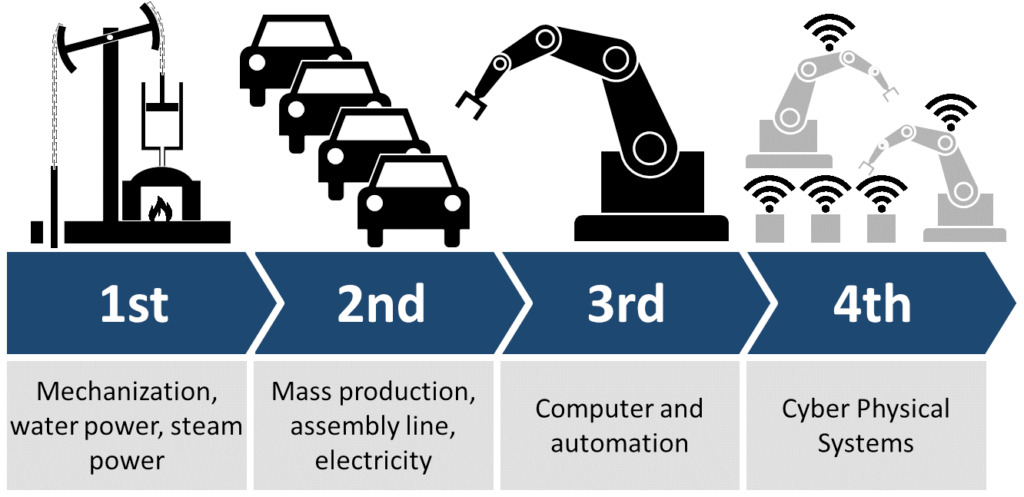
- After reading a viral post over the weekend about an AI agent deleting an entire company database from a single command, the current “maximize token usage at all costs” phase of AI adoption feels familiar to the early 3D CAD era and the Death of the Draftsman. A new tool arrives that is genuinely capable and powerful, everyone rushes to reorganize work around it, and only later do teams learn where judgment, controls, and process still matter.
- Related reading: The AI Great Leap Forward on the strange incentives that appear when usage becomes the goal.

- Digital manufacturing is the phrase people use when they mean “the factory should behave more like software,” which is both basically right and mostly incomplete. Industry 4.0 is Dead is a good read for understanding why the clean-room version of the original idea never really survived contact with the factory floor, and what’s worth remembering now that agents and better software are bringing the broader project back into the conversation. A similar implementation in practice today, this perspective from Justin Lopas at Base Power is useful context — though note it sits one layer up, at operations rather than the shop floor: he effectively had his team rebuild the operations software layer around their factory, trading off-the-shelf SaaS for in-house tools tied directly to their workflows and data. As he put it, “Token costs might actually equal the cost of buying the SaaS, but cost isn’t the point” when the tools are perfectly tailored and infinitely customizable going forward.
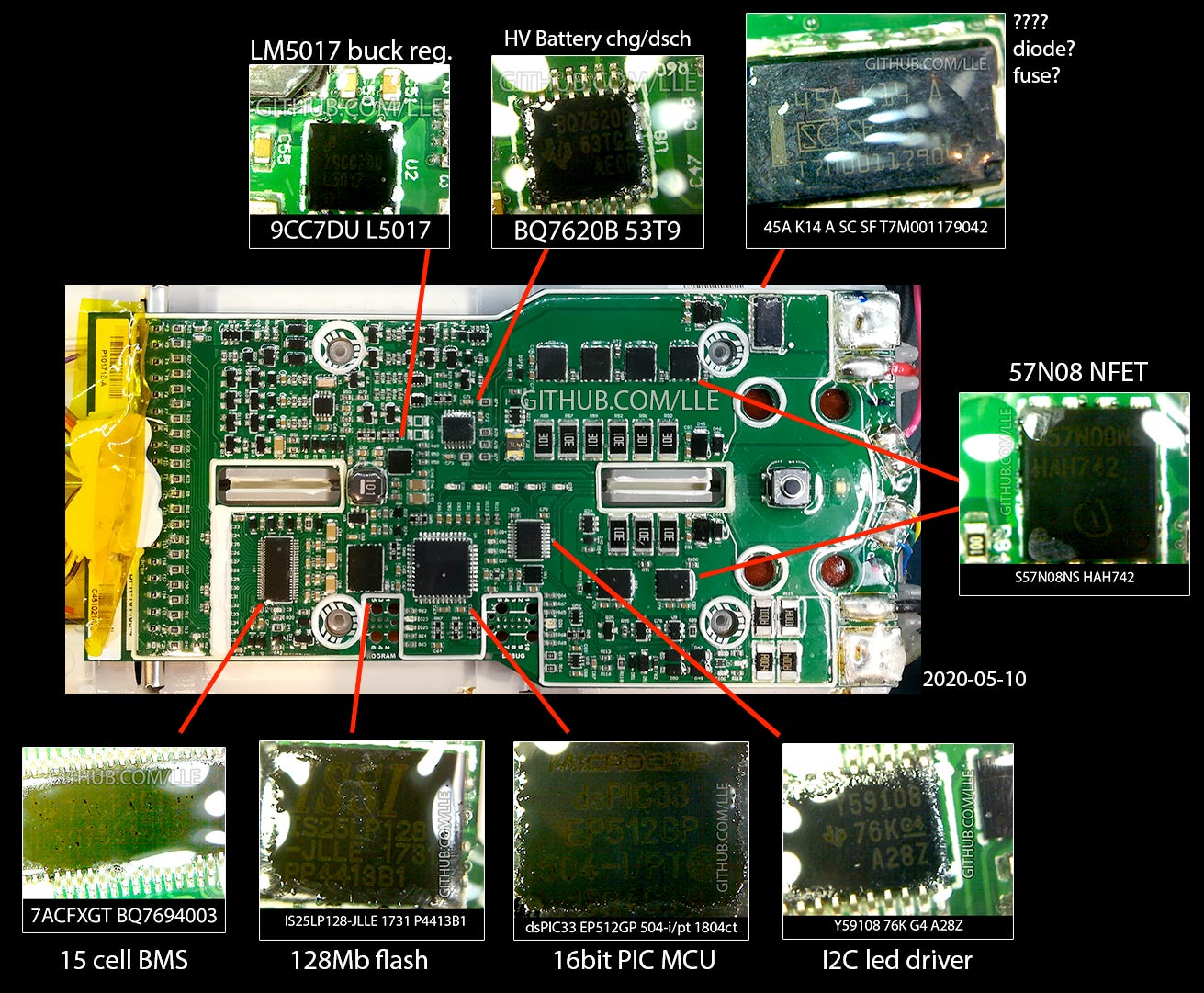
- Broken PCBs and reverse engineering are one of the cleanest ways to turn a finished product back into a set of design decisions. This repo cracks open a Boosted V2 Extended Range battery pack and partially reverse engineers the Battery Management System (BMS), with microscope shots of the PCB, an annotated IC inventory, and a working UART debug video. The chip-by-chip datasheets (TI’s BQ769x0 15-cell monitor, a BQ76200 NFET driver, a Microchip dsPIC33 MCU) are a working starting point for anyone wanting to spec their own e-skateboard, scooter, or go-kart pack. A small note of caution: high-power packs are powerful, unforgiving, and require a bit of scrutiny. The author knew what he was doing and still ended up with a dead MCU, à la “Game-over... I killed it”. If you’re starting out, find something smaller (ie. toy drone battery, dead Bluetooth speaker) and work your way up.
- A new crop of “Cursor for Hardware” startups is trying to turn prompts into early design artifacts that include block diagrams, system architectures, crude BOMs, and prototype concepts. Most outputs look like sketchpad designs rather than engineering packages, but they’re useful for early prototyping. See Schematik and Blueprint.
- Twitter had a very strong reaction (or more gently worded, a collective correction) to one post on how easy it is to build a Kindle. More related reading: the unexpected joys of hacking an old Kindle.
- And a couple fun links to round out the week:
- CNC milling a star.
- A great video from MKBHD on smartphone glass and the marketing game behind “more shatter resistant” and “more scratch resistant” claims.

Startup News
- Project Prometheus, the physical AI lab led by Jeff Bezos and Google veteran Vik Bajaj, closed a $10B funding round at roughly a $38B valuation. The company is building AI models and tools for engineering and manufacturing physical products rather than pure software workflows. JPMorgan Chase and BlackRock are participating in the round, though there is reportedly no lead investor.
- Skydio raised $110M in Series F funding at a $4.4B valuation and committed $3.5B over five years to expand U.S. drone manufacturing. The expansion includes SkyForge, a domestic supply chain program, a new U.S. factory five times larger than its current space, and more than $1B directed toward U.S. suppliers.
- SpaceX struck a partnership with Cursor to develop a next-generation “coding and knowledge work AI,” paired with an option to acquire the startup for $60B later this year. The deal gives Cursor access to SpaceX’s Colossus supercomputer (claimed to equal one million Nvidia H100s) in exchange for product and distribution to Cursor’s software engineers. SpaceX will either pay $10B for the work or buy the company outright, and comes ahead of SpaceX’s anticipated IPO.
- C-Infinity raised $16M in funding to develop AutoAssembler, an AI platform that turns CAD and PLM data into production-ready manufacturing plans. The software automates process planning, engineering change order reviews, and assembly instruction generation inside existing engineering workflows. Canaan Partners led the round, with participation from Inventus Capital, Bee Partners, and Radius Capital.
- Figure AI is reportedly in discussions with UPS for a large humanoid robot deployment across logistics facilities, with investors claiming the potential order could reach tens of thousands of units. The company previously raised more than $1B at a $39B valuation and has said its San Jose BotQ factory could produce up to 12k humanoids per year. Worth caveating: this announcement appears to be coming through investor and social-media chatter, not a clean company announcement.