Interesting Links 🏭
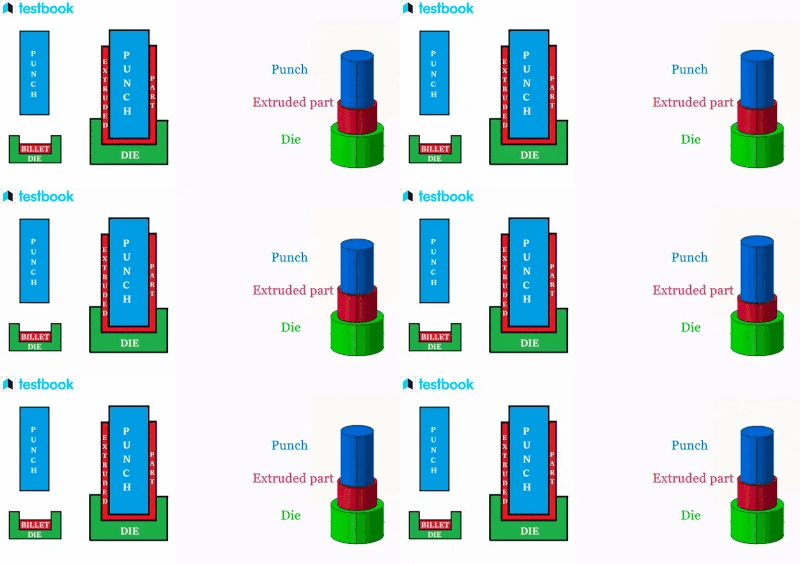
- A lesser-known manufacturing technique worth knowing: impact extrusion forms hollow metal parts in a single high-speed stroke, and was used to produce the aluminum shell of the ‘trashcan’ Mac Pro. The process forces a soft metal slug (aluminum, low-carbon steel) into a die using a hardened punch and depending on the punch–die arrangement, it can be forward, backward, or combined. For example, in backward impact extrusion used for the Mac Pro, the punch drives into the slug and forces material to flow upward around it in a series of progressive steps. The method is more commonly used to make hollow, thin-walled parts like aerosol cans, battery housings, and even scuba bottles.
- So You Want to Build a Nuclear Reactor is David Ruzic’s update on two DOE-funded small modular reactor projects and a clear guide to the practical realities of building nuclear reactors. X-Energy and TerraPower are both part of a 2020 U.S. government program to advance fourth-generation nuclear designs; one using pebble-bed reactors with fuel sealed in graphite spheres, the other a sodium-cooled system with molten-salt storage. Interestingly enough, both are linked to coal infrastructure where TerraPower is building on the site of a retired Wyoming coal plant, and X-energy’s unit is designed to replace a coal-fired generator supplying heat and power to Dow’s Texas chemical facility.
- Open Source Munitions Portal (OSMP) is a searchable archive of verified images of munitions remnants from current and past conflict zones built by civilian harm watchdog Airwars and technical consultancy Armament Research Services. Entries include classification details, source links, and analyst notes, with all images reviewed by multiple munitions experts before publication. You can filter by technical features like guidance type, fin geometry, or marking script, and the site also hosts visual explainers and a glossary of munition categories. They’ve recently added articles with interactive 3D models of widely used munitions like Boeing’s GBU-39 Small Diameter Bomb.
- A new aerial detection concept for small UAVs works like a tripwire in the sky: two or more airborne platforms project tightly collimated laser beams into a 2D mesh, and any aerial object passing through is detected by the resulting drop in signal. Unlike radar which relies on backscatter, this approach senses occlusion (detecting when an object physically blocks the beam), making resolution dependent on beam spacing and avoiding complex clutter-rejection algorithms. The pattern of blocked beams could be used to determine a target’s position, velocity, altitude, and even coarse silhouettes, potentially improving detection of low-RCS aircraft and drones.

- A catalogue of old photos capturing what work looked like when drafting was still a full-time career.
- River Runner lets you pick any spot on Earth and trace a raindrop’s path to its final body of water.
A couple fun links:

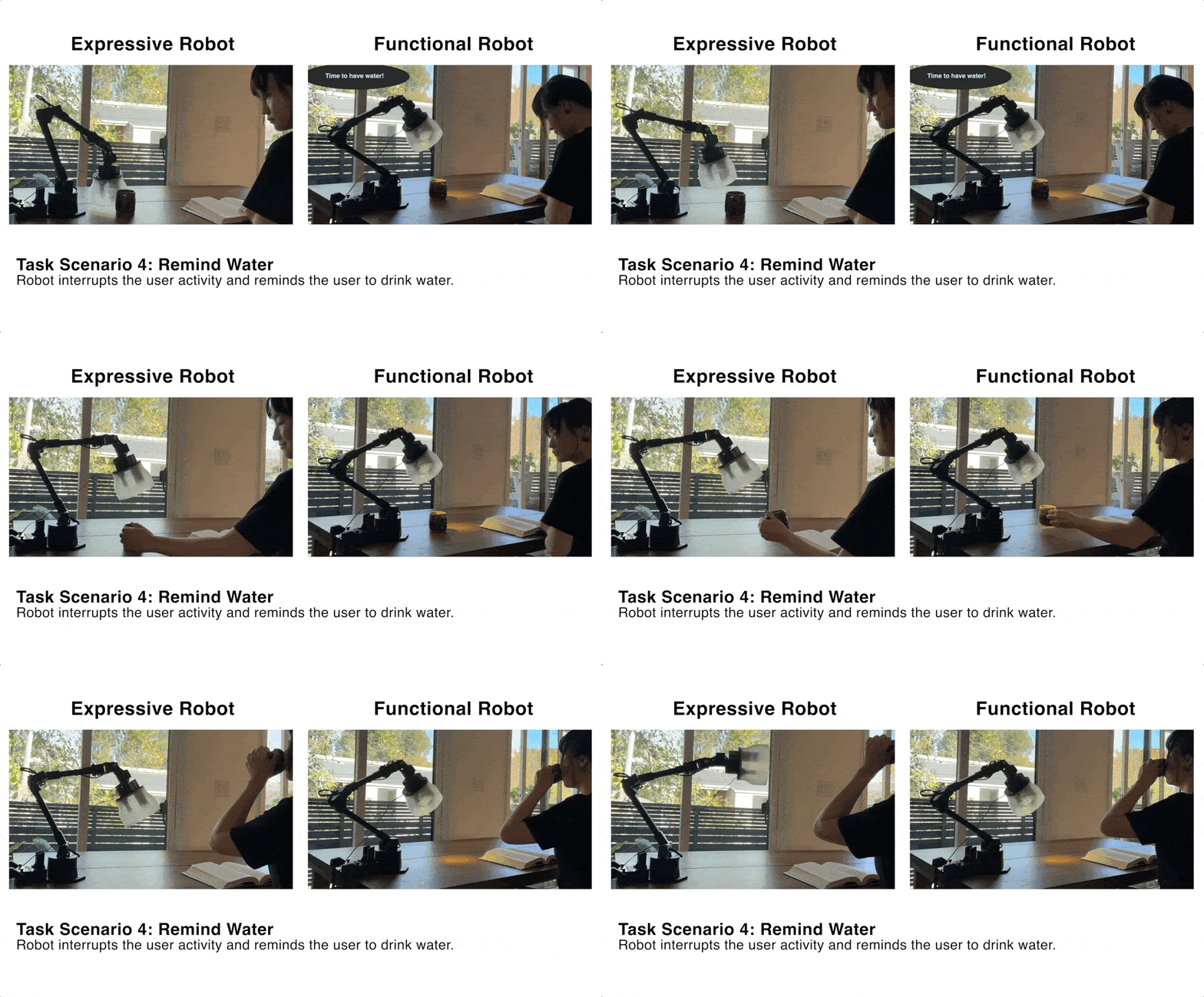
Inspired by Apple’s Pixar-style lamp demo with ELEGNT, LeLamp is an open-source robot version built on the same expressive robotics principles, using a modified SO-101 arm and Hugging Face’s LeRobot robotics framework.
Startup News 🚀
- YPlasma raised $2.5M in seed funding to commercialize fanless plasma actuators that move air using only electrical forces. The solid-state devices are thin, flexible copper strips that generate an “ionic wind” at ~1 W power draw, about a third of a small laptop fan. Founded as a spin-out from the Spanish Space Agency, the technology targets applications in dense chip environments and consumer electronics, enabling new methods for chip cooling for semiconductors. The round was led by Faber,

- Periodic Labs raised $200M in funding to ‘accelerate the discovery and design of new materials’ using advanced machine learning techniques. Not much is public on specifics, but the company is working on AI tools to model and predict material properties more efficiently than conventional methods with potential applications in energy, electronics, and construction. Notably, the company was founded by the former VP of Research at OpenAI and a research scientist from Google Deepmind. The round was led by a16z.
- Orbital Operations raised $8.8M in seed funding for in-orbit defense vehicles that can loiter for years in low Earth orbit to protect satellites and respond to threats. The high-thrust vehicles use cryogenic hydrogen and oxygen propellants kept at extreme temperatures through active cooling, preventing boil-off that typically limits on-orbit stays. The company’s first platform, Astraeus, is designed for rapid repositioning and non-kinetic countermeasures such as high-power microwaves or spoofing. The round was led by Initialized Capital.
- Celera Semiconductor raised $20M in Series A funding for analog design automation. TThe company’s Nestos platform uses digital twin models to automate parts of analog IC design, aiming to shorten development timelines and address bottlenecks in producing custom silicon. The round was led by Maverick Silicon.
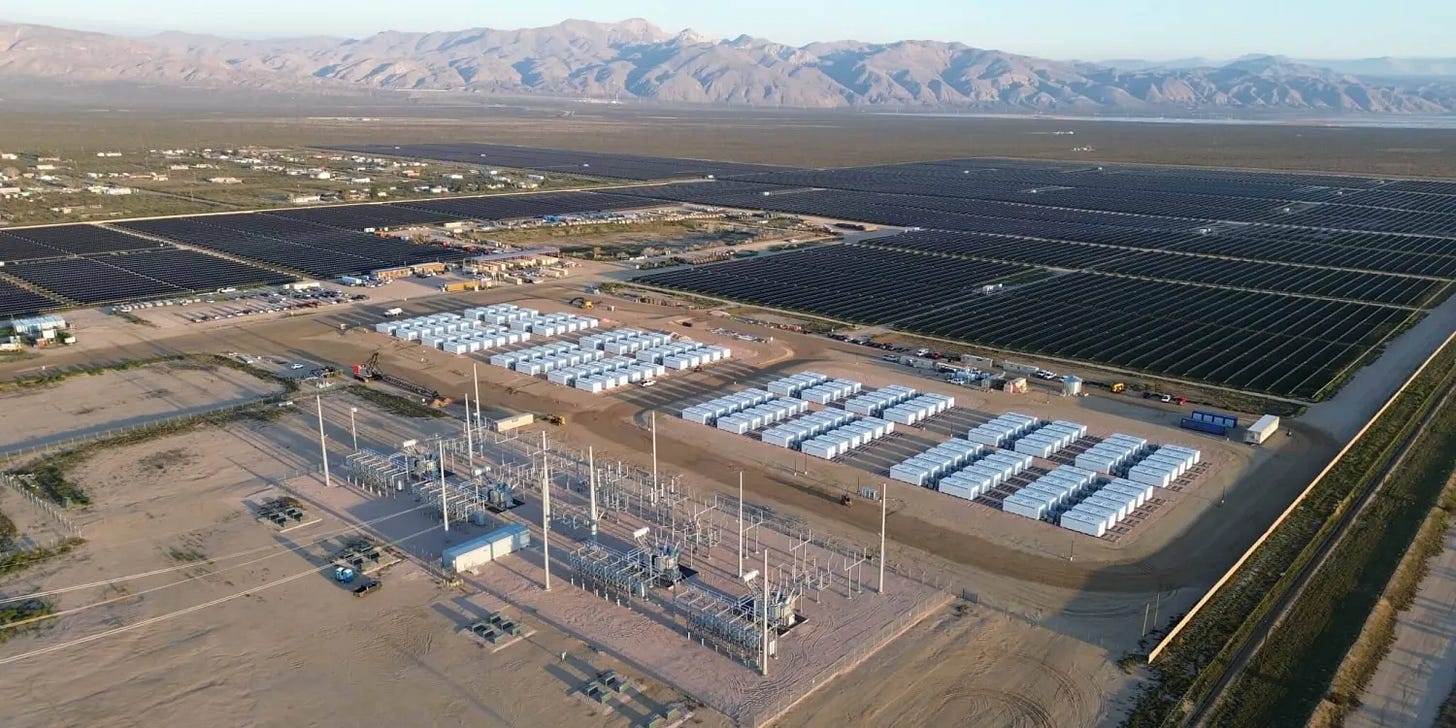
- One of the largest solar + storage projects in the US is now online in Mojave, California. Arevon Energy’s $2B Eland project pairs 758 MW of solar with 300 MW/1,200 MWh of lithium iron phosphate battery storage, enough to power more than 266,000 homes/year (roughly 7% of Los Angeles’ demand) under a long-term deal with the city’s public utilities.