

👋 Happy Saturday! This week’s highlights include lecture notes on the history of industrial robots and humanoids, a new AI-powered search engine for electronics parts, a chart on who makes the layers of a data center, and a tier list of the top 3D printing filaments.
Interesting Lecture Notes: Exploring Humanoid Robots
From an early robotics course tracing the history of robots through popular culture and technical development, one of the clearest introductions to the evolution of humanoid robots and the split between industrial manipulators and human-shaped machines.
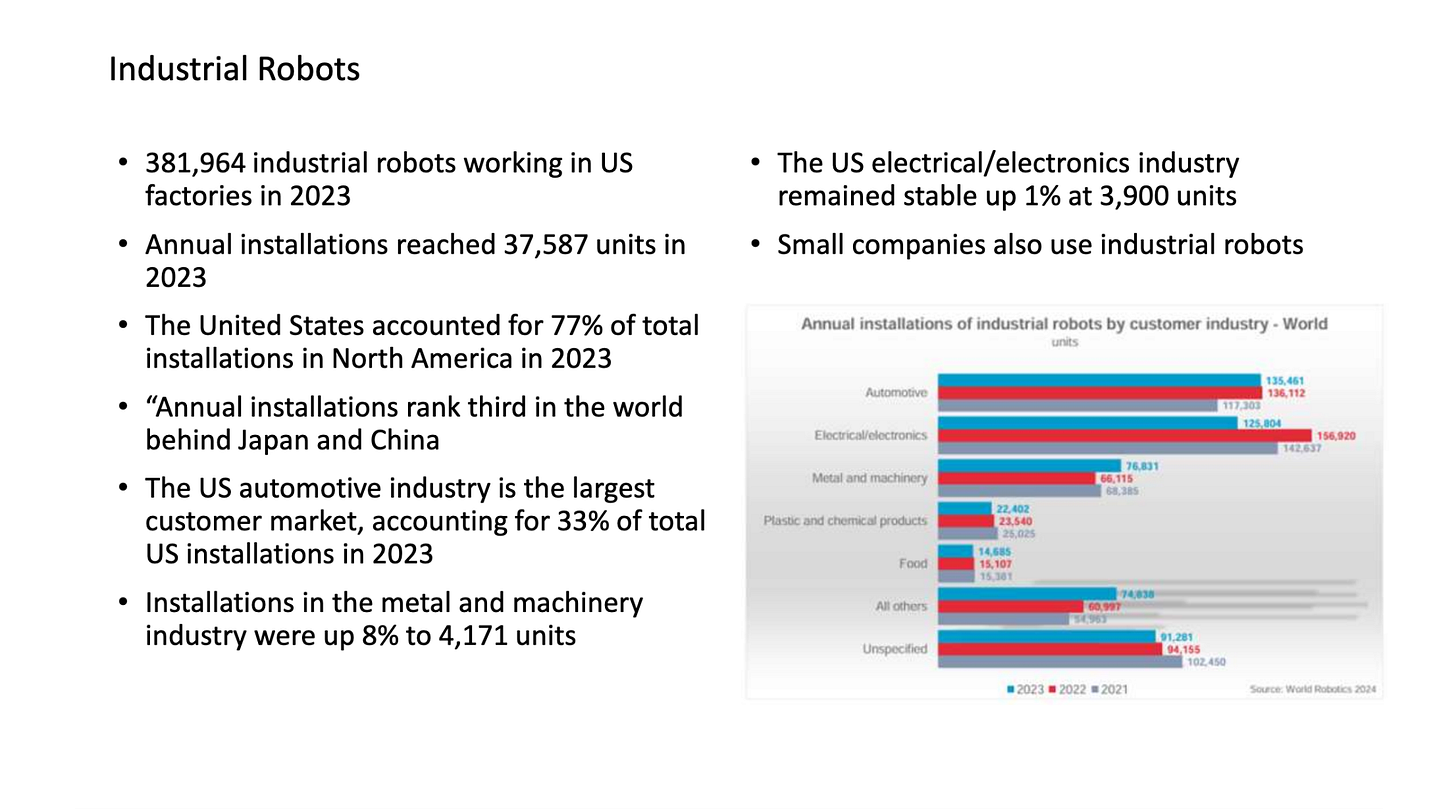
The basic architecture for industrial robots hasn’t changed much in decades: a robotic arm with multiple joints, an end effector at the tip (such as grippers for material handling or welding torches for joining), sensors to provide feedback, and a controller that translates programmed instructions into motion. Actuators turn those signals into force, while a power supply and teaching pendant keep the system flexible for new tasks.
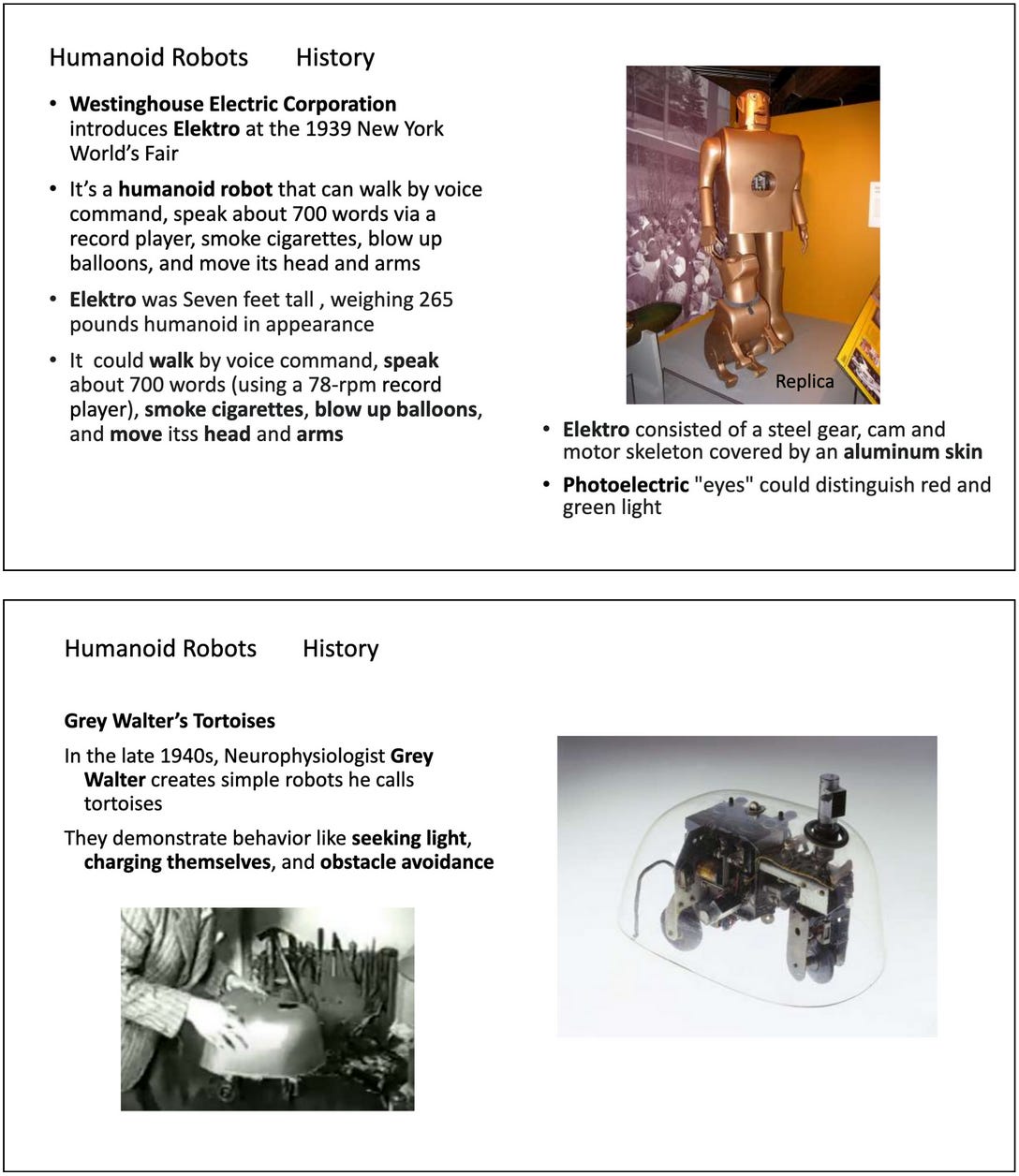
Humanoids by contrast, developed less around throughput and more around fitting into human environments. Part of why humanoids are interesting again is an obvious practical advantage: the built world is already designed for people, so a humanoid should work within it more effectively than re-engineering the environment itself. Some of the earliest examples from the 20th century include:
- W. Grey Walter’s ‘tortoises’, small tricycle-like robots under clear plastic shells that used light sensors to wander and avoid obstacles.
- Westinghouse’s Elektro, a seven-foot humanoid that could walk, talk, and even smoke a cigarette.
Startup Spotlight: Zenode, Parts Search That Doesn’t Suck
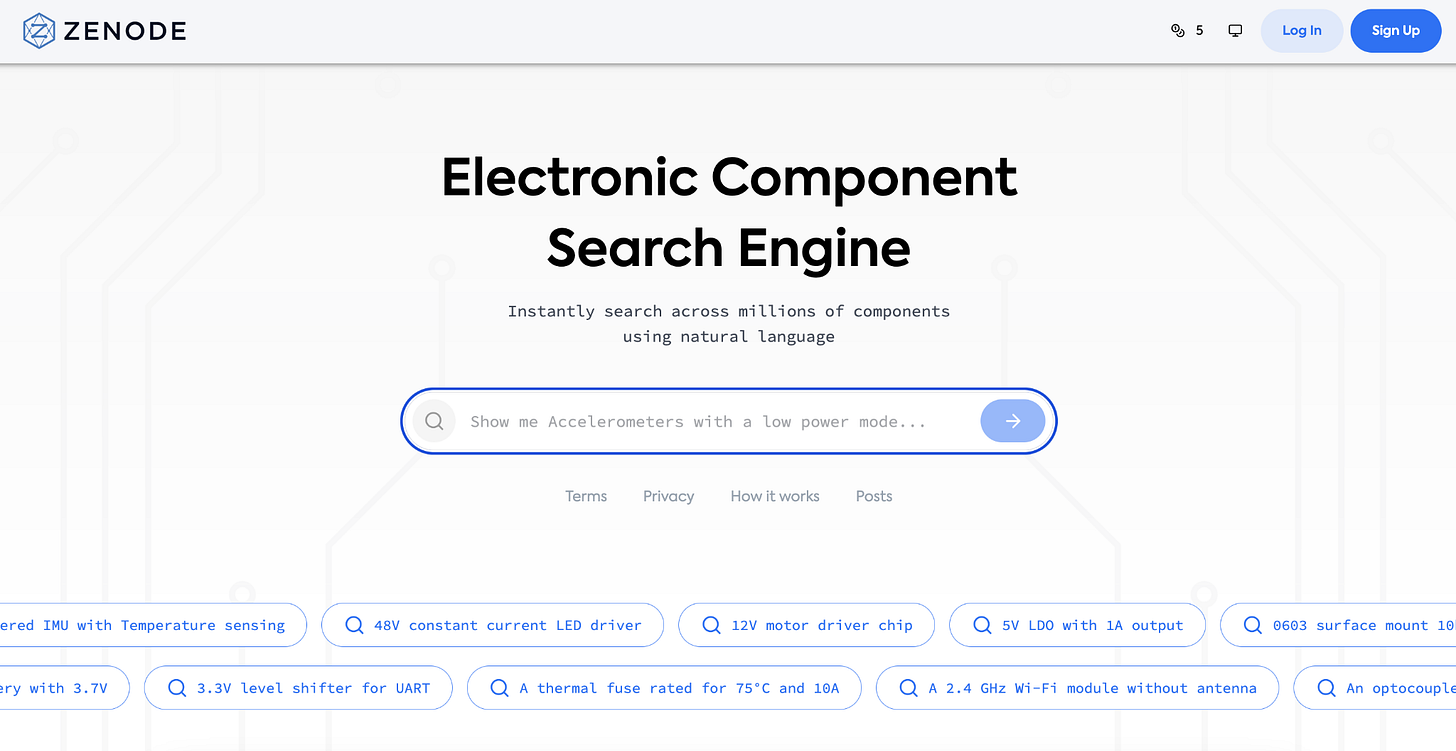
From our good friends Brandon & Collin at Zenode: they just came out of stealth with an AI-powered electronics search engine that helps engineers actually find and understand components. Built on 40M+ part sources, Zenode can:
- Search millions of parts with natural language
- Parse datasheets and highlight answers automatically
- Run “Deep Dive” comparisons across multiple components in seconds (“what’s the lowest-power accelerometer available?”)
Think of it as an AI version of Digi-Key that reads the datasheets for you. Explore Zenode 👇
Interesting Chart: Who Makes the Data Center

Strip it down and a data center is just a building, except everything about it is engineered to keep thousands of computers running 24/7. You can think of it in layers:
- Civil and MEP systems: the foundation work, mechanical, electrical, and plumbing that make the site usable.
- Power and cooling: uninterruptible power supplies, backup generators, chillers, cooling towers, and air handlers or coolant distribution units. Leading suppliers include Schneider Electric & Vertiv.
- IT stack: servers that do the computing, networking gear that moves the data, and interconnects of cabling and fiber that tie it all together.
Interesting Video: The 3D Printing Filament Tier List
A full tier list of 300+ filaments tested by Voidstar Lab, where the ones that truly stand out are those that are broadly useful, forgiving to print, and clear upgrades over the baseline. S-tier picks include PLA variants such as carbon-fiber blends for added stiffness and high-speed formulations that print cleanly even above 300 mm/s, glass-filled nylon for stiffness and durability, and TPU 99A — one of the rare flexible elastomers that consistently works in real applications.
Apparently you can also get scented TPUs like ‘vanilla muffin’ or ‘strawberry gum’, and a few manufacturers are experimenting with waste streams by mixing in additives like coffee grounds to base resins.
Manufacturing & Startup News
More leftovers from our weekly research:
- Swarmer raised $15M in a Series A round to advance its software for autonomous drone swarms, trained on mission data for coordinated actions in GNSS-denied environments across air, land, and sea, it is the largest investment in a Ukrainian defense tech company since the war began.
- Divergent raised a $290M Series E round at a $2.3B valuation to scale its software-defined platform that integrates design automation, metal additive manufacturing, and robotic assembly for aerospace and defense parts.
- Kreios Space raised $8.8M in a seed round to develop electric propulsion tech that enables satellites to stay in very low Earth orbit for high-res imaging and direct-to-device connectivity, with in-orbit demos planned.
- Fenix Space raised a $30M Series A round from Alaska Growth Capital to develop reusable tow-launch and hypersonic technologies for flexible space access, supported by testing at Alaska’s launch and airport facilities.
- Purity ReSource raised $681k in a seed round to scale its technology that purifies spent isopropyl alcohol semiconductor fabs back to electronic-grade quality, defined by ultra-low impurity levels required in chip manufacturing.