

Topics worth your time this issue: the torture device every circuit board passes through, 1,500+ imagined vehicles and the Tunnel Taxi, a tour through Wing's drone engineering workshop with Adam Savage, and a side-by-side look at how Starship's heat shield is evolving across flights.
Quick note: I hope everyone gets some real time off this long weekend. Last week was the first break I’ve taken in a while, after an insane five-month sprint across writing, growth, a conference, and a few new initiatives all at once. Sometimes hard things are worth doing because they stretch what you think you can take on. Hope you get rest this weekend — call it preventative maintenance, then back with more room to take on the next thing!
Interesting Presentation: The Torture Device Between PCBs and Production
Deeply useful, deeply unglamorous problems is a good way to describe the ethos of the hardware test world. Test fixtures are boring infrastructure, but every scaled hardware sector depends on them: automotive, consumer electronics, robotics, basically any industry with circuit boards that needs to ship at volume.
From Joe & Duncan over at FixturFab, How to Design Custom PCB Bed-of-Nails Test Fixtures is an hour-long workshop that walks through the basics of functional test fixtures for PCBs, better known as the bed-of-nails contraptions that sit between every assembled circuit board and the question of whether it works.
Simply defined, a bed-of-nails fixture is a mechanical test jig that presses spring-loaded pogo pins into predefined test points on a PCB, turning dozens or hundreds of electrical contacts into one repeatable manufacturing test station. Anything built and shipped at scale needs some version of a test station (whether it’s mechanical, electrical, software, firmware), and for circuit boards, a functional test fixture answers behavioral checks like: are the voltage rails in spec, can the board talk over USB/UART, do the sensors respond, or do components like the motor driver behave as expected?
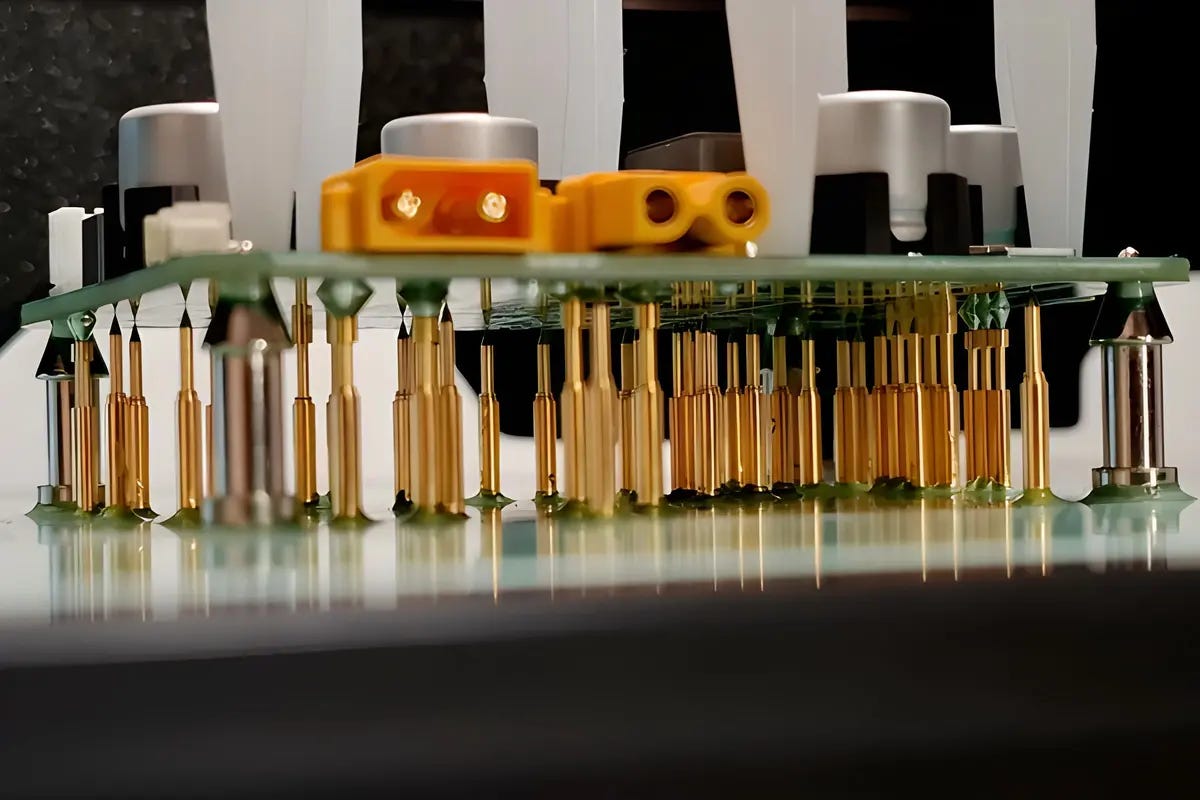
A useful framing is that functional test != prototype bring-up. On the bench, “does this board work?” is a debugging question, but in manufacturing, it has to become a repeatable go/no-go process: contact the board, exercise the major functions, log the result, and set explicit failure handling.
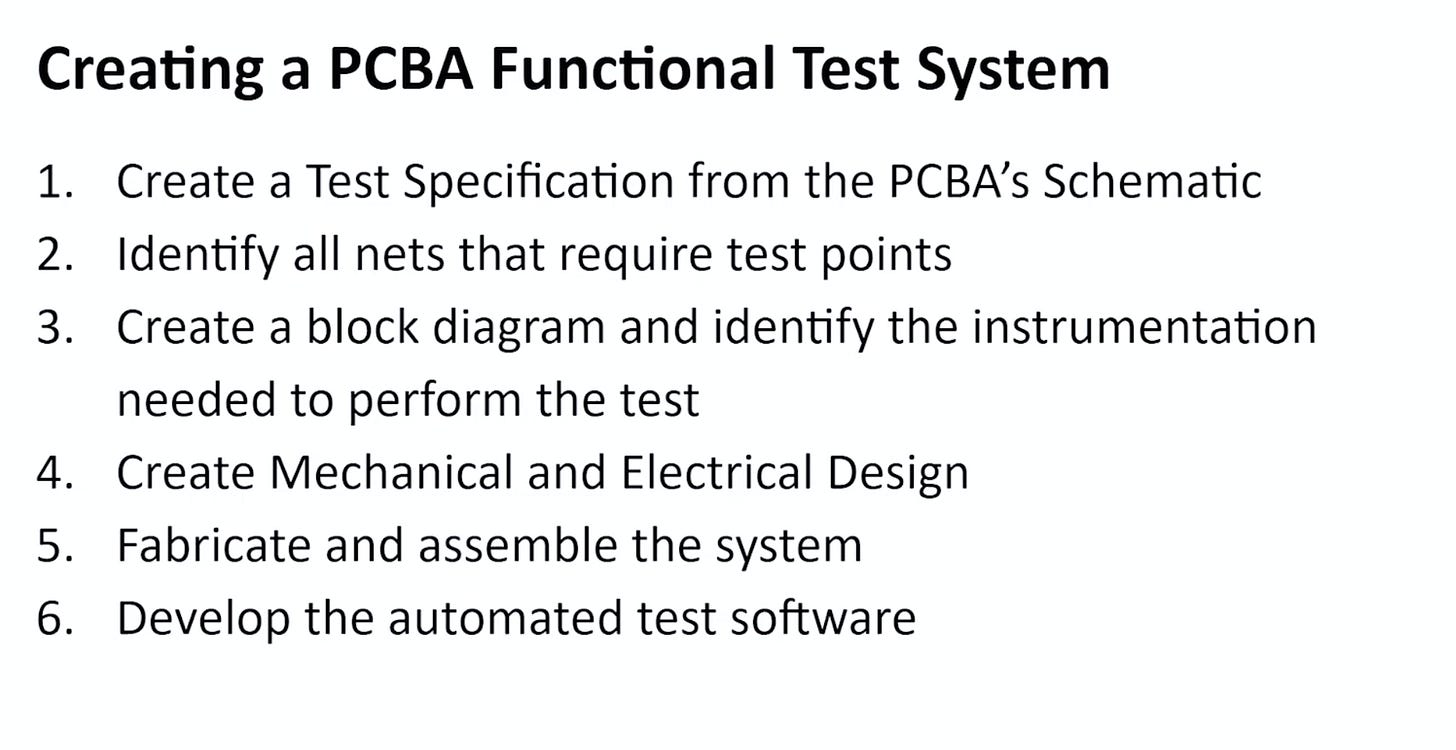
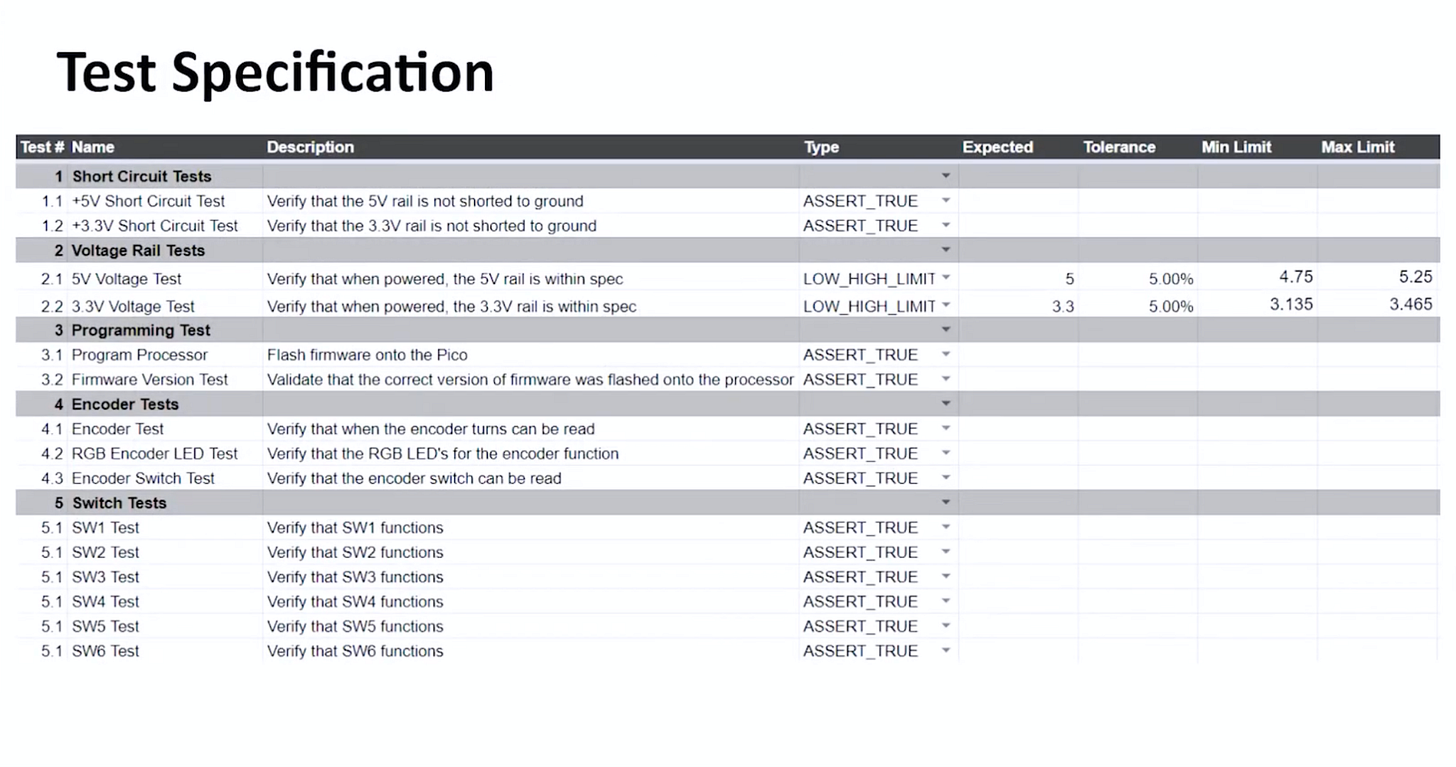
Despite bed-of-nails fixtures being around for decades, the workflow is still surprisingly fragmented for something this old. INGUN sells the fixture and probe hardware, instrument vendors sell the measurement stack (NI Test Stand, Acroname), CMs can build fixtures as part of manufacturing programs, and low-volume teams hack together hand-wired test rigs. Joe & Duncan are trying to turn fixture procurement into a configurable product.
Also see this cool video of a cobot automating board loading at a test station.
More From Around the Web
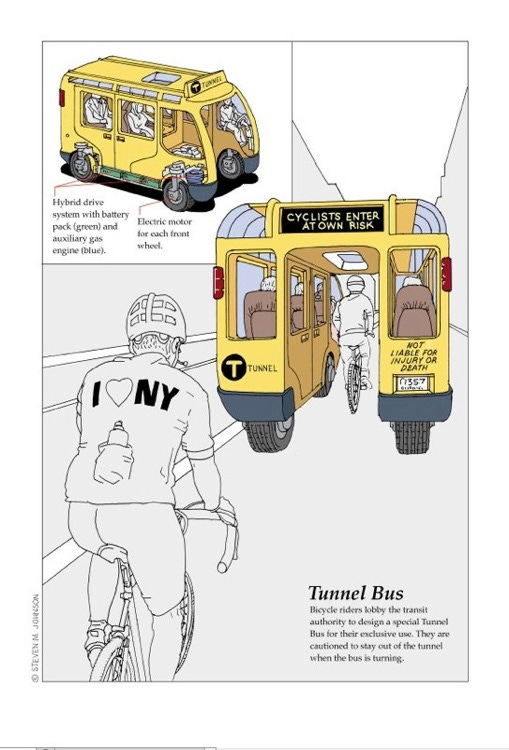
- For the long weekend, Vehicles of the Imagination is a fun and charming book of 1,500+ imagined vehicles; part cartoon archive, part reminder of what it feels like to dream with no limits.
- McMaster-Carr now has an active YouTube channel. Recent videos explain DIN rail components and breakaway tamper-resistant nuts.
- A console-based audio visualizer for the terminal or desktop. See below for a fun and quirky demo.
- The more you know: tolerance expectations in industrial 3D printing. Or when you should print on expensive, industrial machines.
- A side-by-side look at Starship’s heat shield across Flights 10–12. The tiles are what let Starship survive atmospheric reentry; full coverage on Flight 12 here.

Interesting Video: Exploring Wing’s Delivery Drone Workshop
A tour through Wing’s drone workshop, tracing the aircraft from hand-laid composite prototypes to foam airframes, custom propellers, and an in-house wind tunnel for propulsion testing. Over the last few years, drone delivery is starting to emerge as real logistics infrastructure: Zipline has done 2M+ commercial deliveries, Wing is the most credible U.S. consumer challenger at 750k+, and Meituan/Keeta is the Chinese equivalent wildcard.
Manufacturing & Startup News
- Faraday Future raised $25M through convertible notes, bringing recent financing to $70M as the struggling EV company is repositioning around robotics with plans to ship 1,500 units by year-end.
- GE Vernova is expanding its grid equipment footprint through the $5.3B acquisition of Prolec GE, a North American transformer manufacturer.
- Quartermaster raised $43M in Series A funding to scale a ship-mounted sensor system that turns commercial vessels into a distributed maritime sensing network for intelligence and ocean monitoring.
- Star Catcher raised $65M in Series A funding to build an orbital power grid that beams solar power to satellites through their existing solar arrays.