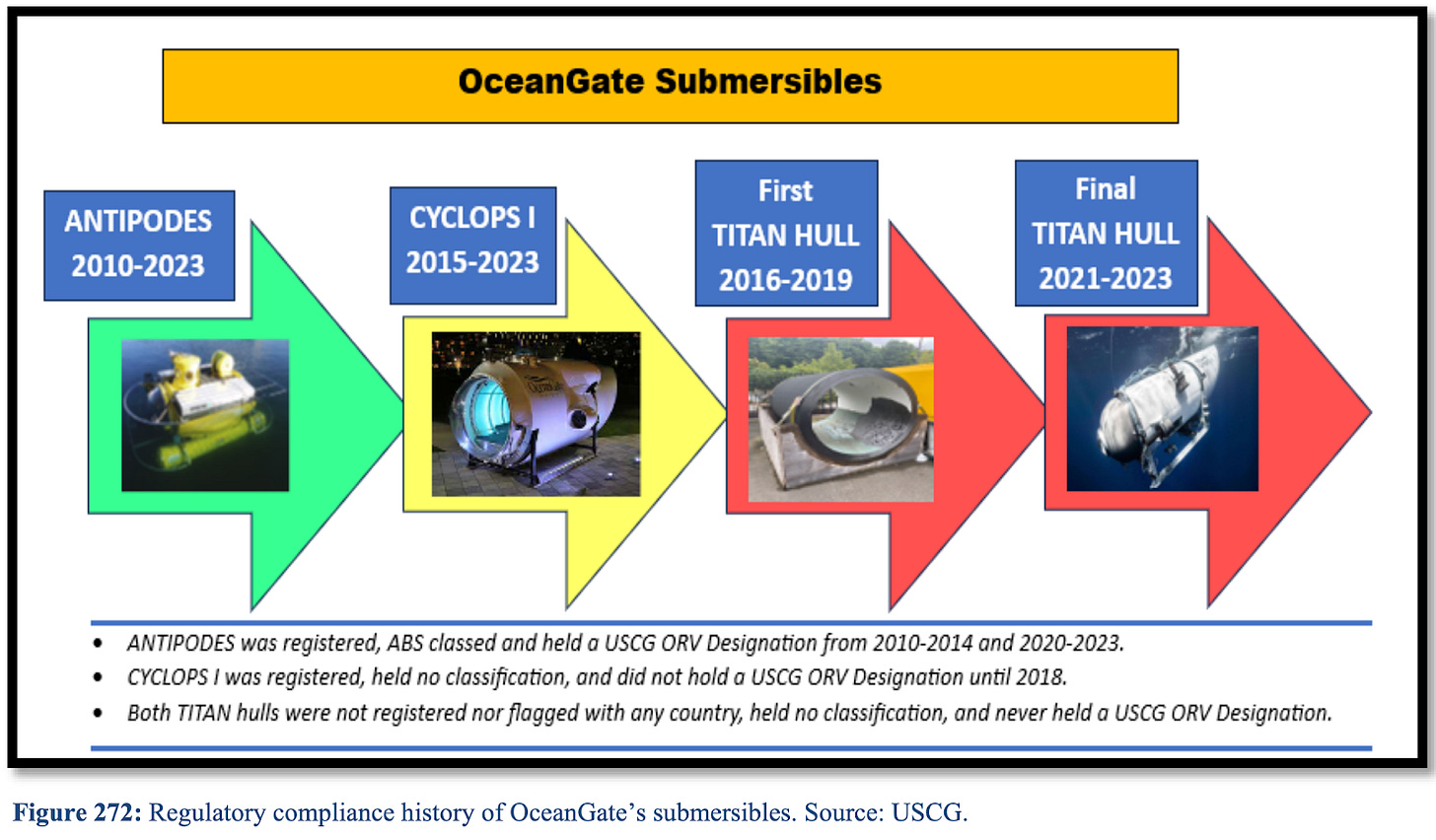
The U.S. Coast Guard’s full report on the OceanGate’s Titan submersible implosion is an engineering postmortem on the reminders of why safety-critical systems demand rigorous testing and validated designs. The analysis section (starts at page 261) highlights four themes: poor material selection for compressive loads, limited structural analysis of CFRP under compression, the absence of any FMEA, and weak process control in composite layup across resin cure and inspection. One of the telling sections details the decision to use carbon fiber for the hull, a material with little track record for deep-sea conditions; another, on page 296, is just as revealing, with the former Director of Marine Integration describing OceanGate’s engineering culture as “akin to a high school project.”
“Carbon fiber has demonstrated its effectiveness in other applications where the material is primarily under tension. However, in deep-sea conditions, the pressure hull experiences extreme compressive forces, a scenario for which carbon fiber has no established track record … Approved materials for pressure hulls of submersibles are typically ductile … allowing them to absorb energy and provide a visual indicator without immediate failure. In contrast, carbon fiber is composed of tightly packed carbon atoms … offering high strength in specific directions but minimal flexibility … [Once] damaged … the material permanently loses some strength … nearly impossible and highly impractical to repair in a structure like TITAN’s hull.”
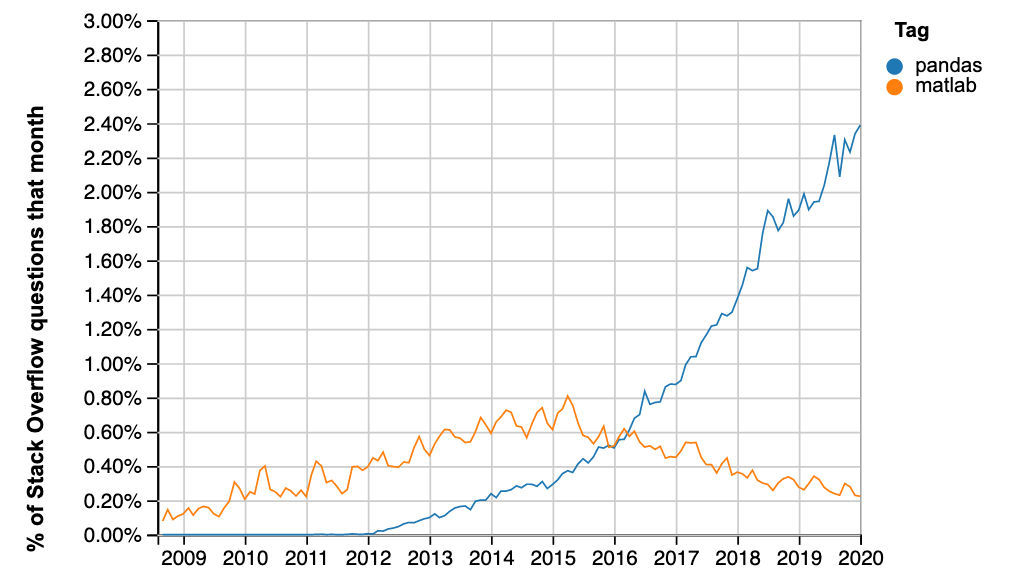
What’s happening to MATLAB? An evaluation of MATLAB (and by extension MathWorks) on why the once ubiquitous engineering toolbox is in slow decline. The story shows up in two places: 1) usage, where Python’s data stack with pandas has eclipsed MATLAB-tagged questions on Stack Overflow, and 2) desirability, where MATLAB now ranks among theleast desired languages. Mathwork’s revenue does continue to grow, not from new users but “license creep”, where they’ve captured a large part of all aerospace and automotive enterprises. Roughly a hundred major companies spend $10–50M annually (!) on licenses, much of which is ultimately passed to the US government through aerospace contractors.
On the same topic: we’ve recently noticed projects like RunMat, an open-source MATLAB runtime that runs unmodified code. Slow decline creates room for alternatives, especially those without license fees or vendor lock-in!
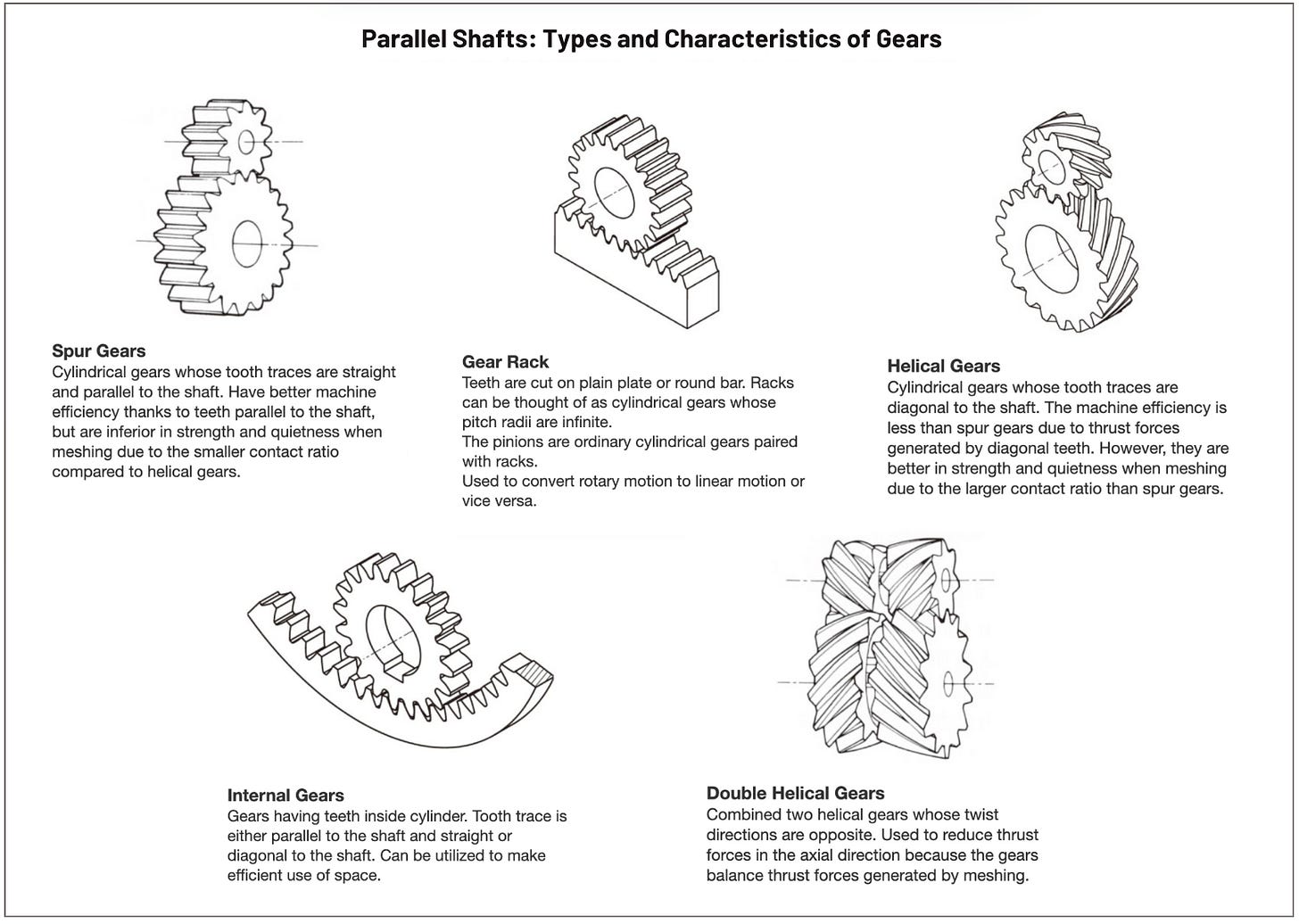
An introduction to gear types and shaft layouts for transmitting mechanical power. This resource from a Japanese gear manufacturer starts with the broader basics of functional parts in a machine (belt & pulley, cam, springs), before narrowing into gear functions and how shaft layout drives gear choice. Gears serve five basic roles: to change shaft direction, convert rotary to linear motion, flip rotation, adjust speed, and change torque. Parallel, intersecting, and skewed shaft layouts then form the basis for different gear types and functions.
Buried in the material was a theory about the decline of mechanism knowledge as devices moved from mechanical systems (cassettes, CDs) to static electronics. Such changes in our era also decreased machine design engineers’ opportunities to be exposed to mechanism design which eventually led to the lack of creativity to develop new structures and mechanisms.
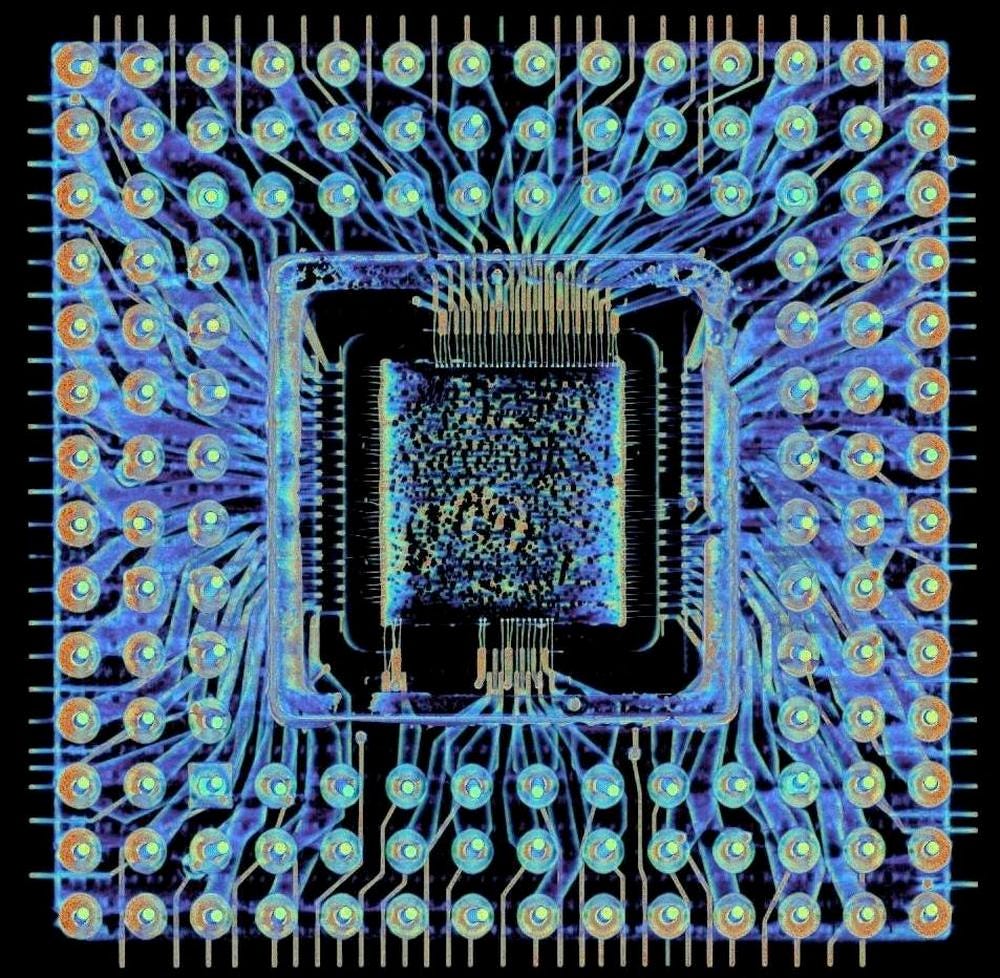
The Intel 386 was the first 32-bit processor in the x86 family which supported up to 4GB of addressable memory, a major leap from earlier 16-bit processors. It also set a record for Intel’s pin count at a time when management in the 1970s was wary of the cost of adding pins to the packaging despite performance gains. Ken Shirriff’s Lumafield CT scan has an interactive view that lets you thumb through all six layers of the package. The custom six-layer ceramic package (two signal, four power/ground planes) was at times as costly as the silicon die itself, stepping signals from ~1 µm features to 2.54 mm pins. The full oral history of the 386 from the Computer History Museum is also a good resource.
Switching high-voltage direct current (DC) is challenging because unlike alternating current (AC), DC voltage never drops to zero, increasing the risk of arcing. Researchers have developed a semiconductor-based circuit breaker using silicon-controlled rectifiers, switching 1400V in just 50µs — 4–6× faster than thyristors and 100× faster than mechanical systems. The recent breakthrough enables more efficient DC transmission by reducing conversion losses and removing the AC-to-DC stage at the load.
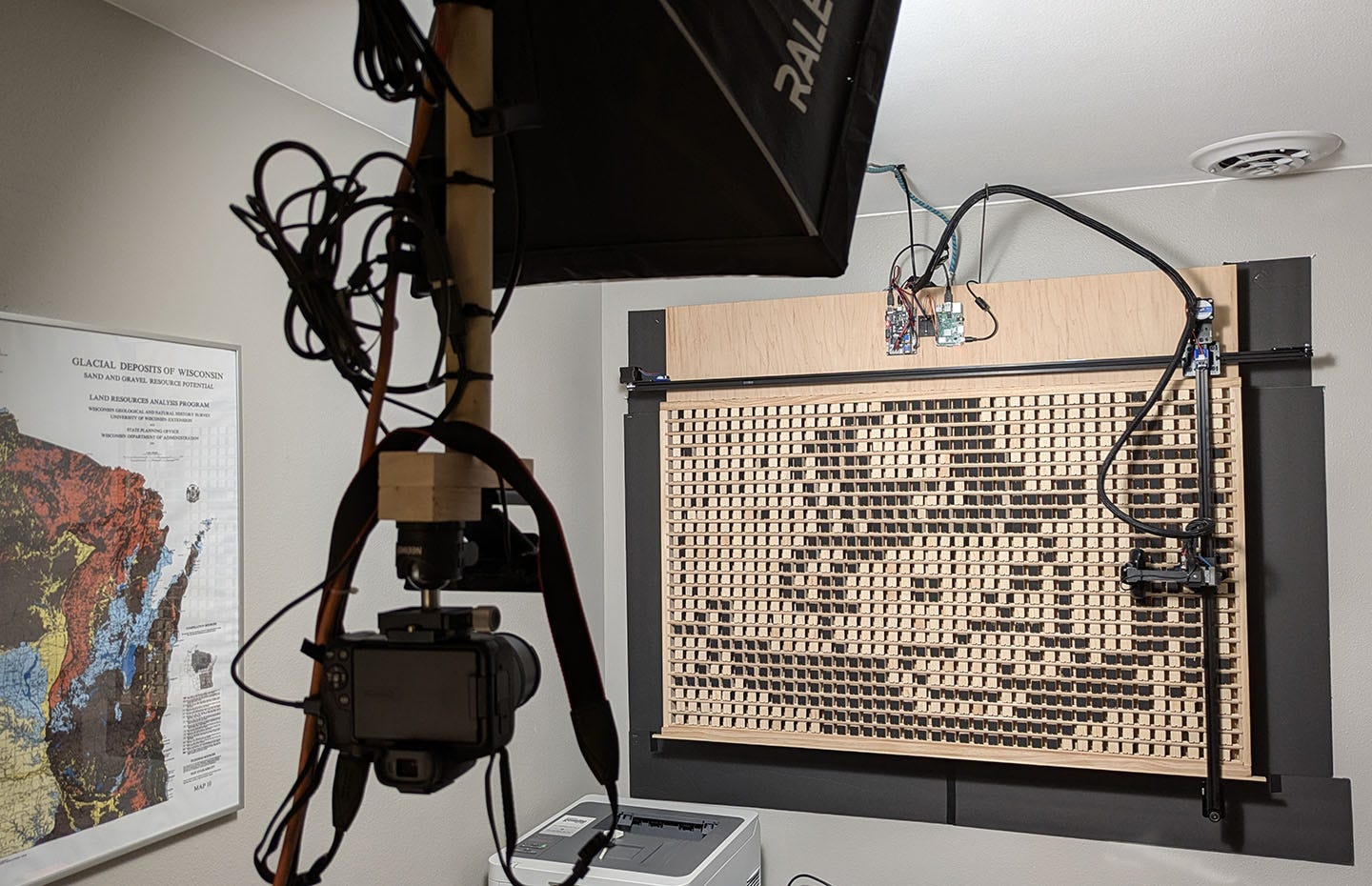
The kilopixel is a mechanical kind of digital art project, which at its essence turns 1,000 wooden cubes into a pixel display by flipping them one by one. It's a two axis machine that uses the third axis as a 'pixel poking' mechanism that rotates each cube to display either the painted or unpainted side. During the first season, anyone could submit designs through a simple web app and watch them play out on the display (finished pieces here).
A couple fun links to round out the week:
A manifesto on hiring from the founder of Scale AI and now Meta’s Chief AI Officer. The only real filter is hiring people who actually care about the work.
For the trivia enthusiasts, Intel once had to pay three dairy farms to relocate because the methane emissions from their cows was reducing chip yields.
On a more serious note:Liam from our team in St. John’s says the OceanGate tragedy altered local Titanic tourism and led to new memorials like the Suleman Dawood Mosque.
Startup News 🚀
Matic Robots is rumored to be closing $50M in funding at a $650M valuation for its advanced floor cleaning robot. The startup claims strong traction: 80%+ cleaning retention after 12 weeks, and 12% of customers already purchasing a second unit. Positioned as a high-end alternative to iRobot, their platform uses advanced lidar and computer vision to navigate homes and handle on-demand spot cleaning. Investors SHV and Abstract Ventures are said to be leading the round.
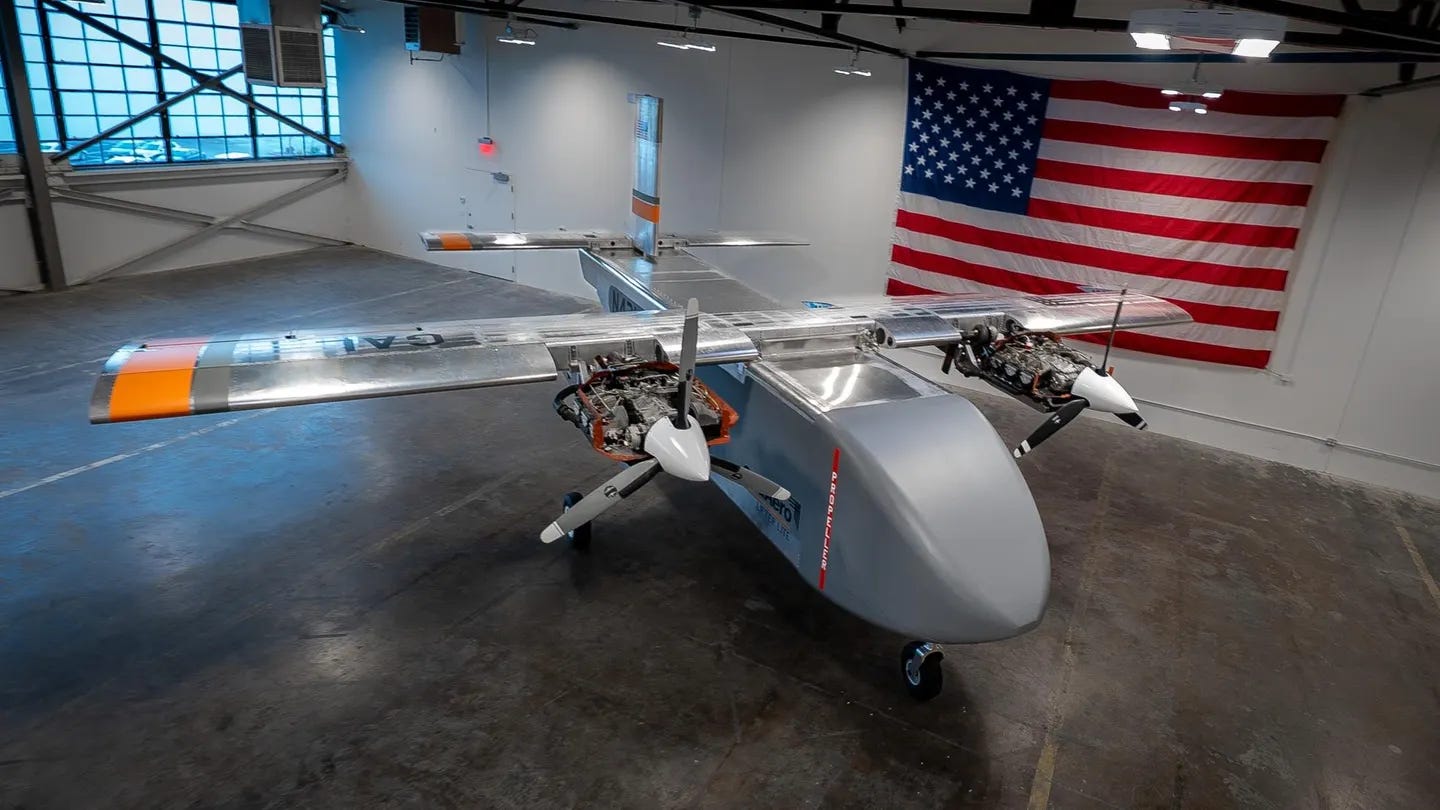
Grid Aero emerged from stealth with $6M in seed funding to develop autonomous air cargo aircraft. With a small 14-person team, they built their first prototype, the Lifter-Lite, entirely in-house. It’s about the size of a Cessna Caravan SkyCourier and represents 90% of the planned full-scale design. Ground tests are underway, with a first flight targeted for later this year or early 2026.
Vulcan Elements raised $65M in a Series A round to establish a commercial-scale facility in for producing high-performance NdFeB permanent magnets Durham, North Carolina. The company’s technology emphasizes a China-independent supply chain with U.S. and ally-sourced materials and DoD-validated processes, enabling rare earth metal production for defense, electric vehicles, and renewable energy systems. Altimeter Capital led the funding.
Squint raised $40M in a Series B round to enhance its AI platform for capturing tribal knowledge and optimizing manufacturing workflows. Their software turns existing documentation (videos, spreadsheets, PDFs) into work instructions, adds spatial guidance on the floor, and provides real-time troubleshooting when things go wrong. The company is positioning itself around capturing “tribal knowledge” on the factory floor and providing tools for consistent execution across shifts.
Ultraviolette raised $21M in an equity round to expand its India-made electric motorcycles into Europe, Latin America, and Southeast Asia. The company builds everything in-house, from embedded software and battery management systems to motor controllers and battery production, and runs a 30,000-unit facility in Bengaluru’s Electronics City. The Westly Group and TCV led the funding.