

Interesting Links 🏭
The 3D printing market was once flush with billion-dollar unicorns, but today the landscape looks more like survival than abundance. While a handful of startups raised hundreds of millions and promised to reshape manufacturing, most of those bets haven’t aged well; valuations have collapsed, public companies trade at a fraction of their peak, and some have gone bankrupt. A few great companies remain (think Formlabs, Bambu Lab, etc.), but many firms are now described as “zombie companies”: unprofitable businesses kept alive by new debt. A couple standout points that paint the broader picture:
- Scale vs. reality: more than 1,000 additive firms compete for a combined ~$25B in market cap. By contrast, CNC machining has 100 major players splitting ~$100B, and injection molding alone adds another >$300B in entrenched value.
- Practical use: 3D printing delivers real value in prototyping and low-volume production, but that’s a thin slice of the manufacturing chain. It shines in high-mix, low-volume applications like rapid prototyping, custom tooling, fixtures, and medical implants where design freedom outweighs unit cost.
TLDR; additive manufacturing lives in a smaller economic sandbox - useful, but a specialized tool rather than the universal replacement investors imagined.


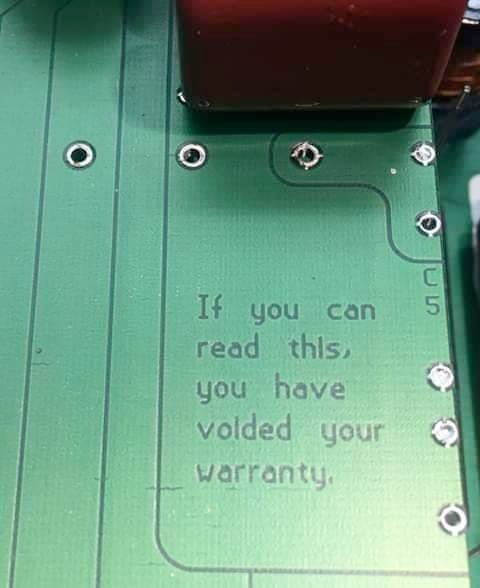
- A performance test of hygrometer (humidity) and temperature sensors, and more importantly, why sensor calibration matters. At the simplest level of calibration, single-point calibration removes offset error by aligning a sensor’s output to a known reference. Two-point calibration goes further by correcting both offset and gain by anchoring to low and high reference conditions (e.g. for temperature: an ice bath and boiling water). For sensors with non-linear response, multi-point curve fitting or lookup tables are required to map measured values across the range to a calibrated function. Datasheet specs like ±0.1 °C or ±2 %RH come from ideal lab setups, but in real hardware, parasitics (self-heating, airflow, board layout, enclosure effects) shift the response. Calibration is the step that takes biased but consistent readings and makes them reliable enough for control loops, safety thresholds, and drift monitoring. Accuracy calibration rapidly gets complicated, or expensive, and often it’s both at the same time.

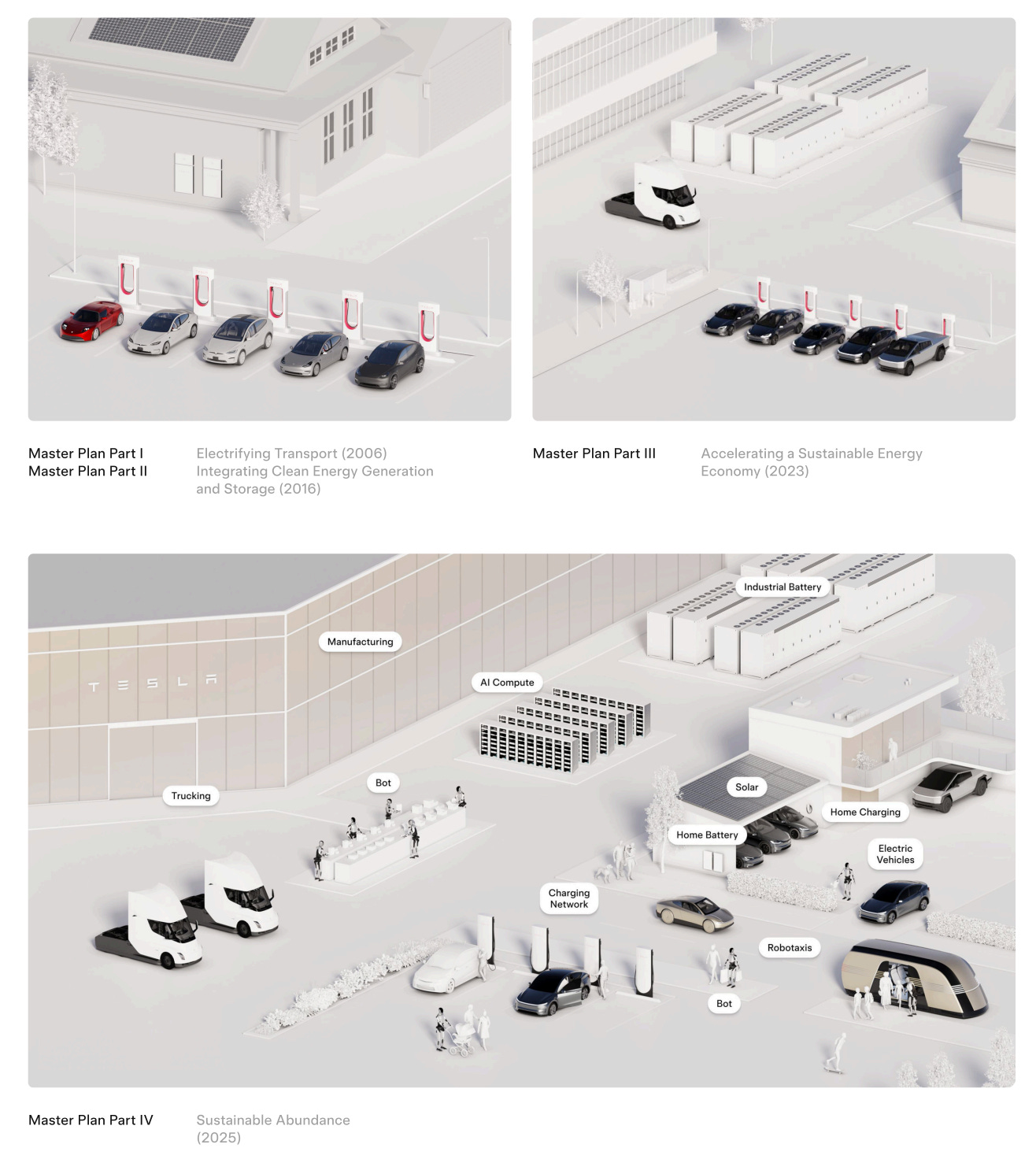
- Tesla released its Master Plan Part IV last week, the latest in a series of public-facing manifestos that lay out the company’s long-term direction in plain language. In 2006, the original plan outlined the sports car → affordable car → mass-market car → clean power arc. A decade later, part II promised solar roofs, a full EV lineup, self-driving at fleet scale, and cars that earn money when parked (a promise that hasn’t materialized yet). Both read like vision statements that seemed improbable at the time, but proved directionally true. Part IV keeps the manifesto style but trades product steps for broad rhetoric: AI, humanoid robots, and “sustainable abundance.”
- Analog Engineer’s Circuit Cookbook: Amplifiers is TI’s reference of canonical op-amp circuits, complete with equations and design notes. Need to boost a weak differential signal? Use an instrumentation amplifier. Designing for noise rejection? A differential amplifier or active filter might be the right tool. The point isn’t to memorize every sub-circuit, but to recognize the topologies and know when to apply them.
- Researchers have shown that under the right conditions, Wi-Fi channel state information (CSI) can be used to measure heart rate. CSI is a per-frequency snapshot of how a Wi-Fi signal is distorted as it propagates through a space, and has been more recently applied to applications like tracking people through space or estimating pose. Pulse-Fi extends this to the biological domain, measuring sub-BPM heart-rate estimation on cheap, single-antenna hardware like ESP32s and Raspberry Pis. By isolating the heartbeat band (0.8–2.2 Hz) and running it through a lightweight LSTM, the group achieved errors as low as 0.14 BPM on a 118-participant dataset. The authors suggest the same approach could plausibly extend to breathing rate or sleep-apnea detection. Full PulseFi paper here.
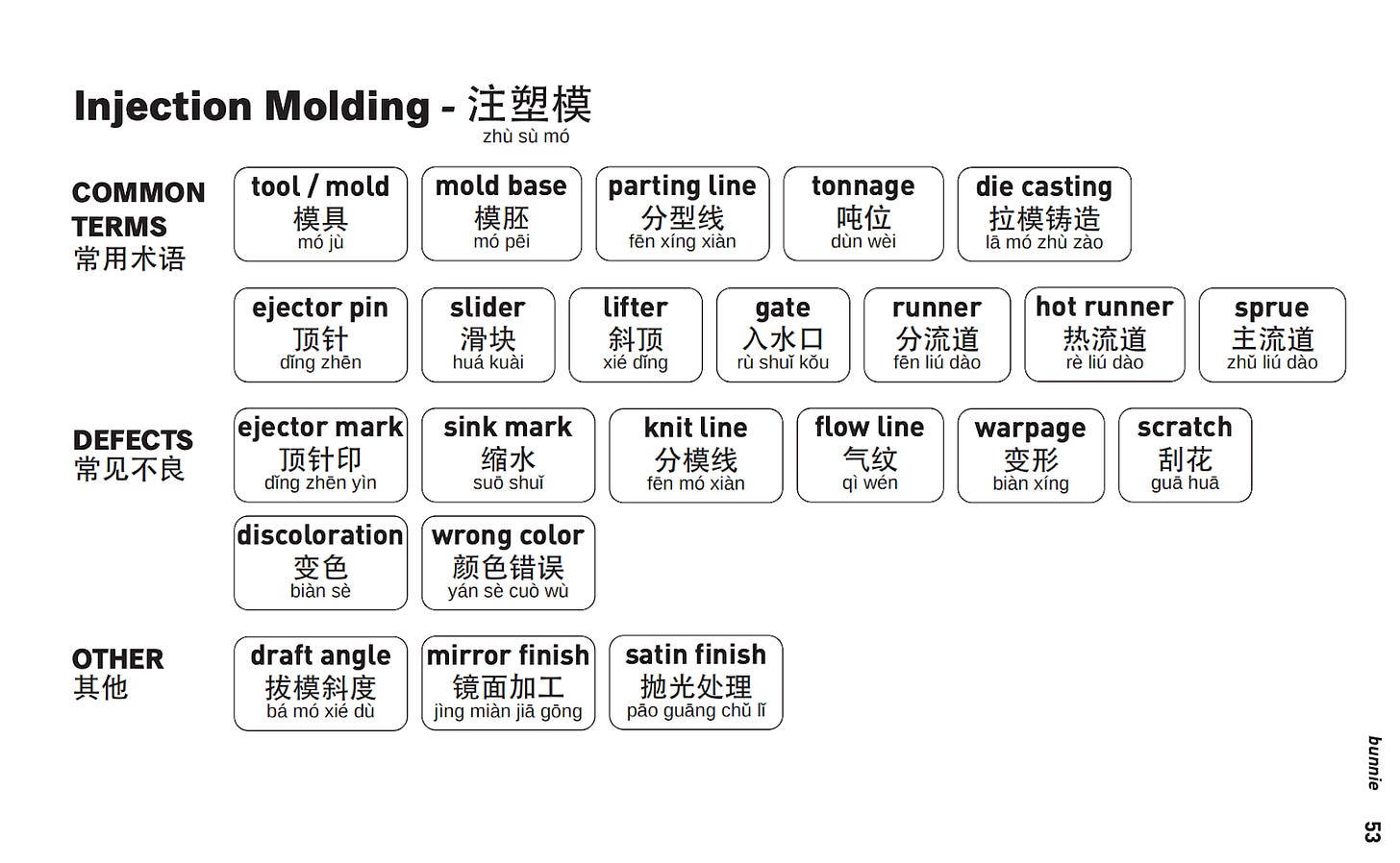
- The Essential Guide to Electronics in Shenzhen by Bunnie Huang. Part field manual to the electronics markets of China and part phrasebook for navigating them. Also, arguably, an interesting way to learn a new language.
Startup News 🚀
- SpaceX agreed to a $17B deal to purchase 50 MHz of exclusive S-band spectrum in the U.S. along with global mobile satellite service licenses from EchoStar, split between $8.5B in cash and $8.5B in stock. The acquisition advances Starlink Direct to Cell technology by enabling a next-generation constellation of satellites featuring custom silicon and phased array antennas that support thousands of spatial beams. The upgrade delivers ~20× the throughput and more than 100× the capacity of the first-generation system, providing 5G connectivity to unmodified LTE phones and eliminating mobile dead zones across over half the world’s landmass. The deal size surpasses the estimated $10B total development cost for the Starship program.
- ASML committed $1.5B to lead a $2B Series C round for Mistral AI, a Paris-based startup developing open-weight large language models. The deal values Mistral at $11.7B pre-money and makes ASML its largest shareholder with a board seat. ASML is the sole supplier of extreme ultraviolet lithography tools, $180M machines used by TSMC, Intel, and others to manufacture leading-edge chips. The investment appears aimed at applying Mistral’s AI and data analytics to optimize semiconductor production while reducing reliance on U.S. and Chinese models. Nvidia also participated in the round.
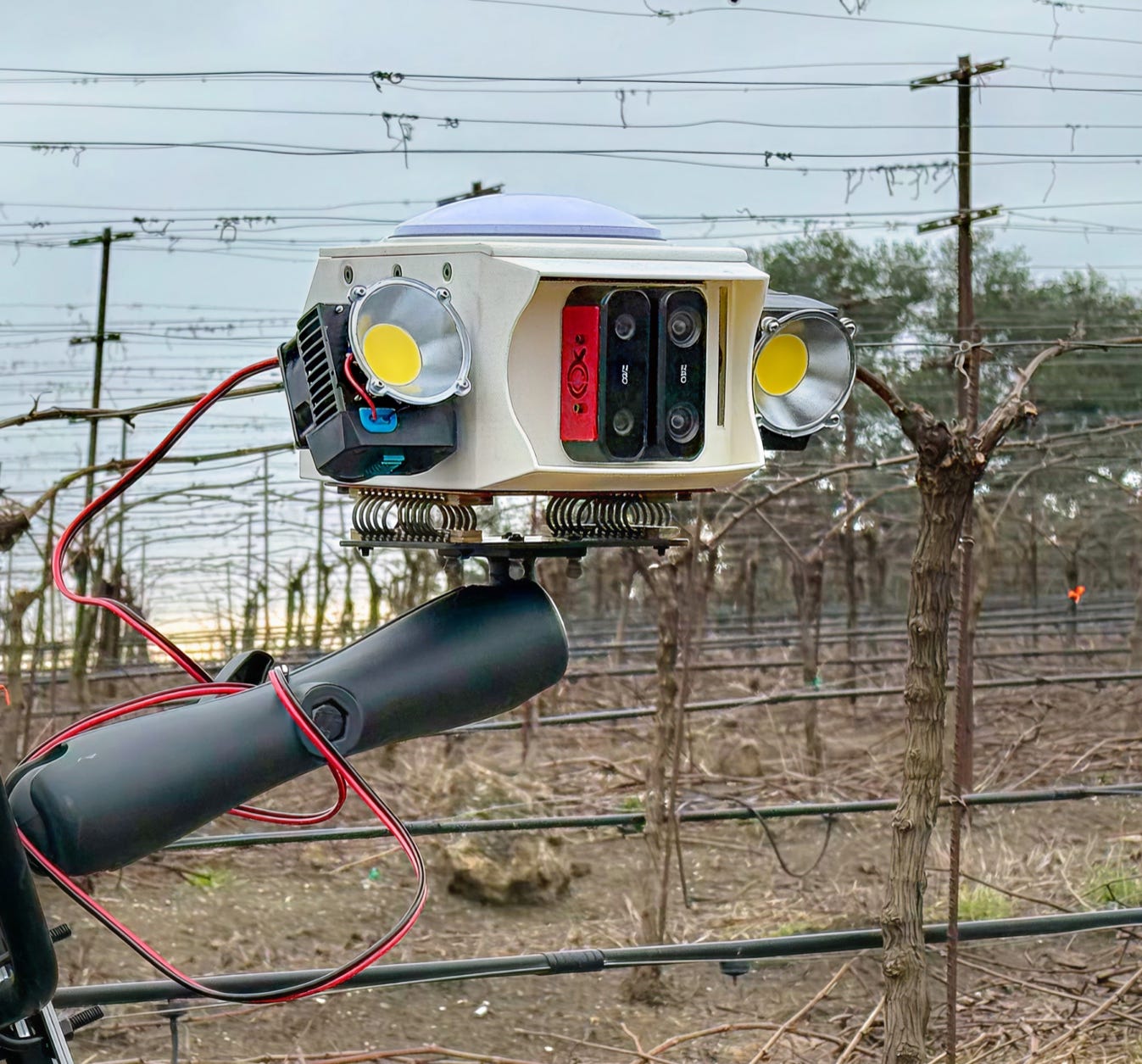
- Orchard Robotics raised $22M in Series A funding to scale its AI vision system for specialty crops. The platform mounts cameras on farm vehicles to capture ultra-high-resolution images of fruit, analyzing size, color, and health to guide pruning, fertilization, and harvest decisions. Already deployed in major apple and grape farms and expanding to crops like blueberries and almonds, Orchard plans to build a farm operating system for autonomous workflows. The round was led by Quiet Capital and Shine Capital.
- Leo AI raised $9.7M in seed funding to expand its AI copilot for mechanical engineers. The Massachusetts-based startup has built a “large mechanical model” trained on sketches, CAD, and peer-reviewed literature that can take parts as tokens, suggest compatible components, and assemble models from text or drawings. The platform aims to cut hours of repetitive search work and free time for design. The round was led by Flint Capital.
- Natron Energy is ceasing operations due to funding shortfalls, halting a planned $1.4B sodium-ion battery factory in North Carolina that was expected to add 1,000 jobs. The company developed Prussian blue–based sodium-ion cells aimed at applications like data center backup power. Natron had $25M in orders previously.