

👋 Happy Saturday! This week’s edition covers how the new generation of 3D printers and massive-scale print farms are shifting additive manufacturing cost curves, a presentation walking through a technical reconstruction of the 2023 Cruise robotaxi crash, and what happened to the plant-based meat boom.
Interesting Chart: Cost Curves for 3D Printing
This simplified chart compares per-part costs for 3D printing versus injection molding and shows how quickly the economics of additive manufacturing are shifting — driven in part by the rise of massive-scale print farms.
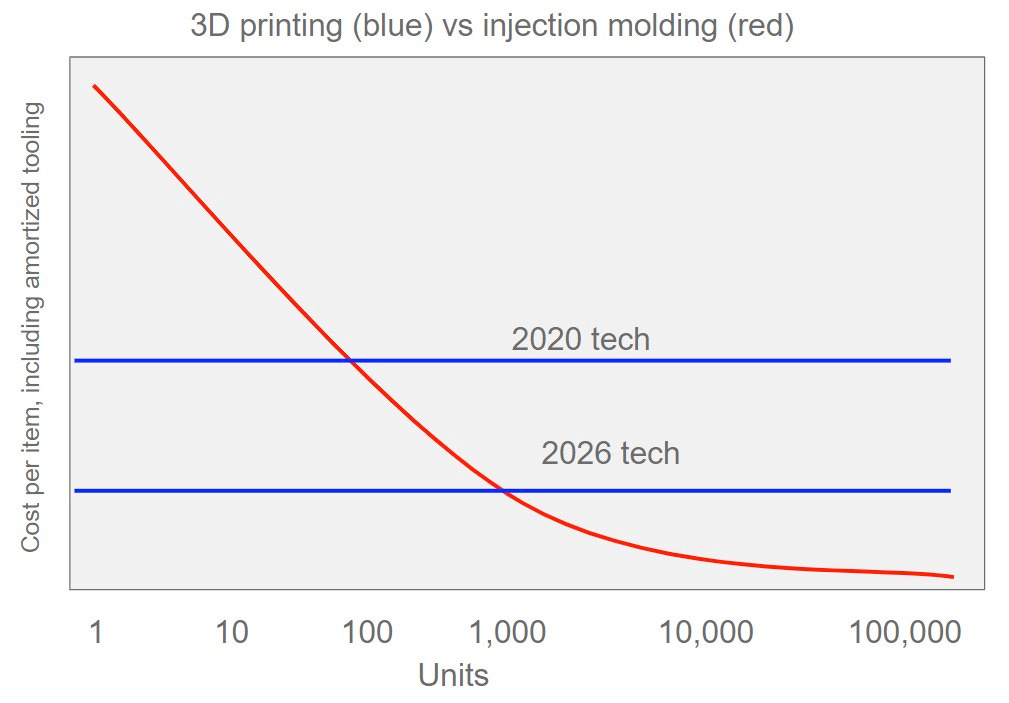
A 3D printing farm, which really is just a centralized operation running racks of networked printers continuously, typically operates anywhere from ten to a few hundred machines. That scale is now starting to change with some massive print farms in China reportedly running upwards of ~5,000 printers (largely Bambu machines). One recent order included 40,000 small desktop ornaments printed and delivered within a week. Assuming each printer runs a full build plate of four parts every 3 hours, across 5,000 machines, that’s roughly 160,000 parts per day.
For a more detailed breakdown, the cost curve below comes from an RFQ sent to a Chinese supplier using a simple nylon part across several manufacturing processes.
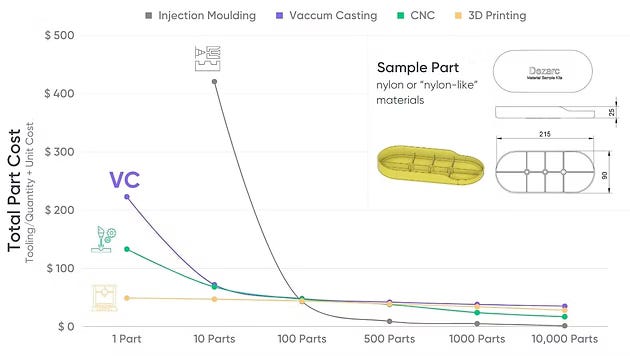
One interesting dynamic: some 3D printing farms built just a few years ago are already becoming obsolete as older machines struggle to compete with the new generation of printers (again, largely from Bambu Labs). As one operator puts it:
“Instead of ordering prints, companies gradually started buying their own 3D printers and producing parts in-house. The economics of those decisions were merciless for us. In the end, outsourcing those 3D prints to us simply stopped making sense - it just wasn’t profitable. For them, and for us as well.”
Interesting Presentation: Anatomy of the Cruise Robotaxi Crash
A technical breakdown of the October 2023 Cruise robotaxi crash in San Francisco, reconstructing the incident step-by-step and examining how the vehicle’s perception and planning stack handled the crash sequence. At the time, Cruise was operating a growing fleet of driverless robotaxis when a human-driven car struck and threw a pedestrian into the path of an oncoming Cruise vehicle.
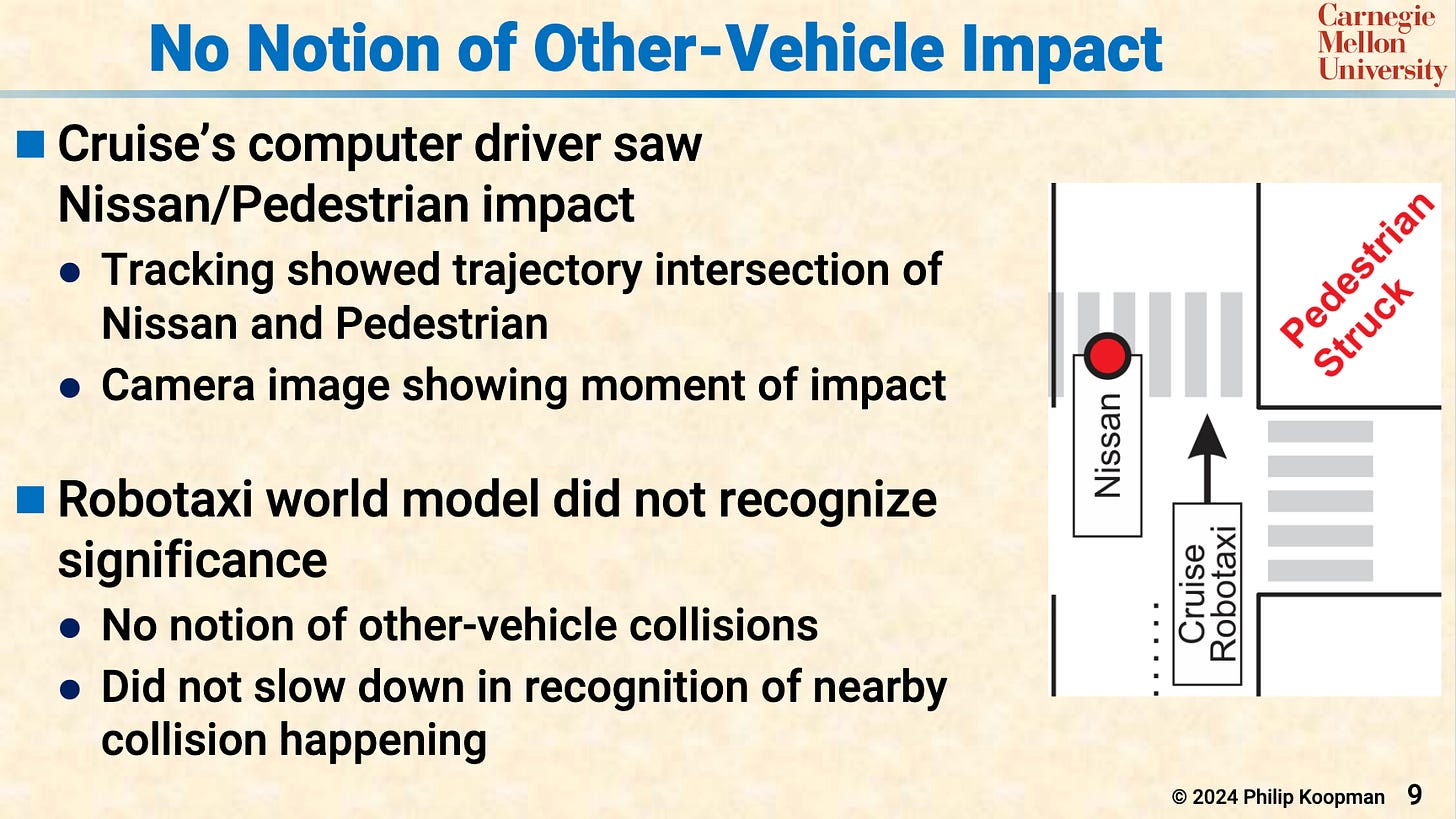
Several subtle failures compounded across the perception and planning stack during the crash:
- The system saw the initial trajectories, but failed to recognize that a collision between two other road users had occurred even though their trajectories intersected.
- It lost track of the pedestrian after the initial impact.
- Braking was delayed despite ~2.9 seconds between the first and second impact.
- Post-collision logic initiated a pullover maneuver that dragged the pedestrian before the vehicle recognized an obstruction beneath it.
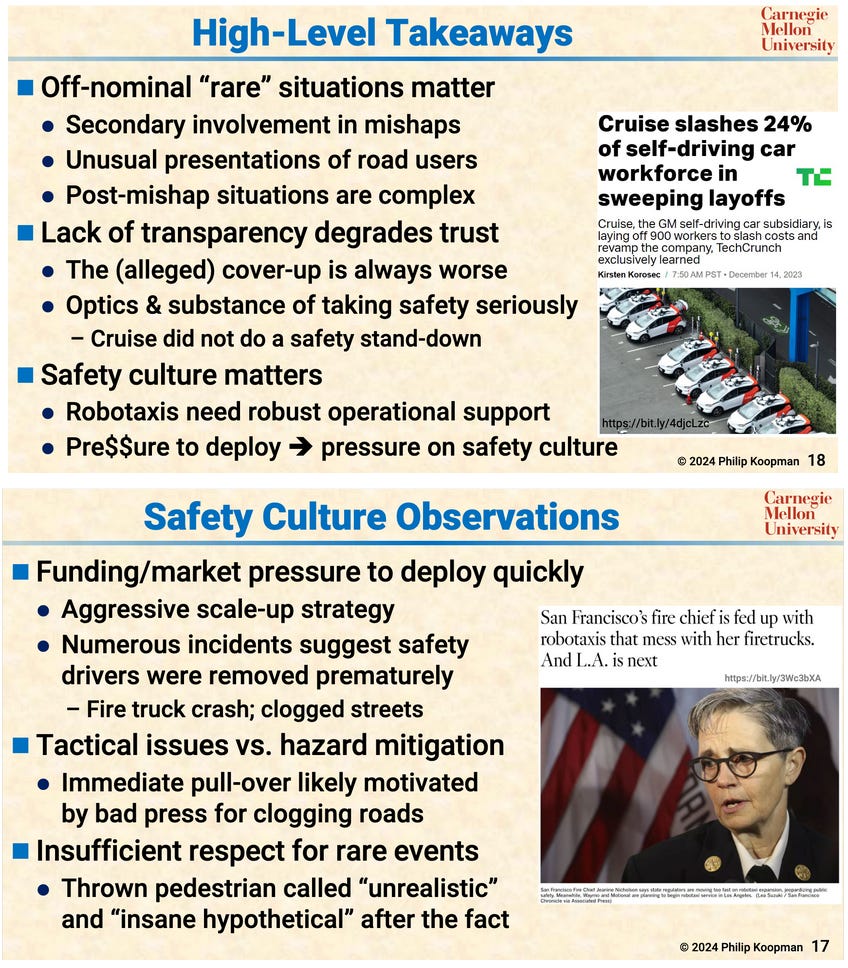
It’s been well-documented, but the incident ultimately became the catalyst for regulators revoking Cruise’s permits in California and for GM later shutting down the autonomous driving subsidiary entirely in late 2024. Full video walk-through here.
Interesting Video: What Happened to Plant-Based Meats?
A good overview of the rise and slowdown of the plant-based meat industry. For a brief moment in the late 2010s, plant-based meat products were rolling out across thousands of restaurants and could even account for upwards of 20% of sales at some chains.
TL;DR: still significantly more expensive to produce (fermentation, specialty proteins, R&D), while traditional meat benefits from massive scale and subsidies.
Manufacturing & Startup News
More leftovers from our weekly research:
- Amazon Robotics cut a small number of roles in its division as part of a broader restructuring effort following the recent shutdown of Blue Jay, its multi-arm warehouse robot program only months after launch. The company is reportedly shifting focus toward a new modular warehouse automation system known internally as Orbital, designed for smaller same-day delivery facilities.
- A new space-focused SPAC raised roughly $230M to merge with a private space company, suggesting the financing model may be slowly returning to the sector after disappearing in 2022. For context, SPACs are publicly listed shell companies that raise capital first and then merge with a private firm to take it public.
- Zeno raised $25M in Series A funding to expand production of its battery-swap electric motorbikes and build out its swap network across Kenya and Uganda.
- Cadence acquired EMA Design Automation, a long-time distributor of its OrCAD and Allegro PCB design tools in North America and Europe, bringing the channel partner and its PCB workflow tools in-house.
- Sophia Space raised $10M in seed funding to develop in-orbit computing hardware for satellites, with the longer-term goal of building orbital data center infrastructure.