

👋 Happy Saturday! This week’s highlights include a catalog of 110+ tips on design for manufacturing, a factory tour inside Rivian’s Illinois plant, and a chart on how semiconductor node names have diverged from physical dimensions.
Interesting Lecture Notes: Design for Manufacturing in 110 Tips
From the University of Florida’s Design and Manufacturing Laboratory, a catalog of 110 rules for designing parts that are easier and cheaper to make. Think of it as the design engineer’s equivalent of ‘68 Bits of Unsolicited Advice.’
Of the many tips listed, a handful of our favorites:
- Never design a part you can buy out of a catalog unless you can clearly justify the choice. Using OTS parts helps us focus on our real mission: designing and building products.
- When possible, use fewer larger fasteners vs. more smaller fasteners.
- Use subassemblies, particularly modular subassemblies. At the same time, avoid too many levels of subassembly—each additional layer adds overhead in the form of manufacturing specs, floor space, and inventory.
- Consider self-tapping screws instead of nuts or threaded holes in mating parts. Threading is one of the most time consuming manufacturing processes, so reduce or eliminate it for mass production.
- Use cast or molded-in identification instead of attached labels because it eliminates the costs involved in purchasing, stocking, and affixing separate labels.
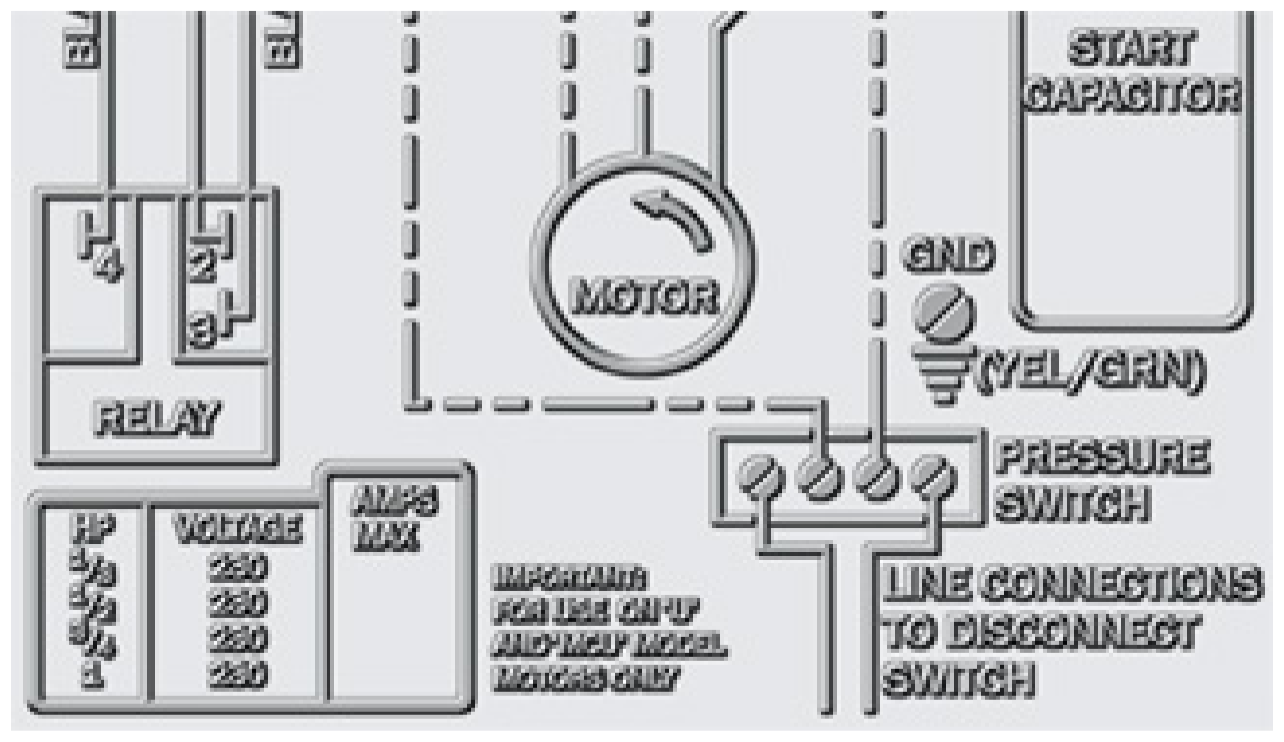
- If the part requires multiple holes, try to dimension them from the same datum to simplify fixturing.
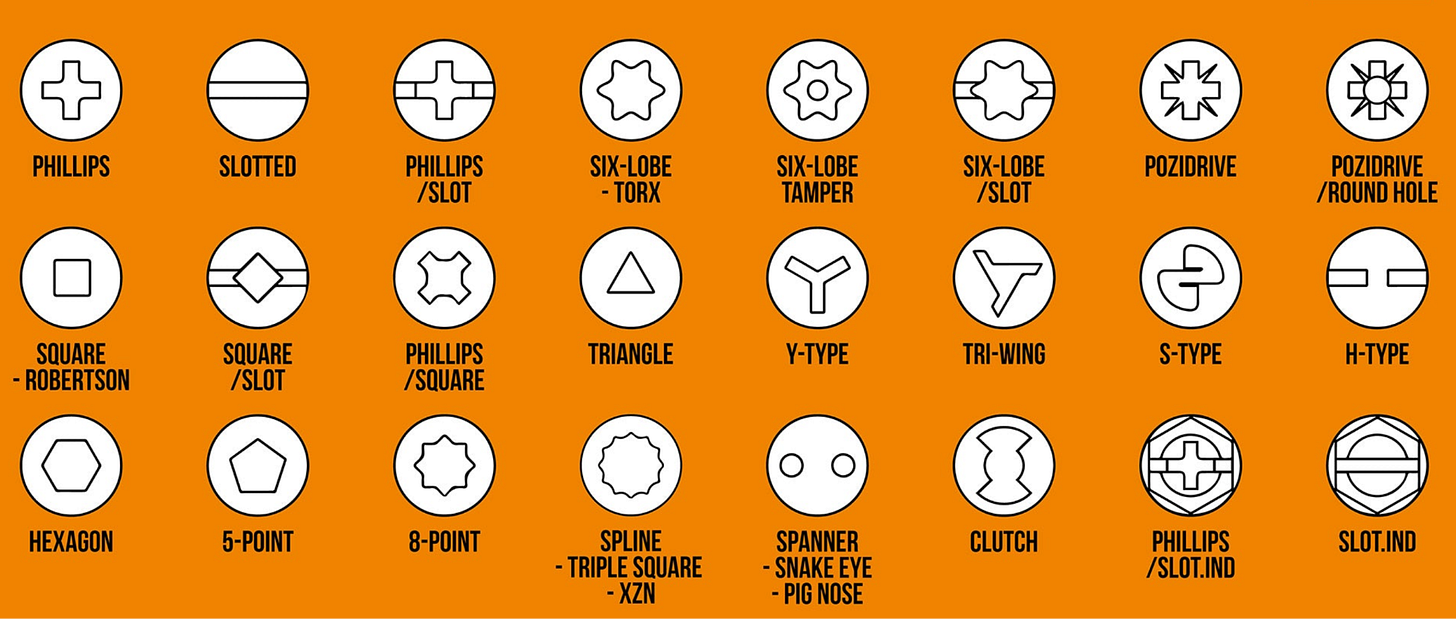
- Choose fastener head types that are easy to drive and torque. Hex, Phillips, and Torx are preferred. Socket (Allen) heads cost more due to the progressive heading die operation required. Slotted heads are cheapest but hard to drive reliably—avoid them if you want to reduce assembly time.
Interesting Video: Inside Rivian’s Illinois Factory
A great tour of Rivian’s factory in Normal, Illinois where they build the R1T pickup, R1S SUV, and commercial vans. The site was originally built in 1988 for Diamond-Star Motors, a joint venture between Mitsubishi and Chrysler. Rivian bought it in 2017 for just $16 million, including a row of 5,000-ton Komatsu presses that now stamp the doors, hoods, and fenders for its vehicles.
At its peak under Mitsubishi, the facility produced over 218,000 vehicles a year. To help set context on current production volumes: Rivian built around 50,000 in 2024, and currently forecasts up to 215,000 units, almost identical to Mitsubishi’s top forecasts from 1995.
Most automation lives upstream in stamping, welding, and battery module assembly. Downstream, final assembly is still mostly manual, with powered lifts and tools that help operators install seats, trim, and other small details.
Interesting Chart: The Meaningless Technology Node
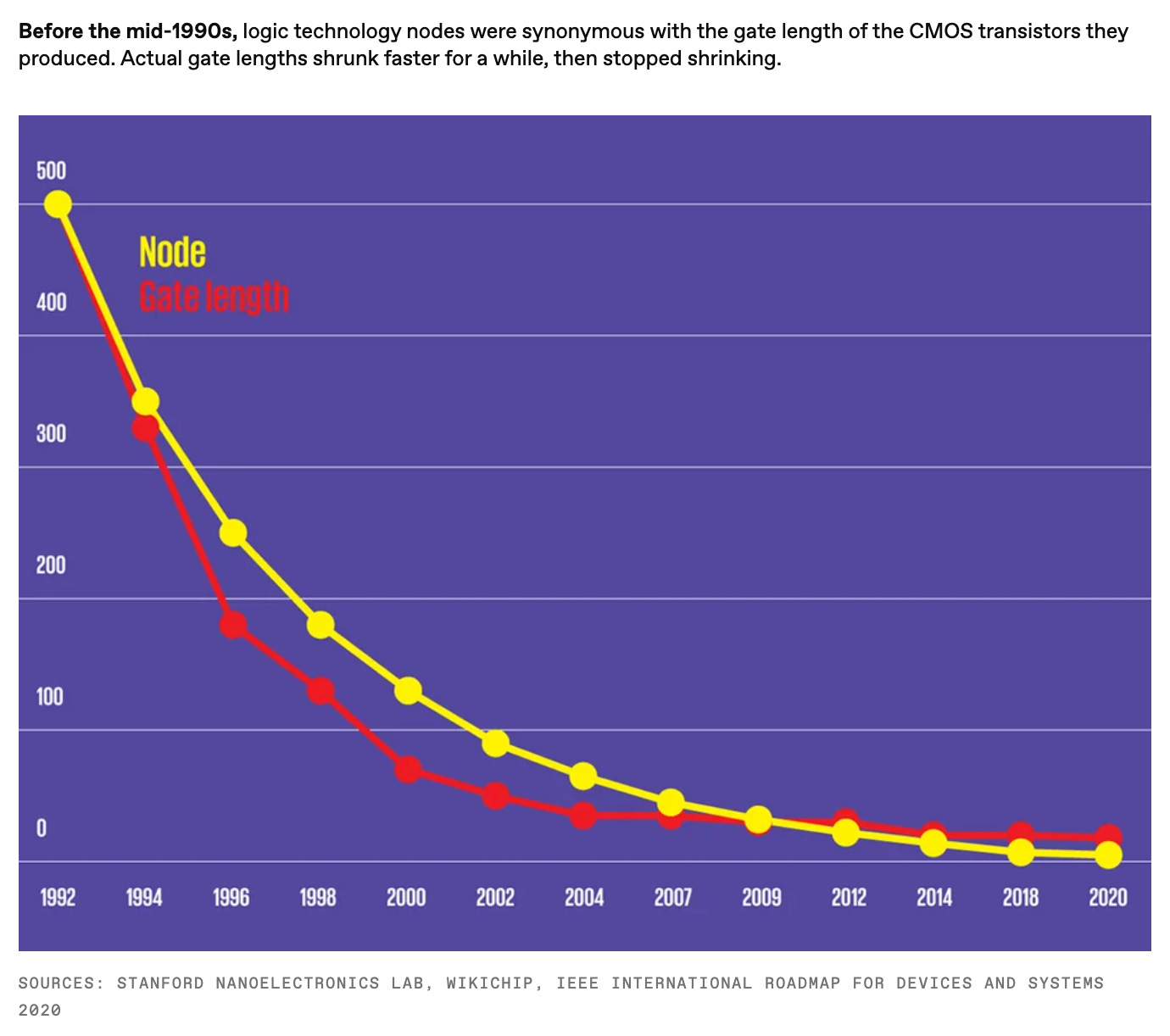
In today’s history lesson: semiconductor node names like a “3 nm” process no longer refer to any physical dimension, but have become marketing shorthand for each new generation of technology.
For example, Intel’s “10 nm” process actually has a gate pitch (distance between transistors) of about 54 nm and a metal pitch (spacing between interconnect lines) of 36 nm. More on the history of naming conventions and better metrics for semiconductor progress linked here.
Manufacturing & Startup News
More leftovers from our weekly research:
- Redwood Materials raised $350M in Series E funding to expand U.S. refining capacity, energy storage deployments, and critical-minerals production across cobalt, nickel, copper, lithium, and cathode active material.
- Space Quarters raised $5M in seed funding to develop space-construction robotics and welding systems for autonomous assembly of large-scale infrastructure in orbit, with a demo targeted for 2027-2028.
- HyImpulse raised $52.5M in Series A funding to accelerate commercialization of its three-stage SL1 small launcher. The German startup aims to support development of sovereign European launch capabilities.
- Phoenix Tailings opened the first fully domestic rare-earth metallization facility in the U.S., located in Exeter, NH. The plant begins with 200-ton annual capacity for light and heavy rare-earth metals like NdPr and DyFe alloys, scalable to 1,000+ tons.
- QFX raised $2.4M in seed funding to advance modular trapped-ion and cold-atom hardware for scalable quantum-computing systems.