

Interesting Links 🏭
- SemiAnalysis breaks down the state of the quadruped robotics market. For all the attention Boston Dynamics gets, the real leader is Unitree Robotics from China. In 2023, Unitree shipped 7,200 quadrupeds (roughly 10× the next-largest competitor) and held over 70% of the global market in the same year. Much of that dominance comes from ruthless cost engineering: the Go2 sells for $1,375 compared to $74,500 for Spot. Actuators drive up up 50–70% of a robot’s BOM, and Unitree’s edge comes from domestic suppliers and faster release cycles. Despite ongoing security concerns, Unitree’s low-cost hardware and open SDKs have made it a staple in research labs while the company expands into industrial inspection and logistics domestically in China.
- FPGA4Fun is a classic encyclopedia-style guide for learning FPGA development. FPGAs are reconfigurable chips made up of thousands of small logic cells, each a tiny circuit containing a lookup table (LUT), a flip-flop, and some routing. By connecting these cells together, you can build almost any digital circuit from simple counters to full CPUs. The site starts with simple projects like blinking LEDs or building counters, then moves to mid-level examples implementing protocols like I²C and SPI. Also includes fun demos and reference designs like Pong.
Street-Fighting Mathematics is a guide to reasoning by intuition using dimensional analysis and mental shortcuts to get quick answers when time or data is scarce. It treats math as a practical language for solving real problems over strict algebraic rigor.
Too much mathematical rigor teaches rigor mortis: the fear of making an unjustified leap even when it lands on a correct result. Instead of paralysis, have courage—shoot first and ask questions later. Although unwise as public policy, it is a valuable problem-solving philosophy, and it is the theme of this book: how to guess answers without a proof or an exact calculation.

- A couple recent product mishaps made headlines last week:
- When AWS went down last week, so did Eight Sleep. Because the company’s smart mattress topper relies entirely on cloud connectivity (via AWS) to control temperature, elevation, and settings, the device couldn’t accept any local commands once Amazon’s servers went offline. Eight Sleep did quickly add an offline mode, but users also noticed another odd detail - their beds were sending over 16 GB of telemetry data every month.
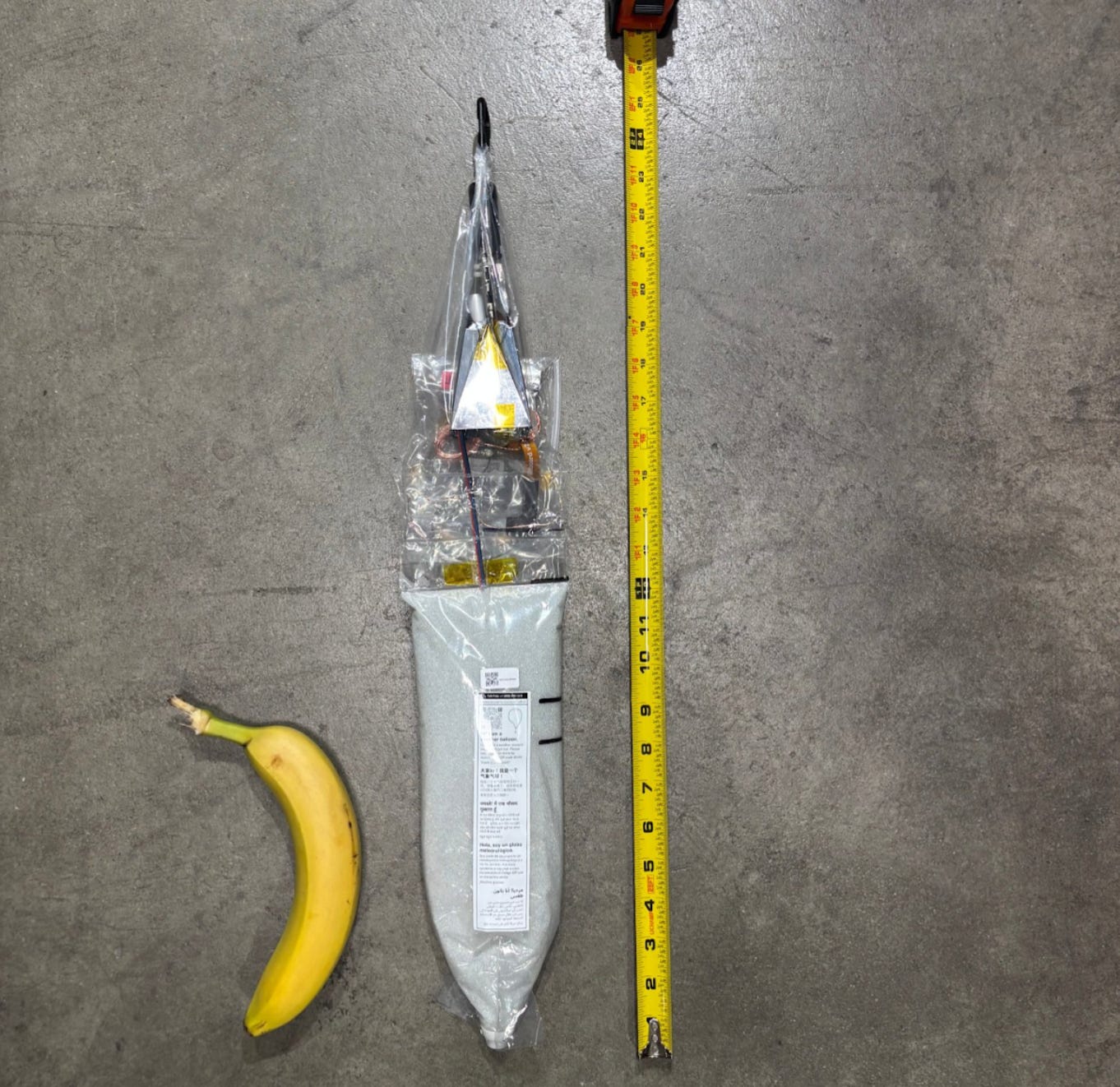
- WindBorne Systems, a Palo Alto startup that flies long-duration weather balloons for AI forecast models, said one of its balloons likely struck a United Airlines flight at 36,000 feet. The impact cracked the cockpit windshield and caused minor injury to a pilot. The CEO traced the damage to the balloon’s sand ballast, which helps the balloon control altitude, and has been posting an unusually open, real-time account of the investigation on the CEO’s X feed.
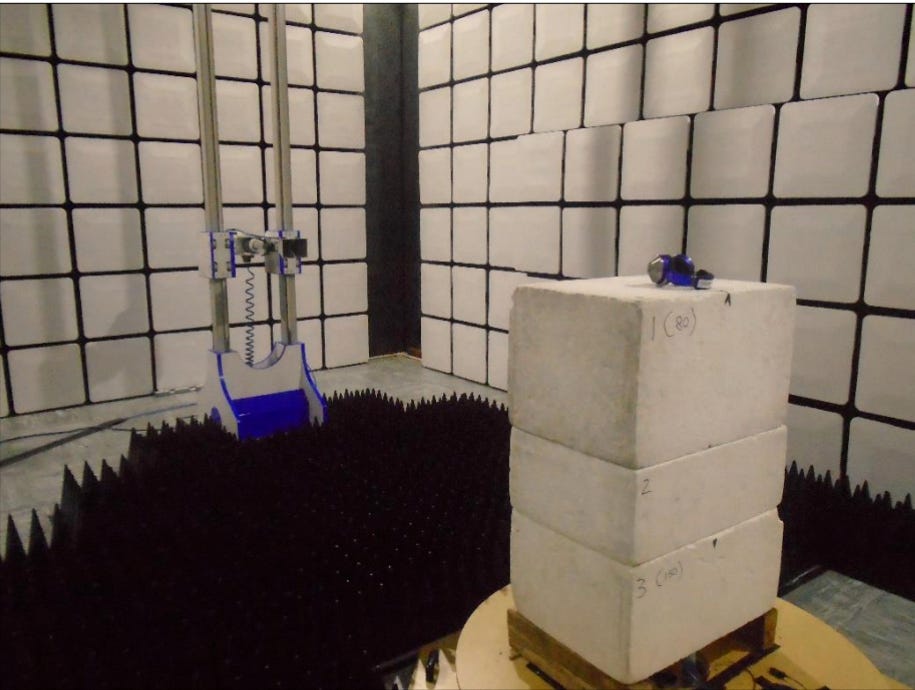
- A crash course on certifying consumer electronics across FCC, EMC testing, and everything in between. Before companies can sell a device, engineering teams have to prove the device doesn’t emit or receive radio noise outside the limits defined by the FCC. That means measuring electromagnetic emissions in an anechoic chamber and making sure they stay below Part 15 thresholds. Anything with a microcontroller or oscillator qualifies as an “unintentional radiator,” while transmitters like Wi-Fi or Bluetooth modules are “intentional radiators” and tested separately. Most products also need UL or IEC safety marks, CE for Europe, and RoHS for material compliance.
- A couple more events of interest on the horizon:
- Summit Interconnect is hosting a webinar on designing PCBs for harsh environments, and how to meet new reliability standards like IPC-6012ES.
- Fictiv is hosting the 18th Oakland Hardware Meetup and giving away free Warriors tickets during the community open mic!
Startup News 🚀
- Sesame raised $250M in a Series B funding to launch its beta conversational-AI platform. Founded by Oculus co-founders, the startup is developing lightweight smart glasses with an embedded voice-based AI agent that interacts naturally with users through speech generated directly from the model rather than text. The round was led by Sequoia and Spark.
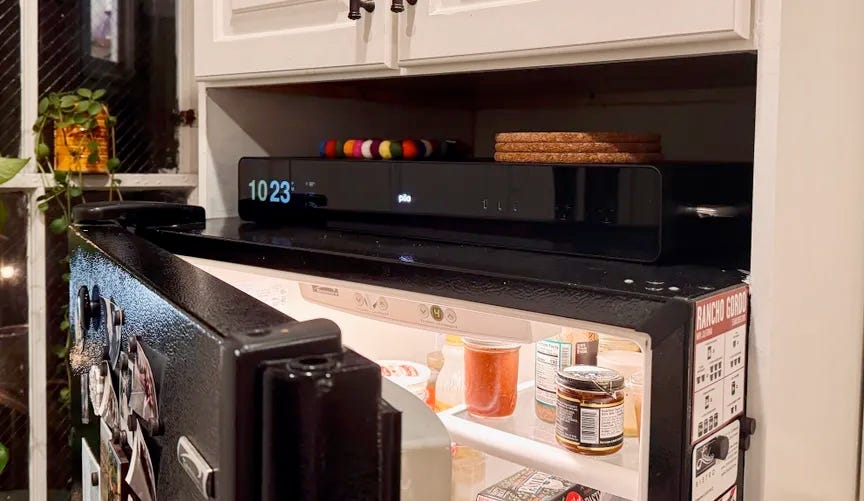
- Pila Energy raised $4M in seed funding to scale its plug-and-play home battery system. The company’s briefcase-sized units plug into standard outlets and combine storage and sensing back up key appliances and manage household energy use. Each 1.6 kWh module can power a refrigerator for 32 hours and network with others over a built-in mesh for future grid integration. The round was led by R7 Partners.
- Starship Technologies raised a $50M Series C round, bringing total funding to over $280M. The company’s autonomous delivery robots operate at Level 4 autonomy, having completed more than 9M deliveries and 12M miles of data collection. The funding will support U.S. expansion and scale the fleet toward 12,000 units by 2027. The round was led by Plural.
- A bit late on our radar: Periodic Labs emerged from stealth with $300M in seed funding to build autonomous AI scientists that can plan and conduct physical experiments. Founded by former OpenAI & DeepMind research leads, the company aims to automate scientific discovery across chemistry and materials research, starting with new superconductors. The company’s approach combines robotics, experimentation, and data collection to generate fresh training data beyond the limits of internet-scale models.
- Petal Surgical emerged from stealth with a $10M in Series A funding, bringing total capital raised to nearly $20M. The company is developing a robotic platform that performs incisionless surgery using focused ultrasound to destroy tumors through acoustic liquefaction, where high-intensity sound waves mechanically break down targeted tissue. The round was co-led by K50 Ventures and TSVC.