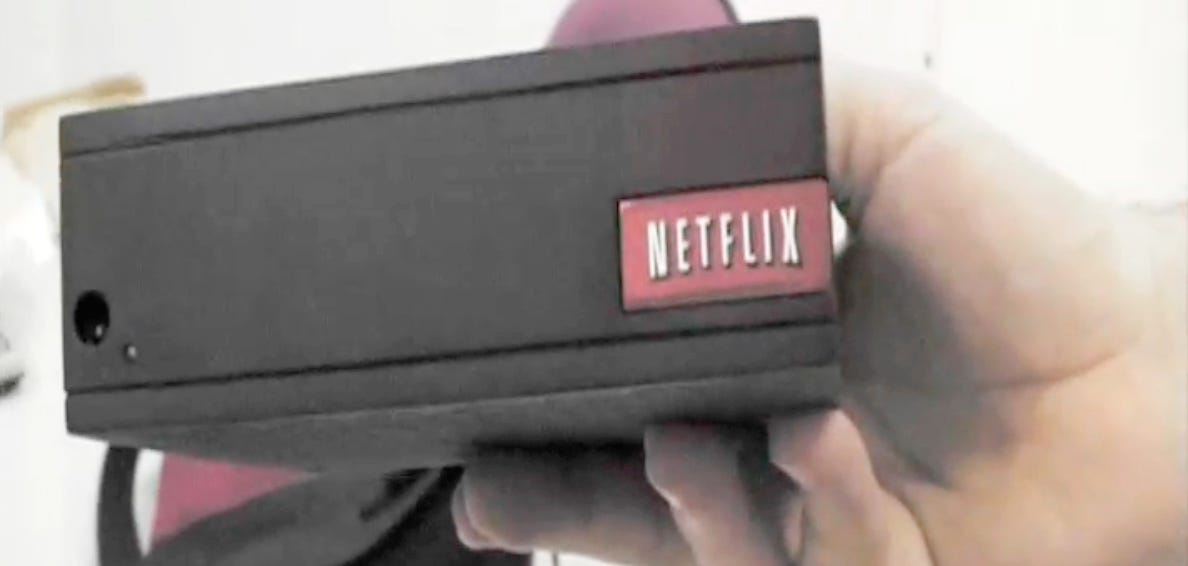
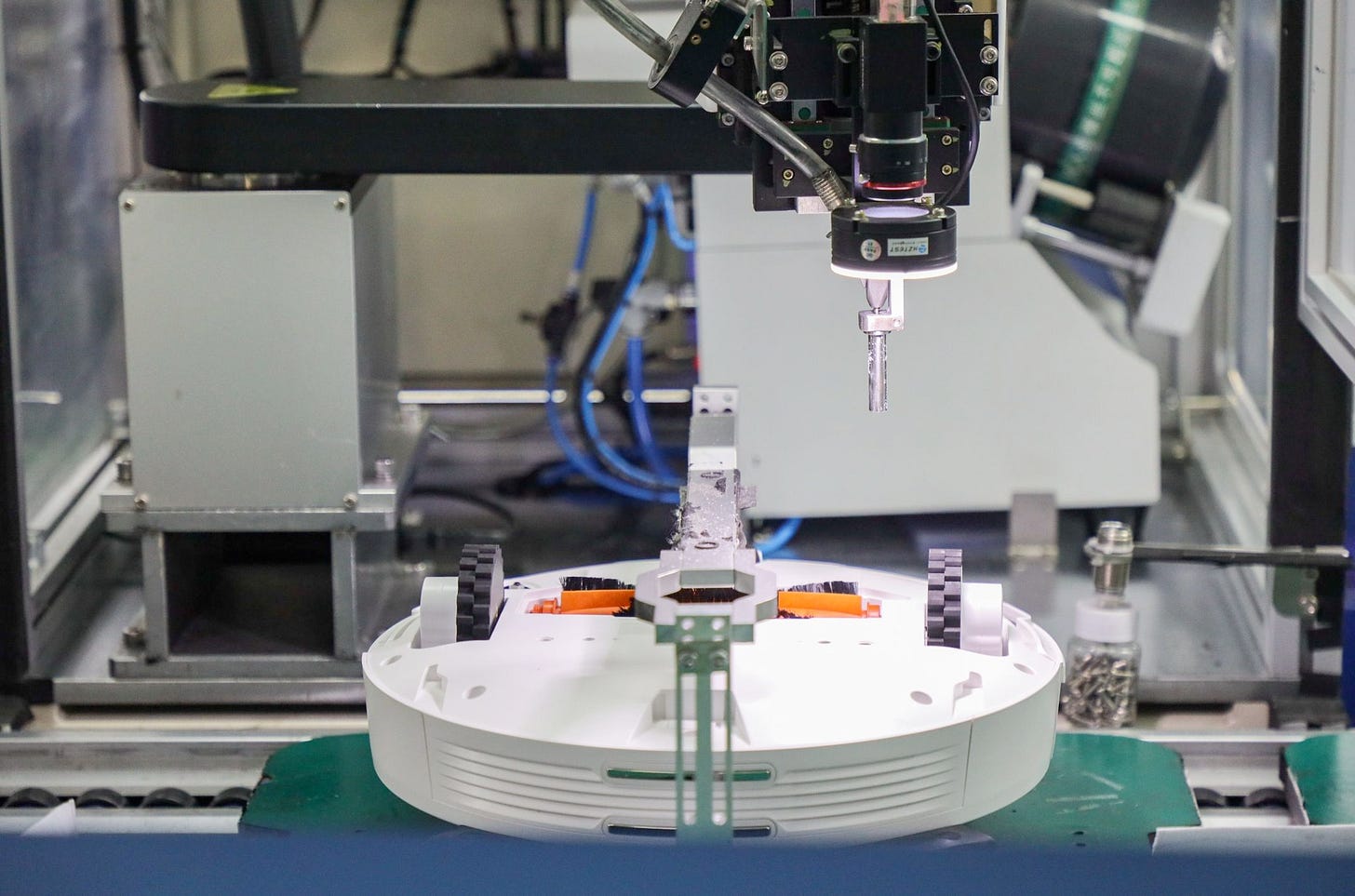
On the eve of Netflix’s $72B bid for Warner Bros., it’s worth remembering that Roku actually began as an internal Netflix project. In 2007, Netflix quietly built its own streaming hardware (codenamed Project Griffin) and took it through the full product development cycle, including on-site manufacturing trips to Foxconn. Weeks before launch, Reed Hastings killed the device despite years of sunk cost, after realizing that owning hardware would structurally conflict with Netflix’s role as a neutral software platform. The team was instead spun out as an independent company with Netflix retaining a ~15% stake; that company became Roku, now a $16B+ business.
After spending a fair amount of time talking to startups—and having worked with hardware consultancies ourselves—Warner Krause’s Insider’s Guide to Selecting and Managing a Hardware Product Development Consultancyis a must-read before choosing to work with one. Like any consultancy, a hardware product development firm is an external team brought in to temporarily augment internal capabilities, like standing up engineering functions or pushing a design from concept through early production. Krause is blunt about the tradeoffs: these firms are expensive, misaligned by default (their incentive is billed hours, not shipping product), and often the wrong answer unless the problem is genuinely complex and time-constrained. The guide provides a practical framework for structuring engagements so incentives align and outcomes aren’t left to chance.
It’s common to spend $1M - $3M USD or more over a couple years with one of these consulting firms to turn an Industrial Design into an engineered consumer product ready for handoff to manufacturing. Are you prepared to spend that amount of cash? If you’re developing a medical device, multiply that number by 2X-3X.
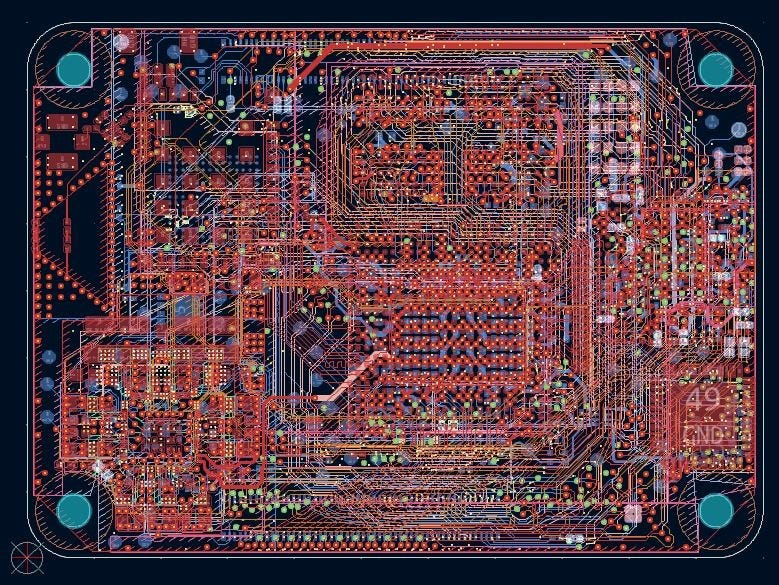
A Raspberry Pi Compute Module 5 motherboard was reverse-engineered by sanding through the board layer by layer to reconstruct full KiCad schematics and the PCB layout. The project started by depopulating all components, measuring passives with an LCR meter (and ferrite beads with a VNA), then sanding the motherboard one layer at a time. Each exposed layer was imaged using a flatbed scanner at 9600 DPI and traced back into KiCad, which made it possible to reconstruct the full 10-layer stackup. It is what’s known as a 2+6+2 configuration since it has four layers of microvias: layer 1-2, 2-3, 8-9, and 9-10. There are buried mechanical vias from layers 2-9, and standard through-board vias from layers 1-10.
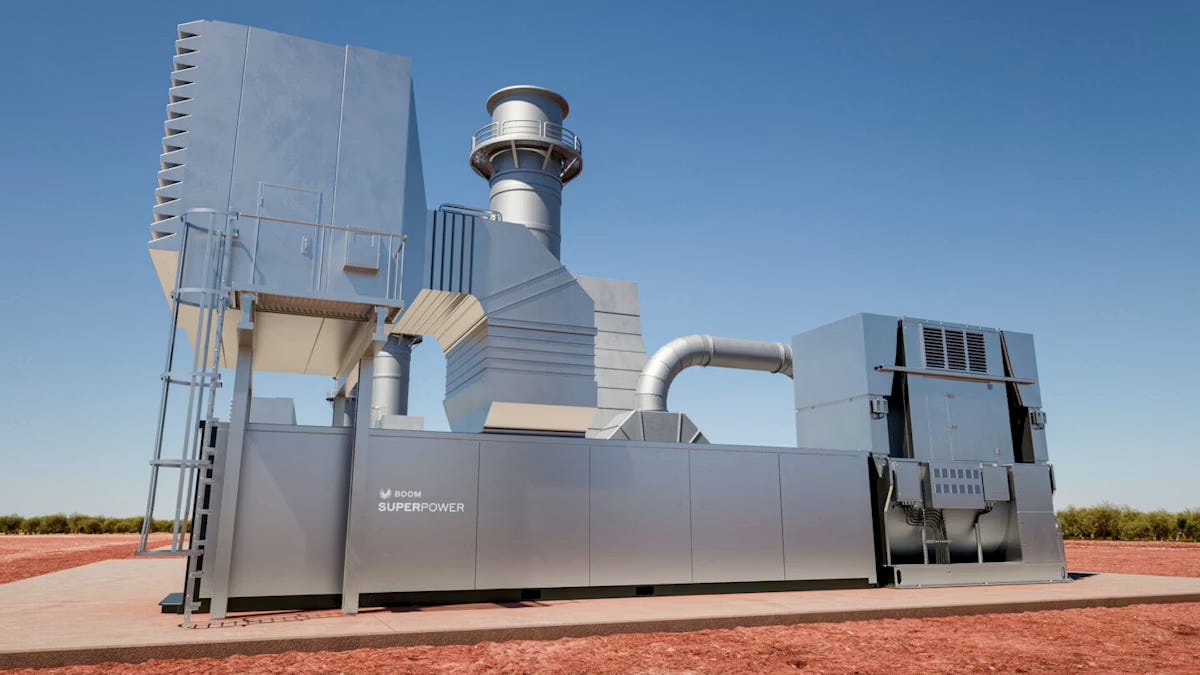
Boom Supersonic has taken a decisive step into power generation by repurposing its supersonic engine technology into gas turbines aimed at powering AI data centers. This isn’t necessarily a new idea—aeroderivative turbines have long adapted jet engine cores for ground-based power—but where Boom’s design stands out is that its engine core was built for sustained Mach 1.7 flight at ~60,000 ft, allowing a 42 MW turbine to maintain full output at ambient temperatures up to 110 °F, well beyond the 86 °F derating point of conventional aeroderivatives. TL;DR it can deliver peak power when data centers need it most during hot, high-load conditions. The company frames the Superpower program as both a near-term, profitable revenue stream and as a giant testbed for Boom’s turbines, though execution and timelines remain open questions.
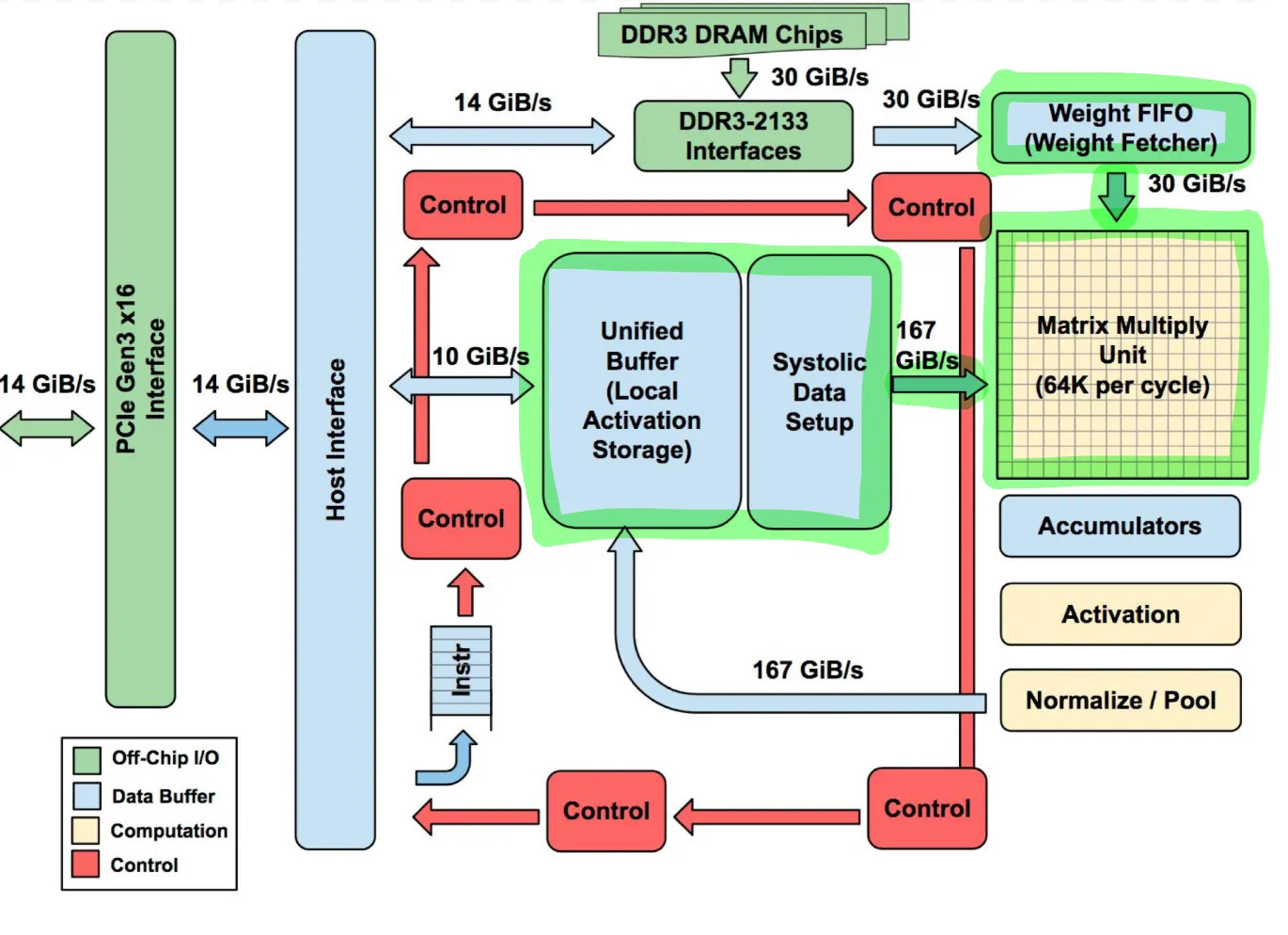
In 2013, a back-of-the-envelope calculation at Google showed that if broad adoption of deep neural network–based speech recognition really took off, it would overwhelm the company’s data centers and drive compute demand up by ~2–3×. That insight led directly to the development of the Tensor Processing Unit (TPU), a custom accelerator built specifically for machine-learning inference. Rather than trying to make CPUs or GPUs stretch further, Google built a purpose-built ASIC for inference optimized around one thing: doing massive numbers of matrix multiply-accumulate operations efficiently, since that’s what modern neural networks spend most of their time doing.
And one fun link to round out this week’s issue: a holiday gift guide from the Institute for Progress (IFP).
Startup News 🚀
SpaceX is reportedly preparing for a potential IPO at a ~$1.5T valuation, aiming to raise more than $30B, putting it among the largest public listings ever and potentially the biggest by valuation. Proceeds would fund higher Starship launch cadence, space-based AI data centers built on modified Starlink satellites, uncrewed and crewed Mars missions, and advanced manufacturing efforts, including concepts like lunar satellite factories. If it happens, the raise would rival Saudi Aramco’s $29B IPO in 2019. It would also mark a reversal from SpaceX’s earlier plan to spin off Starlink for a separate IPO while keeping the core company private.
iRobot filed for Chapter 11 bankruptcy with $190M in debt, resulting in acquisition by its China-based contract manufacturer Picea Robotics. The deal comes just under a year following Amazon’s attempted acquisition in 2024, which was thwarted by EU regulators citing anti-competitive concerns. As the acquirer, Picea will cancel the debt plus an additional $74M in obligations and take full equity. Competitive pressures from other Chinese firms like Ecovacs and tariffs on Vietnam-sourced components drove the restructuring while preserving existing supply chains and product support for iRobot.
Navier emerged from stealth with $5.6M in seed funding to build agent-driven engineering software that automates simulation setup, execution, and validation workflows. The platform layers AI agents on top of existing CAD and simulation tools, using computer vision and spatial reasoning to interpret 3D geometry and run parallel validation workflows. The round included participation from GV, HCVC, and Y Combinator, with early deployments focused on aerospace and automotive programs.
K2 Space raised $250M in Series C funding at a $3B valuation to scale production of large, high-power satellite platforms. Unlike typical satellites limited to a few kilowatts, K2’s current “Mega” spacecraft delivers ~20 kW of continuous on-orbit power (enough to support high-throughput comms, radar payloads, and electric propulsion) with a next-gen platform targeting 100 kW for Starship-class missions. The company has $500M in signed commercial and government contracts and operates a 180,000-sq-ft factory in Torrance designed for high-rate satellite manufacturing. The round was led by Redpoint.
Fervo Energy raised $462M in Series E funding to scale enhanced geothermal power projects. The company uses horizontal drilling and fiber-optic sensing to create engineered geothermal reservoirs in hot rock, enabling scalable, 24/7 carbon-free baseload power. The capital will fund the 100 MW Cape Station phase and expansion toward 500 MW of total capacity. The round was led by B Capital with participation from Google.