

👋 Happy Saturday! This weekend’s highlights include a chart of China’s tech-industrial ecosystem, a proposal for human journey to Mars by NASA using repurposed ISS funds, details on the recent Stargate venture by OpenAI, and news in manufacturing & hardware.
Interesting Chart: China’s Tech-Industrial Ecosystem 📊
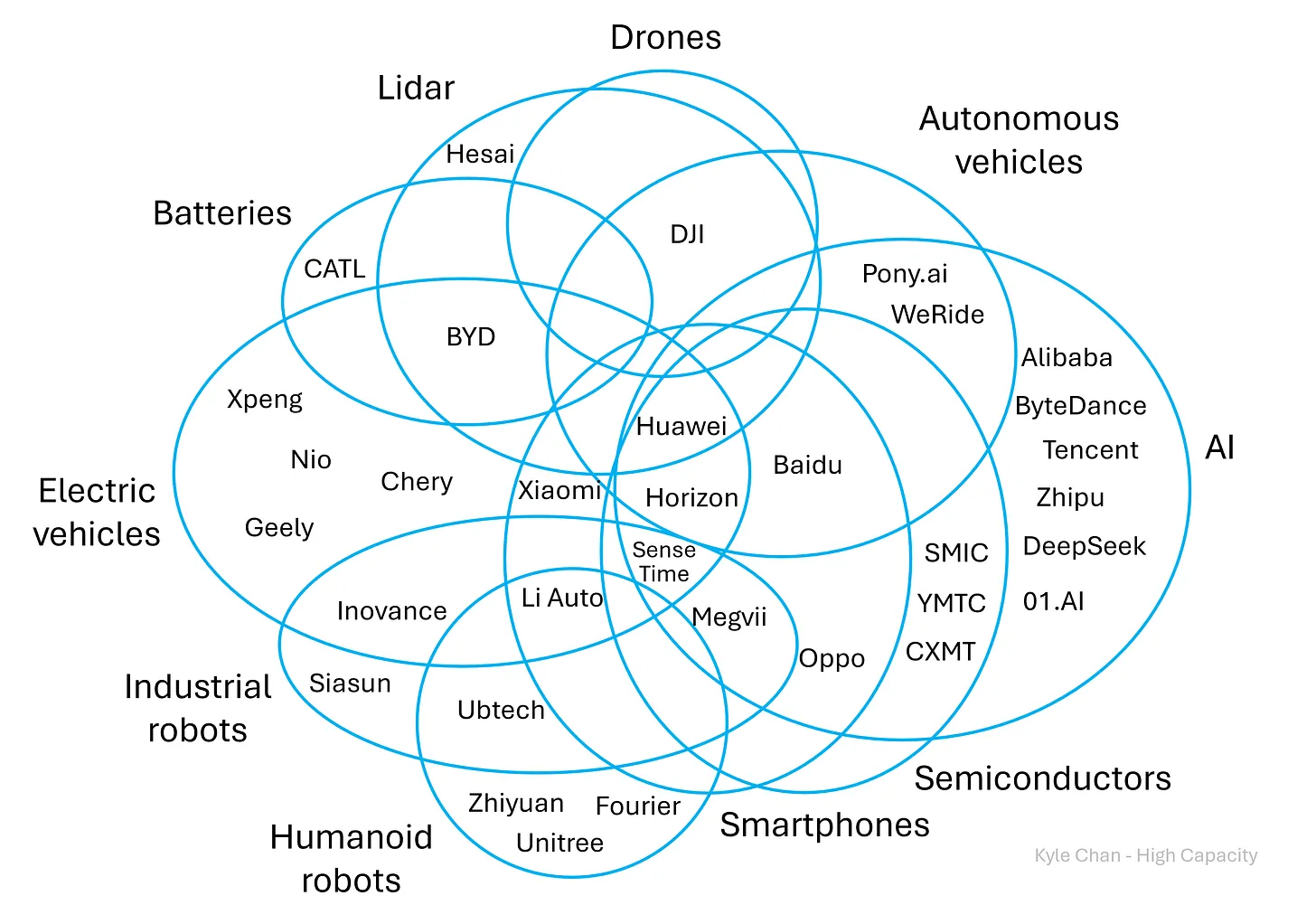
From High Capacity’s most recent article: China doesn’t just have a smartphone industry or a battery industry or an electric vehicle industry. It has all of these industries and more. China’s strength across multiple overlapping industries creates a compounding effect for its industrial policy efforts.
Take Xiaomi for example, broadly classified as a consumer electronics company and yet has expanded from their original industry of smartphones and into sectors like smart home devices and electric vehicles. China’s industrial ecosystem is so interconnected that advancements from domestic suppliers, like those in batteries, can quickly influence other sectors and create compounding effects across industries.
Interesting Paper: A Minimal Architecture for Human Journey to Mars by NASA 📝
Could NASA have completed a Mars mission on its own without SpaceX? According to NASA’s Jet Propulsion Laboratory (JPL) in 2015, a crewed mission to Mars was feasible using repurposed ISS funding alone. The secret? Conservative vehicles and stretched timelines. The project plan involved testing a lander on Phobos (a Martian moon) by 2033, with vehicle development and project planning starting as early as 2015 when the paper was published.
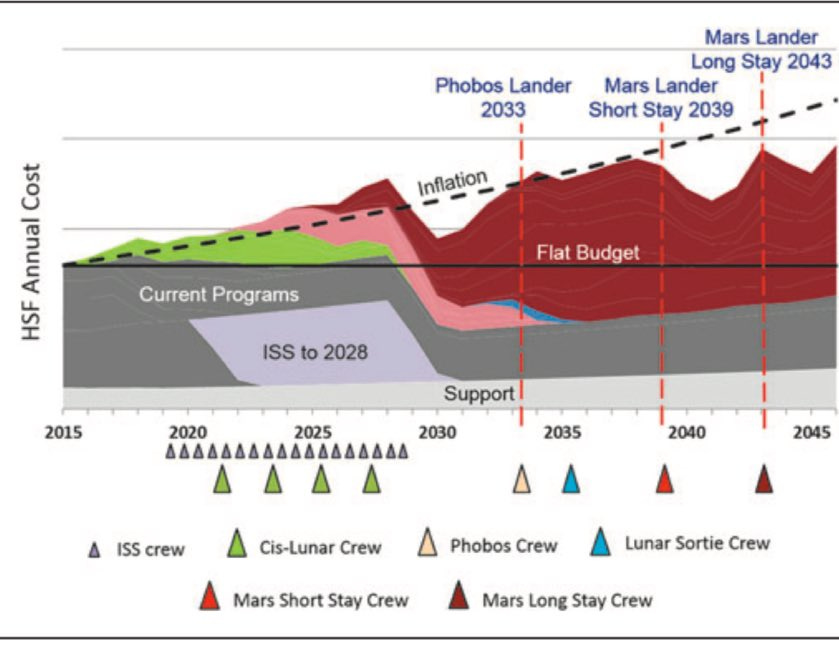
With the first crewed mission planned for 2039, it remains unclear how NASA could have accelerated this timeline even with additional funding. NASA typically only receives ~0.5% of the total U.S. federal budget.
Interesting Video: A Refrigerated Cooling Suit by Adam Savage ❄️
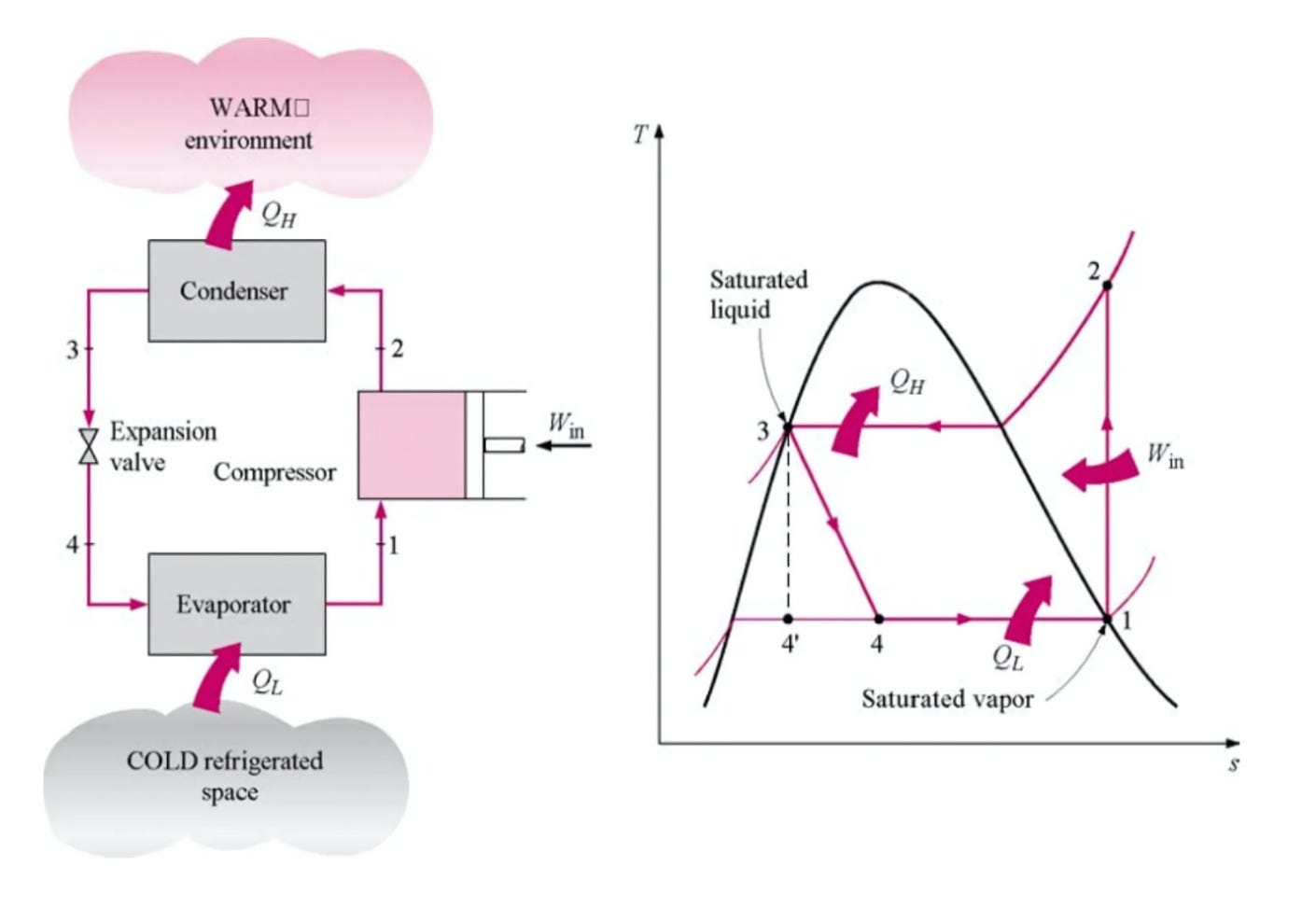
Watch Adam Savage and Kipp Bradford build a refrigerated cooling suit with perhaps the best hands-on explanation of how the vapor-compression refrigeration cycle works. Also includes some very satisfying copper brazing.
In the News: The Stargate Project ⭐
The Stargate Project announced by OpenAI, a venture to build data centers and AI-related infrastructure, involves a massive $500 billion investment over four years, approximately 0.4% of the US GDP during that period! Key equity funding partners include SoftBank, OpenAI, Oracle, and MGX that will invest an initial $100 billion into the project. The project has not yet secured the required funding, with SoftBank and OpenAI expected to commit ~$19B each to initiate it, and public statements confirming no government financing will be involved.
As for any lingering questions, Microsoft CEO Satya Nadella put it best regarding Azure’s infrastructure funding: “All I know is, I’m good for my $80B.”
To put the scale of capital into perspective, inflation-adjusted dollars spent on other large undertakings:
- Interstate Highway System: ~$650B
- Apollo Program: ~$280B
- Manhattan Project: ~$35B
Risks of Stargate: Open-source software, global developer communities, and collaborative ecosystems. Have you heard of Deepseek yet? Stargate could be a digital version of the Maginot Line—a metaphor for expensive efforts that offer a false sense of security. A high percentage GDP figure mega-project like this needs careful scrutiny.
Manufacturing & Startup News
More leftovers from our weekly research in hardware and manufacturing news:
- From a Waterloo student, the Bracket Bot Kit is a $500 kit that gives you everything you need to begin learning about robotics. He’s hosting a hackathon on February 7-9th, more details here!
- Boeing has made a $7.6M non-equity investment in Solace Power to support the expansion of their wireless power technology. The investment will fund an aerospace-grade SMT facility in Newfoundland and Labrador. This follows Canada's decision to acquire Boeing's P-8A Poseidon aircraft.
- Vertical Compute, a new Imec spin-off, has raised $22.2 million to develop a novel vertical integrated memory and compute technology aimed at revolutionizing future AI applications.
- Novatron Fusion Group and Oxford Sigma have announced a strategic partnership to accelerate the development of commercial fusion power stations using Novatron's open-field confinement fusion reactor design.
- Rosotics has announced a strategic shift to focus on building orbital transfer vehicles, planning to establish a fleet at Earth-moon Lagrange Point 5 to create space infrastructure like propellant depots and shipyards.
- Vessel Inc. launched Lattice 1, a $75 hackable ECG system with open-source software, providing a more accessible alternative to vendor-locked, expensive health monitoring devices.
- PCBWay launched fluorescent silkscreen. Their boards can now glow under UV light.
- MP Materials has achieved an historic milestone by reestablishing the U.S. rare earth magnet production. Commercial grade production of neodymium-praseodymium metal is in progress and trial production of automotive-grade NdFeB magnets have started. MP is based in Texas with materials from Mountain Pass.