This Week’s Highlights
- A design puck for injection molding 🏒
- Microwave powered flight ✈️
- Starfactory walkthrough 🚀
Continue reading for interesting links, hardware jobs and internships, startup news, and one very interesting picture at the end!
Welcome to our newest sponsor, SendCutSend! SendCutSend specializes in manufacturing custom sheet metal parts, delivered directly to your door. Order online with instant quoting & fulfillment, and check out their reels on Instagram for cool examples of their work.
Interesting Links 🏭
- The informal design puck is a hands-on tool that highlights manufacturing defects and design in injection molded parts. It includes features like draft angles from 0°-3°, surface textures based on SPI (Society of the Plastic Industry) and YickSang (common texture reference in China) standards, radii from 0.05mm-5mm, and common issues such as sink marks and knit lines. It’s a neat tool that highlights key injection molding concepts: the importance of draft for part ejection, the impact of texture on manufacturing, and design considerations for features like ribs, snap hooks, and ejector pins.
- Request a sample of the design puck here - highly recommended as a great reference to avoid common pitfalls and understand the basics of plastic part design!

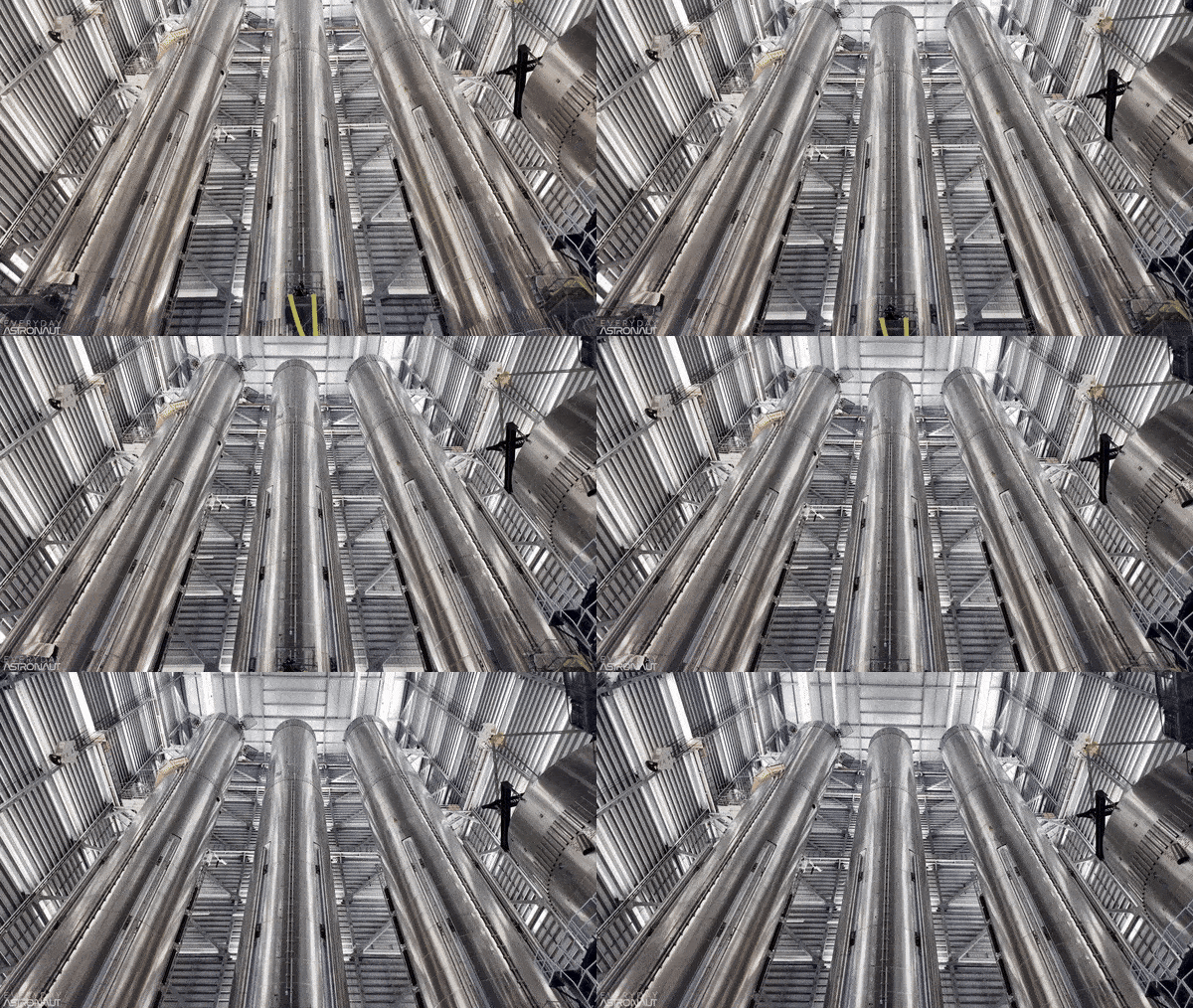
- Last week, Elon Musk gave a walkthrough of the Starship production line (Starfactory) in Texas. Starship uses 33 Raptor rocket engines to create 3x the thrust of the Atlas rocket. SpaceX refined the production line for Starship using tents which could be quickly reconfigured as production requirements changed. Some key changes for manufacturability: almost no hydraulics on Starship (everything is electrically actuated), and the V3 raptor engine will be welded shut and cut open for service (as opposed to unbolting flanges).
- Using tents for production lines might sound crazy, but it's not the first time a Musk company has done it! The unconventional approach was first used at the Tesla Fremont Factory in 2018 to overcome space limitations and boost vehicle production while scaling Model 3 production.
- “There is no such thing as All Purpose glue”. This to That is an online calculator that produces instructions for gluing materials together. Think styrofoam to ceramic (LePage’s regular epoxy), or leather to paper (3M 77), or rubber to glass (GE silicone ii).
- Our friend, Nick McCleery (former CEO of Anneal), published a post-mortem on his engineering startup, Anneal. Anneal was a start-up that built a platform for complex hardware development, with tools for design reviews and issue tracking. It’s an extremely comprehensive read for anyone looking to start a company, going from 0 to 1, and navigating the valley of death for any business. His "Lessons Learned" section is especially valuable, emphasizing key takeaways such as the importance of finding a cofounder and rigorously focusing on distribution to expose your ideas to feedback.
- Almost everything you need to know about EMC in 30 minutes. Recorded talk given by James Pawson, Director and EMC engineer of Unit 3 Compliance, at the Hardware Pioneers Max conference.
- The Atlas Design Assistant is Fictiv's latest tool for simplifying CNC machining design. After uploading the part, the tool assigns a complexity score and can analyze the number of setups required, special fixturing needed, thin wall detection, and provide DFM feedback on the part design. It’s a really neat tool built with data from their manufactured part library, where they’ve manufactured more than 30 million parts since 2013! Although still in beta, you can sign up to be one of the early users.
- Fusion Energy Base actively tracks organizations and projects pursuing fusion energy, including venture capital firms and companies funding startups and nonprofits in the space. You can quickly find active and past fusion products as well as contact information for fusion energy organizations. The site was created by former Octopart co-founder, Sam Wurzel.
- Powering planes with microwaves – what would it look like to use a rectifying antenna to power a 737 for long-range flight? The IEEE article explores the concept of powering airplanes using beamed microwave energy from ground-based antennas. Massive 170-meter-wide antennas spaced every 200 km along flight paths would beam 30 megawatts of power to aircraft equipped with specialized rectifying antennas. While theoretically possible, this approach needs a 1000x increase in power over any power-beaming experiment ever demonstrated.

- Foolish Engineer is a great Youtube channel focused on power electronics and EV systems. Videos include breakdowns of MOSFET gate drivers, how Battery Management Systems work, and more. His recent video on boost converters is fantastic.
Startup News 🚀
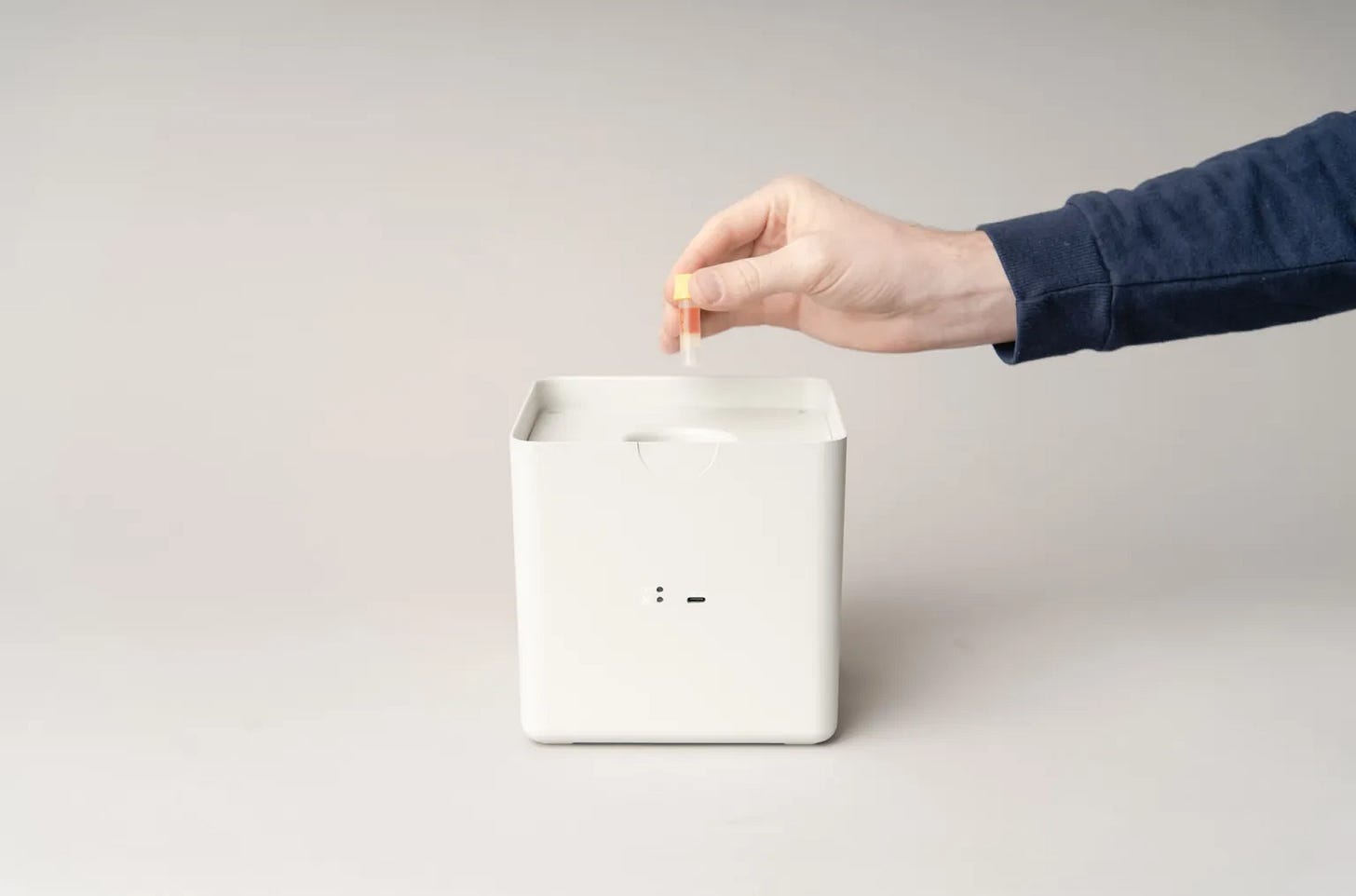
- Artyc has raised $14M in funding since 2021 to develop a battery-powered cold shipping box which eliminates the need for an external power system. The company’s current product is used for pharmaceutical and medical sample refrigeration, and they have plans to expand into a slightly bigger container which can be used for herbs and specialty foods in the near future.
- Rondo Energy has announced a major $80M funding tranche to support three new projects using the company's ceramic heat battery. Details are very light on the specifics of the projects, all are within Europe and in different industries from food and beverage to polymer production. The heat batteries can store energy for up to 18 hours and use electric heaters to charge ceramic bricks to up to 1000C.
- Ironspring Ventures has announced a second $100M fund to invest in future industrial ventures. Similar to Fund I, the firm will focus on manufacturing, construction, transportation, and energy. Fund II can invest up to $4M per check and has backed six ventures so far. Some notable prior investments include: GoodShip, Harbinger, and OneRail.
- Boeing subsidiary Wisk Aerospace has acquired longtime verification tools maker Verocel. The 50 person team at Verocel develop software for managing regulatory compliance in complex aerospace and autonomy applications. Terms of the deal were not disclosed.
- Fervo Energy has signed a 15 year 320 megawatt (MW) agreement with Southern California Edison to sell geothermal energy. Fervo uses horizontal drilling, a technique adapted from the oil and gas industry to access geothermal sources and can then produce power 24/7 without the availability disruptions of wind and solar.
- Equatic is building the first commercial scale carbon direct removal facility in Quebec. The company uses an electrolytic process to accelerate the absorption of CO2 by seawater and then discharge this into a carbonic solid. This produces hydrogen as a byproduct which can be sold to recoup the absorption cost.
- Bright Machines has raised a $126M Series C led by BlackRock with participation from Nvidia and many others. The company makes smart robotics and AI software for the electronics assembly enabling components like batteries, PCBs, etc to be autonomously assembled during manufacturing.
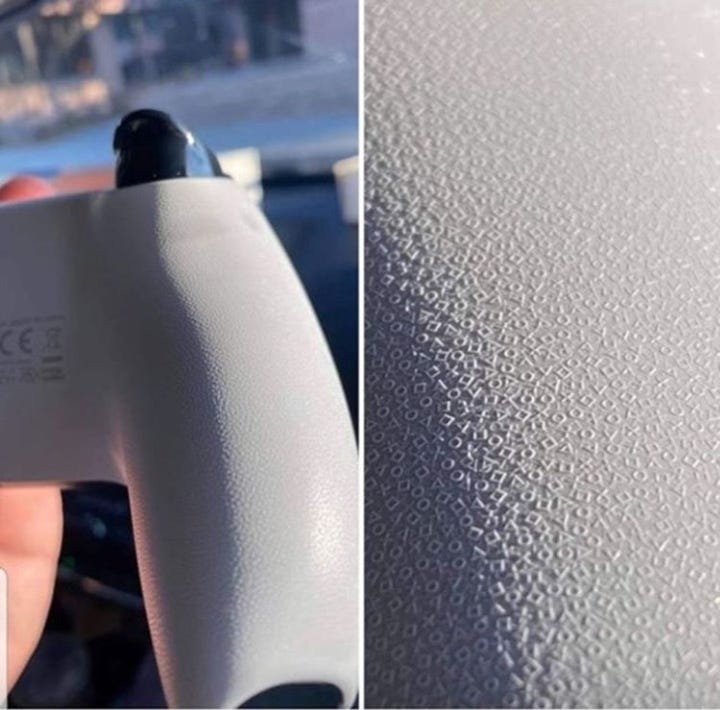
The in-molded surface texture on the PS5 controller, featuring the four geometrical icons used on the gamepad buttons.