

This Week’s Highlights
- CT scans of a coffee bean ☕️
- Bambu X1C vs Stratasys F770 3-D printer comparison 🦾
- The basics of investment casting 🕯️🔥
Interesting Links 🏭
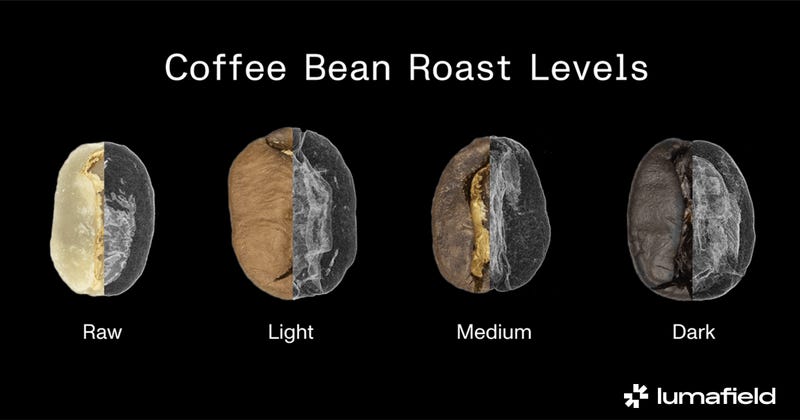
- CT scans of a coffee bean as its progressively roasted. Lumafield uses industrial CT scans to reveal the internal structural changes in coffee beans during different stages of roasting, from un-roasted green beans to dark roast. The roasting process affects bean density, moisture content, and even internal structure (ie chaff thickness increases from 15 microns in green, unroasted beans to 40-300 microns in dark roast, and the bean loses about 25% of its original weight by the dark roast stage). A 3D scan of a full bag of coffee is available here.
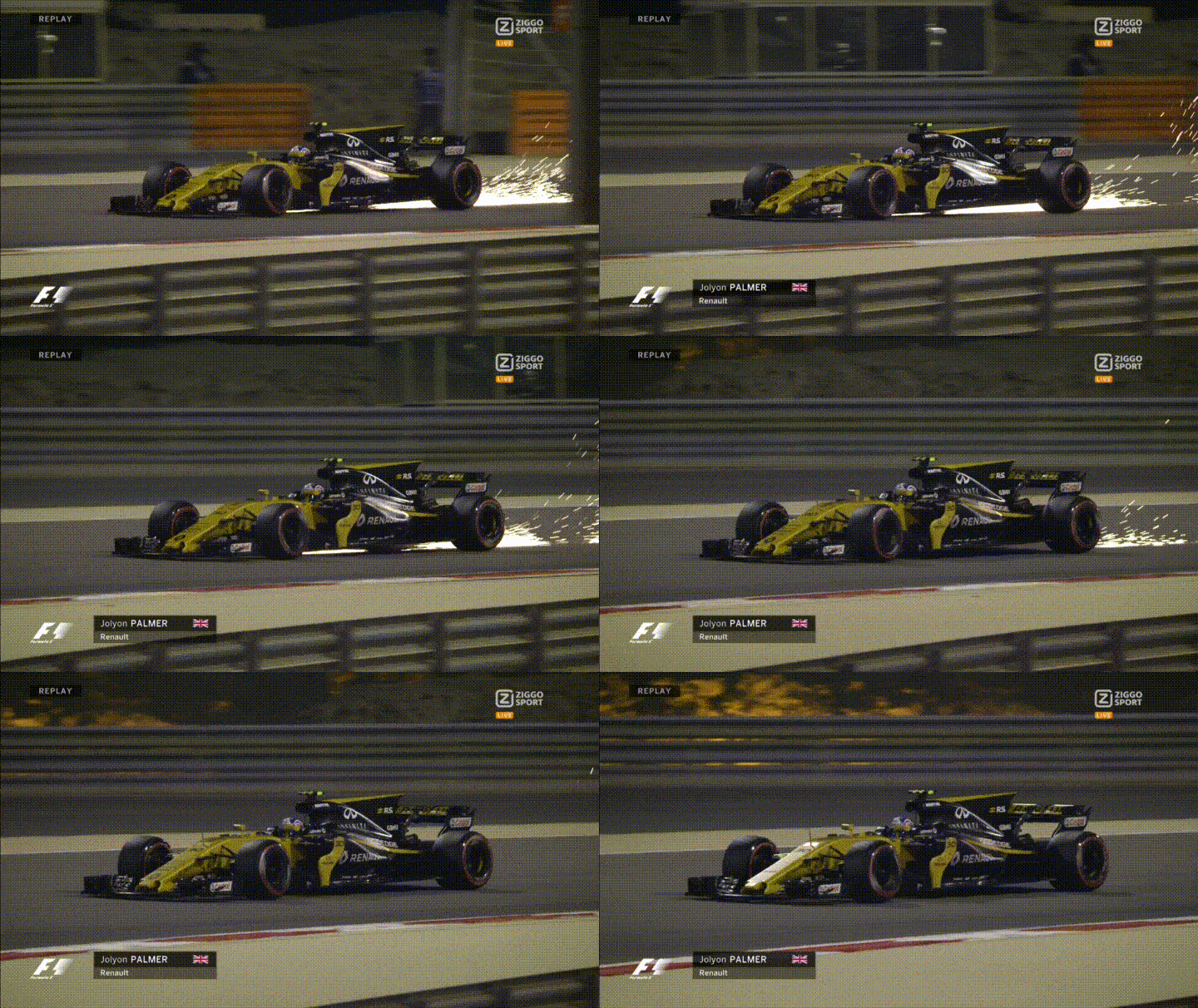
- The sparks below F1 race cars come from titanium skids on top of a wood composite material called Jabroc. These sparks are not harmful; rather, they indicate that the skid blocks are protecting the plank from excessive wear, which is crucial for compliance with FIA regulations to avoid disqualification for failing ride height regulations. When new, the planks are 10mm thick, with a tolerance of 0.2mm. The planks are measured before and after a race, and if they're worn down more than 1mm, the driver's car will be disqualified.
- If you’re interested in the technical aspect of F1, two great resources to learn the engineering fundamentals are Formula 1 Technology by Peter Wright and How to Build a Car by Adrian Newey, current CTO of Red Bull Racing.
- Bambu Labs, founded by five former DJI employees, makes desktop 3D printers that match the print quality of industrial printers at a much lower cost. Our friends at POP Manufacturing recently conducted a comparison between the Bambu X1C and Stratasys F770 3D printer. They identified key differences: bed size, number of extruders, and build chamber temperature. Stratasys printers feature a heated build chamber that can reach up to 200°C, whereas Bambu printers only heat the print bed, with the chamber reaching just 40°C. Strength tests showed that Stratasys parts were generally stronger, particularly at material changeovers. It's worth noting that an industrial Stratasys printer can cost up to 100 times more than a Bambu printer.

- Bunnie Huang’s blog is fantastic, especially his post about a supply chain war story while sourcing the SiT8021 oscillator, highlighting a series of mishaps with suppliers Element14 and Newark, including misconfigured websites and unresponsive customer service. The situation was ultimately resolved by Digi-Key. Interesting note: A company called SiTime has been quietly disrupting the crystal industry by building MEMS-based silicon resonators that can outperform quartz crystals in almost every way.
- Investment casting, also known as lost-wax casting, is a manufacturing process that produces intricate and precise metal part (aluminum & steel alloys). This video explains the investment casting process, starting with creating a wax model coated with ceramic layers to form a hard shell. The wax is melted away, leaving a hollow ceramic mold for molten metal. After solidification, the ceramic mold is broken to reveal the final part. This process yields precise components with excellent surface finishes, reducing the need for further machining or treatment. Though the molds are single-use, this method is ideal for producing anywhere from 10 to over 10,000 parts in low to medium production runs.

- A narrative journey of the BIC Crystal Pen development. First released in 1950, it’s sold over 100 billion units making it one of history's most successful products. You've very likely used one of these pens! The video covers a brief history of ballpoint pen development, where earlier versions failed due to ink issues, and were further improved with oil-based ink and capillary action. The design we still use today was invented by Marcel Bich, who made an affordable version using Swiss watchmaking machinery. The pen's design includes a hexagonal barrel, transparent polystyrene body, and a stainless steel ball, which has remained largely unchanged since its introduction 70 years ago.
- Integrating miniature heat pipes directly into PCB layers can be orders of magnitude cheaper and more thermally efficient than traditional methods of heat dissipation like plated through holes and copper-filled laser vias. Here’s a presentation from the heat pipe’s inventor, AT&S. The pipes allow efficient heat dissipation in compact electronic devices with thicknesses ranging from 400 µm to 2 mm, while also providing design flexibility for remote cooling and heat guiding. This enables temperature-sensitive components like sensors and MEMS to be placed even closer to heat-generating devices.

Startup News 🚀
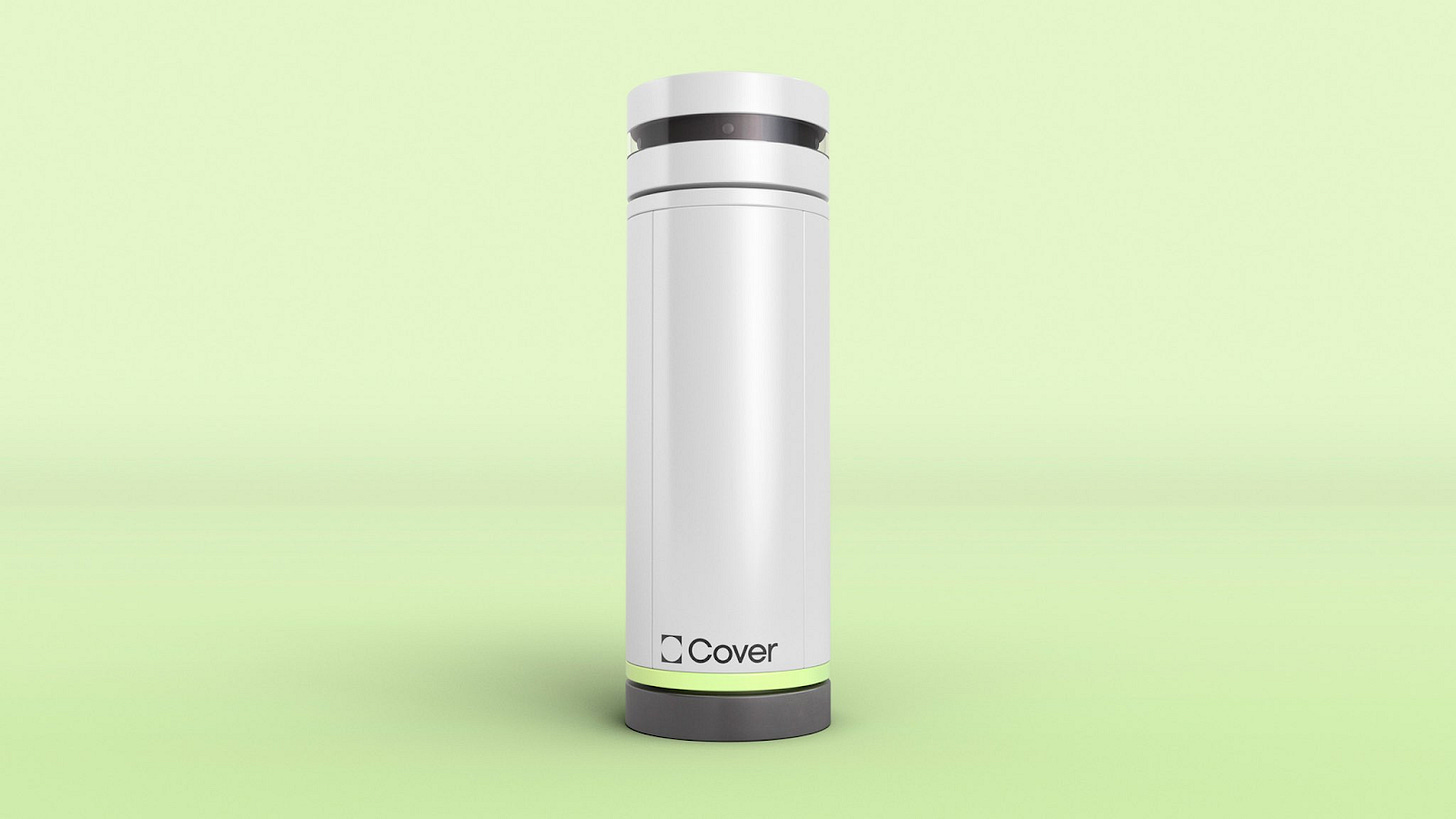
- Cover, an AI security company developing concealed weapon detection, has emerged from stealth mode with founder Brett Adcock (also the CEO of Figure AI) personally investing $10M. They’re licensing terahertz imaging tech from NASA’s JPL to create a security scanner that can detect concealed weapons from up to 4 meters away.
- Fisker Inc, the EV company founded by Henrik Fisker in 2016, has declared bankruptcy. Despite launching via SPAC in 2020, it was delisted from the NYSE earlier this year. It’s unclear if operations will continue post-bankruptcy.
- Kinetic Automation raised a $21M Series B round for its robotic automotive repair system. The company uses a robotically mounted computer vision system to examine a vehicle's ADAS hardware, and other high end sensors to inform calibration and repair. Menlo Ventures led the round.
- Cesium Astro raised a $65M Series B round, led by Trousdale Ventures. Cesium Astro builds phased array software defined radio payloads for space communications. The company has multiple products in different applications such as a SATCOM terminal for space communications with an aircraft from satellites in multiple orbits simultaneously.
- Spaceium has launched via Y Combinator (S24). The startup aims to build a low-Earth orbit cryogenic fuel station by 2025, using its proprietary zero boil-off technology. Potential customers include launch and orbital transfer vehicles, space tugs, moon landers, and satellites.
- C12 raised a $19.4M funding round to develop carbon nanotube quantum computers with a patented assembly process. Varsity led the round with prior investors participating. C12 plans to use the funds to perform quantum operations using two qubits located at a distance from each other.
- Skynopy raised a $3.1M Seed round to develop a communications network for satellites using a network of ground stations. This will allow satellite operators to outsource building their own connectivity network, the company currently has access to 15 ground stations.
A chart showing the total tooling cost, part cost, and lead time for a sample part made by injection molding, vacuum casting, CNC machining, or 3D printing.
