Highlights this week: 🎤 q&a with pete staples, 🇺🇸 how america can win semiconductors, and ✈ the first military flight computer.
🔗 Last week’s most-clicked link: Great video covering battery management system algorithms.
⚡️ Analog Interviews: Pete Staples, CEO & Co-Founder of Blue Clover Devices

Startup News 🚀💰:
- Echodyne, a radar platform startup, raised a $135M Series C co-led by Baillie Gifford and Bill Gates, with participation from multiple new and existing investors including: Northrop Grumman Corporation, NEA, Madrona Ventures, Vulcan Capital, and Vanedge Capital.
- Rune Labs’ Apple Watch-based Parkinson’s disease tracker gets FDA clearance.
- Sensel, a startup building the next generation of touch/force-sensing and haptic technologies, raised a $18.8M Series B led by Global Lighting Technologies Inc and Lenovo.
- Amazon customers in Lockeford, California, will be among the first to receive Prime Air drone deliveries in the U.S.
Interesting Links 🔗:
- Although 98.6% of manufacturers in the U.S. have fewer than 500 employees, these companies produce over $3 trillion of goods each year. Great in-depth piece on manufacturing optimization and the next steps in software-powered manufacturing.
- Learn how Puffco used Instrumental AI and X-Ray images to find root cause in just one day and cut four weeks off their project schedule. Pretty incredible case-study that shows tangible results in a manufacturing setting, using software.
- mHub’s 2022 investor report. Climate-tech, smart grids, industrials, etc. mHub is a community (physically basd in Chicago) that provides access to unparalleled resources including a state-of-the-art prototyping lab and micro-factory, variable and competitive talent pipelines, networks of industry experts and mentors, a robust manufacturing supply chain, active investors, and comprehensive business, leadership and technical training.
- Why America Will Lose Semiconductors – Tangible bi-partisan solutions for solving a national security crisis. The critical software needed to be used to design chips is called EDA and it all comes from the US. The 4 largest companies that design chips for external sale and use contract manufacturers are also American. But that dominance is shifting away to countries that pose as geopolitical risks. US share of chip manufacturing is at an all-time low. The US will lose the semiconductor industry unless immediate action is taken. This is a national security crisis.
- Why wasn't the Steam Engine Invented Earlier? Part 1.
- The world of blind mathematicians. Incredible history of blind mathematicians around the world, including a current professor at the University of Colorado. Lots of geometers as well as analysts -- all involving incredible mental fortitude.
- Nuclear power currently makes up slightly less than 20% of the total electricity produced in the US, largely from plants built in the 70s and 80s. People are often enthusiastic about greater use of nuclear power as a potential strategy for decarbonizing electricity production, as well as its theoretical potential for being able to produce electricity extremely cheaply… but increased use of nuclear power has been hampered by the fact that nuclear power plant construction cost has steadily, dramatically increased over time. Why are nuclear power construction costs so high?
- Bombs, Brains, and Science: Would you rather lose 10% of your researchers or 10% of your labs? Writeup diving into a wonderful work of economic history in which the University of Munich economist Fabian Waldinger attempts to understand whether the dismissal of Jewish scientists at German Universities in the 1930s hurt departmental output more than Allied bombers dropping actual bombs on a department’s building. In the short run, a 10% shock to human capital—dismissing 10% of a department’s scientists—reduced departmental output by .2 standard deviations. A 10% shock to physical capital—the destruction of 10% of a department’s buildings—lowered output by .05 standard deviations. The effects of losing 10% of your researchers was 4X that of losing 10% of your buildings in the short-run.
- Ray Holt and the CADC – The World’s First Military Digital Flight Computer. In 1968, a small Navy team designed the central air data computer and six chips in the process, including: a parallel multiplier unit, a parallel divide unit, a special logic function, the data steering logic unit, random access storage, read-only memory unit, and a 2560-bit ROM with integrated program/data counter.
- Apple’s M1 chips have an “unpatchable” hardware vulnerability that could allow attackers to break through its last line of security defenses. The vulnerability lies in a hardware-level security mechanism utilized in Apple M1 chips called pointer authentication codes, or PAC. This feature makes it much harder for an attacker to inject malicious code into a device’s memory and provides a level of defense against buffer overflow exploits, a type of attack that forces memory to spill out to other locations on the chip.
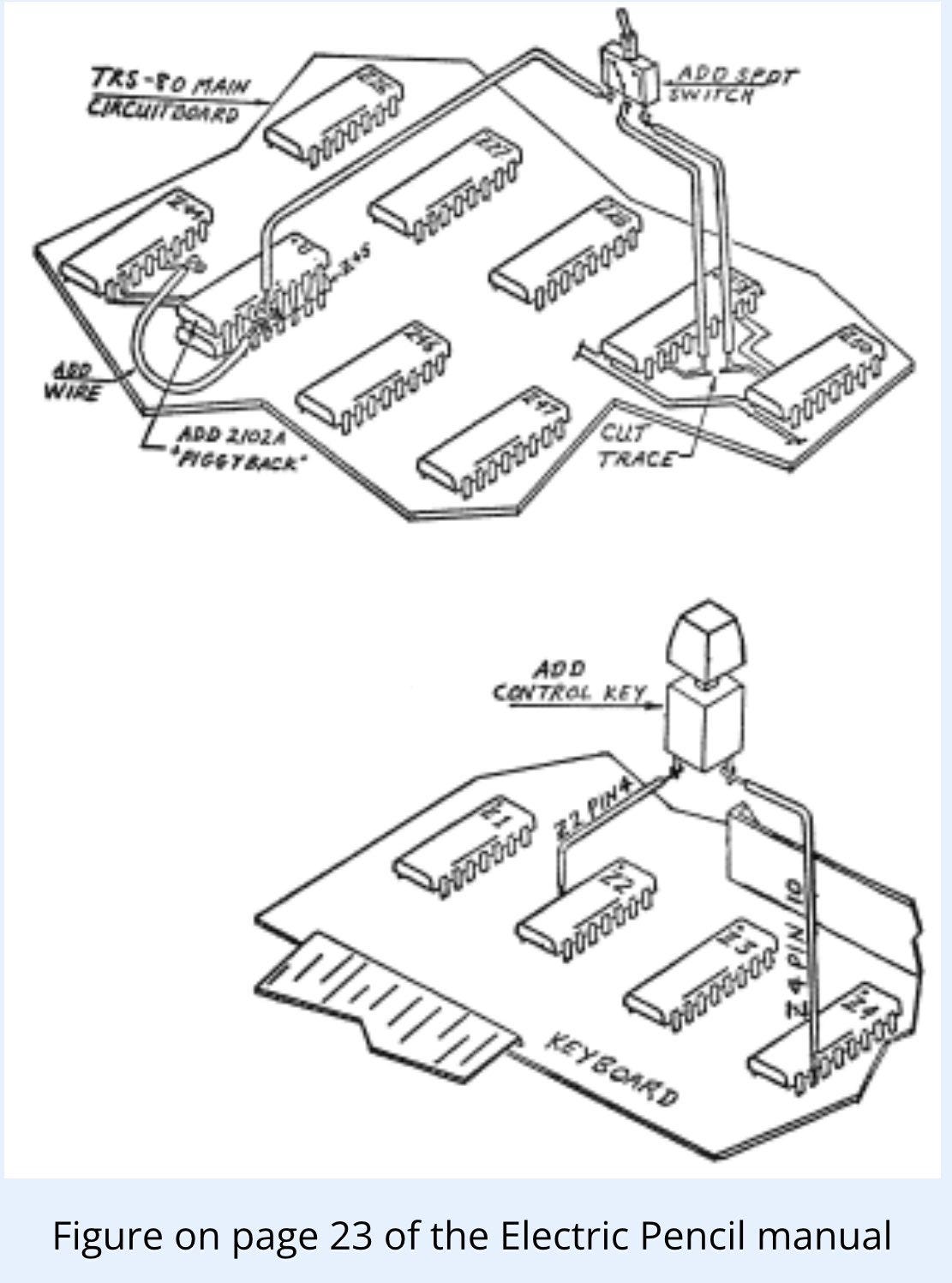
One Interesting Picture 📸: What were you doing if you did this in 1978?