

Interesting Links 🏭
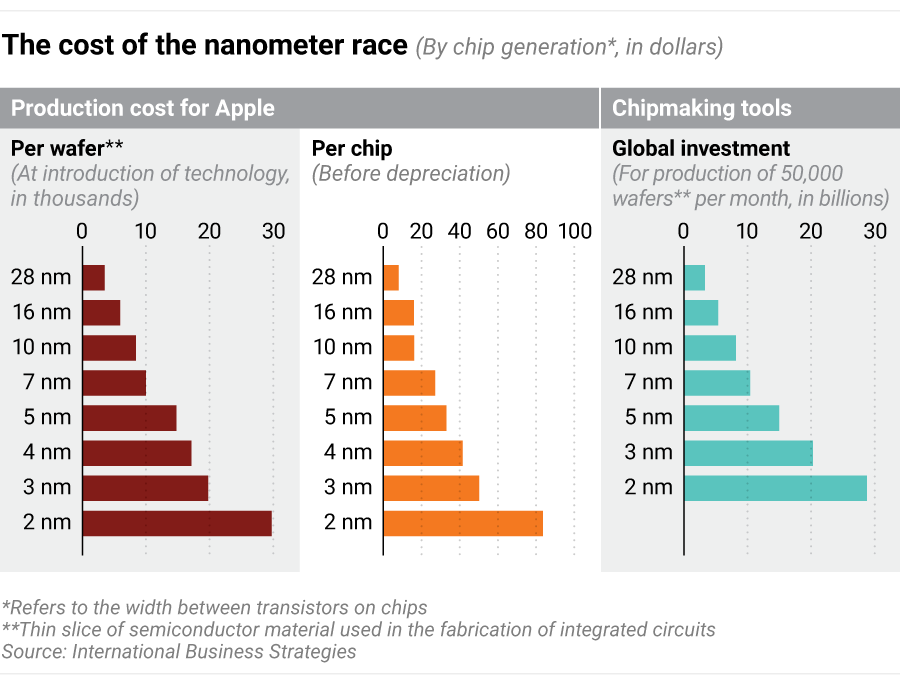
- A history of chip miniaturization, the nanometer race for smaller logic chips, and the impact of Moore’s Law slowing on global geopolitics. Transistors have evolved through three generations: planar transistors (>22 nm) used in everyday electronics like refrigerators and cars since the 1960’s , FinFETs (22-3 nm) found in devices like Apple’s A17 Pro SoC since the 2010’s, and the gate-all-around (GAA) transistors (<3 nm) designed for AI servers and autonomous driving systems since 2022.
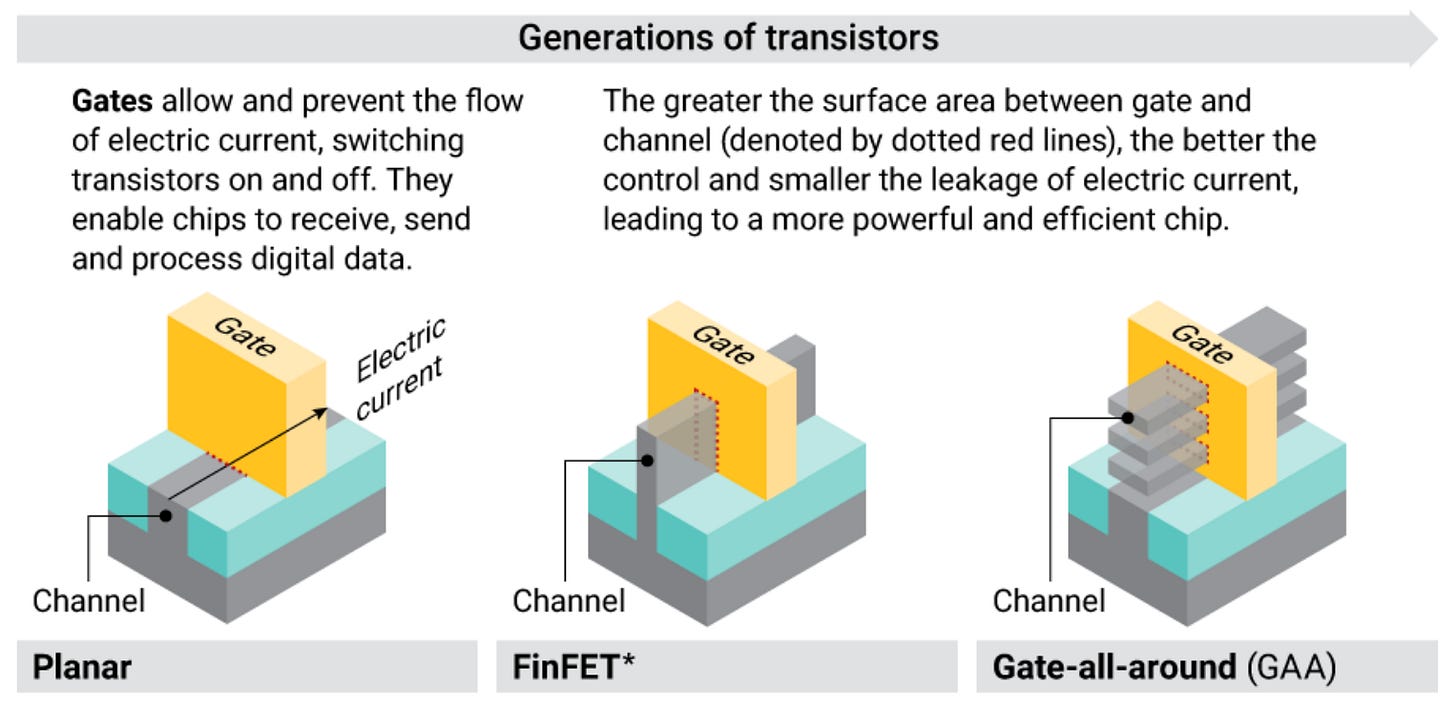
- An interesting design detail on the Mac Mini’s power supply unit (PSU): star shaped solder joints. The star-shaped solder pad design dates back to a 2005 patent (WO2005122655A2) which introduced it as a way to streamline assembly for boards combining SMD and through-hole (TH), leaded components. A popular theory suggests the star shape is an optimized stencil design for the pin-in-paste reflow process used with through-hole (TH) components. Since TH components need more solder than SMDs, the stencil is enlarged beyond the pad size to allow extra paste, which wicks into the through-hole. The star pattern could distribute paste efficiently, reducing overall use and cutting costs.
- Note: The Xbox Series X PSU uses similar solder joints. Pin-in-paste adds solder paste to through-holes on a PCB, allowing components to be soldered in a reflow oven like surface-mount parts.
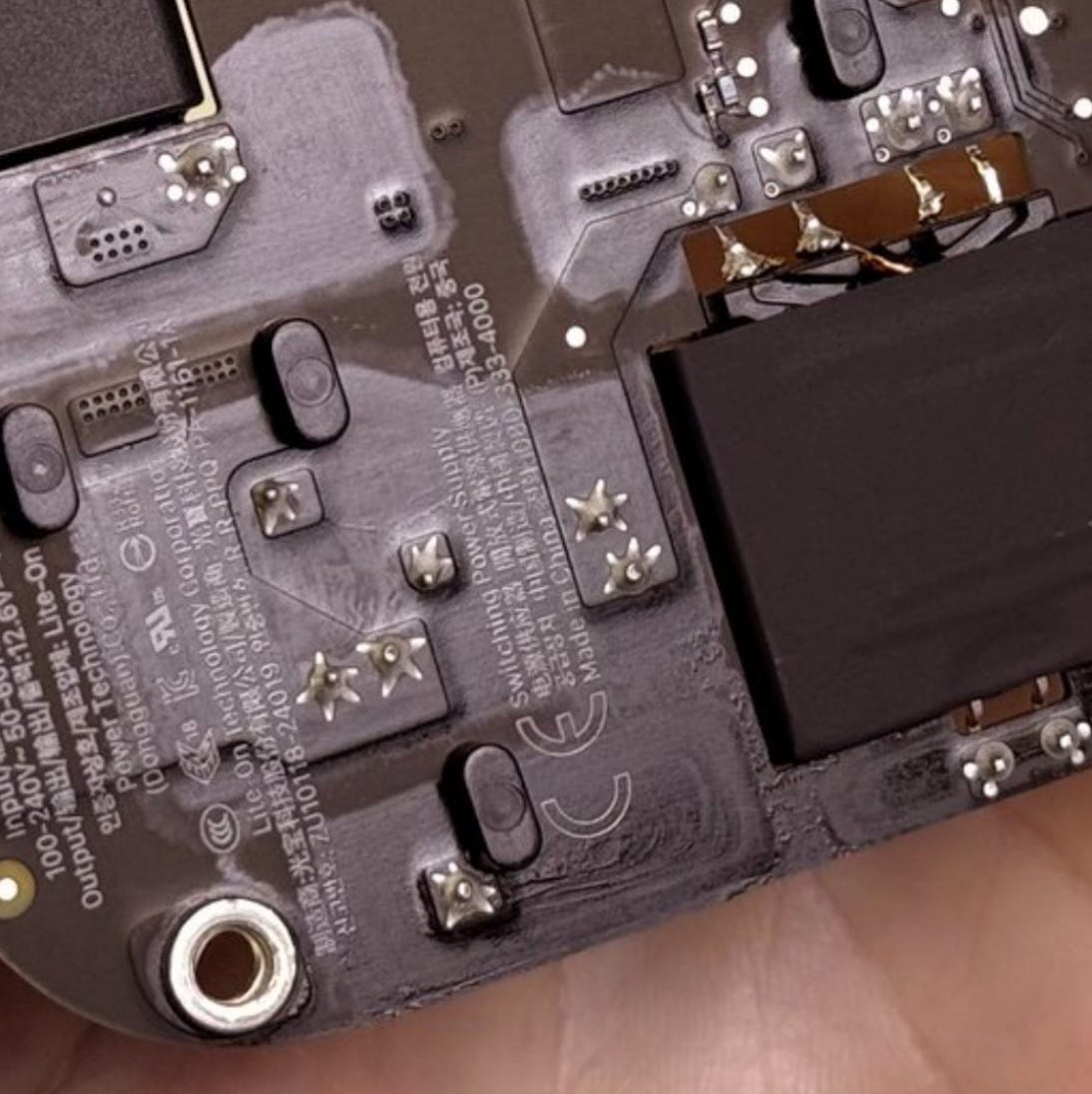
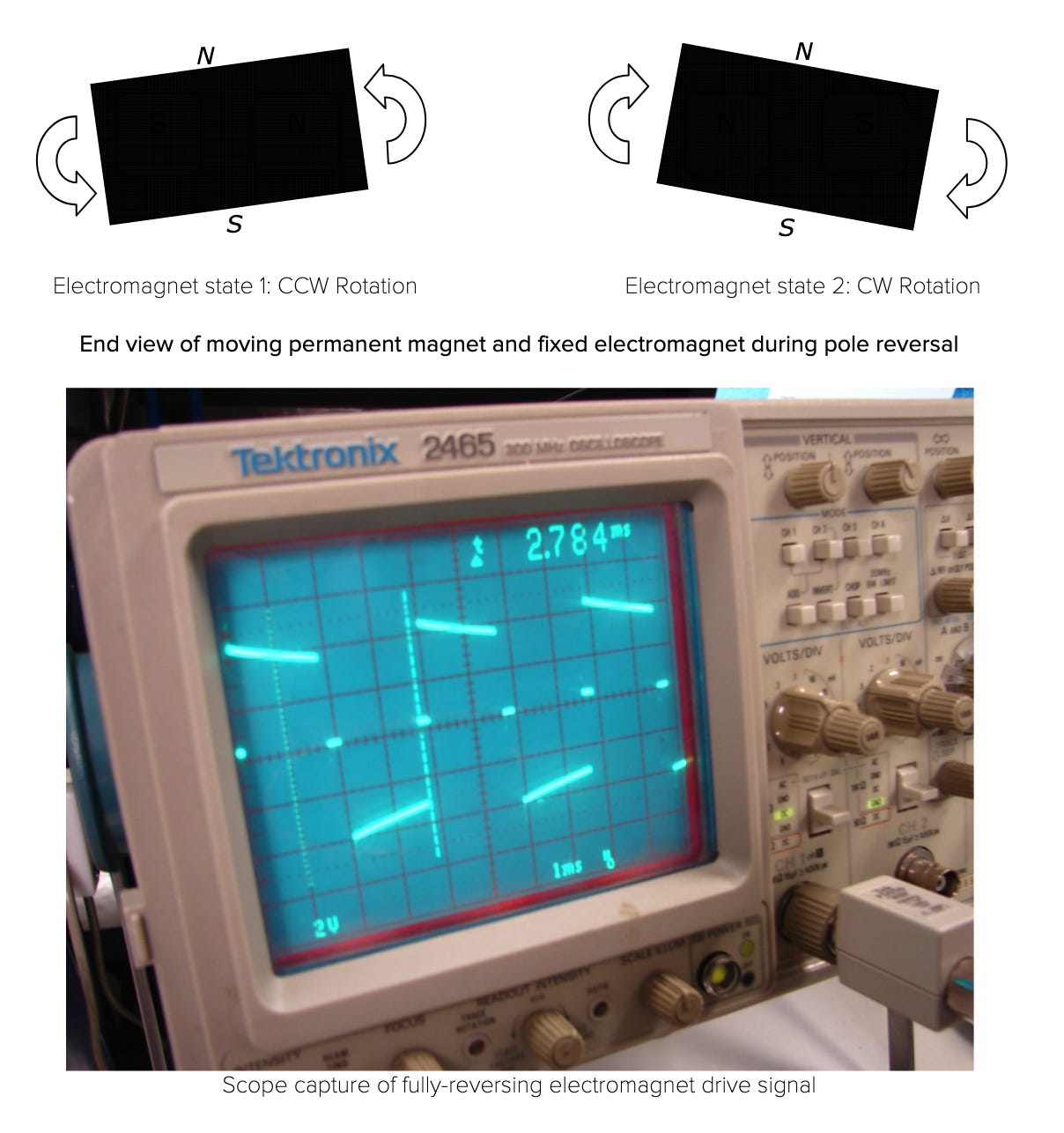
- A teardown of Phillip’s Sonicare electric toothbrush. Electric toothbrushes like the ones from Phillip are surprisingly complex - most include inductive charging, robust waterproofing, and a driver mechanism that vibrates the brush head at up to 31,000 strokes/minute. Some very clever engineering we admired: the toothbrush head assembly contains a fixed electromagnet, a moving permanent magnet, and a bearing structure encased in a sheet metal shell. When current flows through the electromagnet, it creates north and south poles that make the permanent magnet rotate to align. When the current reverses, the poles switch, and the magnet rotates the other way pivoting like a “seesaw” to generate the brushing vibration. Read more about the mechanical design of the toothbrush here by M3 Solutions.
- Lessons on PCB Design from a seasoned PCB designer with experience across military, consumer hardware (Google & GoPro), and the automotive industry (Velodyne Lidar). Some of our favorite bits of advice: 1) assembly drawings show what to do, not how to do it 2) crowding components on a board is always a bad idea 3) if you pick an overseas vendor and don’t know the customs process, expect delays.
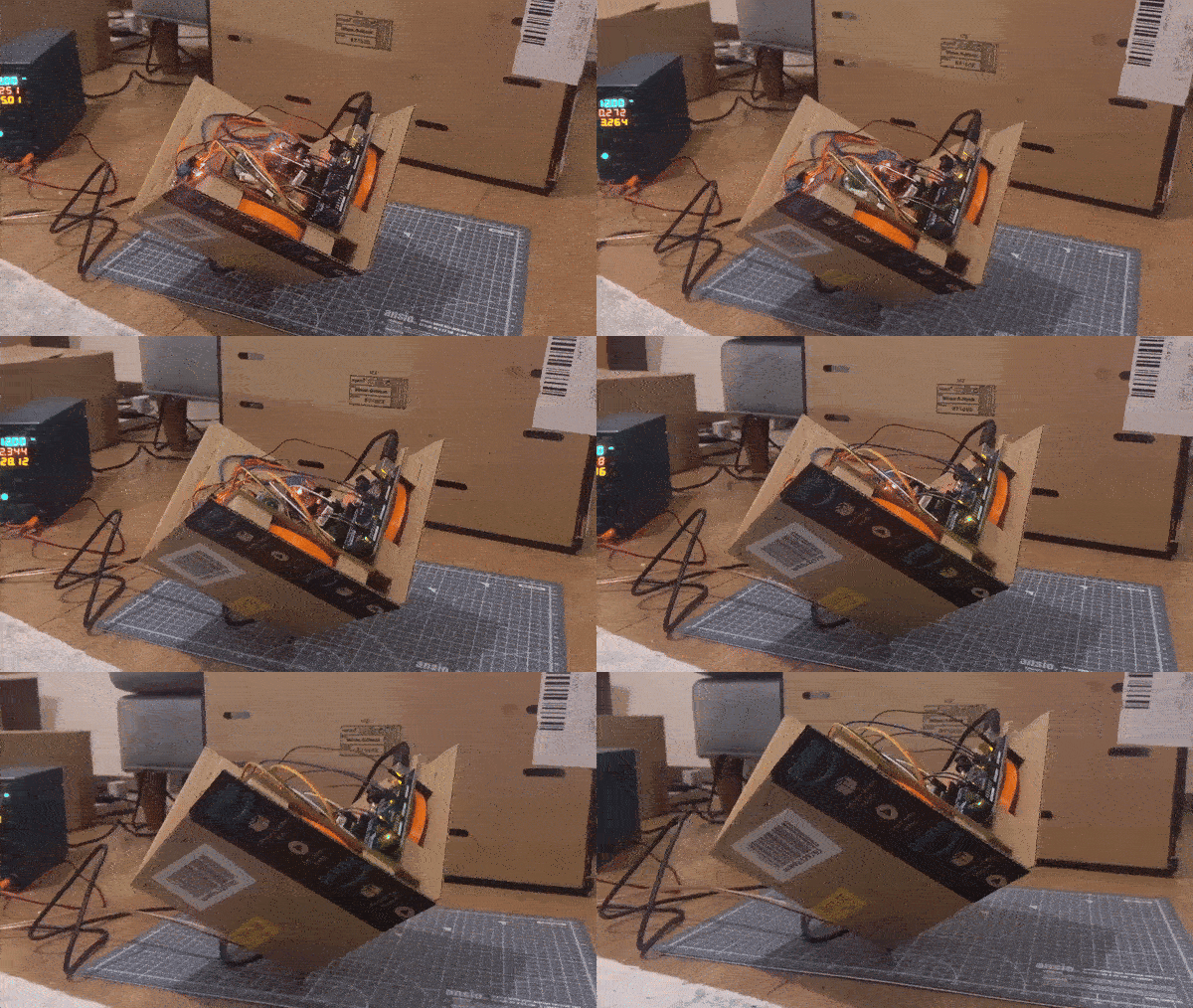
Thomas Godden's self-balancing cardboard cube: powered by three 12V DC motors with reaction flywheels, and stabilized using gyroscope data and PD (Proportional-Derivative) control. Project link and Github repo.
Startup News 🚀
- Apple is committing $1.5B to GlobalStar and securing a 20% equity stake to boost satellite services for the iPhone. GlobalStar is a satellite communications company and first partnered with Apple in 2022 to enable features like Emergency SOS. The company currently operates 26 satellites in low Earth orbit (LOE).
- Antares has raised a $30M Series A round to fast-track development of its first microreactor—a small, portable nuclear power source. The company is building c kW-scale reactors that “can fit in a standard shipping container,” designed to power remote infrastructure for military operations and space missions. The round was led by Alt Capital and Caffeinated Capital.
- Xavveo has raised a $8.6M seed round to develop their photonic radar system aimed at improving AV reliability/safety in all weather conditions. Photonics radar uses optical components to achieve higher resolution and signal quality than traditional RF radar, though RF radar remains a simpler, more cost-effective choice for applications that don’t need extreme precision. The round was led by Vsquared Ventures and imec.xpand.
- Anduril is building “Arsenal-1”, its first major manufacturing plant and is choosing between Arizona, Texas, and Ohio for the facility. The 5 million sq ft facility will be designed as a prototype for a new kind of weapons factory—faster, cheaper, and defined by software. Anduril, known for autonomous aircraft and drones, was chosen as one of two finalists for the Air Force’s Collaborative Combat Aircraft (CCA) program beating out traditional, defense giants like Lockheed, Boeing, and Northrop Grumman.
- Relativity Space is facing a cash shortage, sparking concerns about its future in the launch industry. Founded in 2015, the company built a reputation for 3D-printed rockets and last raised a $650 Series E round at a $4.2B valuation. The company last launched the Terran 1 rocket (85% 3D-printed) in March 2023 but didn’t reach orbit. The company then shifted focus to Terran R, a larger, more traditionally manufactured rocket set to compete with SpaceX's Falcon 9, targeting a 2026 launch. Recently, Relativity confirmed outsourcing its nose cone manufacturing, raising questions about its operational stability and reliance on 3D printing.