

Interesting Links
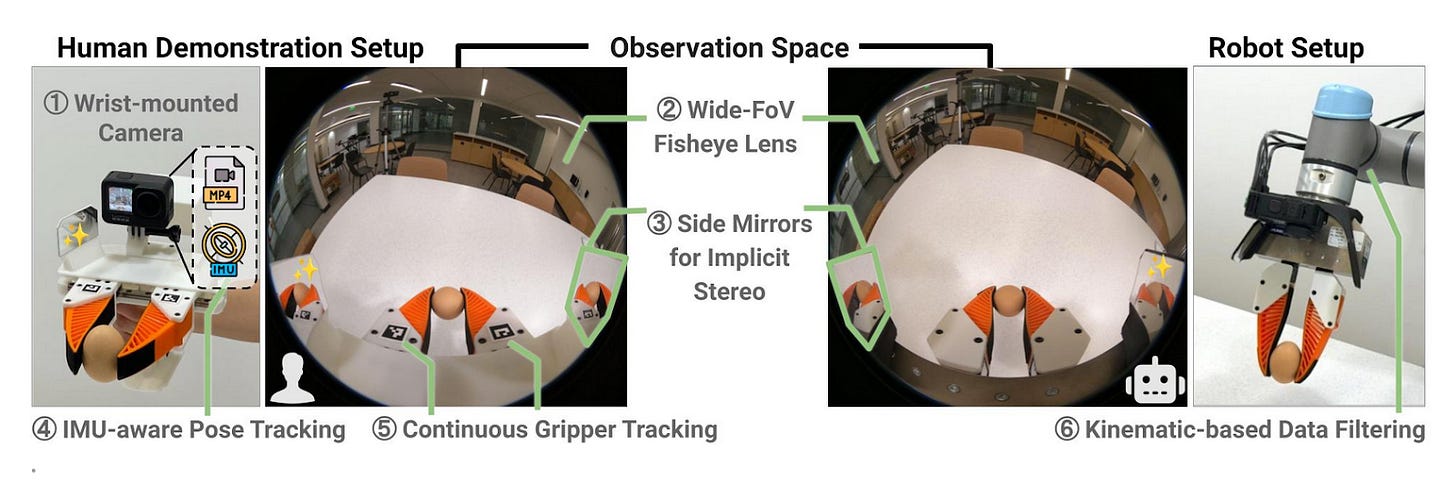
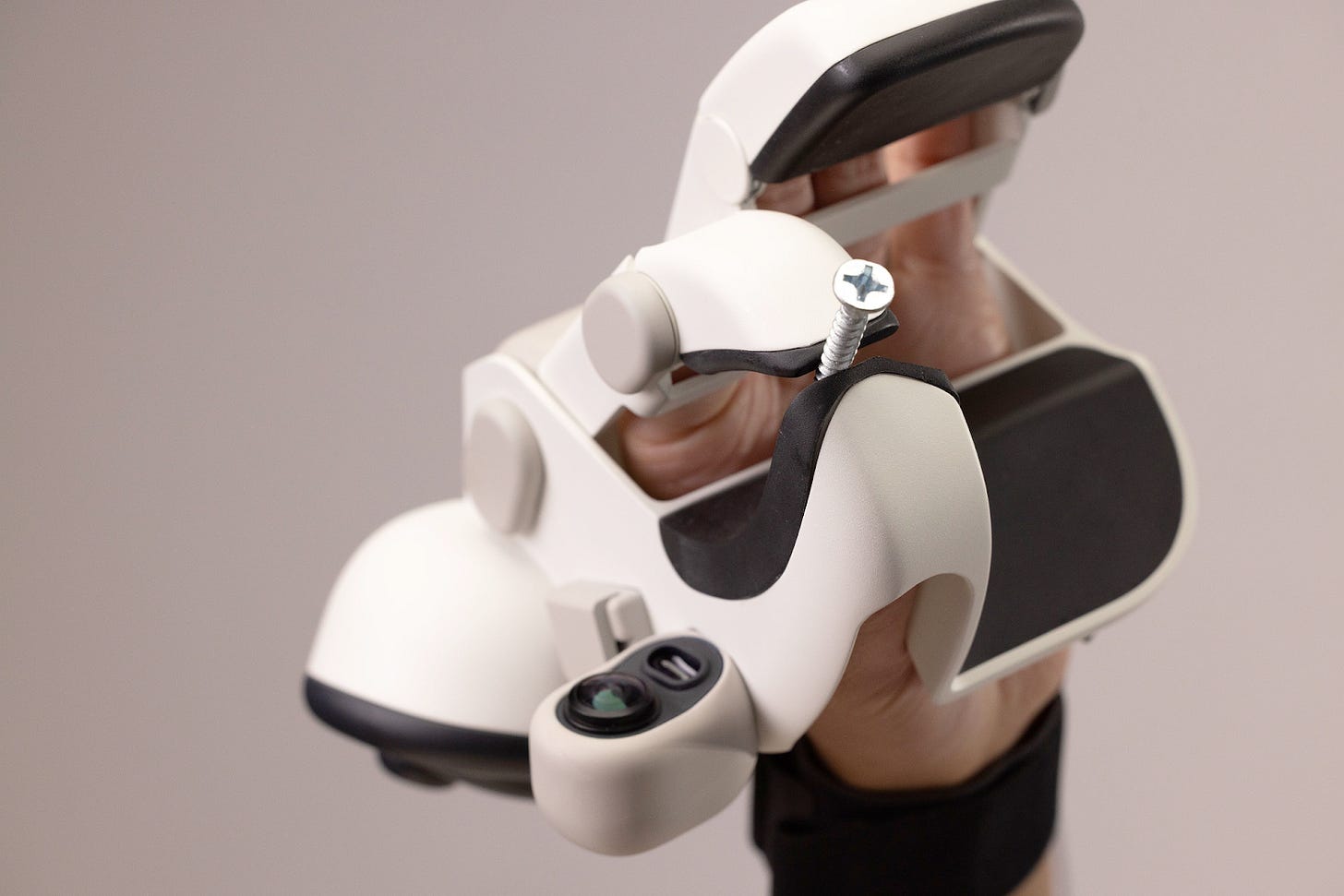
- Sunday Robotics, a startup building perhaps the closest real-world analogue to the kind of robot you’d expect to see in Big Hero 6, traces its intellectual roots to a cluster of Stanford papers that reframed a new approach to robot learning. In the first paper, ALOHA introduced low-cost teleoperation hardware alongside Action Chunking with Transformers (ACT), an algorithm for predicting short sequences of actions rather than individual timesteps; this enabled robots to learn difficult manipulation behaviors from minutes of demonstration data. UMI then introduced a method for decoupling data collection from the robot entirely using a handheld gripper, where a full system was no longer needed to generate training data. Sunday’s commercial bet is that this transfer effect scales: replace the teleoperation rig with low-cost wrist-worn gloves, collect millions of human movement episodes across diverse real-world environments, and train a foundation model (ACT-1) on zero robot data. In other words, collect and build the data pipeline first, then build the robot around it. More from the founders on the logic behind the skill-capture gloves here.
- Motors are deceptively simple in theory: electricity creates magnetism, magnetism creates rotation. Wavefnx’s motor winding calculator turns that abstraction into a browser-based interactive visual. In practice, a BLDC motor works by threading copper wire through slots in the stator in patterns that create the rotating magnetic field; the ratio of slots to poles constrains what winding patterns are viable (not all combinations can produce a balanced three-phase field), and among viable patterns, some are dramatically better than others. How you distribute coils across slots determines the winding factor (how efficiently the pattern converts current into torque) and the harmonic profile (how clean the magnetic field is). For rigorous validation, Emetor offers a more established calculator and FEMM is a free FEA solver for numerically validating designs before anything gets wound.
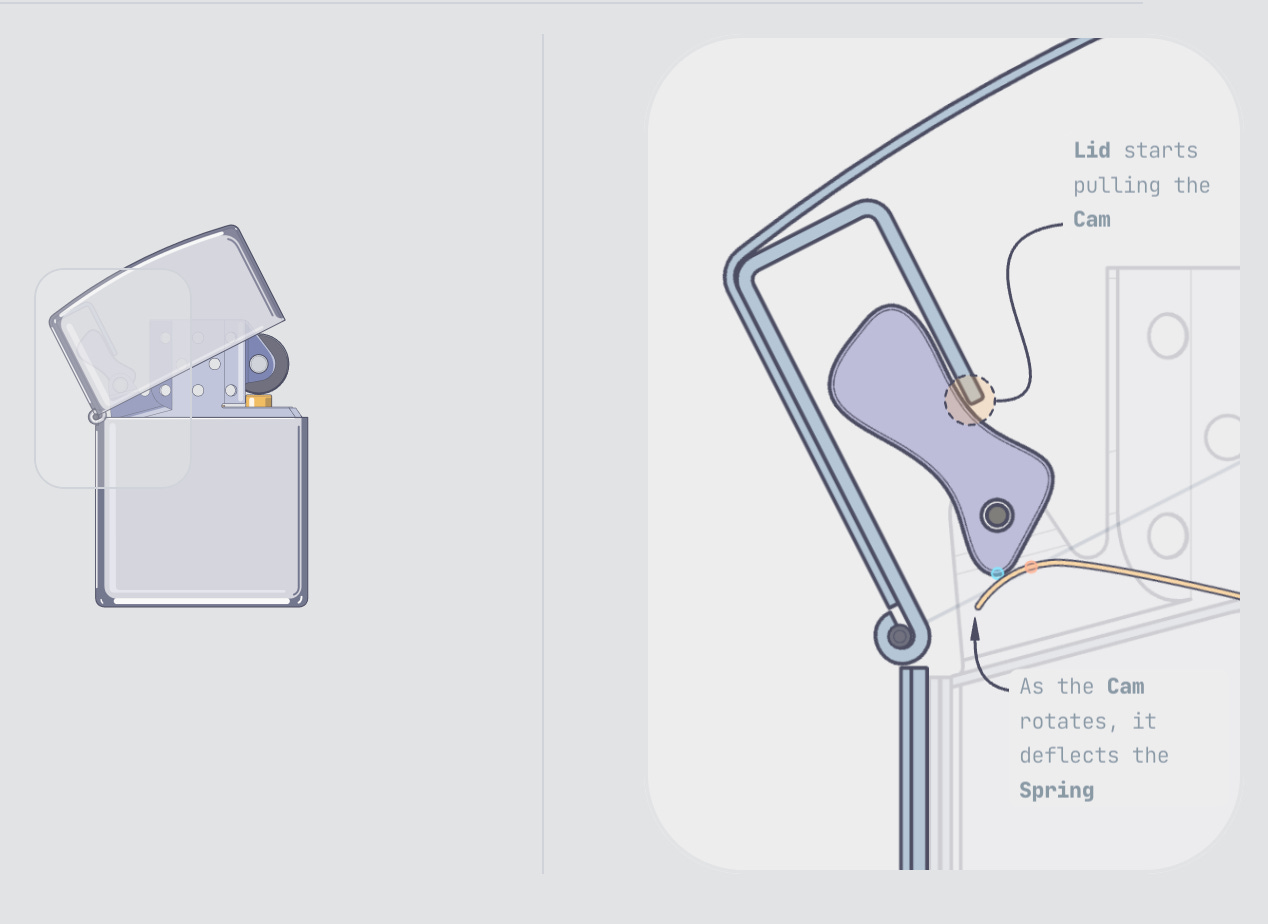
mechanical-pencil.com animates the inner workings of everyday objects. Click through a mechanical pencil, or a candy dispenser and watch each mechanism isolated, annotated, and explained step by step.The Zippo lighter walkthrough is a good example of a classic bistable mechanism: two stable equilibrium states separated by an unstable region. A pear-shaped cam and leaf spring produce that characteristic snap, with the leaf spring loading against the cam’s profile until the system crosses the flip point and the lid traverses to the opposite stable state.
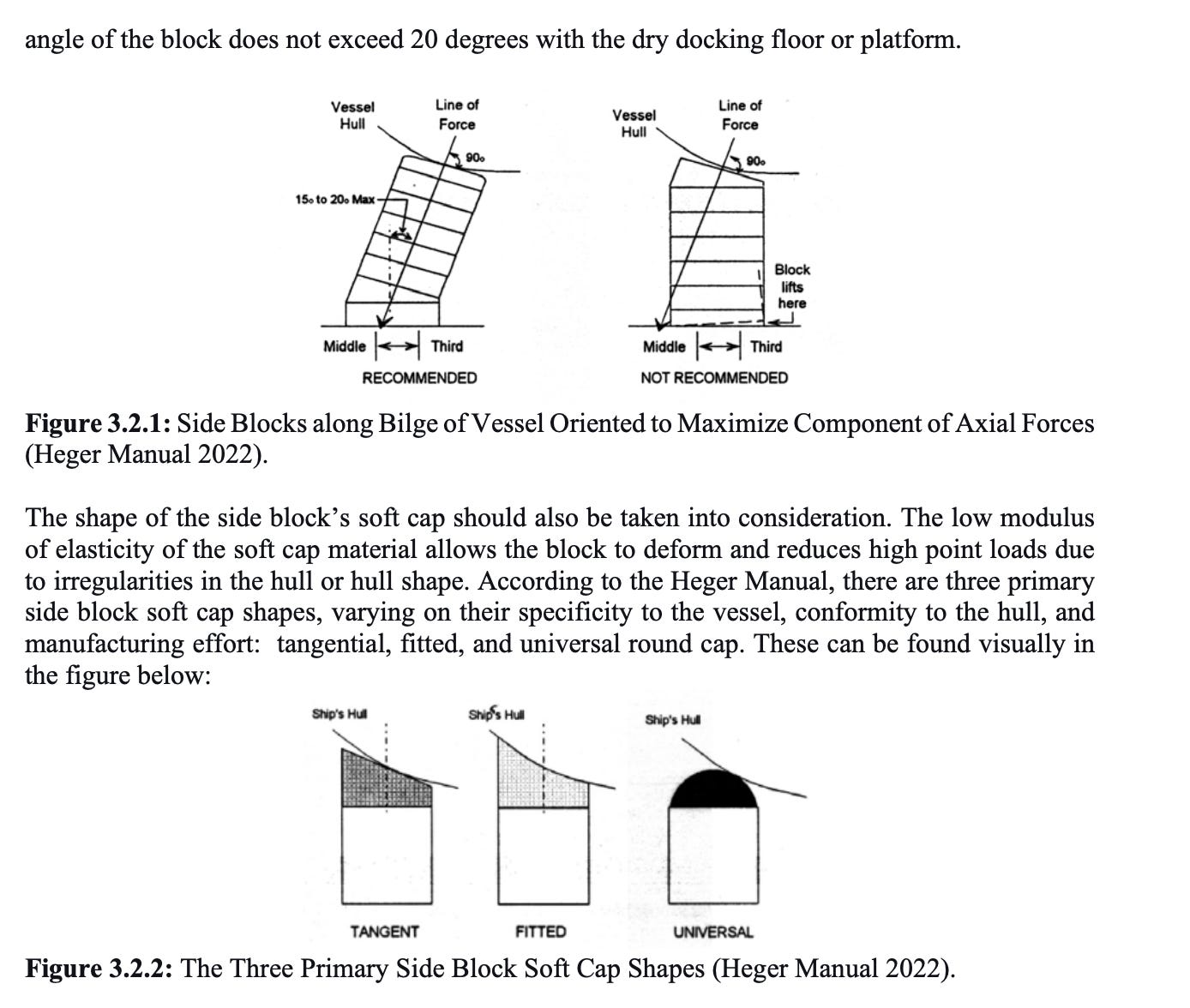
- Ships are built to float, but every few years, they have to stand. Dry Docking for Naval Architects, a University of Michigan coursepack, works through the engineering of that transition. Ships are designed for distributed hydrostatic pressure; they need to rest periodically on discrete contact points on land for repainting, inspection, and repair. Three primary methods exist (graving docks, floating docks, and vertical shiplifts), each with different tradeoffs around cost, vessel size, and shipyard layout. The core problem is fixturing at extreme scale: a hull designed for uniform water pressure now needs to rest on discrete blocks without buckling or deformation. Block materials are selected for how they yield; softwood caps deform to conform to hull curvature, spreading what would otherwise be point loads, while concrete and steel bases provide rigid foundations underneath. The geometry matters too; side blocks have to be oriented so loading stays mostly axial, or they kick out. No single dock type solves every constraint (vessel size, shipyard footprint, throughput, budget), which is why all three methods coexist. Same principle behind every test fixture: the thing you’re holding wasn’t designed for how you’re holding it.
- A special feature: we recently toured EMI, an electronics manufacturer based in Southern California, and published a full factory-floor walkthrough of what electronics manufacturing looks like up close. Equal parts education and a look at the day-to-day mechanics of production.
- And a couple fun links to round out the week:
- Automated assembly of a tank-cleaning brush.
- A software developer trying to figure out why the McMaster-Carr website feels so fast.
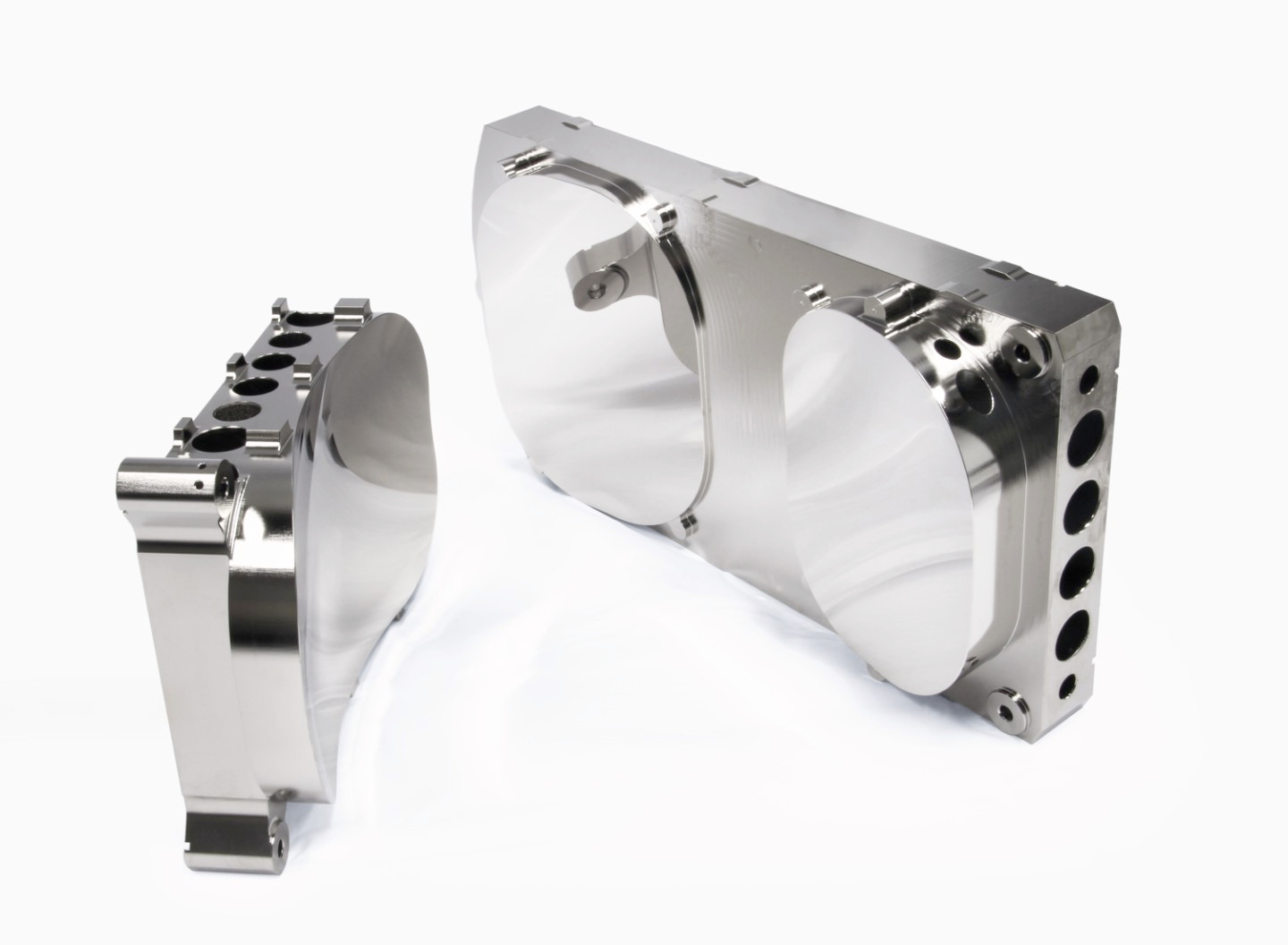
- Metal mirrors from the DESIS hyperspectral imaging spectrometer on the ISS, polished to ~5–40 nm RMS surface roughness.
Startup News
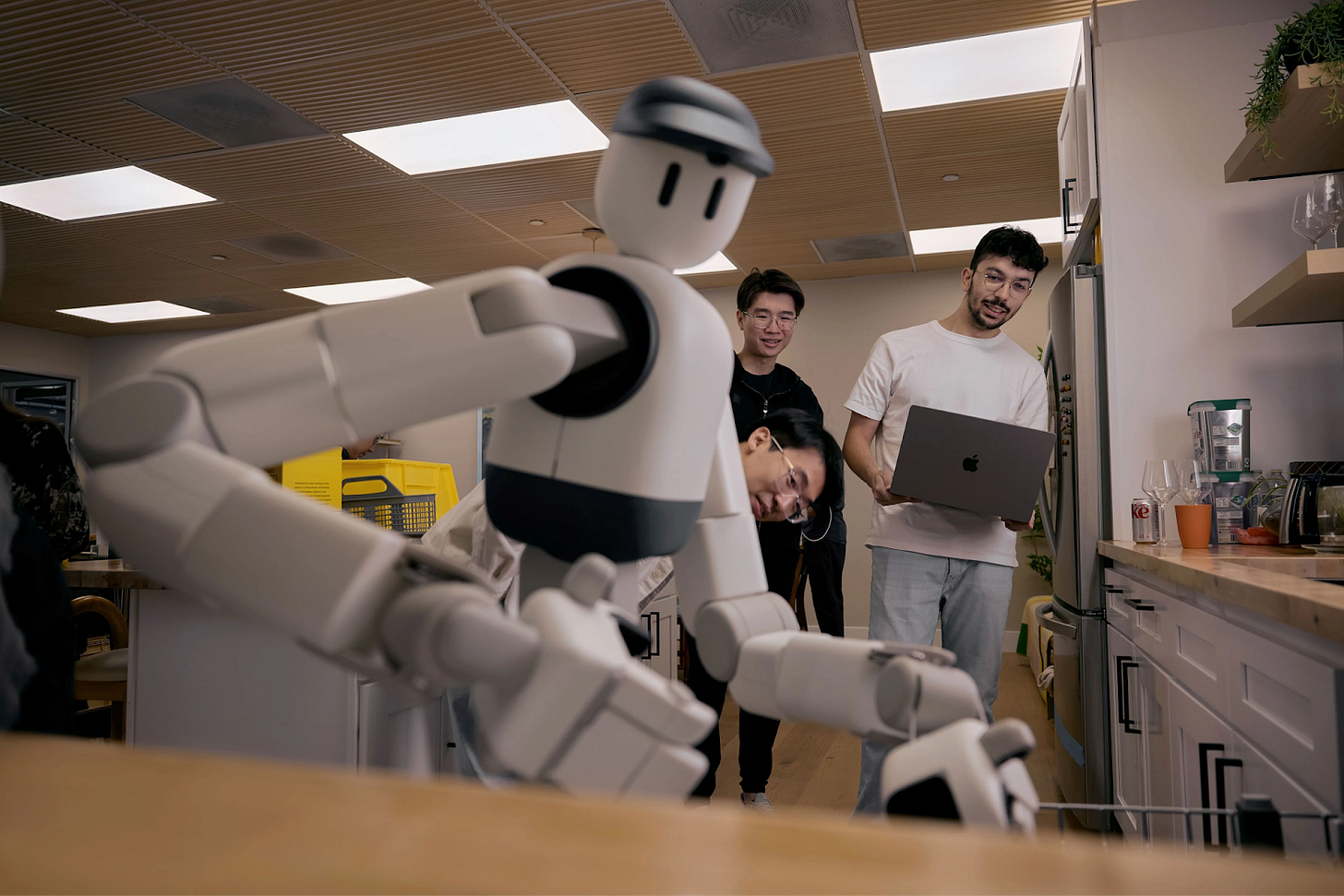
- Sunday raised $165M in Series B funding at a $1.15B valuation to develop its household robot, Memo. The wheeled robot is designed to perform common chores (think laundry, loading dishwashers, clearing tables) and onboards AI models trained from human demonstrations collected via a glove instrumented to mirror the robot’s hand kinematics. The company plans to begin in-home beta testing later this year. The round was led by Coatue, with participation from Bain Capital Ventures, Tiger Global, Benchmark, and Conviction Partners.
- Mind Robotics, a robotics lab spun out of Rivian, raised $500M in Series A funding at a reported ~$2B valuation to develop AI-powered industrial robots. Founded by Rivian CEO RJ Scaringe, the company is using data from Rivian’s EV manufacturing operations to train robots for dexterous, variable factory tasks that fall outside traditional fixed automation. The round was co-led by Accel and Andreessen Horowitz and follows a $115M seed led by Eclipse in late 2025. The startup is Rivian’s second 2025 spin-out, following Also, an electric mobility startup developing modular e-bikes and small cargo vehicles.
- Rhoda AI emerged from stealth with a $450M Series A round to build a robotics foundation model it calls Direct Video Action (DVA). Traditional industrial robots rely on fixed trajectories, and newer vision-language-action (VLA) models depend on large volumes of teleoperated demonstrations that don’t always transfer cleanly to real-world variability. Rhoda instead pre-trains on internet-scale video to learn motion and physics priors, then fine-tunes on smaller amounts of robot-specific data to translate video predictions into control. The core bet is that abundant video data scales better than collecting task-by-task robot demonstrations. Investors include Capricorn Investment Group, Khosla Ventures, Prelude Ventures, and others.
- Sandbar raised $23M in Series A funding to build Stream, a voice-input smart ring. The device includes a push-to-activate microphone, capacitive touch, and haptic feedback for voice capture and basic media control. Audio is sent to a companion iOS app for transcription and AI-driven note organization and query. The round was led by Adjacent and Kindred Ventures, with first shipments planned for summer 2026.
- Swarm Aero raised $35M in Series A funding to develop and manufacture UAVs designed for coordinated swarm operations. The company’s core product is Legion, a command-and-control system that lets a single operator direct dozens of aircraft at once by issuing mission-level commands. The round was led by Two Sigma Ventures and Silent Ventures.