Topics worth your time: revised theories on hardware development and how small teams can have big dreams, the playbook behind Terafab’s supplier sprint, reflections on SpaceX’s first Starship prototype, and more.
Interesting Read: Small Teams, Big Dreams
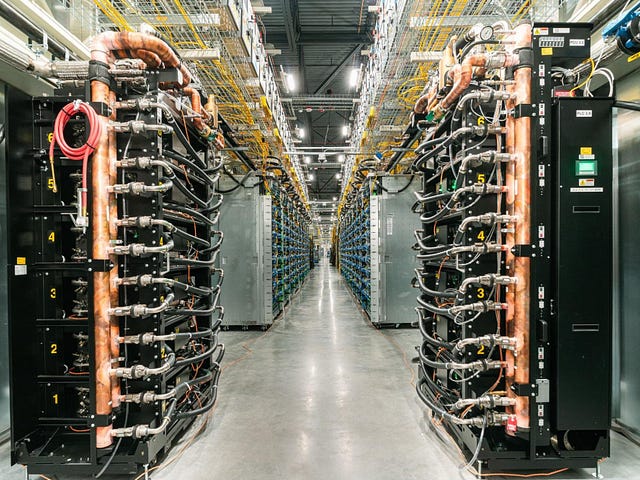
Terafab is, by any measure, one of the most audacious projects of the 21st century. Setting aside a frenetic week in tech, the joint venture between SpaceX and Tesla is estimated to cost up to $119 billion and aims to produce a terawatt of compute a year, or roughly 50x the world’s current output by its founders’ own estimate. Logic, memory, packaging, testing and photomasks would all sit on a 100 million sq-ft megacampus, compressing a supply chain that spans three continents and several decades of compounding knowledge in what would be both companies’ first venture into chip manufacturing.

It’s worth looking at how Terafab is tackling an industry many consider too difficult to break into, starting with how its engineers make decisions. At SEMICON West in October, a mixed group of staff walked the booths of roughly ten Korean suppliers on opening day, having decided in advance which products to discuss with each. Suppliers describe same-day NDAs and questions sent in the early hours, with near-instantaneous responses. As one supplier explains: “The engineer group has the decision authority, so the way of working with ordinary customers is completely different.”
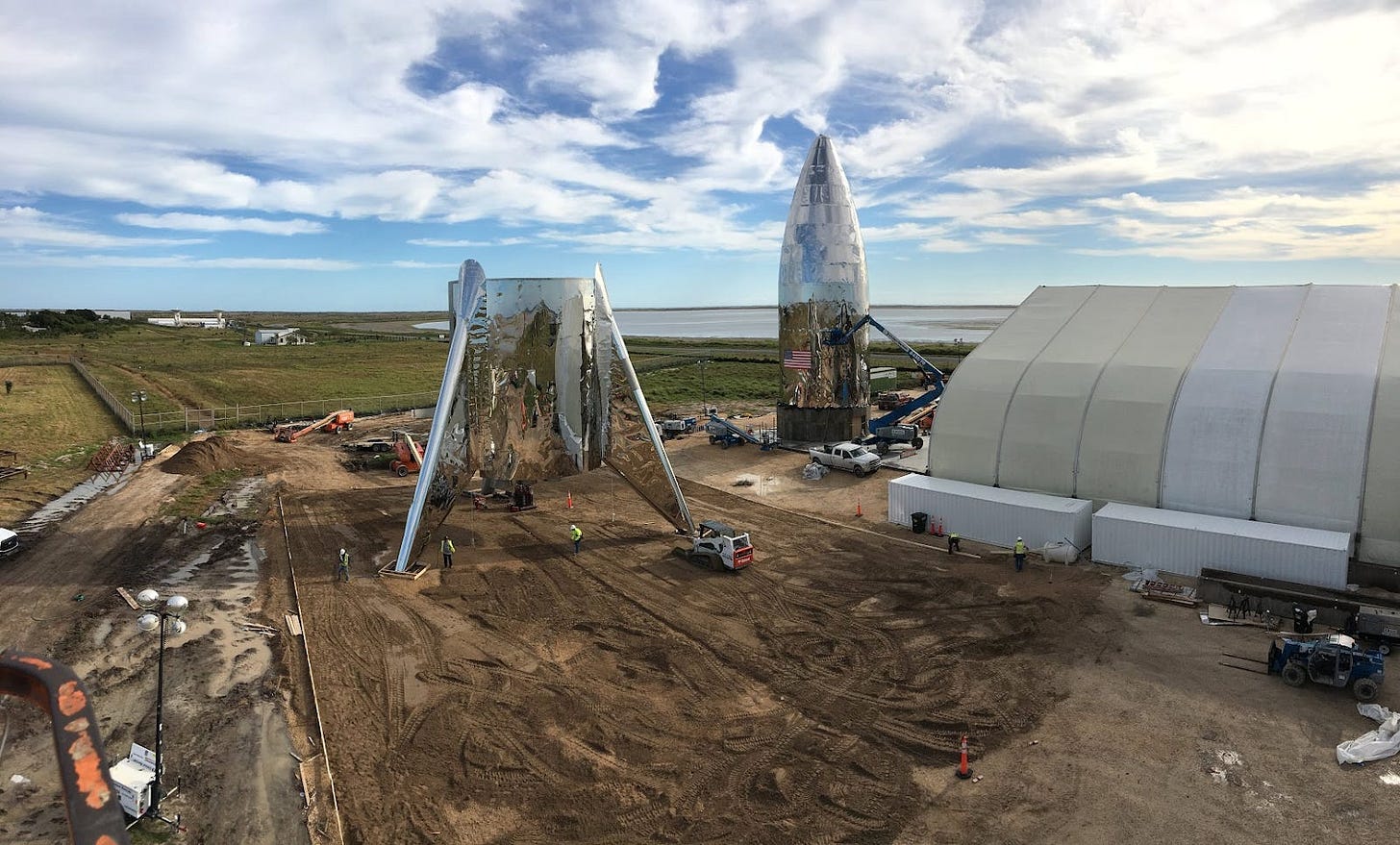
It’s the same operating model that was prescribed for SpaceX’s first Starship prototype, and one that should really be treated as the de facto approach for any new product introduction program. Every hardware program consists of some mix of suppliers, tooling and manufacturers — some more complex than others, but all with their biggest bottlenecks at one of these interfaces.
As remarkable as Starship looks today, the team at SpaceX didn’t yet know how to build a tall steel cylinder in 2018, and turned to a water tower company to build the first one. Rather than letting the contractor set the pace, the engineering team set it, with one rule of thumb: minimize the time you “have the ball” (i.e. the time anyone is waiting on you), so it’s always back in the vendor’s court. From there, the team relentlessly overcommunicated the goal and helped manage the vendor directly to clear blockers wherever it could.
The same dynamic is at play with Terafab again, where leading suppliers like Lam Research and Applied Materials have each stood up dedicated teams to keep pace.
With all the progress in tooling* over the past year, there’s a real case that hardware teams will build faster than ever, particularly in architectural exploration, understanding system requirements, failure analysis, and workstreams that are owned internally. Hardware is hard, though, precisely because the slowest parts often sit outside the team’s direct control.
*We’ve catalogued many of these tools in our software for hardware market map, which we’ll keep updating as they change. Our own opinions have changed more than once — very little in this space stays the same for long!
More From Around the Web
- The New Yorker’s Gideon Lewis-Kraus on why computer chips are the most magnificent things we’ve ever made.
- The world’s highest gear ratio, taken to its logical extreme.
- Most cheap “solar” calculators actually run on a hidden battery.
- The Holotypic Occlupanid Research Group once built a full scientific taxonomy of plastic bread clips.
- The ErgoStrap pallet strapping system is a nifty tool that straps loaded pallets so nobody has to crawl on the warehouse floor to do it.
Manufacturing & Startup News
- Agile Robots raised a $500M Series F at an $8.5B valuation led by SoftBank to expand production of its industrial robots and humanoids, including a new humanoid factory near Munich.
- Path Robotics raised a $300M Series E at a $2.45B valuation to take its welding robots beyond welding into other manufacturing tasks and robot form factors.
- Nominal raised a $240M Series C at a $3B valuation to scale its hardware test and analysis platform.
- Project Omega raised an $80M Series A to recycle spent nuclear fuel through pyroprocessing, recovering isotopes for long-duration power systems.
- Mosaic Intelligence Labs emerged from stealth with a $47M seed to build semi-autonomous catheters with built-in sensing and 3D guidance for procedures inside blood vessels.