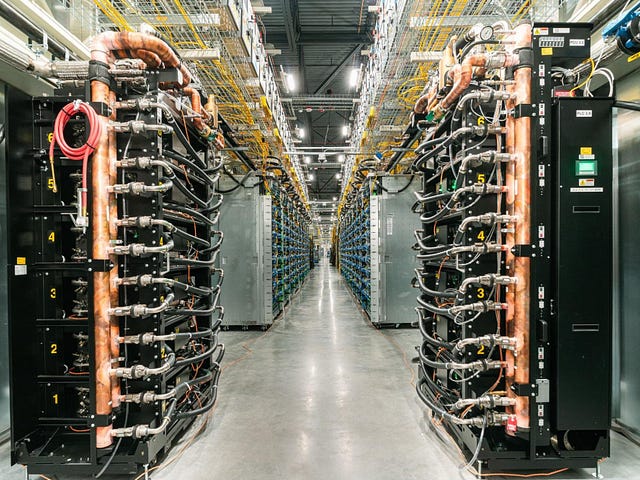
The landscape of engineering is changing quickly, and I’ve been thinking a lot about what that means for the people doing the work. Skills that once took a career to build are getting easier to reach, even in ‘defensible’ spaces that were assumed to be too hands-on for software. Most recently, Anthropic showed Claude designing a speakerphone, a voice-assistant hub, and a handheld virtual pet with Diode Computers. Some of it may be hype, but the progress is hard to deny when new capabilities show up mere months apart and even the staunchest skeptics are taking notice.
Two things can be true: now is possibly the greatest time to explore ideas and build them faster than ever, yet the texture of the work is dramatically changing in ways we’re all still figuring out in real time.
In the meantime, this issue is dedicated to the craft of human engineering, for all the inherited ingenuity and audacity that makes us who we are. Consider it a few breadcrumbs. Where they lead is up to you.
Enjoy the read.
Interesting Links
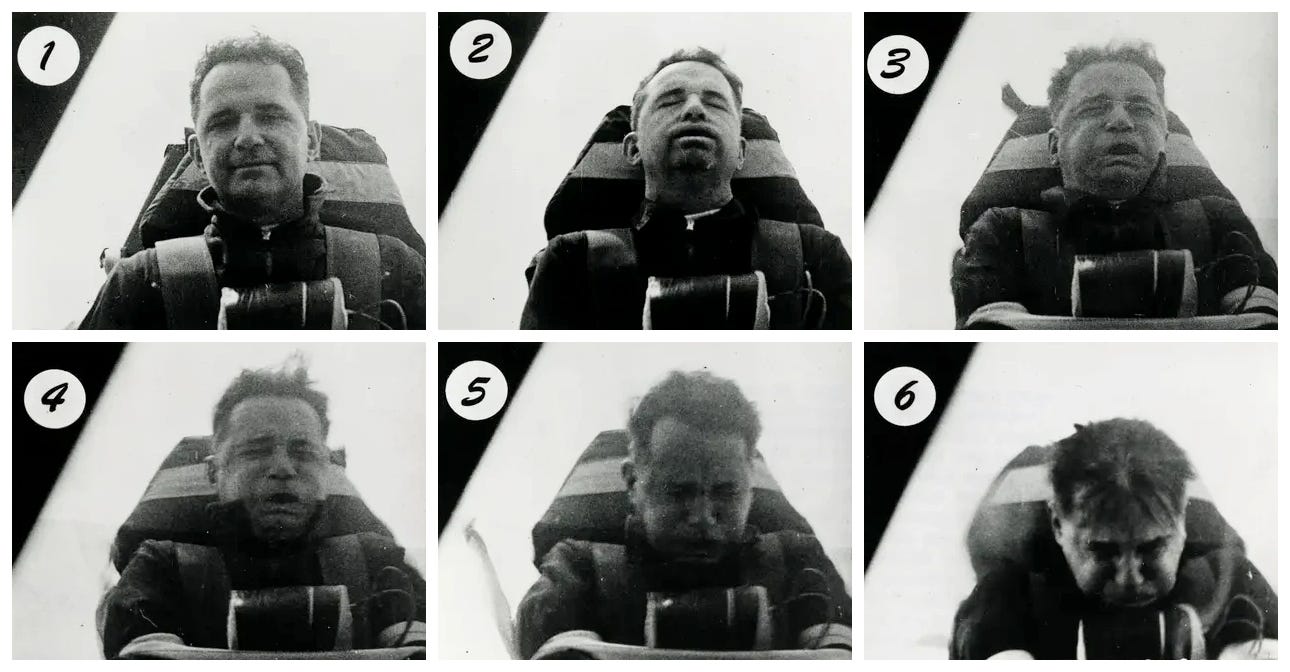
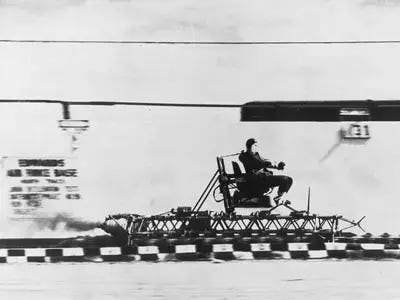
- Anything that can go wrong, will go wrong. Murphy’s Law is usually quoted as a cosmic destiny, but what few know is that the principle first started as a design note after a rocket sled run came back with no data. In the late 1940s, conventional aerospace wisdom held that the human body couldn’t survive much more than 18 times the force of gravity (or 18 g). Dr. John Paul Stapp, an Air Force flight surgeon, set out to prove otherwise by strapping himself to a decelerator known as the Gee Whiz — a Northrop-built rocket sled that could accelerate up to 200 mph and use hydraulic friction brakes to clamp it to a near stop. Captain Ed Murphy (hint hint: Murphy’s Law) brought strain gauges as instrumentation to clip onto Stapp’s harness, and after a run fired, every gauge read zero. The sensors had reportedly been wired backwards. According to his son, Murphy put it closer to: “If there’s more than one way to do a job, and one of those ways will result in disaster, then [somebody] will do it that way.” Japanese manufacturing arrived at same observation with poka-yoke (mistake-proofing).
- So what did Stapp actually learn by using himself as the test dummy? On his final 1954 run, he demonstrated that a properly restrained human can withstand at least 46.2 g, more than 2.5x the assumed ceiling, as long as the seat doesn’t break loose. That finding led to fighter seats being rated to real crash loads, rear-facing transport seats (in a head-on crash, the seat back takes the load instead of the belt), and a later career championing automotive seat belts. Nick Spark’s four-part series is fun reading on the full history of Murphy’s Law.
- Fitbit didn’t invent the pedometer, the smart activity tracker, or even the first connected one for consumers. In fact, Nike+iPod beat it to market by three years with an in-shoe sensor that transmitted pace and distance to a receiver plugged into an iPod nano. Under the hood, both ran on a TI MSP430 and a Nordic radio. What catapulted Fitbit to the front of the wearables boom was how its founders executed the idea. James Park and Eric Friedman, two computer scientists with no prior hardware background, made an informed bet on designing for women and built heavily for that audience: a clip that fit clothing and the center of a bra, a hidden display, and a simple Tamagotchi-inspired flower for tracking progress. They also didn’t do everything themselves. They built a lean team through personal connections (Friedman’s dad introduced them to their longtime EE), brought in NewDealDesign to shape the look and feel, and found the right manufacturing partner willing to grow with them. The company later struggled as consumer tastes shifted toward smartwatches before an eventual acquisition by Google in 2021, but Park and Friedman were right all along with their instinct for simplicity. It’s poetic that some of the most popular wearables today (like Oura, WHOOP, and many more) have no screen at all, and are directionally closer to those early Fitbits than the most capable smartwatches.
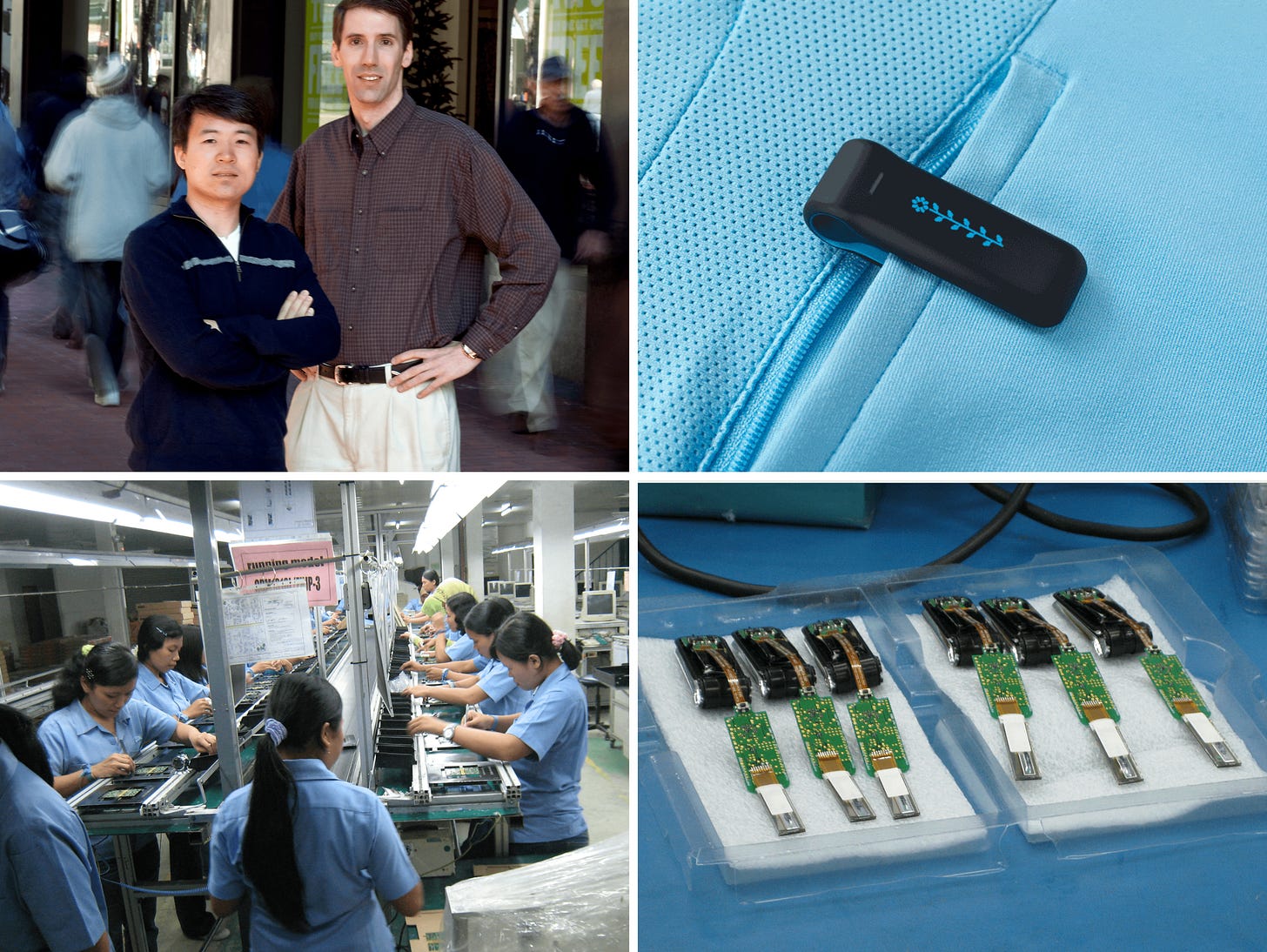
- Part of why I believe building real, tangible things will stay gratifying is simply the love of debugging. There’s an endless parade of weird reasons things fail that you’d never think to design against, and catching them is really half the fun. Fitbit’s ramp to mass production included many war stories, all for a device that’s relatively simple by today’s standards:
- RF Toilet Paper: A week before launch, ultrasonically welding the case shut pushed the display cable against the antenna and cut the sync range from 15–20 feet to a few inches. Park’s fix was rolled-up hotel toilet paper, which the factory turned into a slice of foam during assembly.
- Sweat Corrosion: Returned units showed green corrosion on one contact out of three. The culprit was the reset circuit, which left a small voltage on that pin. On sweaty clothing, it leaked a fraction of a microamp, too little to reset the device but enough to corrode the contact over time.
- Bookmark Tristan Hume’s human-curated YouTube channel list for inspiration, and for examples of human ingenuity and fun shenanigans. Many of the top-ranked names are hardware channels, from our own favorite creators like Stuff Made Here, Dan Gelbart, Breaking Taps, Applied Science (Ben Krasnow), Clickspring, and Sam Zeloof. Andrej Karpathy turned the list into TristanTube for easier watching.
- Viam and Intel are hosting a Robot Hackathon in NYC on 11/13–14: no prior robotics experience needed. Winning teams take home an SO-101 arm, a RealSense camera, and $5K in Viam credits. (Sponsored)
And two last breadcrumbs, quotes on curiosity and tenacity:
Curiosity, like coffee, is an acquired need. Just a titillation at the beginning, it becomes with training a raging passion.
— Nicholas S. Thompson
As you become an adult, you realize that things around you weren’t just always there; people made them happen. But only recently have I started to internalize how much tenacity everything requires. That hotel, that park, that railway. The world is a museum of passion projects.
— John Collison
Startup News
- Rendezvous Robotics raised a $20M seed round to build spacecraft that launch as ~1-meter hexagonal tiles and assemble themselves in orbit using electromagnetic fields. The tiles have flown on zero-G aircraft, a suborbital mission, and two ISS missions, with 32 more headed to the ISS as early as December. A seven-tile orbital demo is planned for 2028. MaC Venture Capital and Toyota Ventures co-led the round.
- Re:Build raised a $2.1B round to expand its hard tech manufacturing capacity and launch new industrial startups. The Massachusetts manufacturing accelerator spun out Slate Auto and says its network spans more than 2.4M sq ft of manufacturing space and 2,100+ US employees. Valuation and round stage weren’t disclosed. General Catalyst and JPMorgan’s Strategic Investment Group led the round.
- Dulo raised a $130M seed round to build foundation models for hardware design. The SF startup, co-founded by Sebastian Thrun and Adrian Aoun, has said little beyond a goal of speeding up how hardware is designed and manufactured. Reported investors include Eric Schmidt, John Doerr, DST Global, Construct Capital, and Lowercarbon Capital.
- Opentrons raised a $40M Series E to expand its lab robotics, software, and data infrastructure for AI-driven experiments. The New York company wants its robots to be the platform “autonomous science” runs on, and will also put the money toward faster protocol development and deeper integration with third-party instruments. Avego led the round, with BroadOak Capital Partners participating.