

👋 Happy Saturday! This week’s edition covers a set of teardowns on the Formlabs Form 4 and the shifting architectures behind desktop SLA, a look at the nuclear fusion startup landscape, and a deep dive into IBM’s mechanical digital-to-analog linkage used in early electric typewriters.
Interesting Teardown: Desktop SLA and the Shift in Printing Architectures
From two of our favorite engineers comes a teardown of the Formlabs Form 4: Bunnie Huang with the written deep dive and Stuff Made Here with the visual teardown. On the exposure system, earlier Form printers used a UV laser and galvanometer mirrors to “write” each layer, scanning a focused beam across the resin and curing it point-by-point. It was the most viable approach when Formlabs was founded in 2011, and in large part how they pioneered one of the first affordable desktop SLA printers.
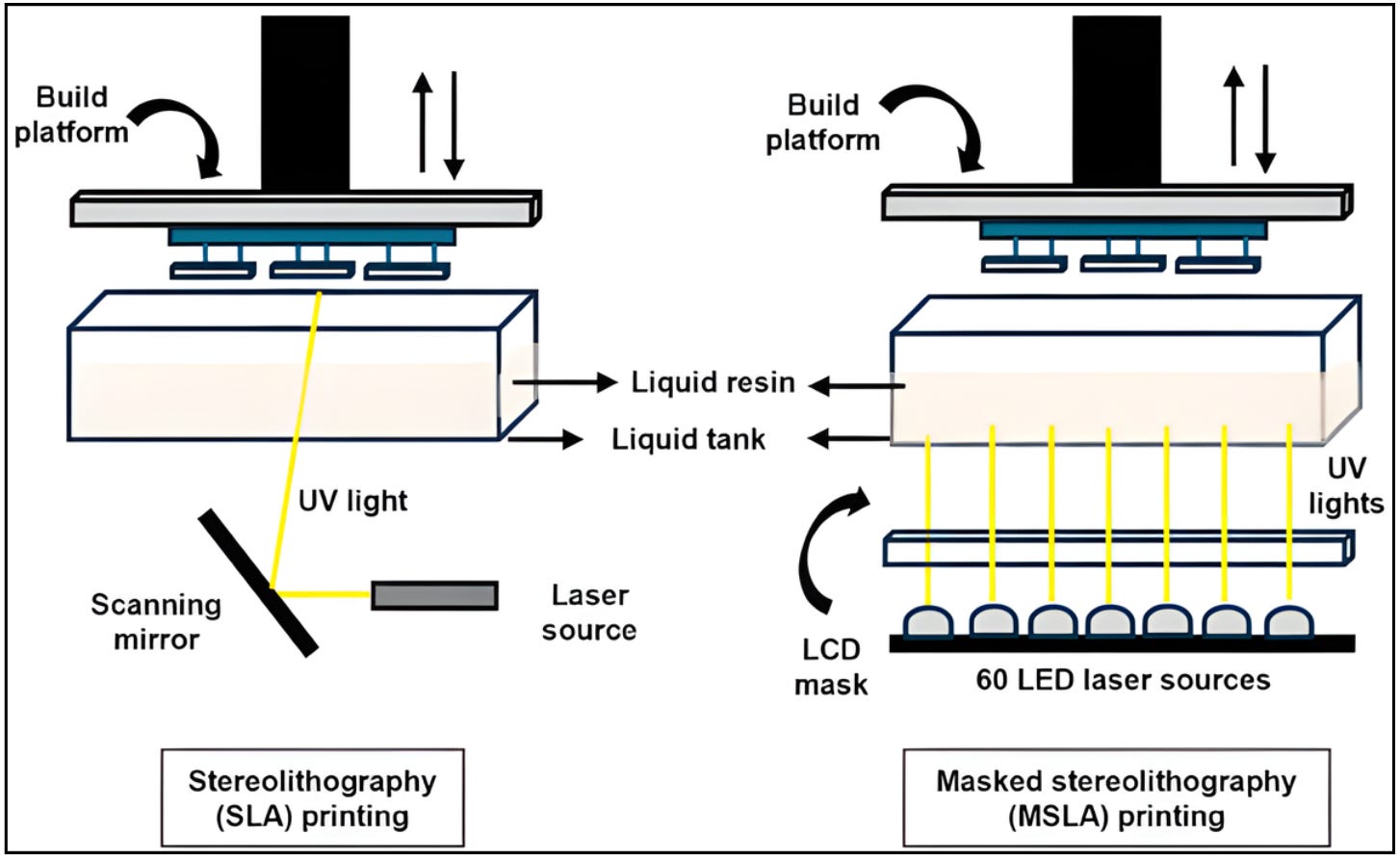
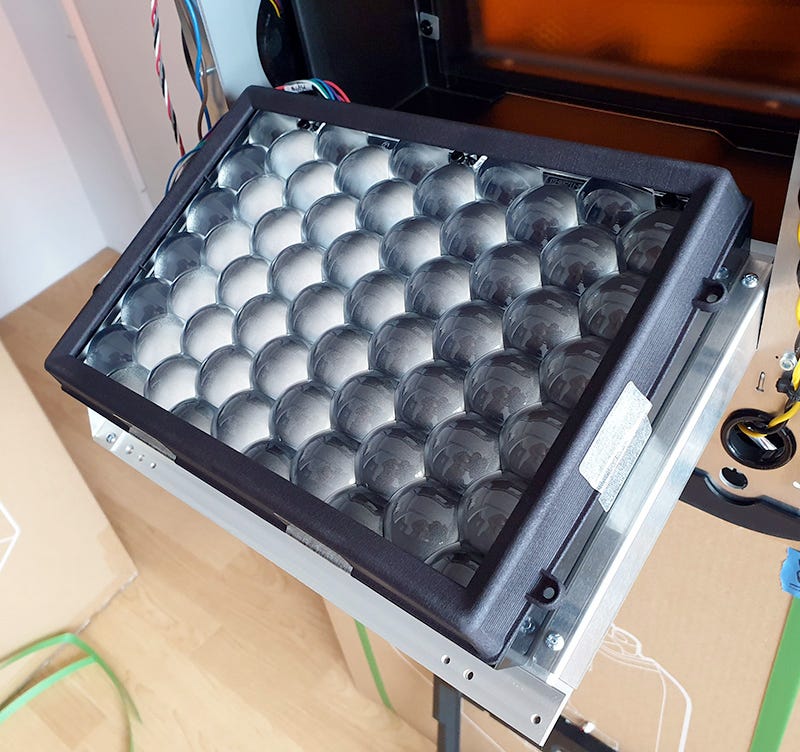
Over the next decade though, improvements in UV LEDs and LCD panels gradually made full-frame masked exposure viable (think exposing a photo all at once, rather than sketching it point-by-point). Once those technologies matured, Formlabs switched to a solid-state exposure stack, leaving the laser-and-galvo architecture that had been the gold standard for nearly a decade.
It’s also worth listening to Shane’s commentary in his interview with the Formlabs CEO on the Form 3 era about 1) the internal narrative that cast the printer as a miss despite solid commercial performance, and 2) the quieter friction that comes with startup growth, particularly how organizations lose shared context as they grow.
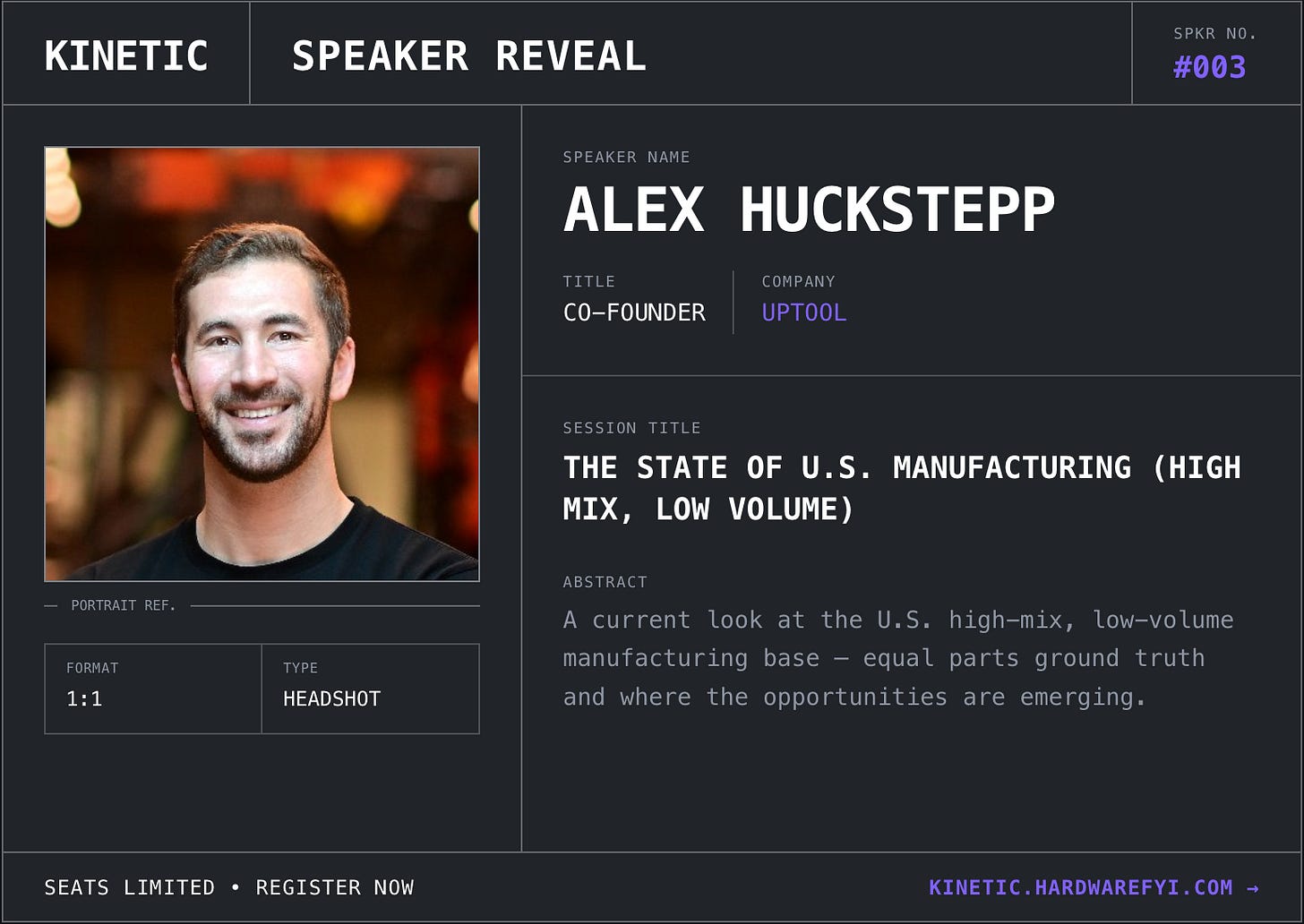
Kinetic Announcement: The State of U.S. Manufacturing (High Mix, Low Volume)
Interesting Chart: The Nuclear Fusion Landscape
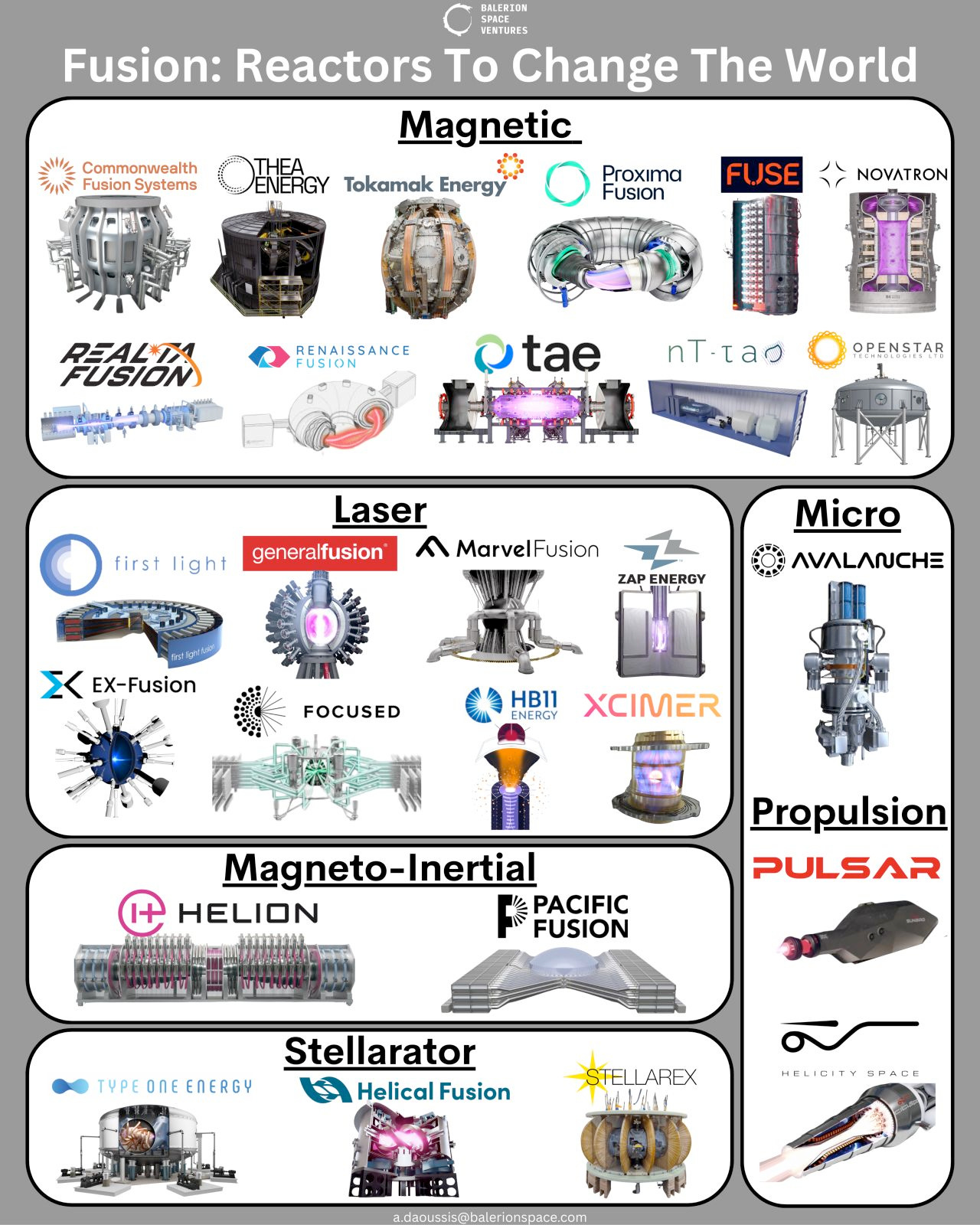
A high-level overview of the nuclear fusion startup landscape, grouped by major fusion approaches. From an outside engineering perspective, most differences between companies come down to how they create and contain fusion plasma long enough for nuclei to fuse. In practical terms, this requires heating plasma to ~100 million °C or more, and maintaining the density and confinement time needed for nuclei to collide.
Tim De Chant has a great overview of the fusion sector and why public sentiment has shifted, largely due to complementary advances in high-temperature superconducting magnets and modern compute/ML for simulation and control of commercial reactors. Also see here for a list of every fusion startup that raised over $100M.
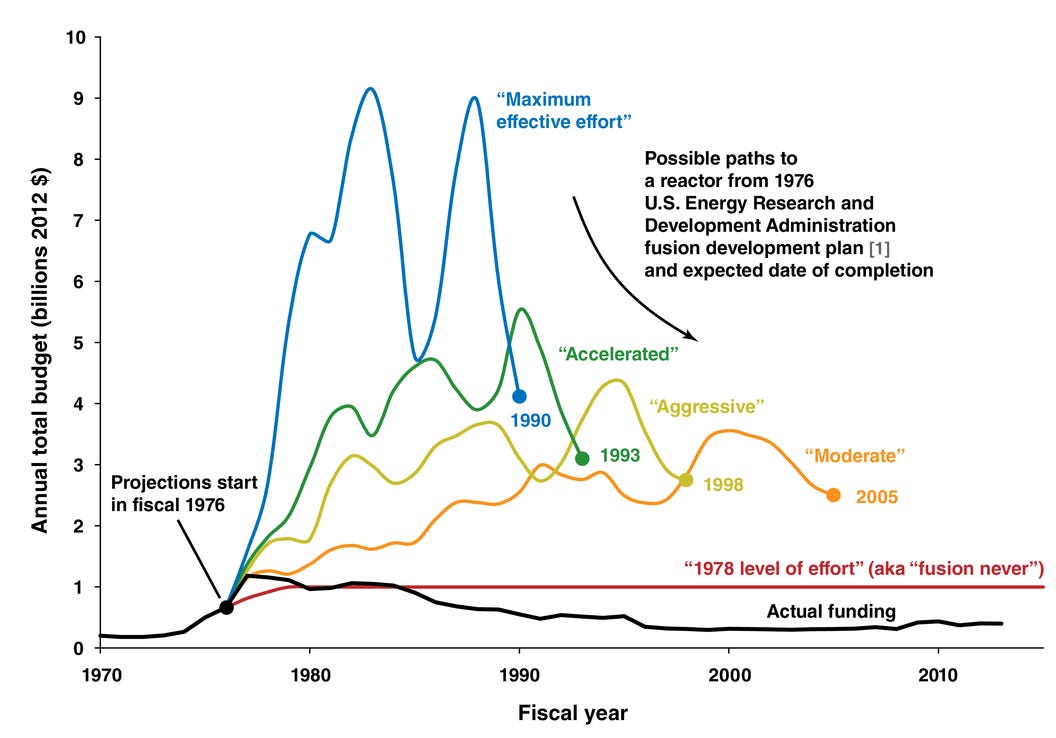
One historical footnote to consider: a 1976 ERDA roadmap projected multiple funding paths to a fusion reactor, all assuming sustained national-priority investment.
Interesting Video: IBM’s Mechanical Masterpiece
A look inside the Selectric’s whiffletree linkage, which converts key presses into tilt-and-rotate motion of the typeball used in electric typewriters from the 1960s. An early example of mechanical “digital-to-analog” design before computers.
Manufacturing & Startup News
More leftovers from our weekly research:
- Agility Robotics signed a commercial agreement with Toyota Motor Manufacturing Canada after a pilot, with plans to deploy its humanoid robot in automotive manufacturing and internal logistics operations.
- Project Omega emerged from stealth with $12M in seed funding to recycle spent nuclear fuel into long-duration radioisotope power sources, first targeting defense applications.
- Wake Energy, a new company from the team at Hardware Is Hard, emerged from stealth to build high-volume battery packs in LA for defense and commercial applications, marketing a $151 battery pack for drone applications.
- On a similar note, Kyten Technologies (YC W26) came out of stealth focused on supplying custom aerospace-grade battery packs for defense and space programs.
- Google signed a 150MW geothermal power purchase agreement with Ormat in Nevada to supply electricity for its data centers, with projects expected to come online between 2028 and 2030.