Social media has been abuzz lately about what might be the most ambitious U.S. infrastructure project proposal in nearly 100 years. The California Forever plan aims to expand Suisun City in Solano County into a large-scale urban and industrial hub anchored by two new zones - one focused on advanced manufacturing, billed as America’s largest manufacturing park, and another on shipbuilding to revive large-scale industrial production near Silicon Valley. The development plan spans two 20-year phases, initially housing about 150,000 residents with full buildout reaching up to 400,000. More on the project’s vision in the Core Memory podcast and their full expansion project application here.
Also interesting to note: the project is backed by Silicon Valley investors like Reid Hoffman and Marc Andreessen, and led by a former Goldman Sachs trader Jan Sramek, who quietly acquired about $900 million in land before revealing the plan. After early pushback against creating a brand-new city, Suisun City (a town of ~30,000) offered a simpler path: fold the proposal into its own expansion, framing it as both a housing plan and a modern manufacturing hub.
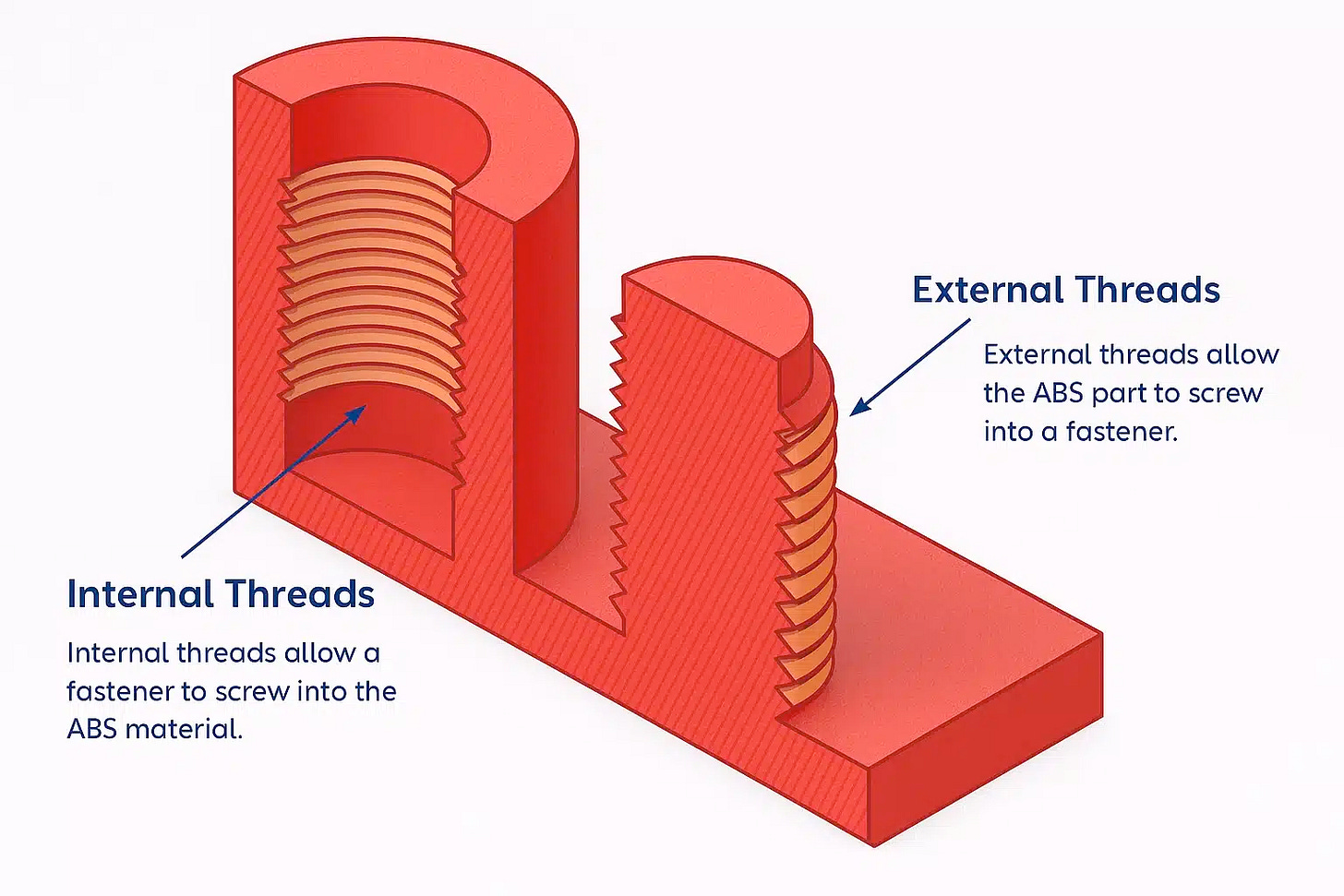
If there’s one single resource we could recommend to learn about plastic part design, it’sBayer Material Science’s Engineering Polymers Part and Mold Design Guide. Fun fact — nearly every credible DFM guide from online prototyping vendors borrows from it, sometimes down to the exact diagrams. The guide covers all the basics and dives into the practical details, like how to design molded-in threads for bottle caps or threaded enclosures.
External threads: if the threads follow the draw direction and sit on the parting line (as most do), they add little to the overall mold cost.
Internal threads: found in parts like caps or fluid fittings, these are where tooling gets expensive and often requires collapsible or unscrewing cores to release the part.
Alumni Founders is a living map of companies started by former SpaceX employees over the past four years. The criteria are simple: spend at least 12 months at the company, then go build your next venture—ranging from bootstrapped experiments to multi-hundred-million-dollar rounds. In many ways it feels like a modern equivalent of the PayPal Mafia, where early PayPal employees in the 2000s went on to seed startups like LinkedIn, Yelp, Palantir, and countless others. It’s a good reminder that the most valuable thing a company produces isn’t the product; it’s the people who built it, and how shared experience inside one organization can seed dozens of others.
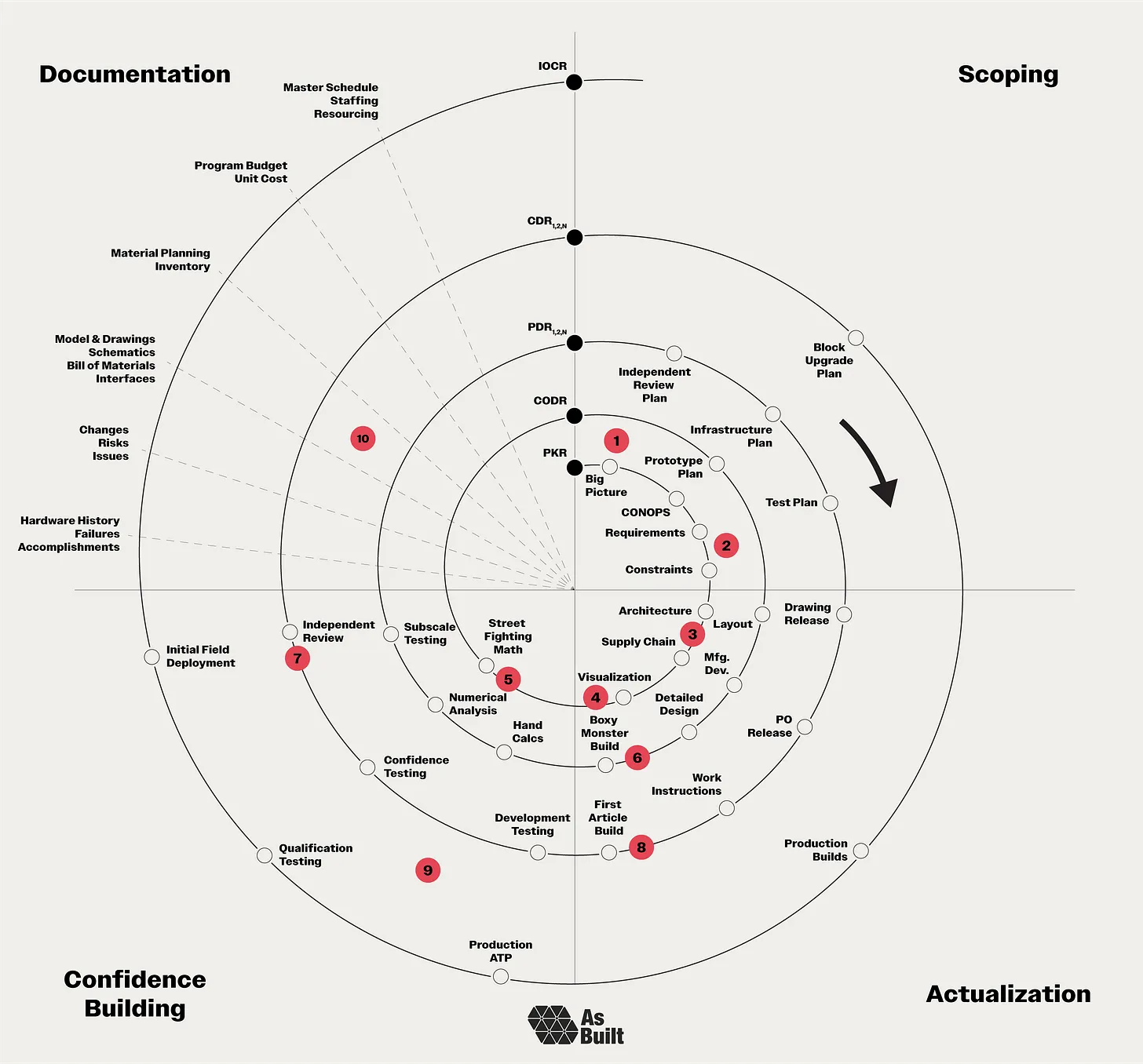
The spiral model of development, first proposed by Barry Boehm in the late 1980s for software engineering, has recently found new relevance in hardware and manufacturing programs as a framework for managing iteration and risk. Each loop around the spiral runs through the same rhythm where teams scope what needs to be built, turn ideas into prototypes, test what breaks, and capture what’s learned. It’s less about following a strict top-down process and using each pass to tighten interfaces, retire risks, and make the next build a little more certain. By treating risk as the primary unit of progress—not schedule or features—spiral development transforms hardware’s greatest liability into its engine of improvement.
There’s a new wearable device on the block, specifically one that straps to your toilet and monitors gut health. Throne recently unveiled a toilet-mounted sensor that uses a combination of optical, acoustic, and infrared sensing to analyze stool and urine in real time, translating color, texture, and flow characteristics into daily ‘Gut Health’ and ‘Hydration’ scores. It fits a similar pattern of companies like Eight Sleep, Whoop, and Oura that all started with hardware as the entry point, but built their real value around the data those sensors generated at scale through subscription platforms. Throne fits the same mold, albeit in a far more private setting.
We now have a page where you can share what you’re reading or working on! Since starting the newsletter, this list has grown into a uniquely broad group of people who actually build things across hardware, machines, and systems. If you’ve been working on something interesting or came across a great read worth sharing, send it our way.
Startup News 🚀
Flow raised $23M in Series A funding to modernize requirements management for hardware teams. Flow’s platform replaces legacy tools with a modern iterative requirement system that syncs requirements, verifies changes, and integrates with engineering tools to speed up hardware development.. Current customers already include Rivian, Joby, Astranis, and Radiant Nuclear. The round was led by Sequoia, with Stripe co-founders John and Patrick Collison joining the board. Check out their launch video here.
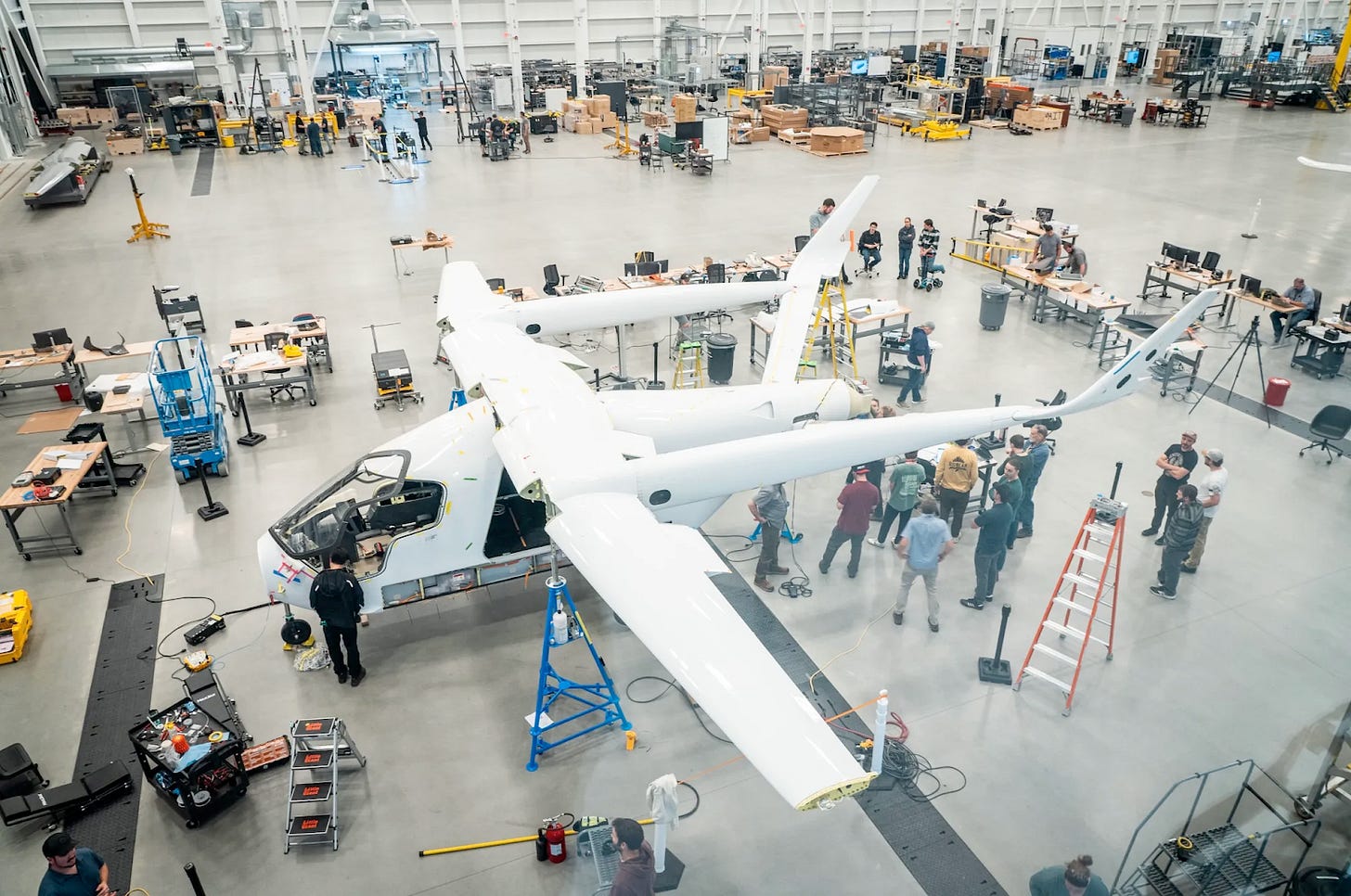
Beta Technologies filed to raise up to $825M in its IPO, targeting a valuation of roughly $7.2B at the upper end of its share range. The Vermont-based company develops electric aircraft, focusing on propulsion systems and airframe manufacturing, and plans to use the proceeds to expand production and advance sustainable aviation technologies. The company is unique for having not raised venture capital, instead seeking institutional investors like Fidelity and Qatar Investment Authority.
Albacore raised $6.5M in seed funding to develop next-generation undersea drones for defense applications. The company’s first platform, Ghostfin, is an 8-foot, 400-pound autonomous mini-sub capable of carrying a 250-pound kinetic payload. The funding will scale production and advance autonomy in Albacore’s underwater hardware systems. The round was led by Outlander VC with participation from Y Combinator.
A slightly late announcement but worth sharing: Sphere Semi raised $12M in funding to use AI to design and fabricate analog semiconductors. aiming to speed up development and improve performance in RF and mixed-signal chips. The round was led by Acme Capital and co-led by Future Ventures, bringing total funding to $20M.
Root Access raised $2.1M in funding to build AI tools that streamline firmware development for embedded engineers. Details are still early, but the IDE can configure peripherals, generate firmware, and compile across toolchains before deployment. The round was led by AlleyCorp.