

A quiet week, then a quick snap back to normal. This issue covers reliability notes from the Shuttle era, battery defects, U.S. manufacturing dynamics, a smart-thermostat primer, and two directories worth bookmarking.
Interesting Links 🏭
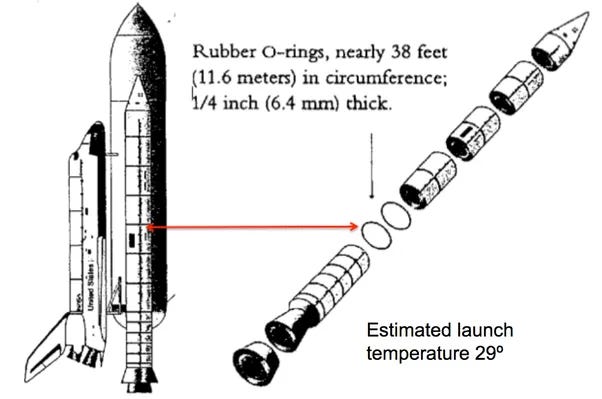
- Richard Feynman’s appendix to the Rogers Commission report — Personal Observations on the Reliability of the Shuttle — written after the 1986 Challenger disaster, is one of the clearest autopsies of how engineering judgment can distort under schedule pressure. He points straight at the solid-rocket-booster field joints (the direct failure path) where repeated O-ring erosion and blow-by had already proven the seal was operating outside its design intent, yet NASA treated those excursions as acceptable because previous flights survived. Instead of treating anomaly as evidence of risk, officials reversed the logic and treated survival as evidence of safety. The same pattern emerged in the certification of the Space Shuttle Main Engine, where cracked turbine blades and other off-nominal behaviors were reclassified as “acceptable” to keep the program moving. For a successful technology, reality must take precedence over public relations, for nature cannot be fooled.
- A friendly reminder: a safety factor is designed in, not inferred from leftover material. An O-ring with one-third of its radius burned away doesn’t mean “3x” margin; once it’s eroding, the margin is gone.
- The recall of Haribo-branded power banks and headphones is a great example of one class of lithium-ion cell failures, specifically a manufacturing defect where uneven electrode alignment could lead to lithium plating and potential shorts. In practice, when anode overhang becomes uneven and the cathode extends past it, current concentrates at the anode edge. Under the wrong charging conditions, that imbalance can promote localized lithium plating and the start of dendrites. This isn’t how most lithium-ion batteries fail in normal use, but in low-cost cells it’s a familiar and well-documented assembly defect. TLDR; the danger comes when lithium has nowhere to go and plates as metal instead of storing inside the anode.

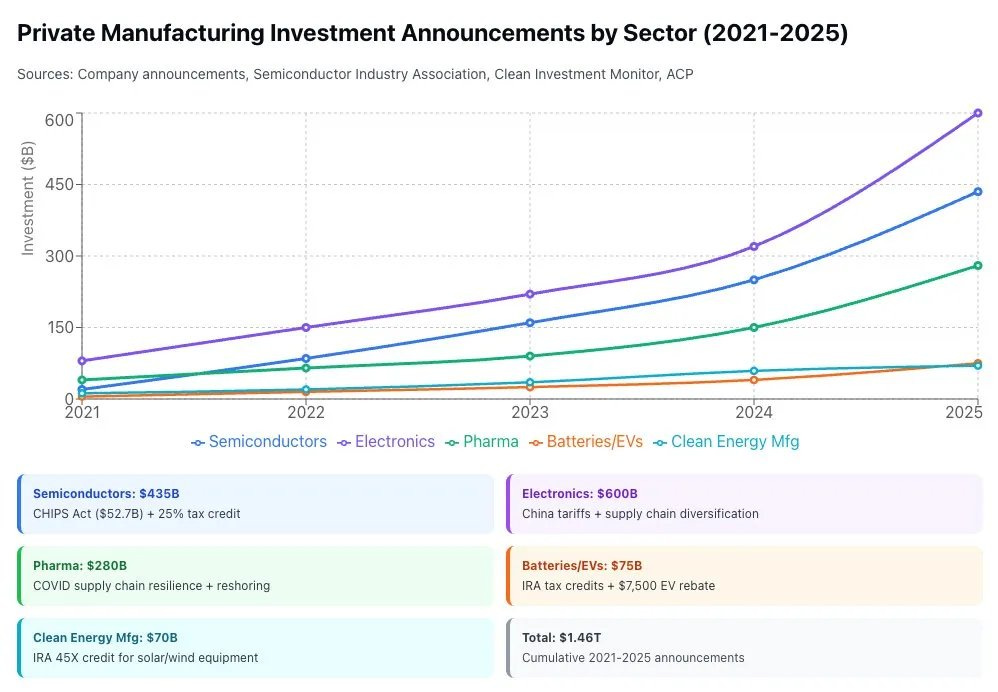
- Field notes from six months inside ~75 factories distilled into a working blueprint for reindustrialization. The core message centers on how a nation stays innovative by continuing to make things, and that the U.S. already has the capacity for a manufacturing revival if the key levers of industry, education, government, tech, and capital can coordinate correctly to turn the flywheel. Equally interesting is the side effect of today’s misalignment, where most small shops get pulled into the “defense trap” — the dynamic where ITAR regulations and prime-contractor budgets make defense the only stable, protected demand because it’s the one sector insulated from subsidized foreign competition.
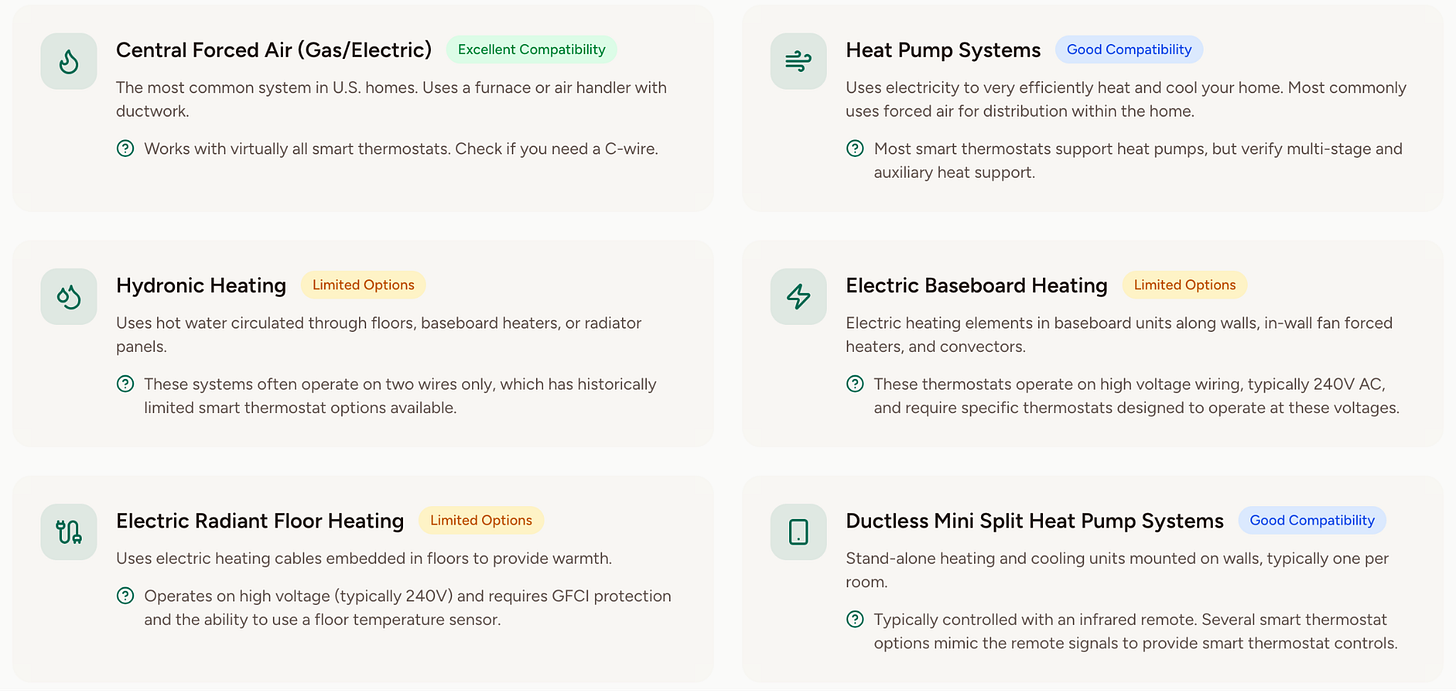
- A smart thermostat buyer’s guide that doubles as a quick HVAC crash course. It covers the four big categories (forced air, heat pumps, hydronics, 240-volt baseboards) and explains how thermostat wiring serves as the simplest diagnostic for separating low-voltage (24V) systems from high-voltage (120V/240V) ones.
- Two new directories worth bookmarking:
- A directory of trade and technician schools. Trade schools teach specific, hands-on industrial skills like machining, electrical, HVAC, and automotive work. The directory also comes from Zach at Doss, the author of the reindustrialization essay above.
- Another growing catalogue of AI tools for hardware engineers, broadly classified across CAD, simulation, documentation, CAM automation, and factory software.
- And one fun link to round out the week: apparently all you need is a lathe and some imagination to machine proper threads into vegetables.
Startup News 🚀
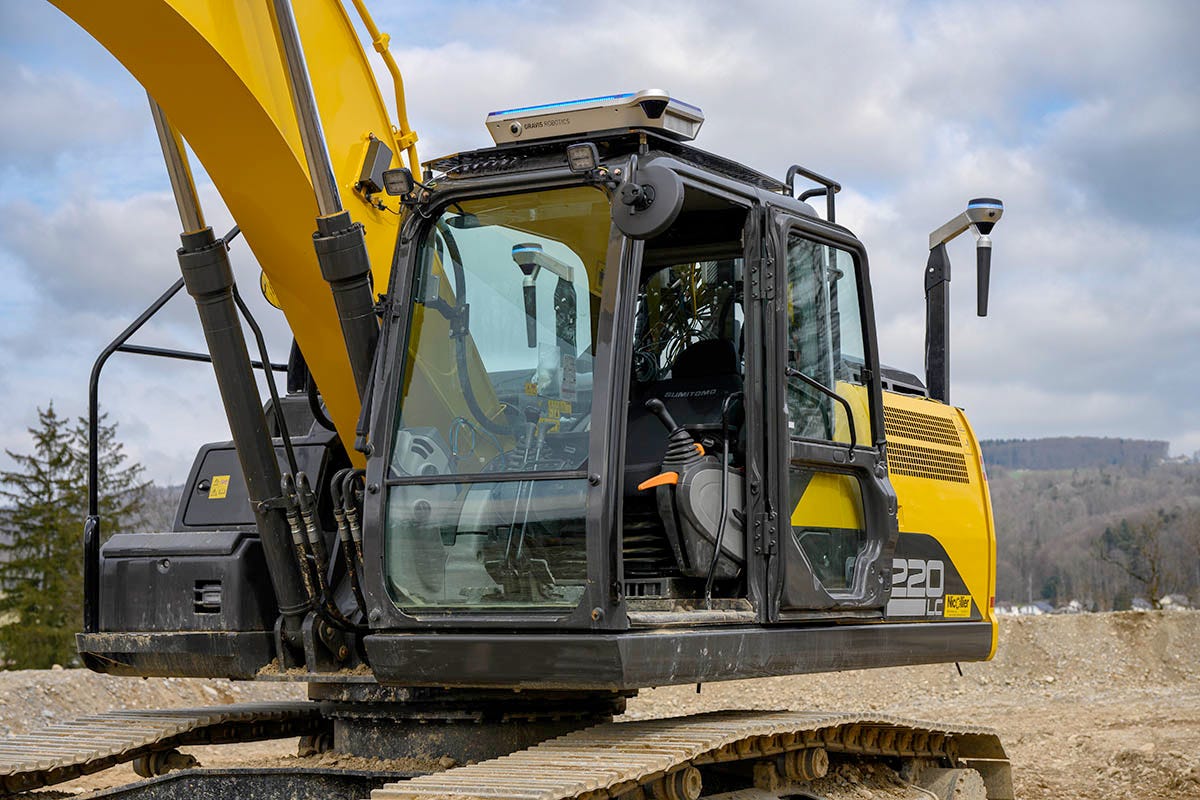
- Gravis Robotics raised $23M in equity funding to scale its construction robotics platform. The company is building a retrofit system that bolts onto existing heavy equipment, adding a combination of LiDAR, cameras, and hydraulic-based sensors for autonomous operation. Early deployments target foundation work, utilities, mining, and renewable energy sites where productivity and safety gains are measurable. IQ Capital and Zacua Ventures co-led the round.
- X-Energy raised $700M in Series D funding to develop its small modular pebble-bed reactors. Each unit is designed to produce 80 MW, with a pipeline of 144 reactors planned to deliver 11 GW for industrial and data center customers. The capital will build out the supply chain required for high-volume deployment and fuel production. Jane Street led the round.
- Endolith raised $13.5M in Series A funding to advance its microbe- and machine-learning-based mineral extraction technology. The platform recovers copper from low-grade ores and waste streams that traditional methods overlook, aiming to unlock new feedstock for EVs and AI data centers without expanding mining footprints. Early work focuses on low-grade sulfide ores where biological leaching shows promise. Squadra Ventures led the round.
- Thermopylae Aerospace raised $1.6M in pre-seed funding to develop interceptor technology for counter-unmanned aerial systems and related applications. The funding will support creation of drone-based solutions to counter low-cost, high-volume deep-strike threats, led by a young Ukrainian engineer and targeting rapid defense deployments. Founders Fund and Naval Ravikant backed the round.
- Quantum Systems raised $194M in additional funding, bringing its valuation to $3.2B. The company builds unmanned aerial systems, onboard sensors, and mission-planning software, with recent product lines moving toward AI-enabled multi-domain platforms. Growth has accelerated through the acquisitions of AirRobot, Nordic Unmanned, and Spleenlab, consolidating a broad UAS stack under one roof. It is the largest private capital raise for a European dual-use aerospace company, with Balderton Capital among the significant partners.