

Interesting Links 🏭
- Motion profiles in motors are planned trajectories of speed, acceleration, and position that dictate how a motor moves from one point to another. Instead of just telling a motor “go from 0 to 1000 RPM,” a motion profile specifies how the motor should accelerate, run, and decelerate along the way. This video shows two basic profiles in action: the trapezoidal profile which ramps up, holds constant velocity, then ramps down; and the rectangular profile, which jumps instantly to speed with no acceleration limit. More advanced approaches (S-curves, quintic polynomials, or minimum-jerk trajectories) come into play when factors like smoothness and vibration control matter, beyond the simple profiles common in industrial motion control.
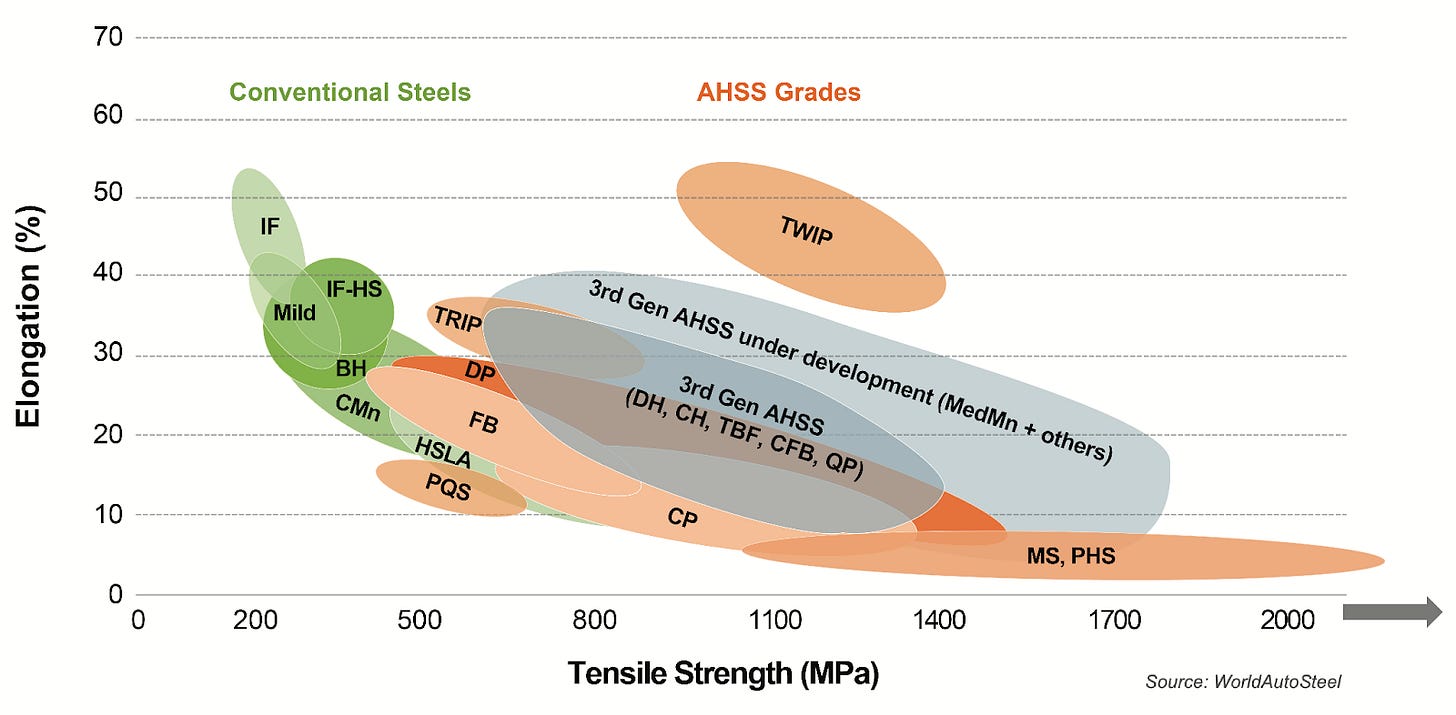
- How ASTM grades define structural steel, and how those grades map to the wider steel family tree. In construction, steels are ordered by ASTM (American Society for Testing and Materials) specifications: standards that lock in chemical composition, mechanical properties, and testing requirements The familiar A36 still shows up in plates and secondary shapes, but wide-flange beams used for columns are now almost always ASTM A992 which adds a carbon-equivalent cap for weldability and has largely replaced A36 as the default framing grade. Structural steels are just one branch in the broader taxonomy: low-carbon alloys for cost, high-strength low-alloy steels for lighter frames, quenched-and-tempered plate for >100 ksi yield, abrasion-resistant plate for wear, pressure-vessel steels for heat and toughness, and stainless and tool steels when corrosion resistance or tooling life dominate.
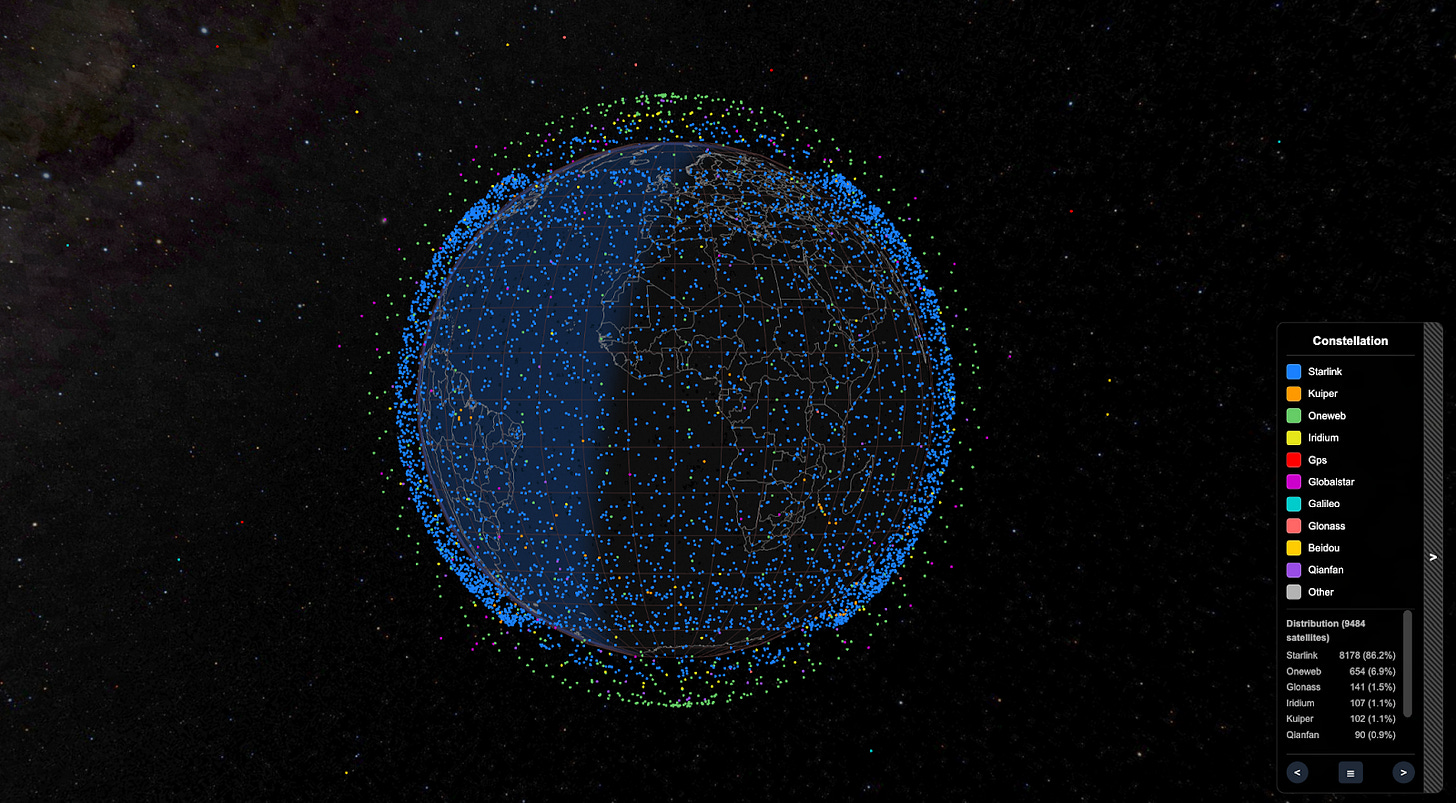
- Satellite Map is a live visualization tool that tracks the positions of active satellites across different constellations. These systems fall into three main categories:
- Broadband internet (LEO, ~500–1,200 km): Starlink, Kuiper, OneWeb, and Quianfan. Flying closer to Earth cuts latency to near-fiber levels and extends coverage to regions terrestrial networks can’t reach.
- Satellite communications (LEO, ~780 km): Iridium and Globalstar, launched in the ’90s, still handle satellite phones and narrowband links for aviation, maritime, and remote operations.
- Global navigation systems (MEO, ~20,000 km): GPS (US), Galileo (EU), GLONASS (Russia), and Beidou (China). Higher orbits let each satellite cover a wide footprint, so global service is possible with only a few dozen spacecraft.
To set the scale, Starlink alone now accounts for more than half of all active satellites with over 8,000+ currently in orbit. By contrast, Project Kuiper (Amazon’s broadband constellation) has 102 satellites as of August 2025 with a target of 3,200+.
- Cable bend radius is the minimum radius a cable can be bent before its materials or performance are compromised. It’s usually expressed as a multiple of the cable’s diameter (i.e. a 1 cm cable with a 10x bend radius can only be bent down to 10 cm safely). Common values: fiber 10–20x diameter, Ethernet ~4x, coax 6–10x, power cables 6–12x. Push past those limits and you risk signal loss or premature failure.
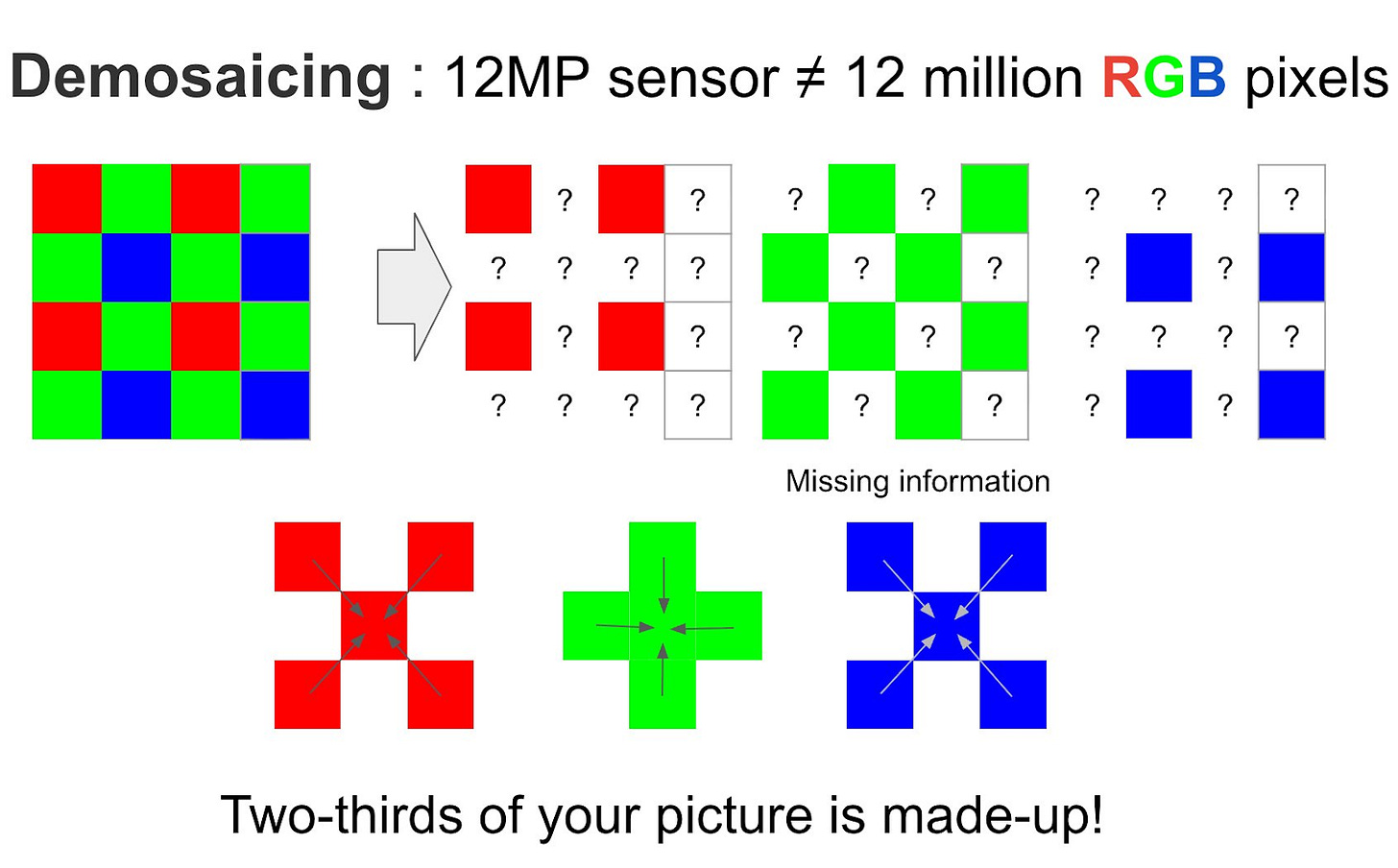
- Every ‘raw’ photo is sensor data passed through the phone’s image signal processor which reconstructs it into a usable image in milliseconds. Each pixel’s photodiode captures only one color channel, meaning two-thirds of the final image’s color is interpolated, not real. The Bayer color filter array introduced in 1976, uses a mosaic pattern—50% green, 25% red, 25% blue—to interpolate colors across neighboring pixels. The approach draws inspiration from the human eye’s cone cells, which are sensitive to short-, medium-, and long-wavelength light. The Mobile Computational Photography Tour is a great overview of the history of digital cameras and computational photography.
- One way to streamline demand for electric vehicle chargers and heat pumps in the future might be to bundle them together in a single installation. Mitsubishi Electric and EVHACS have announced a partnership on an integrated unit that combines an EV charger with a heat pump and air conditioner. The system uses a single installation and electrical connection for all three functions, with the intent of reducing total labor costs and smarter load balancing.
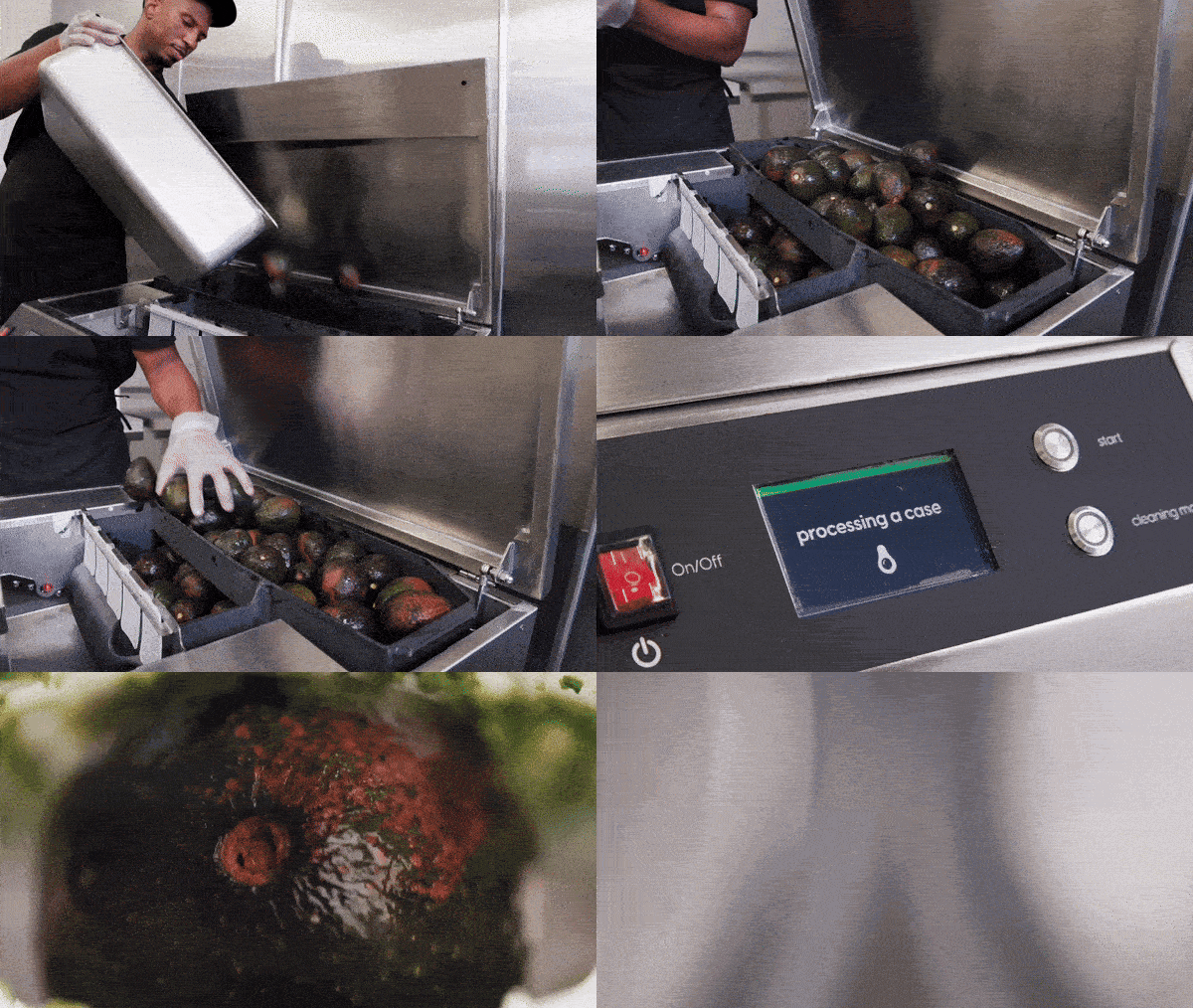
- At a Chipotle in Huntington Beach, an ‘Autocado’ machine automates the full process of cutting, coring, and scooping avocados for guacamole. More details here.
- A DIY build of a fake typewriter for a standard keyboard using three solenoids, some switches, and a dinging bell for the sheer joy of mechanical sound.
- A free online class on high-speed digital design from Eric Bogatin at CU Boulder, using the same base material he teaches in a full-semester graduate course.
A couple fun links:
We’re still looking to design cool t-shirts! If you can do old-school US graphics or 8-bit pixel design, email us.
Startup News 🚀
- The U.S. government will take a ~10% equity stake in Intel through an $8.9B investment, using a mix of CHIPS Act grants and $3.2B from the Defense Department’s Secure Enclave program. The deal marks an unprecedented step where Washington now owns a piece of the country’s largest domestic chipmaker. It’s meant to accelerate Intel’s stalled push into leading-edge fabs for AI and high-performance computing and to shore up domestic capacity at a time when advanced manufacturing is concentrated in Asia—regions seen as strategically vulnerable.
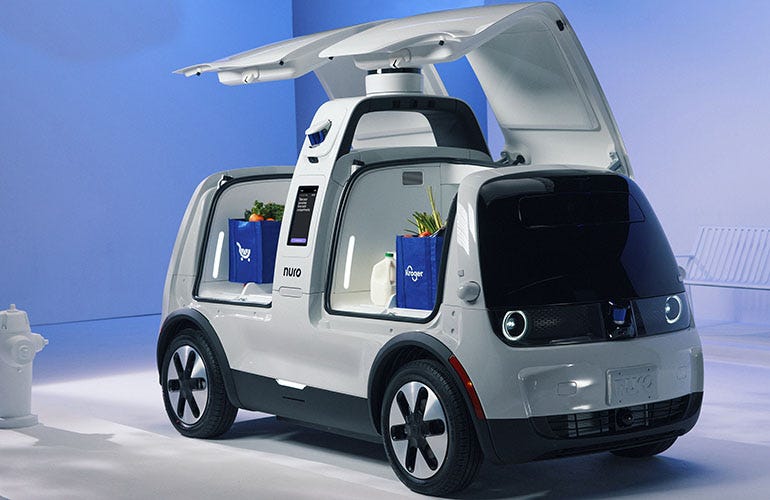
- Nuro closed a $203M Series E round at a $6B valuation, down from $8.6B in 2021. The company develops autonomous driving software and now focuses on licensing it to automakers and mobility providers after scrapping its own delivery fleet in 2024. The new funding supports commercial deployments including Uber’s planned robotaxi service using Lucid Gravity SUVs equipped with Nuro’s tech. Lead investors also conveniently include Uber and Nvidia (whose Drive AGX Thor platform underpins Nuro’s compute stack).
- Aalo Atomics raised $100M in a Series B funding to develop modular nuclear microreactors, with an initial prototype slated for 2026 at Idaho National Lab. The Aalo-X prototype will also include a colocated data center, though the company hasn’t detailed what makes it more than a pilot demonstration. Longer term, Aalo plans to deploy “Aalo Pods,” each bundling five Aalo-1 reactors feeding a single turbine to generate 50 MW of electricity. The round was led by Valor Equity Partners.
- New hardware startups in Y Combinator’s S25 batch:
- Normal is automating hardware certification and compliance testing (FCC, CE, UL).
- Nox Metals is building a software-driven metals supplier platform.
- F4 generates automated compliance checks for engineering drawings (GD&T, ASME/ISO).
- Group14, a startup developing silicon anodes for lithium-ion batteries, raised $463M in a Series D funding. The company is scaling production at its Korea plant while pushing back its Moses Lake facility to 2026. Its silicon anode material aims to increase energy density and reduce charging times in EVs, consumer devices, and grid storage. Lead investors include SK Inc. and Porsche Ventures.