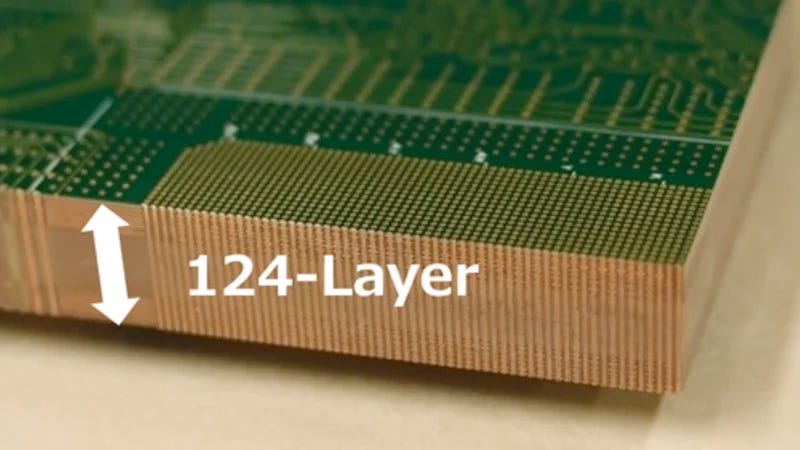
In the world of PCB stackups, a new record has been set with a 124-layer board - the highest commercial layer count achieved without exceeding the standard 7.6 mm thickness. To put that in perspective: consumer devices usually land between 2 and 4 layers, enough to handle basic routing and simple power distribution. Industrial and networking gear bump that to around 6–12 layers, balancing signal integrity, noise control, and multiple power domains. High-performance boards, like those in AI accelerators, aerospace electronics, or wafer-level semiconductor testers, regularly exceed 20 layers, where the PCB itself is integral to electrical performance, thermal management, and ultra-dense routing requirements.
If you didn’t know, roughly 70% of Raspberry Pi’s customers today use the board for industrial automation, with only about 30% for education and hobbyist use. This literature review covers the broad applications a Raspberry Pi is now used in industry, from industrial automation to monitoring systems and specialized verticals. The number feels high but checks out: the hardware checks enough boxes for many industrial use cases and the documentation + software support beat most legacy automation vendors.
Note: For true industrial use, there’s also the Revolution Pi that repackages the Raspberry Pi Compute Module for the DIN rail (standard mounting system in control cabinets). It adds 24 V power input, modular I/O, galvanic isolation, and meets the same standards used by PLCs.
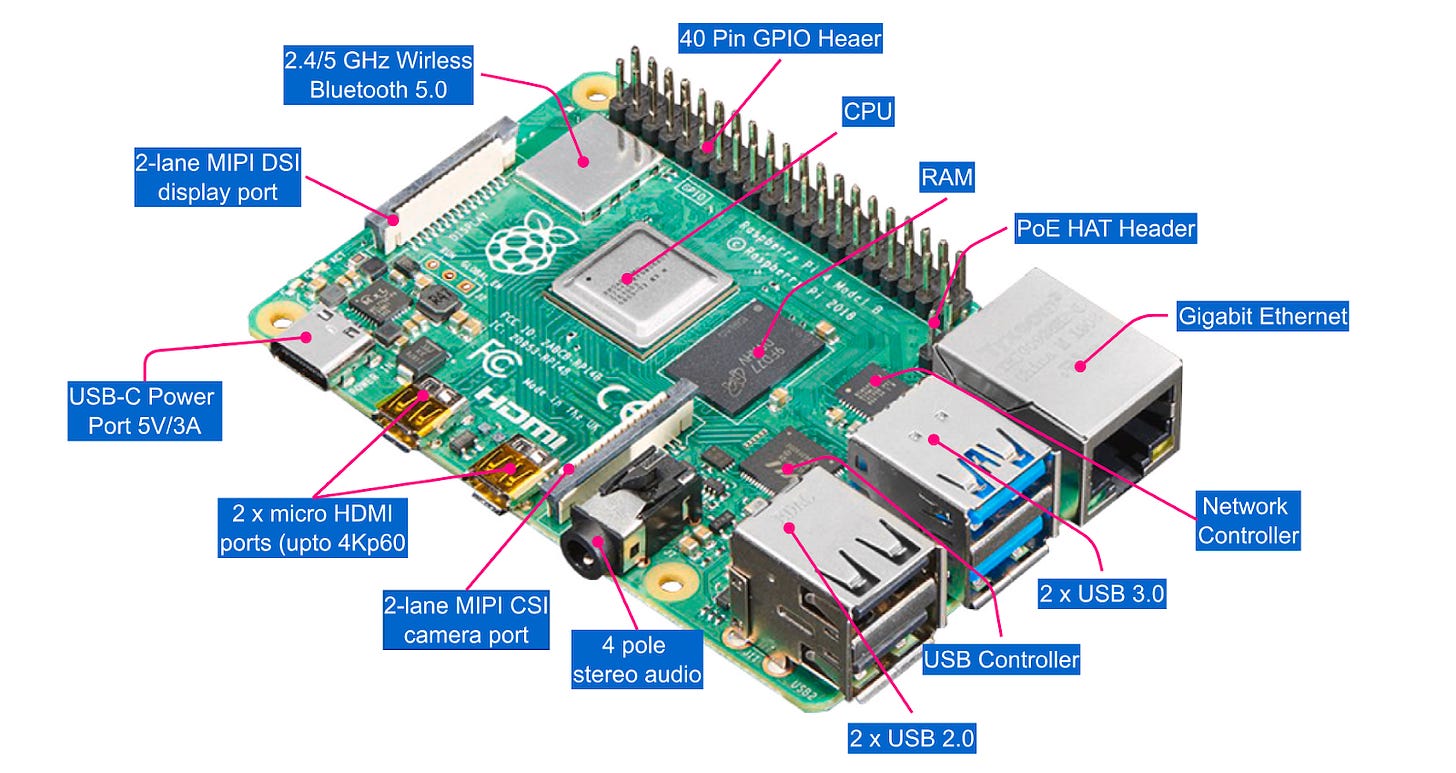
Standard Components in a Raspberry Pi
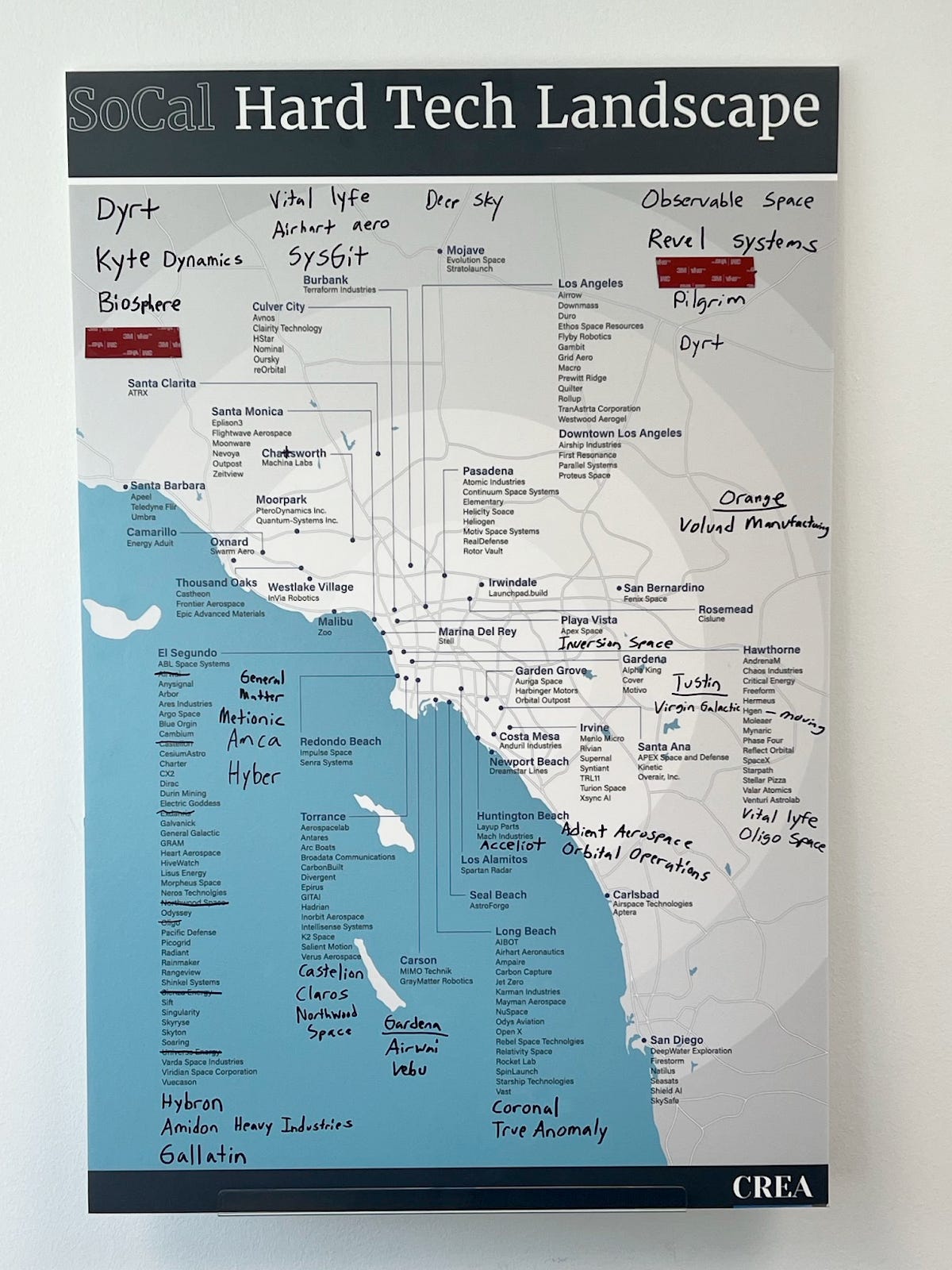
A map of every emerging hard tech. startup in Southern California. The region has the feel of late-20th century Silicon Valley, where startups cluster in the same few zip codes stacking on top of each other. Cities become magnets for talent, and the more talent they pull in, the stronger the pull gets.
Some backstory: the map comes from a local real estate agent who leases office space to companies in the area. He updates it monthly as part of his commercial real estate newsletter, which surprisingly, is a pretty fun read!
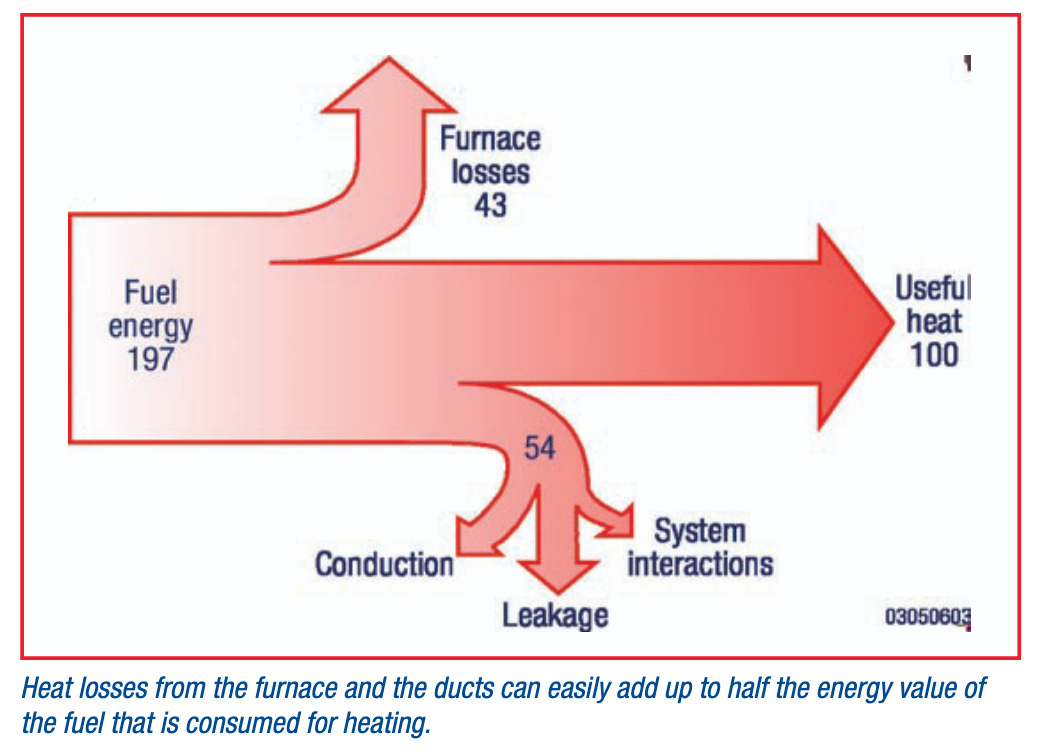
In hot climates and during extreme weather, heating and cooling can drive over half of peak electricity demand and duct losses make the problem worse. According to the NREL: “Typical systems with ducts in attics or crawl spaces lose from 25% to 40% of the heating or cooling energy that passes through them”. Most of that loss comes from two things: air leaking through cracks and joints, and heat conducting through the duct walls. It's one of the main reasons ductless heat pumps have taken off. They may seem counterintuitive (multiple units instead of one central system) but by cutting out the ducts entirely, they avoid one of the biggest inefficiencies.
A couple fun links to round out the week:
This is a mechanical egg sorter: eggs roll down a track and trigger weight-sensitive levers that drop them into bins based on mass.
Neuralink's A Year of Telepathy is an interesting read about how three paralyzed patients used its brain-computer interface for 4,900+ hours over 670 days. One now designs 3D models in CAD, another controls a robotic arm, and the third regained full digital independence (browsing, typing, and gaming) using only their thoughts.
Startup News 🚀
Reflect Orbital raised $20M in Series A funding to accelerate the development of their satellite constellation, designed to reflect sunlight to solar farms on Earth after dark. The company’s initial satellites will deliver illumination around 0.1 lux (roughly the brightness of a full moon) with plans to scale to noon-level intensity as the constellation grows. The long-term goal is to extend solar farm operating hours by reflecting sunlight just before dawn and after dusk. Interestingly, while Reflect’s long-term vision is energy infrastructure, most early interest has been for basic nighttime lighting, from events to emergency response. The round was led by Lux Capital, with participation from Sequoia Capital and Starship Ventures.
Note: it’s wild how fast things move with fresh capital especially in hot sectors. We last covered Reflect’s $7.6M raise from Sequoia in September 2024 (Issue #100).
InfinitForm raised $12.7M in seed funding to accelerate development of its generative AI platform which optimizes CAD models for manufacturability. The tool helps engineers create manufacturable, cost-efficient CAD models by optimizing part geometry for real-world processes like CNC machining and injection molding. The round was led by Schematic Ventures.
Cofactr has made its second acquisition of the year, this time acquiring Cogbase: a supplier search and vetting tool that automates the process of finding U.S. based vendors from part drawings and specs. The acquisition expands Cofactr’s sourcing capabilities, giving manufacturers access to over 450,000 suppliers and reducing the time it takes to replace vendors.
A bit late but still worth sharing: Rainmaker raised a $25M Series A round to expand its drone-based cloud seeding platform. Instead of manned aircraft, they use autonomous UAVs to disperse silver iodide and custom radar systems to measure the effect (reflectivity, particle shape, ice nucleation). Their system combines atmospheric data from sources like NEXRAD and satellite feeds with flight ops and forecasting tools into one platform. The system is already in use by state water agencies in Utah and Colorado, cities in California and Texas, and a confidential Middle Eastern government partner. The round was led by Lowercarbon.
OroraTech, a Munich-based startup, raised $40M in a Series B extension round to scale its wildfire forecasting platform. The company operates a constellation of ten thermal imaging satellites to generate persistent heat data and build a wildfire digital twin of Earth. This allows for earlier detection, better monitoring, and more accurate modeling of fire behavior at global scale. The round was led by BNP Paribas Solar Impulse Venture Fund.