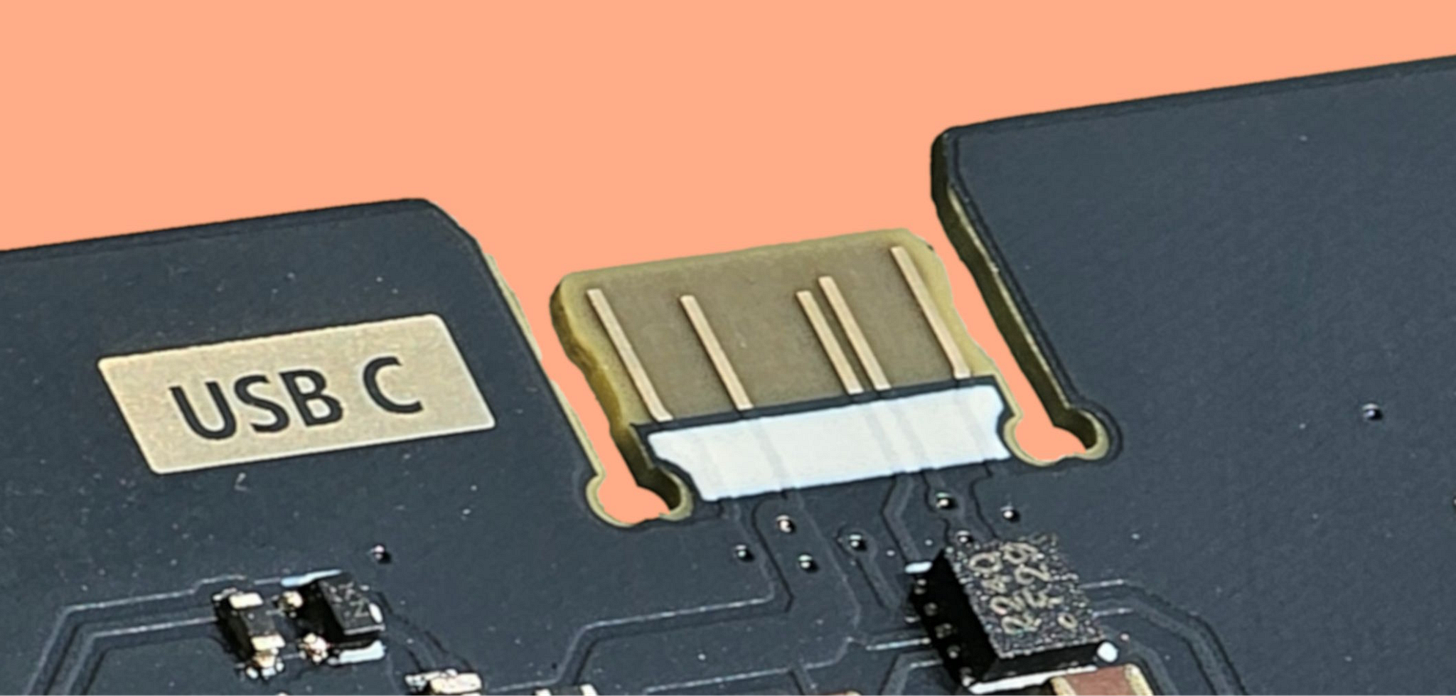
The simplest connector is no connector at all: just a USB-C edge on the board itself. Most boards default to 1.6 mm thickness, but this setup requires a board thickness of 0.8 mm to fit a standard USB-C receptacle. Edge connectors are also common in PCIe and other card interfaces, but even with gold plating (ENIG) they’re typically rated for only about 50 insertion cycles. The GitHub repo. has a great set of test photos showing mating cycle wear and bend failures. Best suited for low-cycle ports like debug, test, or anything you’ll only plug in a few times.
A quick heuristic to estimate the true cost of a part from raw material and manufacturing labor is theIdiot Index, simply defined as the cost of a part or finished product divided by cost of its component raw materials at commodity level. It’s a useful metric for finding hidden ‘parasites’ in a design. For example, a $1,000 part made from $100 of aluminum should raise questions around cost buried in machining complexity, assembly time, or over-spec’d tolerances.
Raw material prices for common metals can be found in sources like the World Bank’s Pink Sheet, which also lists foods like bananas and cocoa if you want to check whether you’re getting overcharged at the grocery store.
For electrical measurement and troubleshooting, Multimeters 101: Basic Operation, Care and Maintenance and Advanced Troubleshooting for the Skilled Trades is one of the most approachable introductions out there. It walks through how to actually use a multimeter (measure voltage, current, resistance, continuity) and how to use meters to analyze circuits. The trick to effectively troubleshooting electrical equipment and circuits is to zero in as quickly as possible on the problem. Using a multimeter will allow you to effectively test the components that are most likely causing of the problem before you unnecessarily dismantle the equipment and replace parts.
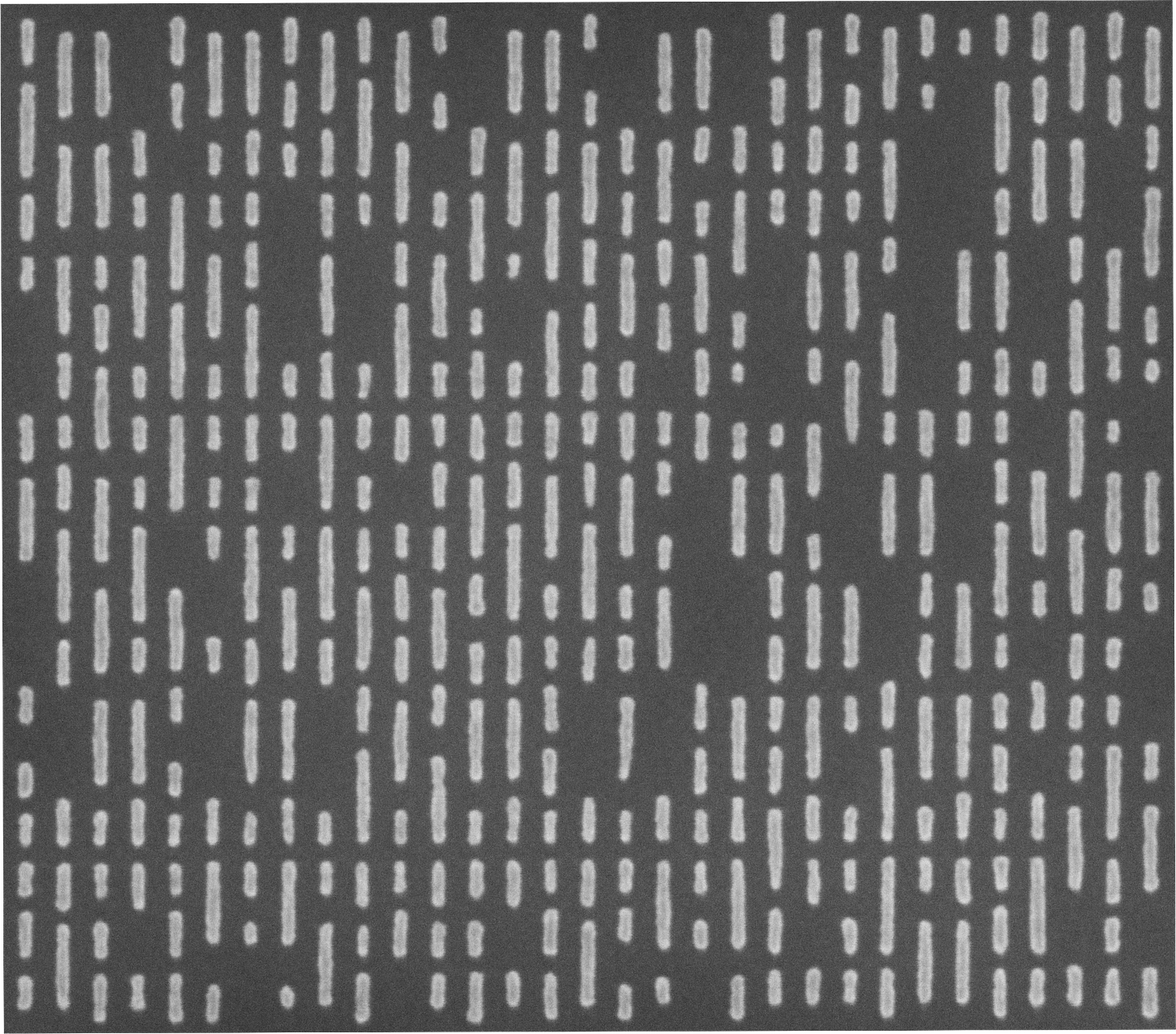
SemiAnalysis has a great piece on how ASML’s near-monopoly in advanced chipmaking could finally be challenged. For the uninitiated, ASML’s machines use extreme ultraviolet (EUV) lithography, firing lasers at tin droplets to produce 13.5 nm light that’s bounced off near-perfect mirrors to etch transistor features on silicon. Each system runs in vacuum, relies on multilayer mirrors and masks, and often needs multiple exposures (multi-patterning) to reach 2 nm nodes. Substrate’s X-ray lithography (XRL) tool aims to skip that optical stack entirely: X-rays don’t refract, eliminating precision mirrors, and could enable single-pass exposure per layer. The company claims comparable resolution to ASML’s next-gen “high-NA” EUV tools at roughly one-tenth the cost, but none of this is independently verified and questions remain around mask durability, overlay precision, and throughput. More on the history of XRL in Vik’s Newsletter.
A 12 nm contact array printed with 13 nm spacing from Substrate
The seven phases of the internet is an interesting look at how the internet has evolved in the past and how it may evolve in the future. The internet began as a “network of networks,” linking early research systems through shared protocols that made data reliably flow between them. TCP/IP provided the common language, introducing the basic ideas of packet routing, error correction, and congestion control that still underpin it today. Phase two was the mobile internet, driven by RF advances and efficient chipsets that made the app economy possible. Phase three, the internet of things, embedded billions of low-power chips into industrial and consumer devices. We now stand in phase four known as the Internet of AI agents, where autonomous systems (both digital and physical) collaborate and make decisions across networks instead of just transmitting data.
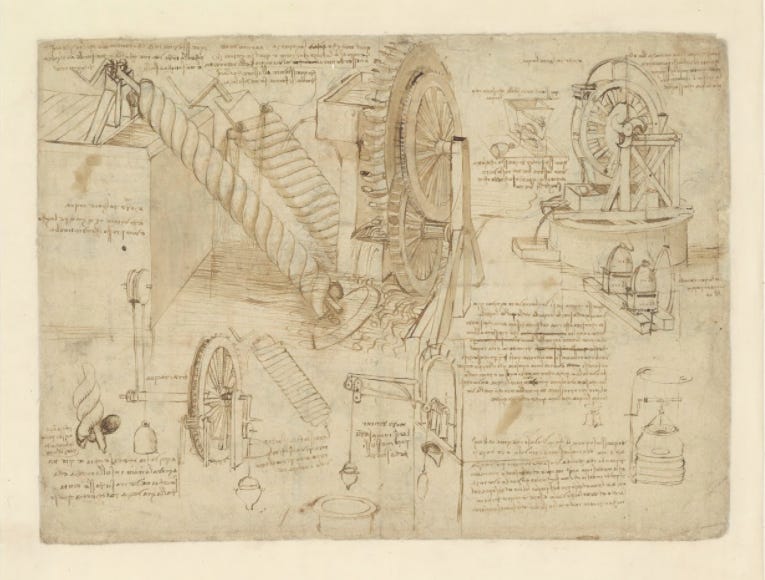
A full digital archive of Leonardo da Vinci’s Codex Atlanticus is available online, covering four decades of sketches and notes across his studies in engineering, anatomy, mathematics, and science. The codex categorizes his work by subject, with detailed studies of mechanisms and early machines.
A couple fun links to round out the week:
We’ve made plenty of market maps before, but FirstMark’s AI Landscape might be the densest map that covers every imaginable vertical, layer, and subcategory across AI.
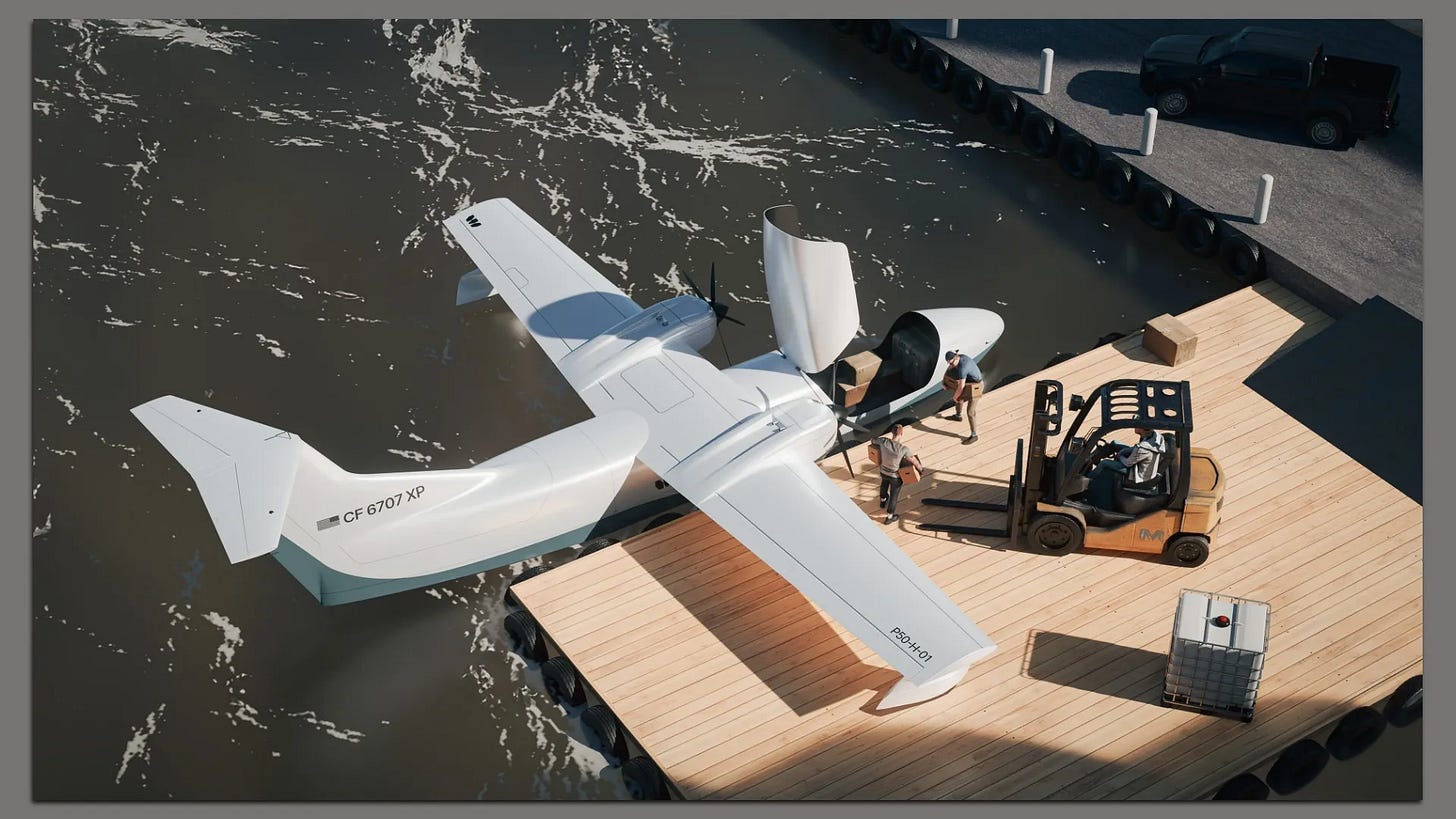
Poseidon Aerospaceraised $11M in seed funding to develop unmanned cargo aircraft platforms optimized for heavy-lift missions. The funding will support manufacturing of the Egret and Heron models, scalable production in a new facility, and enhancing logistics for commercial and defense applications in remote environments. The round was led by Tamarack Global
Adam raised $4.1M in seed funding to expand its AI-driven CAD platform for conversational design of mechanical components. The funding will support improvements in spatial reasoning, hiring across AI and engineering, and development toward professional-grade workflows. The round was led by TQ Ventures.
Valar Atomics raised $130M in a Series A round to advance its nuclear reactor technology. The funding will support mass manufacturing of small modular reactors designed for clustering at gigasites aimed at providing scalable power for AI data centers and industrial manufacturing. The company is currently constructing its first Ward 250 reactor in Utah to demonstrate 100 kW of thermal energy production. The round was led by Snowpoint Ventures and co-led by Day One Ventures and Dream Ventures.
Neros raised $75M in a Series B funding to scale production of its FPV drone systems and strengthen a sovereign supply chain. The funding will support expansion of its Archer platform, insource key manufacturing steps, and advance R&D for next-generation autonomous systems. Neros builds military-grade drones and has shipped thousands of units to Ukraine and the U.S. military. The company was recently selected for the U.S. Army’s Purpose-Built Attritable Systems program. The round was led by Sequoia Capital.
Terranova raised $7M in seed funding to develop terraforming robots that elevate land to prevent flooding. The funding will accelerate deployment of modular autonomous vehicles capable of injecting wood slurry underground, lifting an acre by roughly a foot per day. Costs start around $50K per acre-foot for new development and wetland restoration (rough napkin math), offering a faster and lower-cost alternative to sea walls. The round was led by Outlander VC and Congruent Ventures.