

Good morning, and welcome to the second week of December! This issue covers a mapped view of the payload stack from SpaceX’s recent Transporter mission, a primer on Blanchard grinding, SSD data-retention limits, Finland’s heat-recovery model, and a few systems-engineering notes.
Interesting Links 🏭
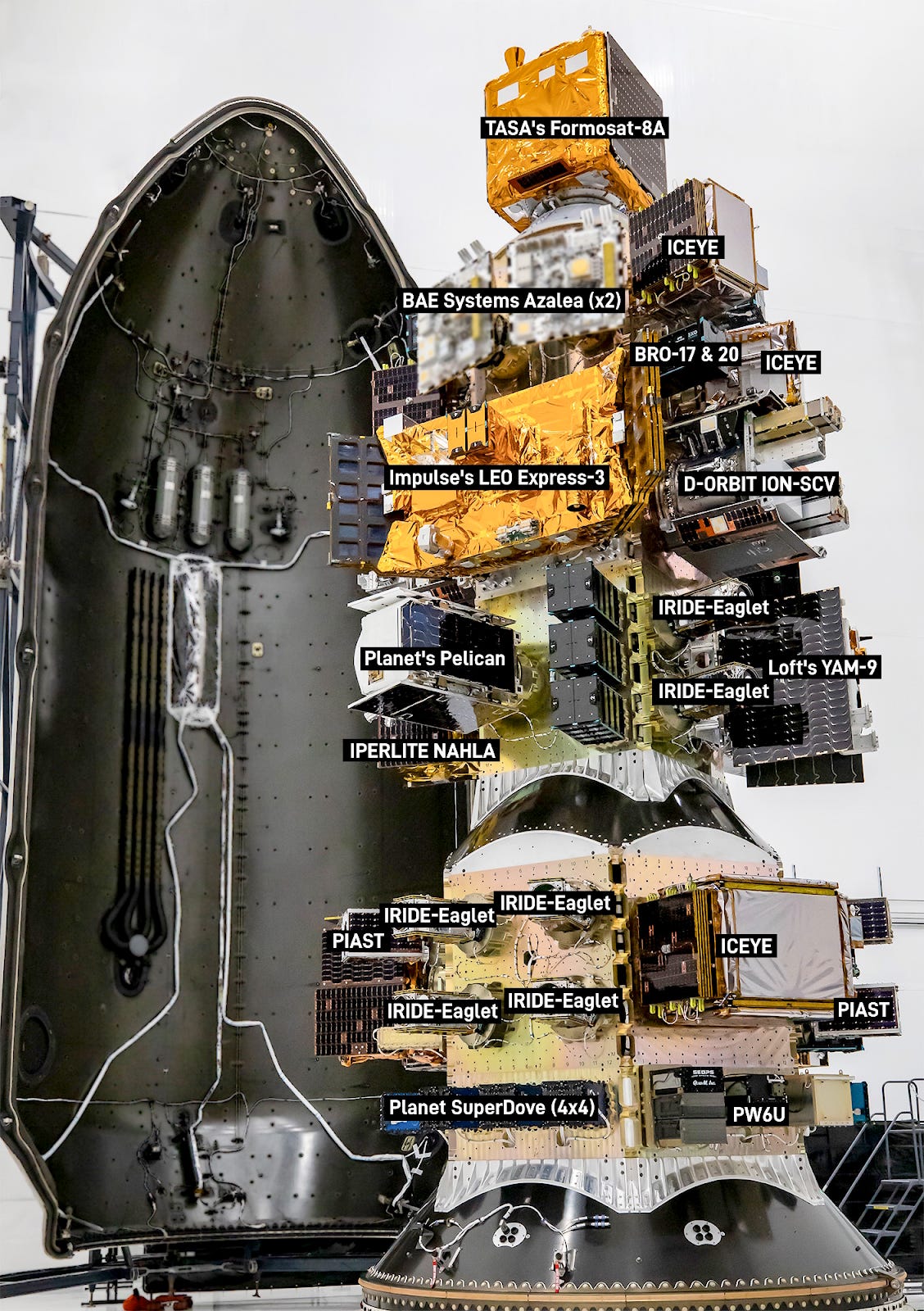
- SpaceX’s most recent Transporter flight carried 140 satellites, and a user on X mapped the visible payload stack in detail. The rideshare population is a mix of Earth-imaging satellites, small national programs, and a few “space tugs” that carry other satellites to custom orbits. Higher up sit larger Earth-observation payloads like Formosat-8A, while the mid-deck is a dense mix of commercial SAR satellites, radio-sensing spacecraft, and a few orbital-transfer buses. The lower rings carry Planet’s imaging satellites alongside clusters of European and Asian cubesats. It’s a neat snapshot of how varied modern rideshare payloads have become once everything is stacked together.
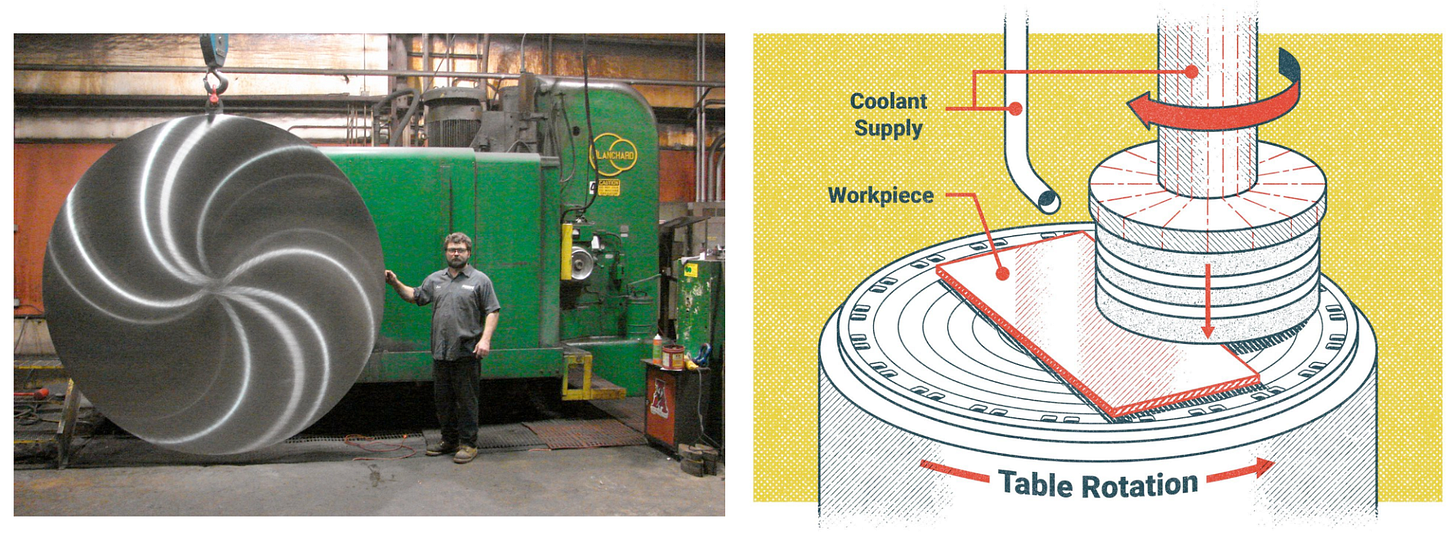
- Blanchard grinding is a rotary surface-grinding process built for high material-removal rates on large, flat parts, and its signature crosshatch finish is simply the machine’s motion made visible. A vertical spindle with an abrasive wheel grinds the workpiece on a rotating magnetic chuck, sweeping the entire surface under a uniform abrasive load. As the wheel feeds down and the table turns, broad overlapping passes remove stock quickly. Typical tolerances land around ±0.002” on dimensions and ±0.002” flatness or parallelism per foot; common applications include large castings and forgings, plate stock, and mold or die blocks.
- If an SSD sits unpowered, how long will the data last? Solid-state drives store data as charge in billions of tiny transistors and when powered, the controller refreshes weak cells and corrects drifting bits with ECC; unpowered, none of that happens, and charge gradually leaks through the oxide, shifting voltage levels until bits flip. Consumer SSDs typically use TLC (three bits per cell) or QLC (four bits per cell) NAND, where packing more bits into each cell narrows the voltage margins and makes the stored charge more sensitive to drift. In practice, those drives are rated to retain data safely for ~1–3 years at room temperature (lightly-worn drives often exceed that rating), with retention dropping faster as the drive ages or if it has seen heavy write/erase cycling.
- Also of interest: a long-running empirical test showed fresh drives held their data while worn drives degraded and lost files.
- Finland is pioneering a clever pivot in data center design by channeling waste heat from general compute workloads into its district-heating network. The system sits inside Helsinki’s 50-meter-deep tunnel infrastructure, where heat pumps take the warm water coming from the data centers, raise it to district-heating temperatures, and feed it into the citywide loop. The cooled water then returns to the data centers, letting operators avoid major cooling-system capex while turning waste heat into a usable resource. Today the partnership supplies heat for ~1,500 homes; still small in scale, but a meaningful demonstration.
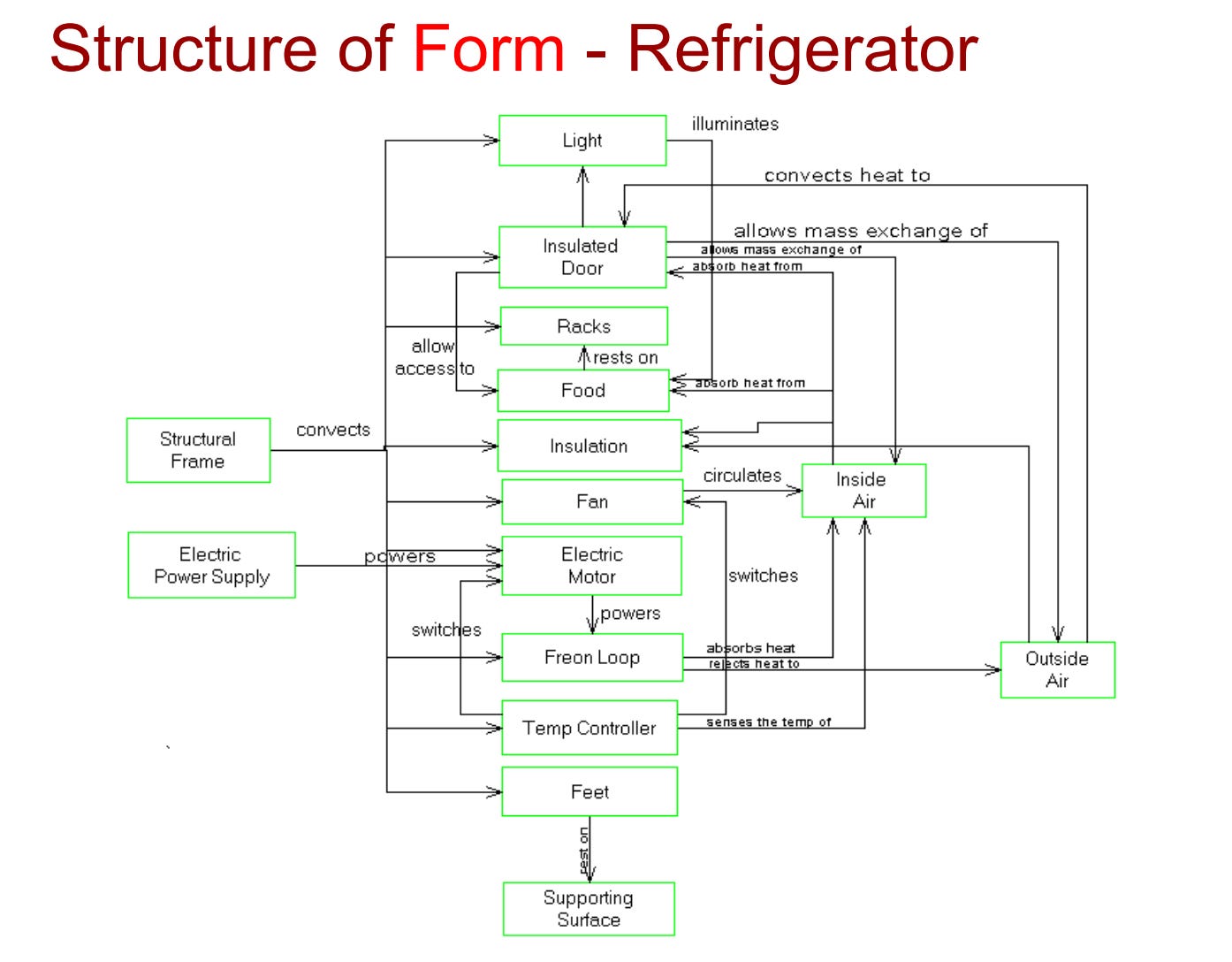
- More from this weekend’s issue on systems engineering, drawing on lecture notes about system architecture and concept generation. Managing complexity is the decomposition of function and form — case in point, a refrigerator.
- A couple fun links to round out the week:
- KiDoom by Michael Ayles runs the original DOOM engine inside KiCad’s PCB editor. Walls become copper traces, demons are QFP-64 footprints, and ammo packs appear as SOT-23-3 transistors.
- A short essay on writing as scaffolding for a wandering mind; structure for the unstructured, and a practical tool for thinking more effectively.
Startup News 🚀
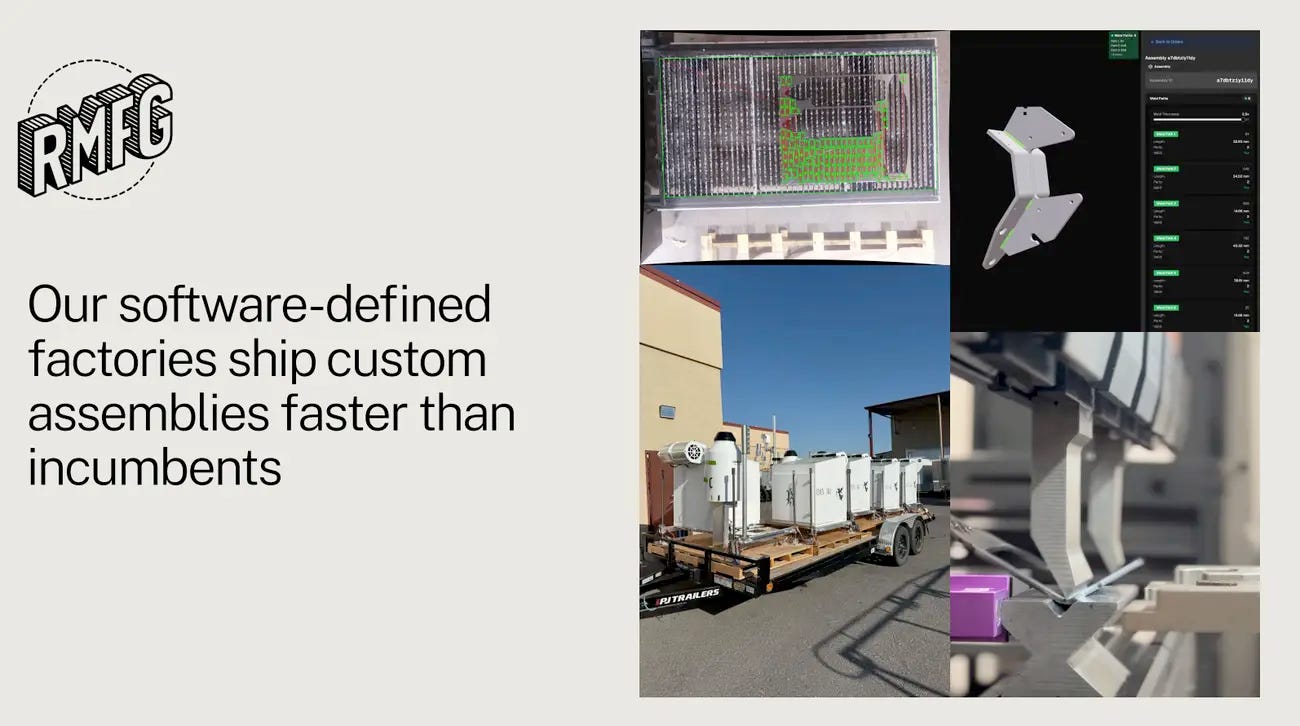
- RMFG raised $4.5M in pre-seed funding to build an AI-powered sheet-metal factory. The Dallas–Fort Worth facility uses AI agents for quoting, automated quality checks, and on-the-fly design adjustments, which together significantly cut lead times and enabled the company to ship 100,000+ parts last year to ~200 customers. The company is positioning itself as a domestic alternative for startups that want to avoid the cost of building in-house capacity or the security risks of overseas manufacturing, with early demand concentrated in the fast-growing robotics sector. Y Combinator, Day One Ventures, and Soma Capital backed the round alongside several notable angel investors.
- Quilt raised $20M in Series B funding to scale production of its consumer-focused ductless heat pumps and develop additional home energy products. The company has delivered roughly 1,000 units, expanded sales from the Bay Area to 16 U.S. states and five Canadian provinces. The company is positioning itself as the design-forward, software-native alternative to legacy HVAC manufacturers, with growing demand from local home-services installers who now deploy most units. Galvanize and Energy Impact Partners co-led the round.
- Castelion raised $350M in Series B funding to mass-produce its Blackbeard hypersonic missile. Plans include integration with U.S. Army and Navy platforms, construction of a 1,000-acre New Mexico factory, and high-rate testing starting in 2026. The company produces solid rocket motors, seekers, and thermal protection systems to deliver thousands of low-cost missiles annually with dramatically shorter design-to-field timelines. Altimeter Capital and Lightspeed Venture Partners co-led the round.
- Reditus Space raised $7.1M in seed funding to build ENOS, a reusable orbital reentry vehicle for microgravity research and in-space manufacturing. The 13-person team is finishing the spacecraft roughly 18 months after founding and will debut it on a SpaceX rideshare next summer, carrying a 40 kg pharmaceutical microgravity payload for a two-month orbital mission before atmospheric reentry and splashdown off Florida. The company is positioning the orbital vehicle as a fast-turnaround alternative to ISS-style research access, with a roadmap toward 20+ flight lifetimes and larger future vehicles. The round included participation from Y Combinator and Antler, with no designated lead investor.
- Unlimited Industries raised $12M in seed funding to develop an AI-native platform that automates end-to-end design, engineering, and fabrication for data centers, power plants, and mining facilities. The system compresses project timelines from months to days by eliminating design fragmentation and change orders, targeting rapid deployment of energy and critical-minerals infrastructure. The round was co-led by Andreessen Horowitz and CIV.