

Topics worth your time: an insider's account of how Tesla built its residential energy business through 'vertical' integration, the six DOF interface behind intuitive CAD work, why product testing uses articulating fingers and acoustic heads, and the Falkirk Wheel’s counterbalanced canal lift.
Interesting Links
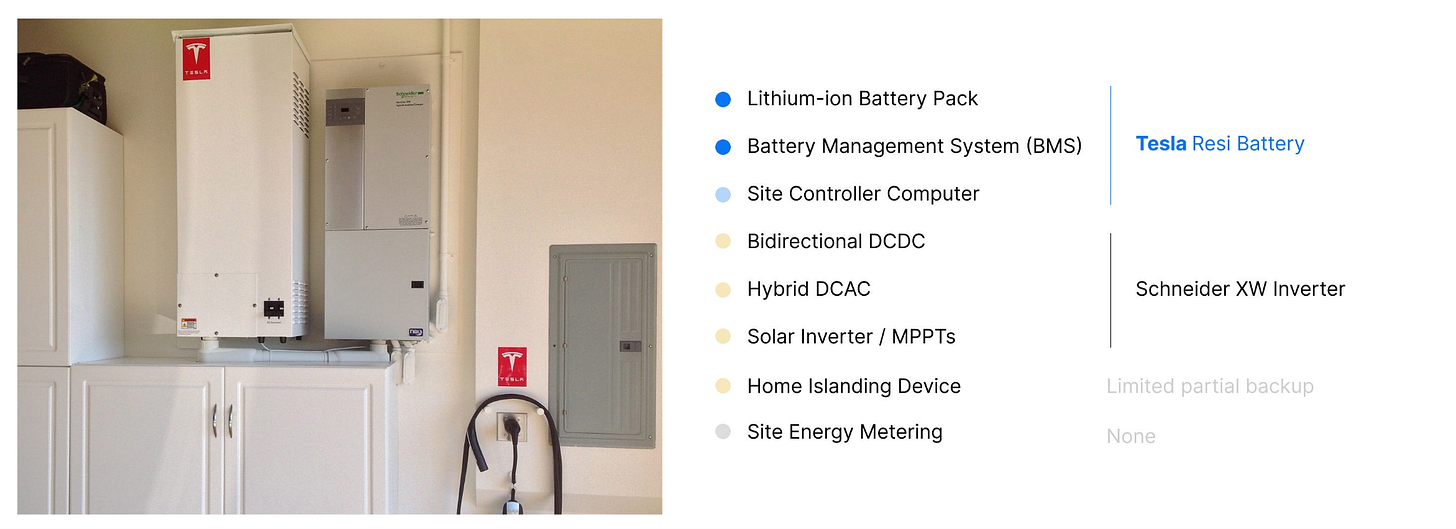
- An insider’s account of the buildout strategy behind Tesla’s residential energy business from two early Powerwall engineers. For all the talk around vertical integration, many enduring platforms began as OTS components patched together into a working system. In 2012, Tesla’s residential energy effort began with a California Energy Commission grant and a simple thought exercise: could EV battery modules supply backup power through a home’s electrical system? What follows is a product journey that’s not about vertical integration as an opening strategy, and more about using each development iteration as fast strategic steps. The first iteration, ‘Resi,’ combined modified Model S battery modules, a basic BMS, and a Schneider XW 4048 inverter/charger designed for 48 V lead-acid banks rather than EV cells. Instead of building an inverter (and pushing time to launch), Tesla added a small controller between the two that read the battery’s limits and adjusted the Schneider accordingly. Each later version then pulled in another layer exposed in the field — solar compatibility, metering, controls, installation — and by the sixth generation, nearly the whole system had moved in-house. Small important steps, each compounding over time.
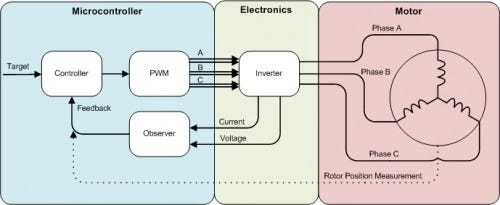
- For related reading on the role of the inverter in residential battery storage systems, Steinmetz’s primer on motor controllers and inverters explains the same class of power electronics from the EV side. Batteries are DC devices, but few of the things we want batteries to power can use that DC directly; a house expects stable 120/240 V AC, and a brushless motor needs three-phase AC current that changes with the rotor. The job of the inverter is to handle the DC-to-AC conversion, and a motor controller is the broader term for a device that controls motor actuation (current sensing, phase current control loops, etc.), though the terms are often used interchangeably. Useful reading for anyone working around battery systems.
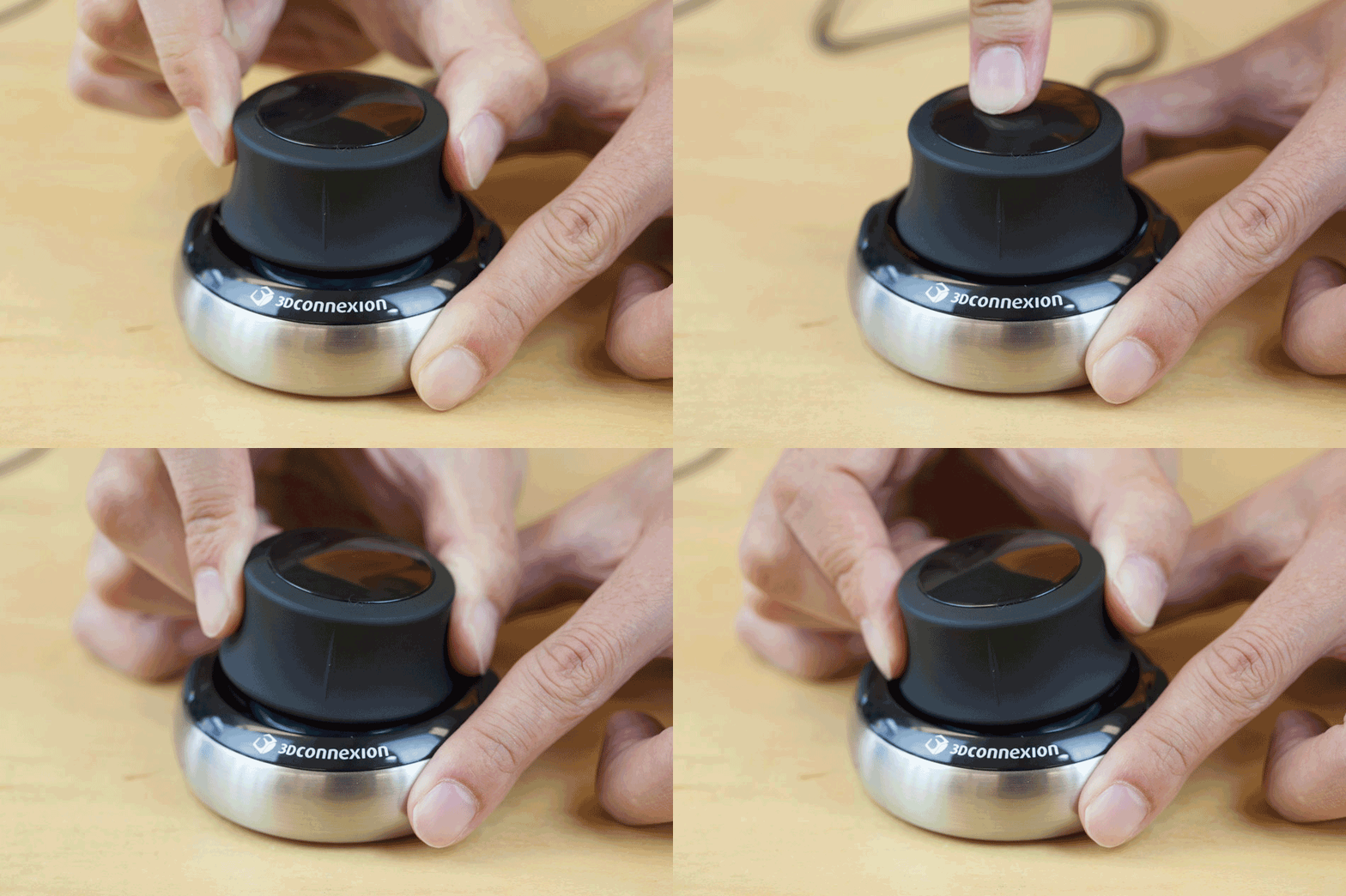
- Learning CAD, or any new skill, first feels like a set of memorized commands. Over time, those commands then converge into a recognized intuition. And for the best intuitive control of a model in space, CAD power users use an input device known as the SpaceMouse. This open-source build is a useful look at what sits inside and the operating philosophy behind how to use it. The small puck gives the user six degrees of freedom to move the camera (three translations, three rotations) and acts as a physical analogue for the model - push it forward/backward to zoom in and out, tug it up/down to translate vertically, or twist left/right to rotate around it. Commercial models use an optical sensing system built on the same principle; two PCBs mounted between three springs, one fixed at the base and the other free to move. A slotted plastic piece moves between six LEDs and light meters, and the resulting pattern of interrupted light tells the controller how the puck has moved.
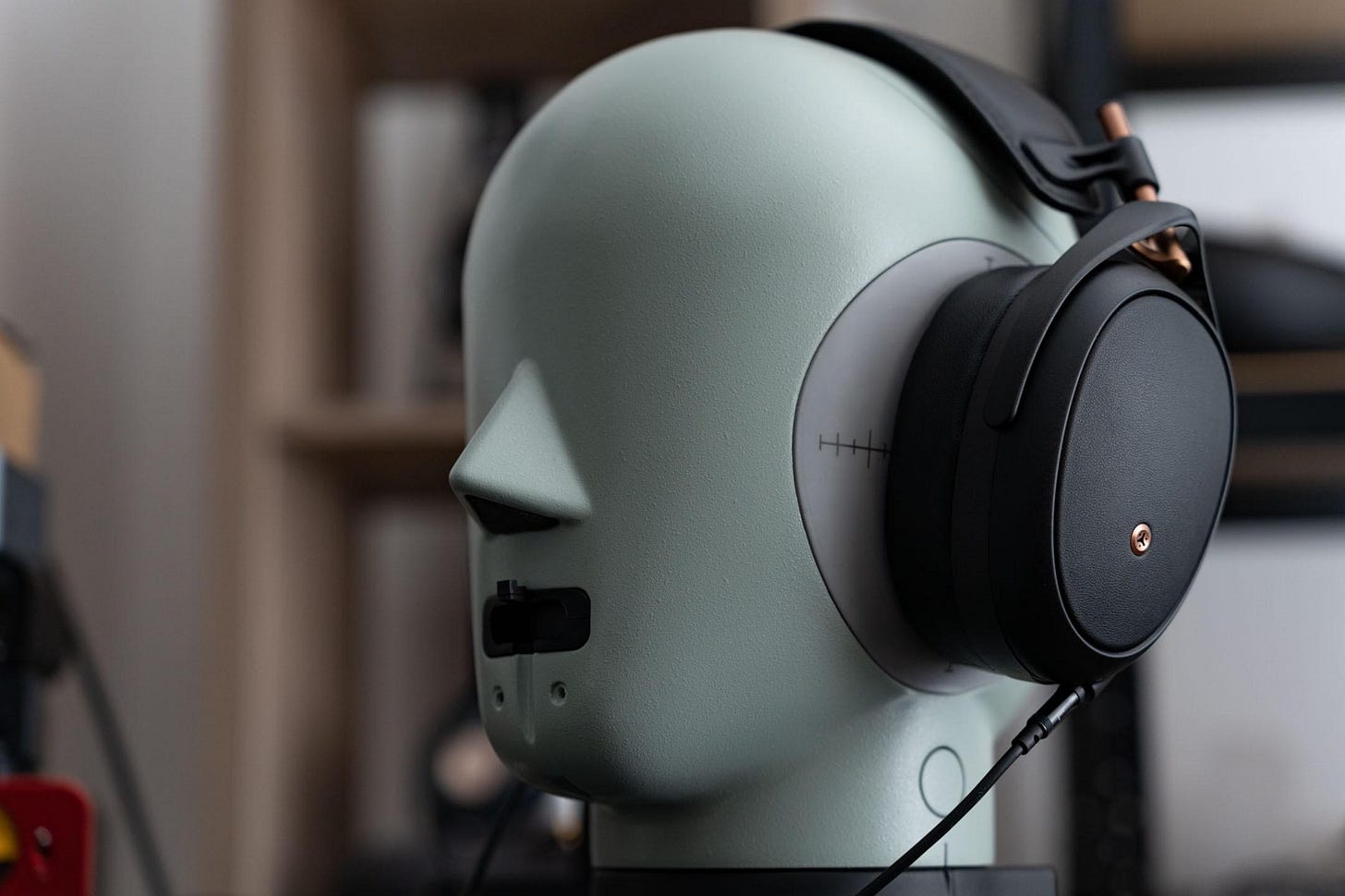
- Product testing contains an enormous catalog of very specific worries. Some become UL requirements; others become standardized test equipment. Articulated finger probes like the ULP20, for example, are used to check whether a “human finger” could touch a live electrical part. There's even more anatomically correct equipment, like the B&K 5128 acoustic test head used for audio testing. Engineers can mount headsets (earbuds or headphones) to it and measure the frequency response, distortion, channel matching, and isolation at the simulated ears. By no means is it meant to capture how a headset will sound to every listener. Instead, it reproduces the acoustic load consistently enough that two tests, or two designs, can be meaningfully compared.
- Canal locks are water-filled chambers that raise or lower boats between sections of canal at different elevations. While boat lifting locks have largely converged to the Pound Lock, the Falkirk wheel is a one of a kind rotary boat lift. It replaced 11 sequential locks, and only uses 1.5 kWh (about 1/9 of a gallon of gas) to complete a rotation. Because of its symmetry, the prior lift is used as a counterweight to displace all load except the boat. The early designs were completed by using a Lego helicopter model kit and modifying it. See here for a more detailed overview of many other styles of Locks.
- And a couple fun links to round out the week:
- StartUp Podcast is probably our favorite podcast of all time. The first season follows Alex Blumberg building Gimlet Media, a podcast production company, eventually acquired by Spotify.
- Using a forklift as external fixturing during CNC ops.
Startup News
- Atoms, Travis Kalanick’s robotics company, has raised a $1.7B funding round led by a16z to build a robotics platform targeting heavy industry and mining. Atoms is a rebranded holding company built on Kalanick’s CloudKitchens business; in March, it acquired Pronto, the heavy-industry automation company run by former Uber executive Anthony Levandowski. Few details have been shared on the company’s plans, but has described an ambition to build a “wheelbase for robots” and expand into industries including mining.
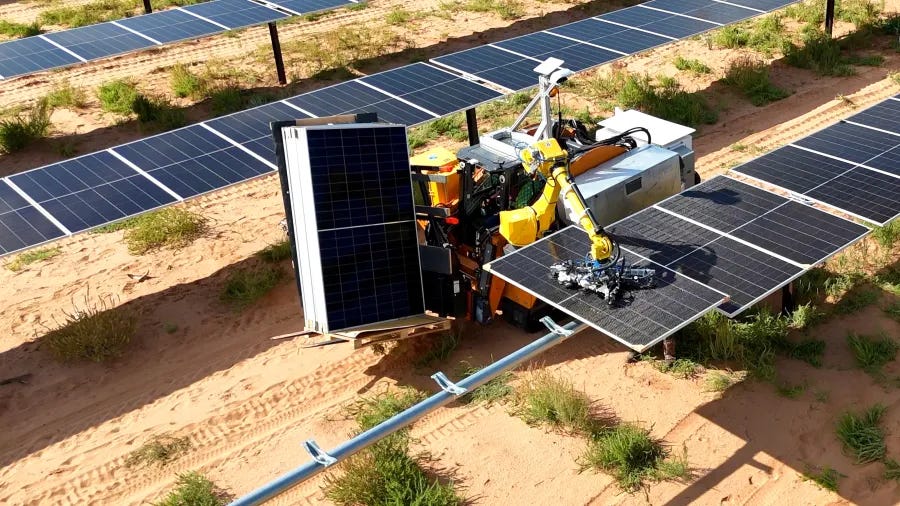
- Gritt raised a $26M Series A to automate solar-panel installation, bringing total funding to $32M. The company uses AI software with off-the-shelf skidders and robotic arms to move and position panels, helping an eight-person crew install 3,000–4,000 panels per day compared to ~800 manually.
- Humanoid raised a $152M Series A for its wheeled humanoid robots, becoming Europe’s first humanoid robotics unicorn. Unlike bipedal humanoid startups, Humanoid is building a wheeled platform for factory and logistics work; Bosch will manufacture the robots, while Schaeffler has agreed to deploy thousands across its manufacturing facilities.
- Sila secured $300M in private funding to expand U.S. production of its silicon-carbon battery anodes at its Moses Lake, WA facility. Sila’s silicon anodes offer 20–40% higher energy density than conventional graphite, and the facility is designed to scale from 2 GWh of annual capacity to as much as 250 GWh over the next five years.
- Antares Nuclear raised a $470M Series C to build microreactors for U.S. military bases. The company is one of three finalists in the Pentagon’s Advanced Nuclear Power for Installations program. The round was led by Paradigm and Caffeinated Capital.