

A lot of this newsletter is curation, which mostly means reading, sorting, and deciding what’s worth surfacing. This week I wanted to try something a little different and let the issue follow a few intellectual curiosities more directly. The result is a varied but related set of themes: smart glasses as a consumer product still constrained by optical manufacturing, air conditioning as development infrastructure, and an old educational topic that engineers tend to learn once, forget, and relearn in practice. Enjoy the read!
Interesting Links
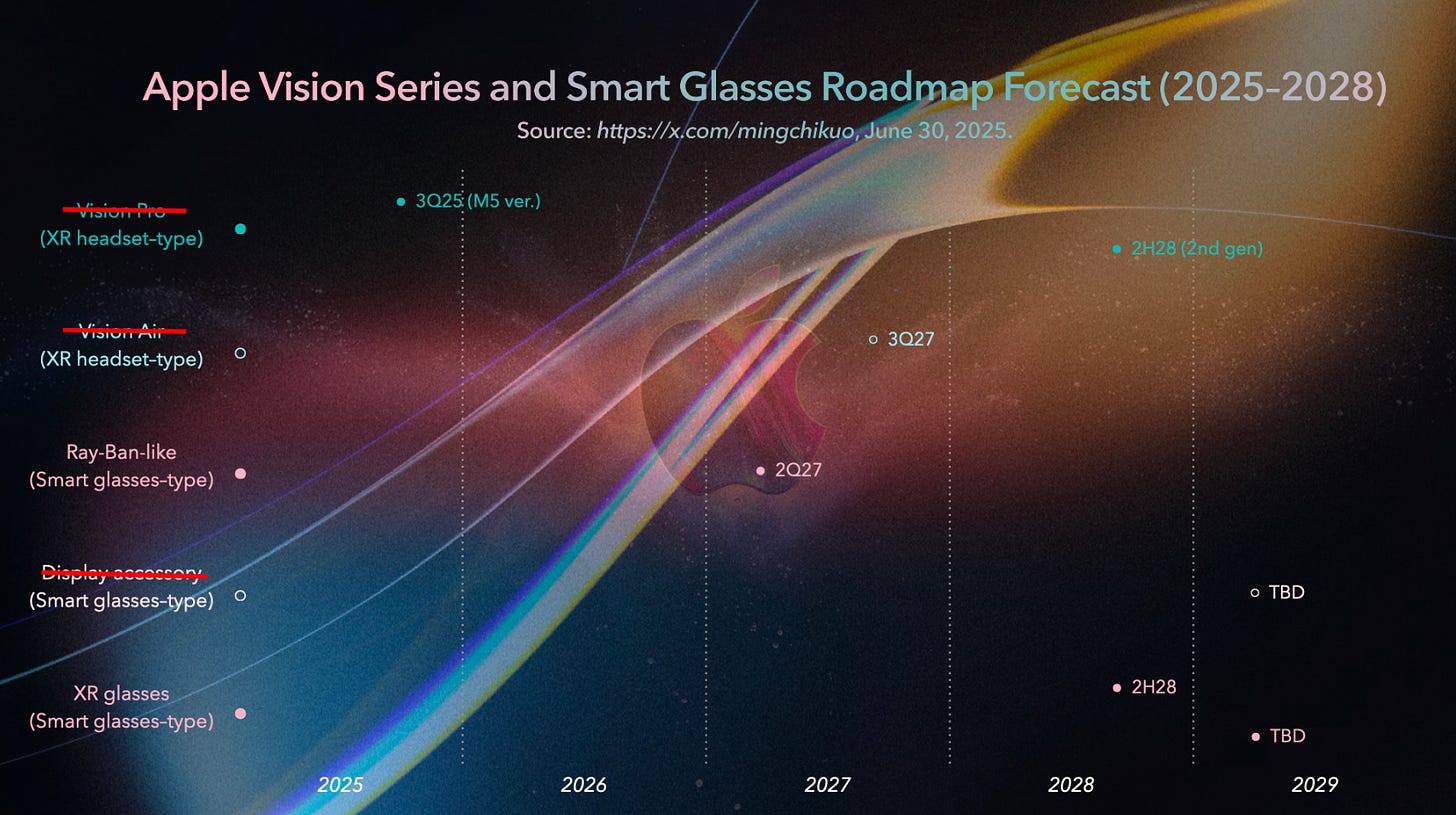
- At the start of last year, Meta’s CTO circulated an internal memo titled 2025: The Year of Greatness, framing the company’s metaverse and hardware push as a defining year that likely determines whether this entire effort will go down as the work of visionaries or a legendary misadventure. The evidence is still early, but Meta appears to have found real consumer demand in the simplest version of the category, specifically smart glasses built around cameras/audio without a dedicated in-lens display. EssilorLuxottica (Ray-Ban’s parent company) sold more than 7 million Meta Ray-Bans in 2025, up from roughly 2 million across 2023 and 2024 combined, while revenue tripled in the first half of this year. According to a well-known supply chain analyst Ming-Chi Kuo, that demand signal now puts Apple’s original headset-first roadmap in a different light. The company is reportedly focusing on just two smart glasses variants, a display-less AI pair aimed at Meta’s Ray-Bans in 2027 and a more complex waveguide-based AR/XR version pushed to 2029.
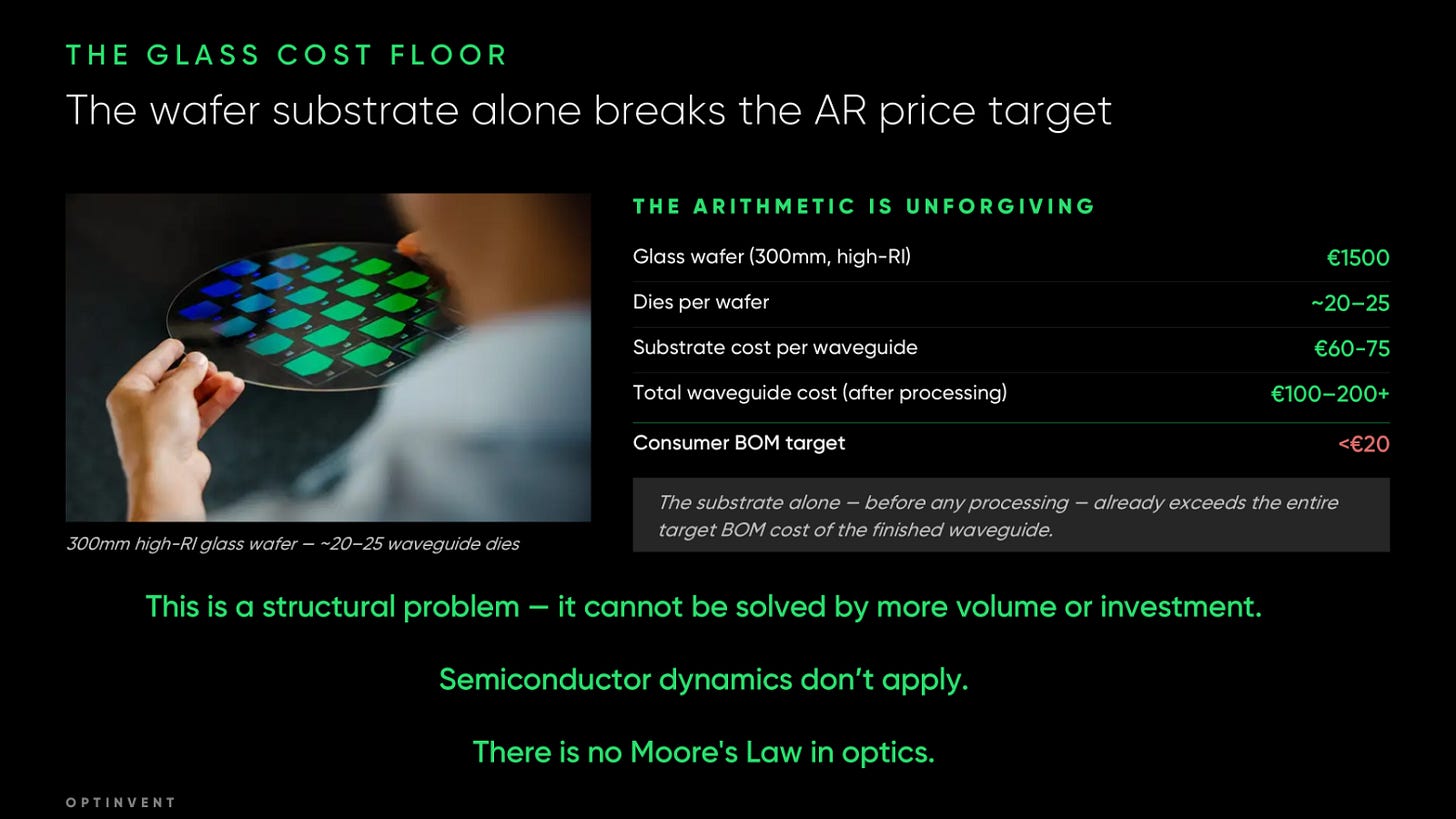
- Camera smart glasses are starting to look like a real consumer category. Add a display though, and the product quickly turns back into a precision optics problem. Why the Waveguide Is Blocking Mass-Market AR Glasses is a useful breakdown of the technical bottleneck around the waveguide, the optical element that routes an image from a tiny projector into the eye. Simply stated, today’s waveguides are made from specialty high-index glass wafers, processed in cleanrooms at nanometer-level precision (~30% of BOM cost). That creates a structural dichotomy: the product wants to be sold like consumer eyewear, but the gating component exists today in a manufacturing paradigm not compatible with high-volume, low-cost production. There are several companies claiming polymer waveguides (one monolithic part molded with reflective arrays), but the important caveat is that this is still early and unproven at the volumes the category ultimately needs.
- As cooling demand climbs globally, heat pumps should be scaling fast, and yet residential adoption in the U.S. is still grinding against a friction that’s under-discussed: heat pumps are not yet commodity products. A former rocket propulsion engineer turned HVAC contractor lays out the operating reality well through a comparison to the gas furnace. A gas furnace is boring in the best way; contractors measure the old unit, match the cabinet size, voltage, efficiency tier, and BTU rating (measure of heating output), then install a comparable unit. This is a commodity in practice: a product category reduced to known variables and a repeatable installation workflow. Despite all of their stated advantages, heat pumps do not yet fit that pattern. Instead of swapping a known box into a known opening, contractors are often reconciling ducts, voltage ratings, controls, refrigerant lines, equipment pairings, and load assumptions on a house-by-house basis. Heat pumps are sold like equipment and installed like custom projects, and that gap, more than any technical limitation, is what keeps adoption slower than the opportunity suggests.
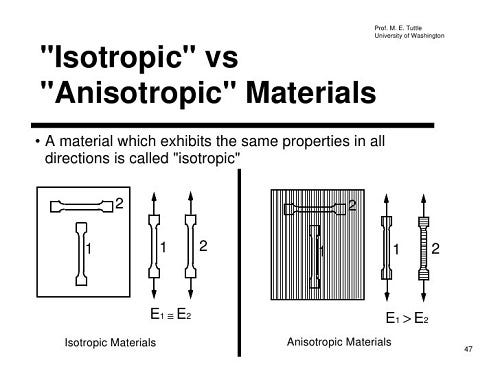
- Isotropic means a material behaves the same in every direction. Anisotropic means the axis you load, cut, or measure against changes the answer. Most engineers learn this early in school, then relearn it when a part quietly inherits a preferred direction from the process. It’s common to hear 3D printing flagged for anisotropy as though other processes exclusively produce isotropic parts. Injection molding orients glass fibers along the flow front in materials like glass-filled nylon; the same resin will test differently depending on where you cut the coupon relative to the gate. Rolled sheet develops a crystallographic texture. Forgings follow part geometry with grain flow. Castings have dendritic solidification fronts. FDM just makes the directionality visible because the layers are printed in plain sight. Composite engineers are the ones who design for it explicitly, choosing ply angles to put the strong axis where the load goes. Everyone else inherits and accepts it - the trick is knowing how processing leaves an imprint on final performance.
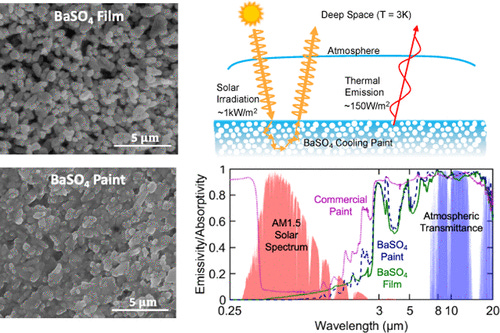
- Not all cooling requires energy to move heat. A few years ago, researchers at Purdue created a library of metal-oxide suspensions for cheap paint that reflects and radiates heat — capable of reflecting up to 98.1% of incoming solar radiation. While an AC uses compressors to heat up a working fluid and then rejects that heat to a cooler environment, this paint radiates its heat to the cold sink of space to achieve subambient temperatures. The paints are now being commercialized to cool homes where energy is scarce and costly, and to cut AC loads at large facilities like grocery stores. The main drawback is that it only works on surfaces oriented upward, and requires a clear sky to radiate effectively. Fortunately, the radiative particles used to make these paints don’t require exotic or expensive precursors, and can be made at home, as shown here. Not a bad outcome for a project that basically boils down to, “What if we made the whitest color possible?”
- And a couple of fun links to round out the week:
- Lee Kuan Yew, Singapore’s founding father, on air conditioning as a theory of development. It changed the nature of civilization by making development possible in the tropics.
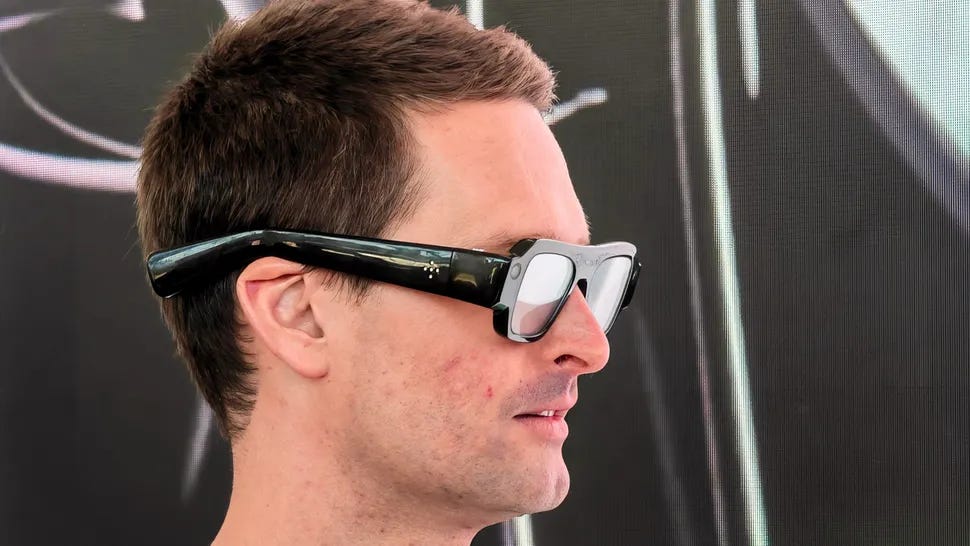
- Related to AR hardware, these are the new Snap Spectacles.
Startup News
- The return of the SPAC, sprinkled in with humanoid robotics. Agility Robotics plans to go public through a SPAC merger in a deal valuing the company at roughly $2.5B. The Oregon State spinout is best known for Digit, its bipedal warehouse robot, which is already operating across nine customer sites like Toyota Motor Manufacturing Canada and Schaeffler. The transaction is expected to bring in more than $620M, which Agility plans to use to scale production of its next-generation Digit v5, fulfill existing orders, and expand deployments with new and existing customers.
- Omen AI raised $31M in Series A funding to monitor coolant health in liquid-cooled AI data centers. The company’s sensors track more than 21 elemental signatures across metal content, biocontamination, and wear patterns, replacing the old model of taking fluid samples and waiting days for lab results. As GPU racks get denser, coolant chemistry becomes a control problem with more heat absorption traded against bacterial growth and expensive downtime. Nava Ventures led the round.
- Rocket Lab agreed to acquire Iridium in an $8B deal that would combine its launch and satellite manufacturing business with Iridium’s satellite communications services. The deal gives Rocket Lab a shortcut to the parts of a constellation business that are slowest to build from scratch, especially the spectrum, distribution, and existing customer base. The deal is expected to close in mid-2027.
- General Intuition raised $320M at a $2.3B valuation to train AI agents using video games as the bridge from simulation to real-world robotics. The company spun out of Medal, a gaming clip platform, giving it access to hundreds of millions of hours of gameplay paired with the underlying player inputs. General Intuition is using that data to build a foundation model for agents across gaming, simulation, robotics, drones, and other controllable systems, though whether gameplay can transfer reliably into the physical world is still the open question. Khosla Ventures led the round.